
Reviewed · SICILY STREET FOOD AND MARKET TOURS
Streeet food tour in Ortigia
The best part of this Ortigia street food tour is the way food and place are tied together. You start near the ancient Apollo Temple, taste classic Sicilian bites, then walk into the market to see the produce, cheese, meat, fish, and local traders behind the cooking.
I like the small group of up to 10 people, which should make questions and conversation easier. I also like the local angle: guides such as Roberto, a Siracusa native, have shared stories about the island, its monuments, and its daily life while leading guests from one tasting to the next.
The main concern is reliability. Several bookings reportedly had no guide at the meeting point and required phone calls before a cancellation was confirmed. The overall score is 3.7 from six reviews, so I would keep the provider’s contact details handy and avoid scheduling this as your only plan for lunch.
Key points at a glance
- Apollo Temple starting point: Meet at 11:00 a.m. near one of Ortigia’s oldest Greek monuments.
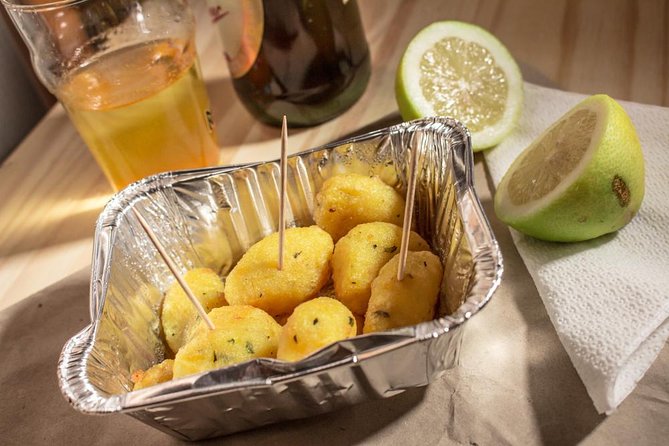
- Classic Sicilian tastes: Try arancino, granita, typical appetizers, and a local wine tasting.
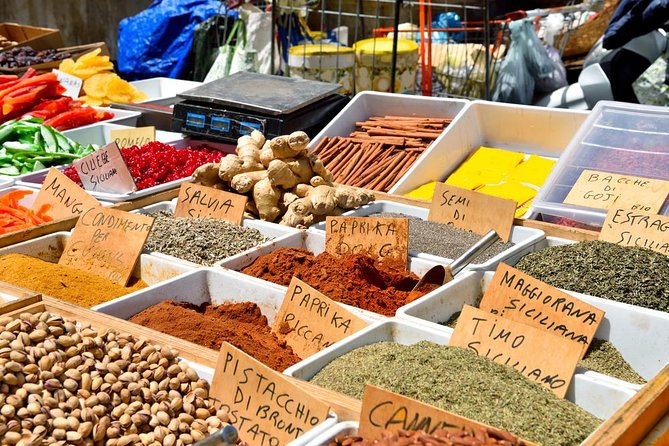
- Ortigia market access: Walk through stalls selling produce, nuts, fruit, cheese, meat, and fresh fish.
- Local storytelling: Roberto has been praised for connecting food with Siracusa’s history and present-day culture.
- Three-hour format: The tour works as a light lunch and a first look at Ortigia.
- Small group size: A maximum of 10 people allows for a more personal outing.
Starting beside the ancient Apollo Temple
The tour begins at Piazza Duomo, 5, at 11:00 a.m., with the Apollo Temple listed as the practical meeting landmark. This is a smart place to begin. You are not being asked to search for a nameless doorway in a side street. You meet in the historic heart of Ortigia, close to one of the island’s most important ancient sites.
The Apollo Temple dates from the beginning of the sixth century BC and is described as the oldest Doric temple in Sicily. Even if the focus is food, this opening gives the tour a strong sense of place. You get a quick reminder that Ortigia is not simply a pretty setting for restaurants. Its streets sit on an island with centuries of Greek, Roman, medieval, and later Sicilian life layered together.
The guide introduces the local street food before the tasting begins. The supplied information refers to a passionate female guide, while several detailed accounts specifically praise Roberto. If Roberto is leading your departure, you can expect a guide who grew up in Siracusa, knows the island closely, and may add personal stories to the formal history.
That difference matters. A food tour can be little more than a sequence of snacks. Here, the best version of the experience links each bite to the city around you. You are not only told what something is. You have a chance to understand why it belongs in everyday Sicilian eating.
More Street Food Tours in Sicily:
- Palermo Original Street Food Walking Tour by Streaty
★ 5.0 · 2,105 reviews - Palermo: Street Food and History Walking Tour
★ 4.9 · 1,294 reviews - Palermo: Street Food Walking Tour with Local Guide & Tasting
★ 4.9 · 632 reviews
Arancino, the first serious bite

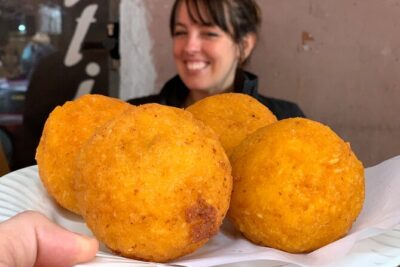
One of the early tastings is arancino, the famous Sicilian fried risotto ball. It is a practical street food: rice shaped around a filling, coated, and fried. The result is filling enough to give the tour some substance, rather than leaving you with only tiny samples.
Arancino is also a useful introduction to Sicilian food because it shows the island’s fondness for food that is portable, hearty, and made for informal eating. Your guide explains the dish while you taste it, giving you a better handle on what to look for when you see arancini in cafés and food counters elsewhere in Sicily.
The tour does not specify the filling or style served, so you should not expect a particular version. That is a small limitation for anyone hoping to compare several varieties. The value lies more in tasting a classic and learning its place in local food culture than in receiving a full cooking lesson.
Because the tour begins at 11:00 a.m., the arancino arrives at a useful time. It helps turn the outing into a light lunch. If you want a large, formal meal, this is not designed for that. If you prefer to eat as you walk and keep room for several different foods, the timing makes sense.
Granita at a well-known Siracusa bar
The next stop takes you to one of Siracusa’s well-known bars for granita. This is a softer, colder contrast to the fried arancino. Your guide explains how the Sicilian dessert is made as you taste it.
The food itself is simple, but the setting helps you understand how granita fits into local life. It is not presented only as a dessert saved for the end of an elaborate meal. On a warm Sicilian day, it is an easy pause during a walk through town.
The tour does not state the flavor served, so you should not book expecting a particular fruit or coffee granita. The important detail is the explanation of how the dessert is created and the chance to try it at a local bar rather than treating it as an abstract item on a checklist.
This stop also gives the tour some rhythm. Arancino supplies a savory, fried bite. Granita resets your palate and keeps the food walk from feeling heavy. The balance is useful, especially when the remaining stops include appetizers, market products, and wine.
Inside the Ortigia food market
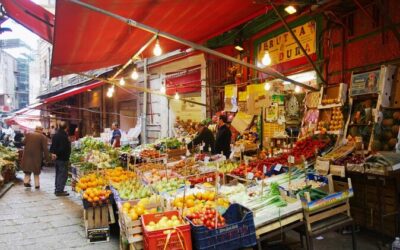
The market is the heart of the experience. Your guide takes you directly into the Ortigia food market, where you see stalls arranged with vegetables, fruit, nuts, cheeses, meats, and fresh fish.
This is where the tour moves beyond prepared food. You get a look at the ingredients that shape Sicilian cooking and the people who sell them. The guide can introduce you to local producers and traders, then answer questions about what you are seeing. That human contact is one of the strongest reasons to choose a guided market visit instead of walking through on your own.
A market stop also gives you a more grounded view of Ortigia. The grand monuments are important, but the market shows how the city eats and shops. Carefully arranged produce, fresh fish, cheeses, and cured meats tell you more about daily food habits than a restaurant menu alone.
You should expect the market to be an important part of the walk, but the exact tastings there are not fully specified. The information promises typical Sicilian appetizers and fresh products, not a fixed menu with stated portions. That flexibility can be a plus, since the guide may respond to what is available that day. It also means you should not assume you will sample every product displayed.
The market ends the tour at Vicolo Bagnara, listed as the final point. That is useful if you plan to continue exploring Ortigia on foot. You finish in the food market rather than being returned to the starting square, so consider this when arranging your next stop.
More food and wine days in Sicily:
- Catania: Mount Etna Morning or Sunset Day Trip with Tasting
★ 4.8 · 4,028 reviews - From Catania: Mount Etna Sunset Tour with Tasting and Cave
★ 4.7 · 1,119 reviews - Catania: Etna Morning Excursion with Tasting and Pickup
★ 4.8 · 820 reviews - Palermo Walking Tour and Street Food
★ 5.0 · 617 reviews
Wine and a light Sicilian lunch
A local wine tasting is included, described as a way to raise a glass during the food experience. It is meant to accompany a light lunch of appetizers and street foods, not to function as a separate winery visit.
I like this format because wine helps connect the food stops. Sicilian wine is part of the region’s table culture, and a small tasting adds another local product without turning the tour into a technical class. The available information does not identify the wine, the number of pours, or the producer, so you should think of it as a modest included tasting rather than a full wine education.
The food portions are also not listed. You will try several typical items, but the tour is best understood as a generous snack and light lunch. If you have a large appetite, plan to eat again later. If you like sampling many things and avoiding a long restaurant meal at midday, the format is a good fit.
Since alcohol is included, the experience may not suit someone who avoids wine. The tour information does not describe a nonalcoholic substitute, so ask the provider before booking if that matters to you.
Why the guide makes a difference
The strongest accounts of the experience focus on Roberto. He is described as a Siracusa native who knows the island’s streets, monuments, current culture, and local people. Those details suggest a tour that can feel personal rather than rehearsed.
A guide who has lived in Siracusa all his life can point out more than the obvious landmarks. He may explain the setting around the Cathedral, add anecdotes about side streets, and connect the food to the city’s identity. The guide also promises to answer questions and offer advice for the rest of your time in Siracusa.
That last point has real value. A three-hour tour is not only about what you eat during those hours. It can help you decide where to walk next, what local foods to look for, and how to understand Ortigia’s layout. You should use the question time well. Ask about other market stalls, local dishes, and places to eat after the tour.
The guide quality is also the biggest variable. Several detailed accounts describe a warm, cultured, and engaging host, but separate accounts report that no guide arrived at the meeting point. That is not a minor complaint. A food tour depends entirely on the guide showing up, opening the right doors, and handling the tastings.
Group size, timing, and practical fit
The maximum group size is 10 people. That is small enough for a guide to hear questions and keep the group together in narrow streets and market aisles. It also makes it easier to speak with traders without creating a large crowd.
The tour lasts about three hours and begins at 11:00 a.m. You should allow the full time, since the walk includes the ancient temple area, food stops, the market, and conversation with the guide. The start is central and near public transportation, which makes it a practical first activity in Ortigia.
The meeting point is Piazza Duomo, 5. The tour ends at Ortigia Street Market, Vicolo Bagnara. These are not the same place, so do not assume you will finish where you started. Both locations are in Ortigia, and the end point leaves you near more food and sightseeing, but you should check your onward plans before setting out.
Most people can participate, according to the activity information. No special access details are provided, so I would still ask the provider about walking conditions if you have mobility concerns. A market and street walk can involve uneven surfaces or crowded passages, but the supplied details do not give enough information to describe the route more precisely.
Mobile tickets are accepted, and confirmation is provided at booking. Group discounts are available, which can improve the value if you are booking for several people. The tour is sold in dollars at $115.19 per person, a fairly serious price for a three-hour food walk.
Is $115.19 a fair price?
The price makes sense only if you value the combination of food, guiding, and local access. You are paying for more than an arancino, a granita, and a glass of wine. The package includes a guided walk through Ortigia, a market visit, explanations of Sicilian food, and the chance to meet local traders.
Still, the published details do not give the number of tastings, serving sizes, or wine pours. That makes it hard to measure the price purely by food quantity. I would not choose this tour if your main goal is the cheapest possible lunch.
I would consider it if you want a structured introduction to Ortigia and prefer to have someone explain what you are seeing. The value is strongest on a first visit, when the history, market, and food can give you a useful map of the island. A group discount could also make the cost easier to justify for families or friends booking together.
The reliability issue changes the value calculation. A high price requires dependable operation. Since some bookings reportedly ended with no guide at the meeting point, confirm the tour close to the date and keep the provider’s contact information accessible. The free cancellation policy allows cancellation up to 24 hours before the start for a full refund, but changes or cancellations inside that window are not accepted and are not refunded.
Who should book this Ortigia food walk?
I would recommend it to someone who wants food and sightseeing in one activity. It suits first-time visitors who want an overview of Ortigia, people who enjoy asking questions, and anyone curious about market ingredients rather than only restaurant dishes.
It is also a good match for a small group that wants a shared lunch experience without spending three hours at a table. The guide’s local background is especially valuable if Roberto is leading, since his personal connection to Siracusa appears to be a major part of the experience.
You may want to skip it if you need a guaranteed, carefully listed tasting menu, a full meal, or a purely historical walk. It may also be a poor choice if you have a tight schedule and cannot tolerate the possibility of a last-minute problem.
Should you book it?
Book this tour if the appeal is local context with your food: ancient ruins, street dishes, a Sicilian market, appetizers, and wine in one three-hour outing. The arancino and granita give you two clear food highlights, while the market and guide can make the experience feel connected to real life in Siracusa.
I would book with two precautions. First, confirm the meeting details and keep the provider’s phone number available. Second, treat the food as a light lunch rather than a large feast. If the tour runs as intended, it offers a useful, personal way to begin exploring Ortigia. If reliability matters more than local color, the mixed record means you should compare it with another option before paying the full price.
FAQ
Where does the tour start?
The tour starts at Piazza Duomo, 5, in Siracusa, with the Apollo Temple serving as the key landmark. The scheduled start time is 11:00 a.m.
Where does the tour end?
The tour ends at the Ortigia Street Market on Vicolo Bagnara, 96100 Siracusa. The start and end points are different.
How long does the food tour last?
The experience lasts approximately three hours.
What food and drink are included?
The tour includes arancino, granita, typical Sicilian appetizers, and a local wine tasting described as part of a light lunch.
How many people can join?
The group is limited to a maximum of 10 people. Group discounts are available.
Can I cancel for a full refund?
Yes. You can cancel at least 24 hours before the local start time for a full refund. Cancellations or changes made less than 24 hours before the tour are not accepted or refunded.
Just added around Sicily
- Zafferana Etnea:Honey extraction workshop and honey tasting★ 4.7 · 3 reviews
- From Trapani: Favignana and Levanzo Yacht Tour with Stops★ 5.0 · 4 reviews
- Mt Etna: Winter Trekking Tour with Optional Catania Transfer★ 4.7 · 13 reviews
- Wine tour with wine tasting★ 4.7 · 18 reviews
- Sicilian Soul: Winery Tour, Wine & Food Tasting in Catania★ 5.0 · 4 reviews
- Wine tasting in Catania Historic center★ 4.4 · 15 reviews
- Valley Of The Temples By E-Bike With Picnic Included★ 4.7 · 7 reviews
- Valley of the Temples and Villa Romana Multi-Language Tour★ 4.8 · 5 reviews
Sicily Street Food and Market Tours, compared.
Palermo Original Street Food Walking Tour by Streaty
Read our review →
Street Food Walking Tour with Local Guide & Tasting
Read our review →
Night Street Food Tour of Palermo with a Local -For real foodies!
Read our review →
Browse the lists this tour appears in