
Reviewed · MARSALA WINE AND SALT PAN TOURS
Guided tour of the Trapani Salt Pans and Salt Museum
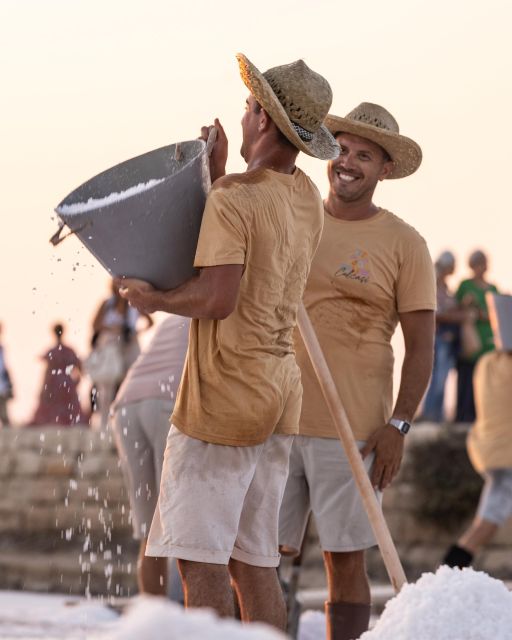
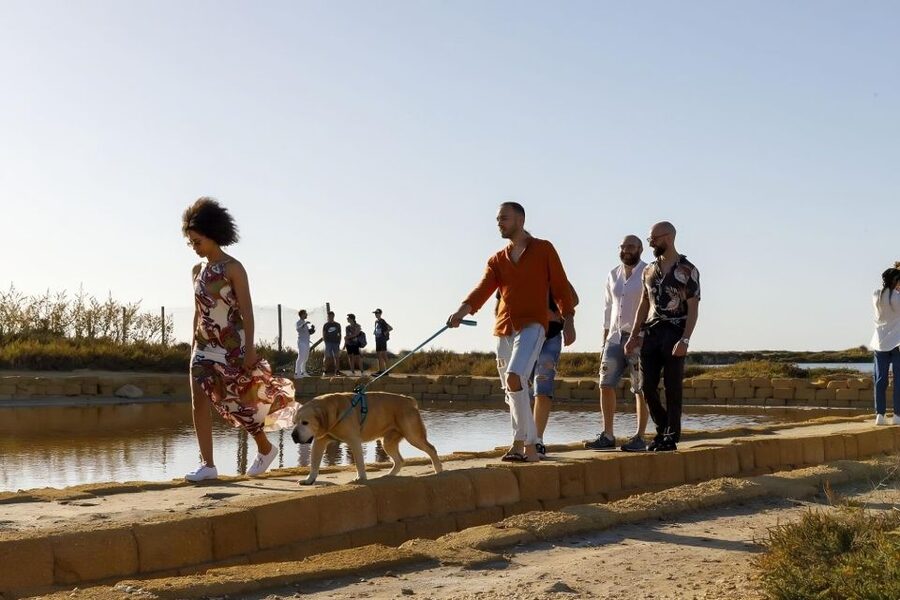
Trapani’s salt pans turn a simple seaside walk into a hands-on lesson in nature, work, and Sicilian food. You follow the edge of the Saline Culcasi, see white salt, pink pools, gray clay, and sky-blue water, then reach into a production tank to touch salt forming before your eyes. I like the working character of the place, and I like that the Culcasi family has made salt here for four generations.
The tasting adds a second pleasure. You sample whole salt and flavored fleur de sel from the Slow Food Presidium, then step into an old farmhouse containing the salt museum and a 1400s mill. The main caution is simple but important: this is a roughly one-hour walk, so anyone who is ill, recovering, or unsteady should think carefully before booking.
Key points to know before you book

- A four-generation salt-making family leads the only tour offered by the Culcasi family.
- A one-hour walk follows the salt-pan perimeter, with a basic level of fitness required.
- Hands-on salt production lets you touch salt inside the tanks and follow its change from seawater to table salt.
- Flavored fleur de sel tasting gives the tour a tasty finish, with several aromas from the family’s own production.
- A 1400s mill and salt museum explain the hard work and family story behind the pans.
- A nature setting in a WWF reserve brings protected plants, birds, sea views, and colorful evaporation pools into the experience.
Why Trapani’s salt pans are worth your time
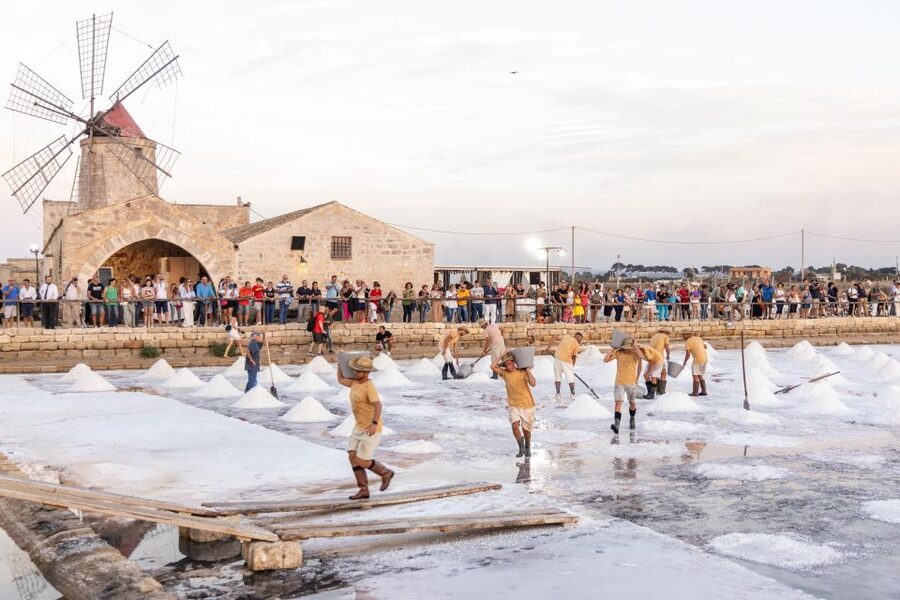
The salt pans near Trapani are not just a photo stop. They are working places where seawater is guided through a series of tanks, gradually losing water until salt remains. The tour lets you see that process at close range instead of treating the pans as a distant scenic backdrop.
I find the color changes especially appealing. The salt itself can look brilliant white, while the pools take on shades of pink. Gray clay borders some areas, and the sea and sky supply the blue. These contrasts make the walk feel almost painterly, but the real interest is practical: every color belongs to part of the salt-making environment.
The pans sit within a WWF reserve, so the walk also gives you a look at protected plants and birds. The experience is not presented as a formal wildlife excursion, and you should not book it expecting a long bird-watching session. Still, the reserve setting adds a calm, natural side to a tour built around industry.
More Marsala wine and salt pan trips:
- Trapani: 2-Hour Salt Flats Tour
★ 4.9 · 286 reviews - Segesta, Erice and Salt Pans Full-Day Excursion from Palermo
★ 4.2 · 1,791 reviews - Trapani: Salt Pans Sunset Tour and Flamingo Way
★ 4.4 · 252 reviews
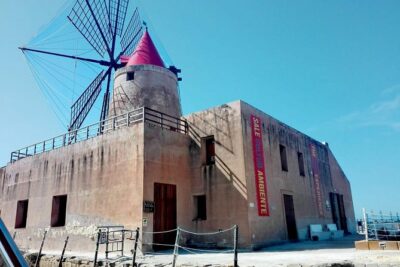
Starting below the windmill at Saline Culcasi
Your meeting point is easy to identify once you reach Via Salina Chiusa 1. Go to the ticket office in the forecourt below the windmill, then find the guide behind the salt sales counter.
That detail matters because the site includes a shop and working salt-pan buildings, and you do not want to waste time searching around the property. The tour is operated by ORO DI SICILIA S.R.L., with guiding available in English and Italian.
The tour lasts 75 minutes, but the walking portion takes about an hour. That leaves time for the museum and tasting, though the exact pace can depend on the group and the guide. Wear comfortable shoes, light comfortable clothing, and a hat. There is no sense dressing for a formal museum visit when most of this experience takes place outdoors.
The tour is listed as wheelchair accessible. At the same time, the stated walking requirement is worth taking seriously. If you need regular rest breaks or have recently been unwell, confirm that the route suits you before you reserve. One person who had not yet recovered from illness found the late notice about the one-hour walk frustrating. The walking requirement should be treated as a central part of the booking, not a minor footnote.
Walking the salt-pan perimeter

The first part follows the perimeter of the salt pans. You walk beside the pools and banks, watching the water reflect the sky as the route approaches the areas where salt forms.
This is a gentle sightseeing walk in spirit, but it is still a hike of about an hour. The ground and outdoor conditions are the main things to prepare for. Comfortable shoes are more useful than stylish ones, and a hat will help on a sunny day.
The guide explains how seawater moves through the salt pans and becomes the crystals familiar from a kitchen salt cellar. You are not simply looking at finished piles of salt. You get to follow the stages of production and see the connection between the sea, evaporation, the tanks, and the final product.
The family connection gives this explanation a personal angle. Salt workers in the Culcasi family have carried on the trade for four generations. That makes the old tools, tanks, mill, and buildings easier to understand. They are not props placed here for a themed attraction. They belong to a continuing family business.
The best part for many visitors will be the chance to touch the salt inside the production tanks. This small action changes the pace of the tour. Instead of hearing a technical explanation and moving on, you get a direct sense of the material being produced.
You should still follow the guide’s instructions and avoid treating the tanks like an open swimming area or unrestricted work space. The point is to handle the salt as part of the explanation, not to interfere with production.
The colors and wildlife around the pools
The salt pans offer a useful lesson in looking closely. White salt may seem like the obvious subject, but the gray clay, pink pools, blue sea, and reflected sky give the area much of its visual appeal.
The pink tones are particularly striking. They help you see that the pans are made up of different environments rather than one large body of water. The changing colors also make photographs more interesting than a simple view across flat water.
Because the pans are inside a protected reserve, plants and birds are part of the setting. The tour is suitable for all age groups in that sense, and the walk can work well for families who want an outdoor activity with something to explain at each stage.
Still, keep your expectations practical. The published experience promises protected plants and birds, but not a guaranteed list of species or a specialist nature guide. The salt production remains the main subject. The reserve is an important setting, not a separate birding tour.
More museums and sites in Trapani:
- Guided tour of the salt pans of Trapani and the Salt Museum
★ 5.0 · 188 reviews - Tile Museum – Majolica Museum – Rooms at the Genius
★ 5.0 · 85 reviews - Enchanted Castle of Sciacca – Museum Tickets
★ 3.5 · 63 reviews - Syracuse: Museum Guided Tour with Sicilian Puppet show
★ 4.1 · 27 reviews
Inside the old farmhouse salt museum
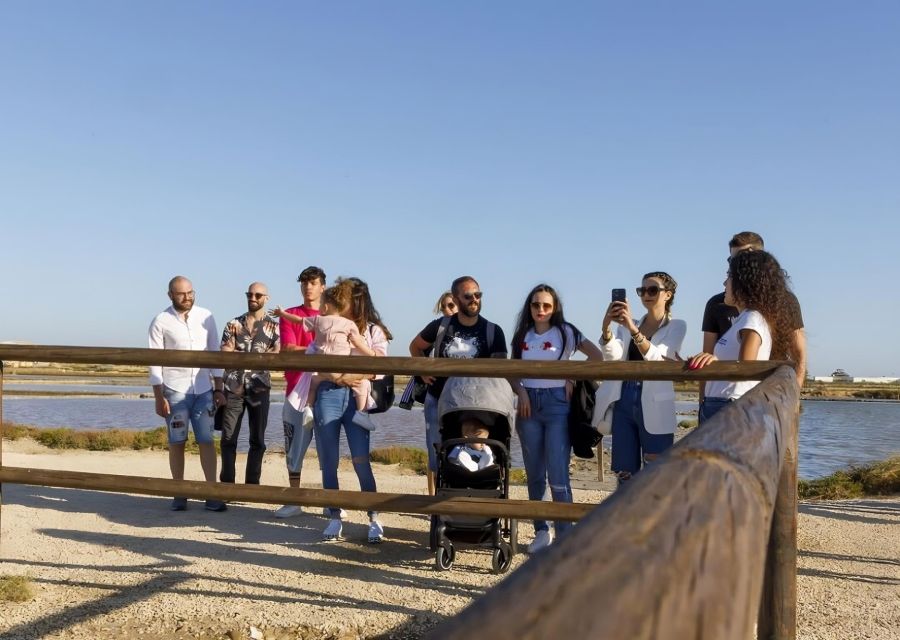
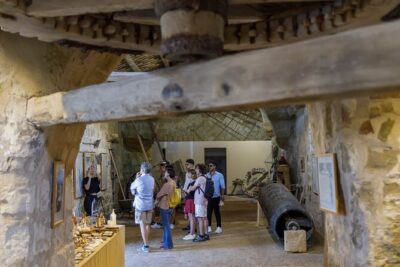
The second part moves indoors to the ancient salt museum. It occupies an old farmhouse and includes an ancient mill dating from the 1400s.
This is where the physical work behind salt production comes into focus. The museum traces not only the labor of the salt pans but also the story of the family that has run the operation for generations. After walking among the tanks, you can connect the machinery and buildings with the people who depended on this work.
The old mill gives the visit a strong historical anchor. You see how much the salt trade depended on manual labor, simple equipment, and the sea. The museum is included in the official guide of the European Union, a useful indication that it has formal cultural value beyond being a sales room.
Do not expect a large museum with hours of exhibits. The appeal is its setting inside the farmhouse and its close link to the working pans outside. If you prefer big collections and long displays, this portion may feel brief. If you like small museums tied to a real local trade, it adds substance to the walk.
The museum also helps explain why salt matters so much in Trapani. Salt was not merely a seasoning. It was a product shaped by geography, weather, labor, and trade. The building makes that connection more tangible than a quick explanation at an outdoor viewpoint.
Tasting whole salt and flavored fleur de sel
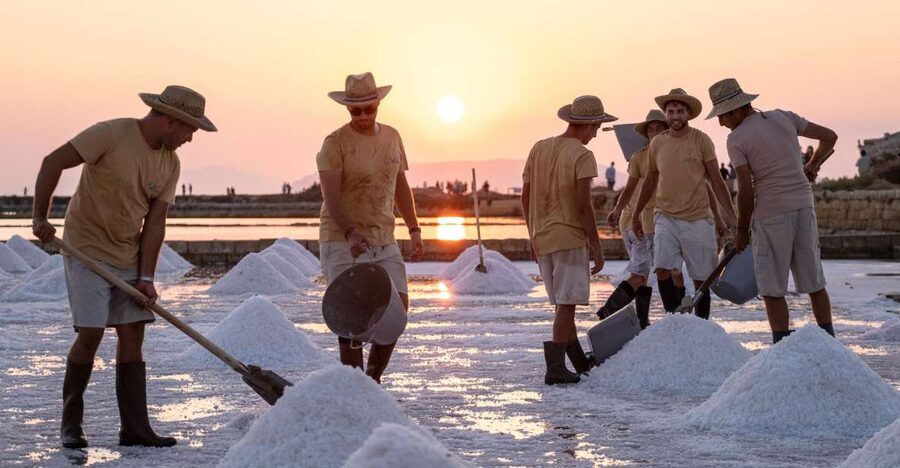
The tasting is included in the ticket and features whole salt and fleur de sel in different aromas produced by the family.
Fleur de sel is a delicate salt gathered from the surface of the evaporation ponds. Here, tasting several versions gives you a simple way to compare texture and flavor. It also turns the visit toward modern Sicilian cooking. You can begin thinking about salt not as a generic white powder but as a regional ingredient with different uses.
The flavored varieties are linked to a Slow Food Presidium, which adds a food-culture angle to the experience. This is not a full meal or cooking class, so do not arrive expecting a large spread. The value is in trying the products and understanding what the salt pans produce.
I would leave room in your luggage for a small purchase if you find a favorite. The tour includes the tasting, while any products you buy separately would be an extra cost. The sales counter also helps explain why the family continues to maintain the pans as a living business.
The tasting is particularly useful for people who enjoy food-focused travel. It gives you something concrete to remember from the tour, and it may help you choose a salt for your own kitchen. For children, tasting flavored salts can also make the production story easier to remember.
The optional aperitif or dinner afterward
After the tour, you can have an aperitif with a view or eat at the restaurant. These options are not part of the $21 tour price, so plan to pay separately if you stay.
The timing can work well for a slower afternoon or evening near the pans. An aperitif gives you a chance to sit with the sea and salt-pan views after the walk, while dinner lets you turn the visit into a longer outing. The information provided does not specify menus, prices, or opening hours, so check those details directly before building your schedule around the restaurant.
The view is part of the appeal, but the tour itself remains the better value if your main goal is to understand salt production. The meal or drink is an add-on, not a reason to overlook the walking requirement.
Is $21 a fair price?
At $21 per person, the price covers more than entry to a scenic area. You receive a guided walk, access to the salt museum and old mill, and a tasting of whole salt and several flavored fleur de sel products.
I consider that fair value for a 75-minute experience, especially because the tour connects three things that are often separated: nature, local work, and food. You see the sea and protected reserve, learn how salt is made, handle salt in the tanks, and taste the finished product.
The price is less compelling if you only want quick photographs of the windmill and pools. You could find the walk too slow if you have no interest in production or family history. The value depends on taking part in the explanation rather than treating the site as a lookout.
The flexible booking terms also reduce some planning risk. You can cancel up to 24 hours in advance for a full refund, and you can reserve now and pay later. Starting times vary, so check availability for the date you want.
Who should book this salt-pan tour?
I would recommend it to you if you want an easy-to-understand introduction to a traditional Sicilian trade. It suits food lovers, families, photographers, and anyone who prefers a short outdoor activity with a clear local focus.
It is also a good choice if you are staying in or around Trapani and want an experience that feels tied to the area rather than a general sightseeing stop. The four-generation family story and the working tanks give the visit a sense of place.
You should pause before booking if a one-hour walk is difficult for you. The tour is listed as wheelchair accessible, but the stated fitness requirement still matters. Contact the provider if you need to clarify how the accessible route works for your needs.
The experience is offered in English and Italian. If you need another language, this is not the right choice based on the available information.
Should you book Saline Culcasi?
Book it if you want to see how seawater becomes salt, walk among unusual colors, visit a small historic museum, and taste a local product for $21. The mix of outdoor scenery, family history, and food makes the 75 minutes feel purposeful.
Skip it if you cannot manage about an hour on foot or if you want a large museum, a long meal, or a specialist wildlife excursion. For most visitors who can handle the walk, the tour offers a direct and affordable way to understand one of Trapani’s oldest working traditions.
FAQ
Where does the tour begin?
The meeting point is the ticket office in the forecourt below the windmill at Via Salina Chiusa, 1. Find the guide behind the salt sales counter.
How long does the experience last?
The guided tour lasts 75 minutes. The walking section takes about one hour.
What languages are available?
The live guide is available in English and Italian.
How much does the tour cost?
The listed price is $21 per person.
Is the salt tasting included?
Yes. The ticket includes a tasting of whole salt and fleur de sel in different aromas produced by the family.
Can I touch the salt?
Yes. During the salt-pan walk, you can touch salt forming inside the production tanks and follow the process from seawater to finished salt.
What should I wear?
Bring comfortable shoes, a hat, and comfortable clothes. The tour includes about an hour of walking outdoors.
Is the tour suitable for someone with limited fitness?
A basic level of fitness is required because the route includes about one hour of walking. The activity is listed as wheelchair accessible, but you should confirm the route details if you need accessibility support.
Can I cancel for a refund?
You can cancel up to 24 hours in advance for a full refund.
Can I pay later?
Yes. You can reserve your place and pay later, which keeps your plans flexible.
Just added around Trapani
- From Trapani: Favignana and Levanzo Yacht Tour with Stops★ 5.0 · 4 reviews
- Trapani: Paragliding flight with GoPro photos and videos★ 5.0 · 4 reviews
- Trapani: Marettimo Island and Sea Caves Boat Tour with Lunch★ 4.5 · 41 reviews
- Sicily: Selinunte Park Entry Ticket & Sicily Digital Audio Guide★ 4.5 · 4 reviews
- Visit and Private Tasting of EVO Oil and Organic Wine★ 5.0 · 14 reviews
- Visit Segesta and Selinunte from Trapani★ 4.5 · 7 reviews
- Luxury Private Tour of the Egadi Islands: Favignana&Levanzo from Trapani★ 5.0 · 64 reviews
- Bluefin Tuna Fishing Charter in the Egadi Islands★ 5.0 · 13 reviews
Marsala Wine and Salt Pan Tours, compared.
Segesta, Erice and Salt Pans Full-Day Excursion from Palermo
Read our review →


Guided tour of the salt pans of Trapani and the Salt Museum
Read our review →

From Palermo Sicilian Retreat Erice & Marsala Tour with Lunch
Read our review →Browse the lists this tour appears in