
Reviewed · SICILY STREET FOOD AND MARKET TOURS
Catania: Underground and Street Food Walking Tour
Catania’s best surprise may be under your feet. This 2.5-hour walk leads from the black-stone Roman amphitheater into lava caves, buried churches, Roman remains, and thermal ruins, then brings you back above ground for market food and a local drink. It gives you a useful key to understanding a city rebuilt again and again after eruptions, earthquakes, war, and time.
I like the mix of archaeology and everyday Catania. You get access to places that can be difficult to find alone, and the stop at Piazza Carlo Alberto adds the sound, smells, and quick bites of a real Sicilian market. I also like the guides’ personal touch. Oreste’s archaeology background has made this especially strong for travelers who want context, while Matilde has also been praised for making the walk clear and enjoyable.
The main consideration is physical access. You will climb a few irregular steps, enter confined underground spaces, and walk between several sites. Some locations can also change if they are closed or unusable, so this is not the right outing for wheelchair users, people with serious mobility limits, or anyone uncomfortable underground.
Key points at a glance
- A prehistoric lava cave in the city: See how Mount Etna’s eruptions shaped Catania, even below ordinary streets.
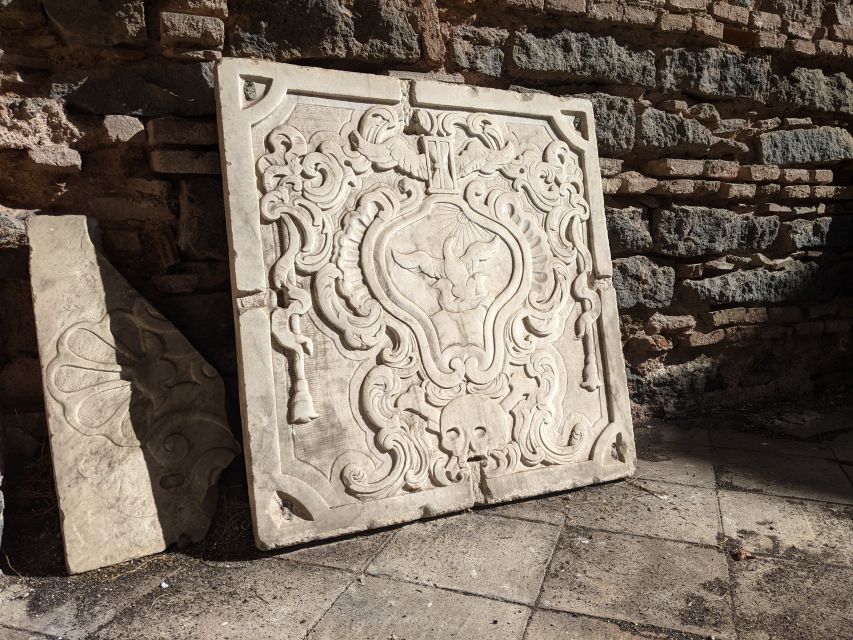
- Roman remains beneath modern Catania: Visit an ancient funeral chapel and thermal ruins that reveal the city’s earlier layers.
- Street food at Piazza Carlo Alberto: Pause in the open-air market for local snacks and the atmosphere of daily Catanese life.
- A drink locals order at the kiosk: Finish with mandarino e limone, a citrus drink associated with Catania.
- Small groups with strong local guides: Groups are limited to 10, with tours offered in English, Italian, French, and Spanish.
- A smart first look at the city: The route ends at Piazza del Duomo, close to the elephant statue and cathedral area.
Why Catania makes more sense underground
Catania is not a city you can fully understand by admiring its handsome streets. The grand Baroque facades along Via Etnea tell only part of the story. Below them are older structures, lava flows, religious spaces, and water channels that show how the city has been rebuilt over its earlier self.
That layered story is the heart of this walk. Your guide does not simply point to a stone and name its date. The route connects Etna’s eruptions with the shape of the city, then links Roman Catania with the churches and streets above it. This makes the experience more than a standard city walk.
I would choose this tour early in a Catania visit. Once you have seen what lies beneath the pavement, the cathedral, market, and Via Etnea become easier to read. You begin to notice the black lava stone, the rebuilt facades, and the way old ruins appear in unexpected places.
The small-group format helps. With no more than 10 people, you should have a better chance to hear explanations in narrow spaces and ask questions without holding up a large crowd. The guides named for this experience include Oreste and Matilde. Oreste’s archaeology training is particularly useful for travelers who want more than quick facts about Roman construction and volcanic layers.
More Street Food Tours in Catania
- The Original Catania Street Food and Market Tour by Streaty
★ 5.0 · 345 reviews - Catania: Street Food Guided Walking Tour
★ 4.9 · 326 reviews - Catania: Guided Street Food Walking Tour
★ 4.7 · 300 reviews
Meeting the guide at Piazza Stesicoro
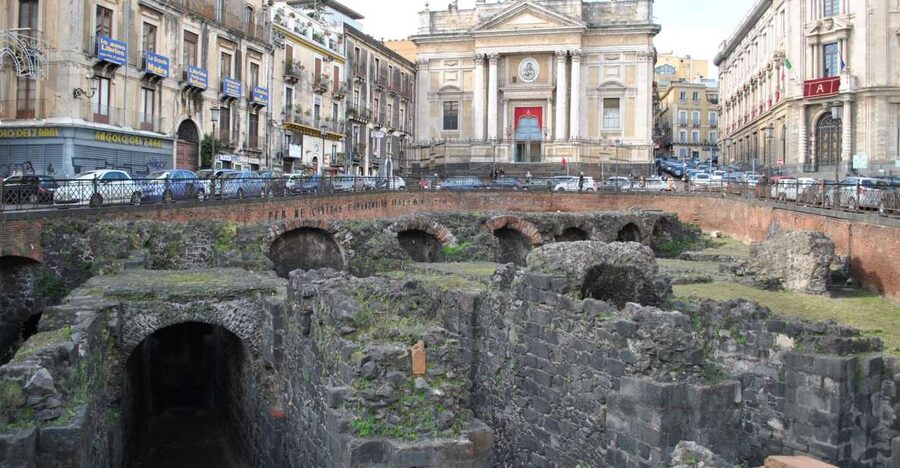
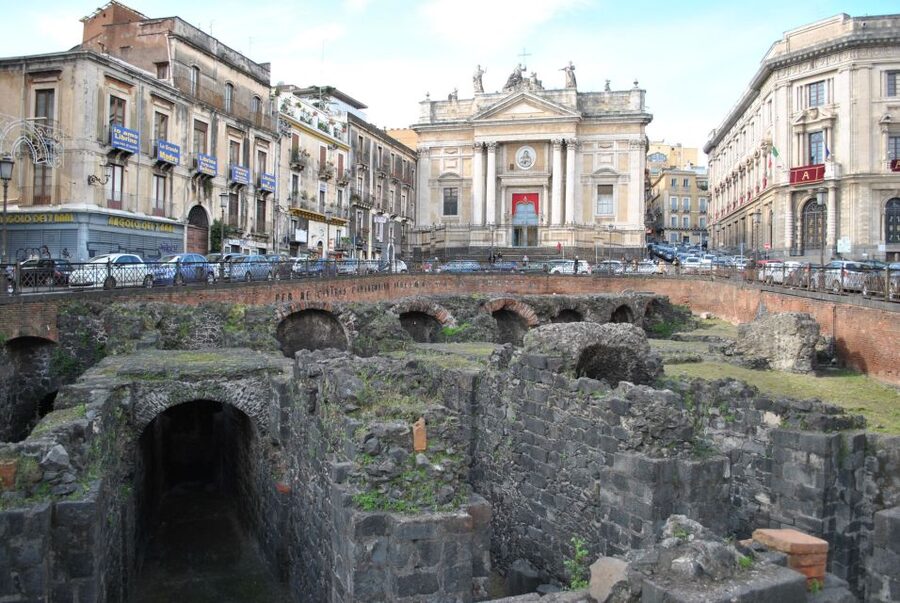
The walk begins at Piazza Stesicoro, in front of the entrance marked by two columns at the Roman Amphitheater of Catania. Look for the guide holding a nameplate. The meeting coordinates are 37.50728988647461, 15.086018562316895.
This is a practical starting point because the amphitheater immediately shows how much of Catania lies below today’s street level. You begin with about 15 minutes for a look and photographs before heading underground. The ruined arena is not just a backdrop for the meeting. It sets up the central idea of the tour: modern Catania was built over an older city.
The first stop is best treated as orientation rather than a full amphitheater visit. If you want a detailed look at the monument itself, allow separate time another day or before the tour. Here, the focus quickly shifts to what happened below the present city.
Entering the underground sites
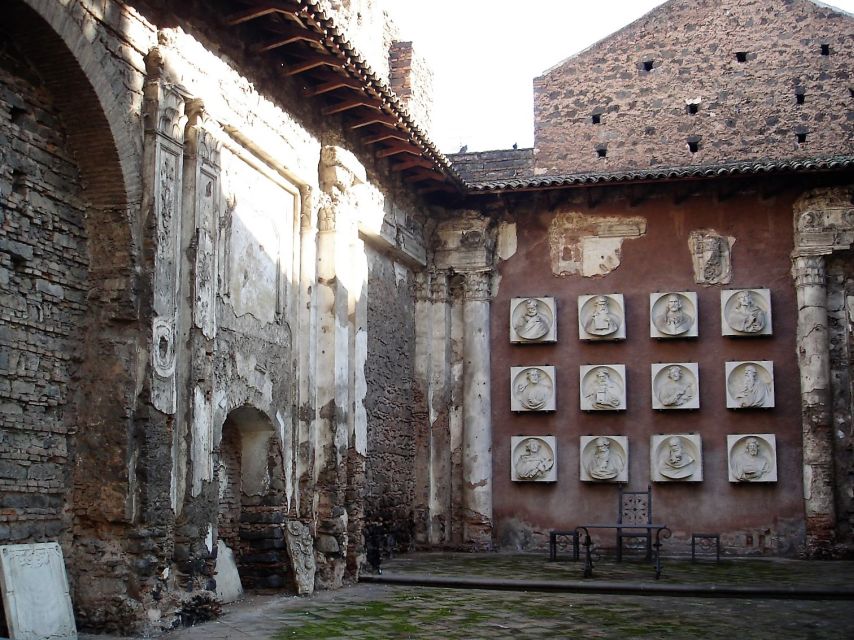
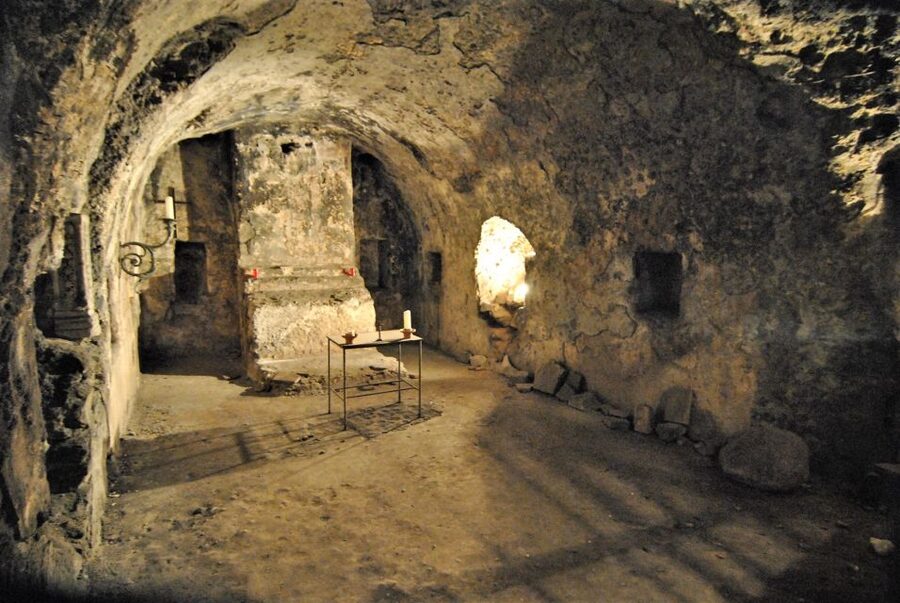
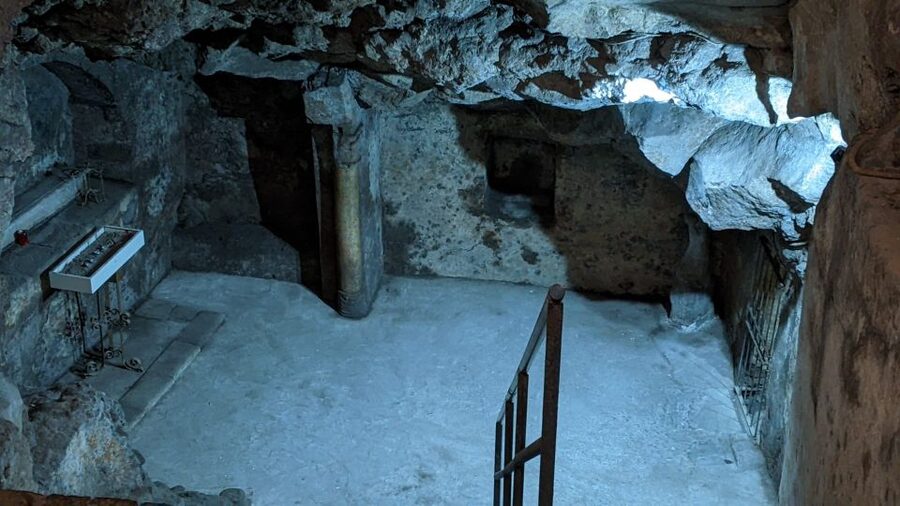
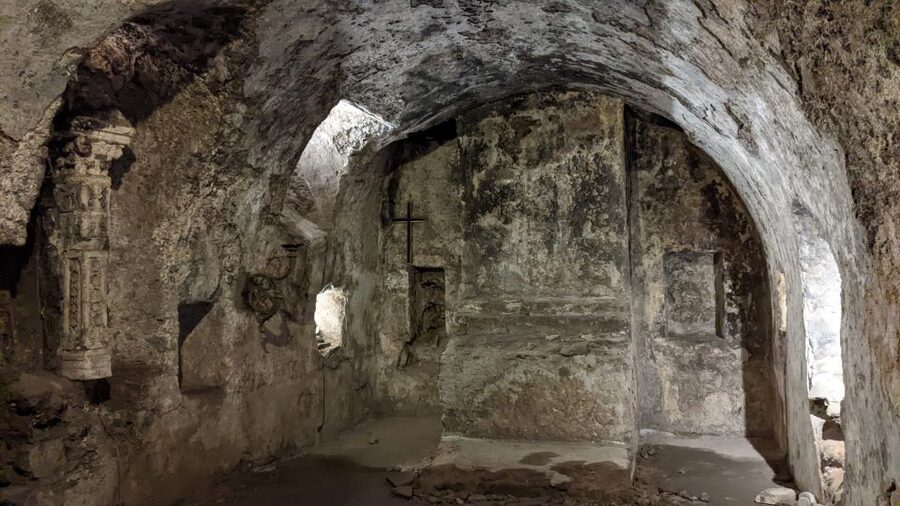
The underground portion lasts about 30 minutes at the first listed site. Expect a guided visit through spaces connected to the city’s volcanic and religious past. The route includes a prehistoric cave associated with Etna’s eruptions and an ancient Roman funeral chapel.
The cave is especially memorable because of its location. You are not heading into a remote mountain area. You are seeing volcanic evidence in the middle of an urban center, in a place where ordinary city life continues overhead. That contrast makes the geology feel immediate rather than abstract.
The funeral chapel gives the tour a different mood. Roman remains in Catania are not always presented as one large, tidy archaeological park. They can appear in fragments, beneath later buildings and streets. A guide is valuable here because the remains may not explain themselves. You need someone to point out what you are seeing and connect it to the city’s Roman period.
The route can include churches affected by bombing and older religious places concealed beneath later construction. Access depends on conditions at each site. One location may be replaced by another underground stop if it is unavailable, and that flexibility is useful in a city where openings can change.
A Christmas Day outing, for example, had fewer underground places open than usual, but the guide adjusted the route with other lesser-known locations. That tells you two things. First, the exact sequence should not be treated as fixed. Second, a strong guide matters because the experience depends partly on how well the available sites are explained.
Street food at Piazza Carlo Alberto
After the first underground visit, you head to Piazza Carlo Alberto and the open-air market. This is the tour’s most energetic change of pace. Instead of quiet stone rooms, you get stalls, voices, food smells, and the everyday rush of a Catanese market.
The scheduled market stop lasts about 30 minutes and includes street food, local snacks, and tasting time. The exact food selection is not specified, so do not book this expecting a fixed tasting menu. Think of it as a guided introduction to local market eating, with the guide choosing or pointing out items along the way.
That arrangement has a real advantage. Sicilian street food is best understood in place, not served as a formal sequence in a restaurant. At the market, you can see where food is sold, watch the pace of local shopping, and ask what people eat in ordinary daily life. One visitor singled out a market dish as among the best meals of a two-week trip, though the name was not remembered. That is a reminder to ask your guide to write down the name if something catches your attention.
The market can be noisy and crowded. If you prefer a quiet, seated food tour, this may feel hectic. I see that as part of the value, but you should know what you are choosing. This is a short taste of Catania’s food culture, not a long lunch with generous portions.
You return to Piazza Carlo Alberto later for another brief food or dessert stop. The two market visits break up the historical walking and give you another chance to try something local. Come with a light appetite, but do not expect the tastings alone to replace a meal.
More Walking Tours in Catania
- Catania: Heart of the City Guided Walking Tour
★ 4.6 · 708 reviews - Catania: City Highlights Walking Tour
★ 4.7 · 666 reviews - Syracuse, Ortigia and Noto walking tour from Catania
★ 5.0 · 273 reviews - Catania : Private Custom Walking Tour With A Guide (Private Tour)
★ 4.5 · 92 reviews
Via Etnea, lava stone, and the cathedral
The route then moves back through central Catania toward Via Etnea, the city’s main street. Here you see aristocratic palaces and late Baroque churches, with Etna’s volcanic material reflected in the dark stone used across the center.
This part of the walk helps balance the underground stops. Catania is not only ruins and damaged structures. It is also a grand urban center with broad streets, elaborate facades, and churches shaped by rebuilding. The guide’s job is to show how these polished buildings relate to the disasters and reconstruction that came before them.
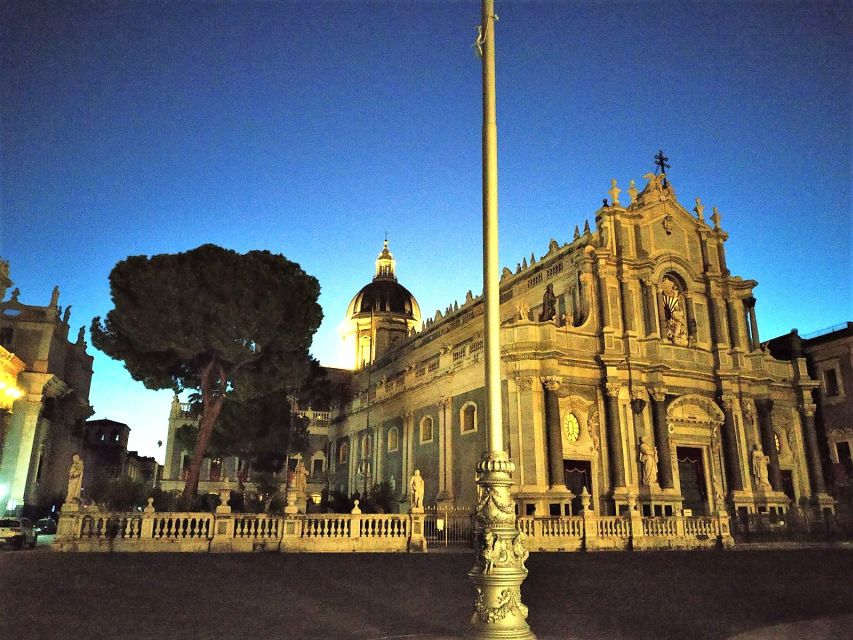
The walk continues toward Piazza del Duomo, where the famous black lava-stone elephant provides one of Catania’s most recognizable symbols. You may see it earlier or later depending on the route, but it is part of the city’s central visual language: local stone, religious power, and civic identity gathered in one square.
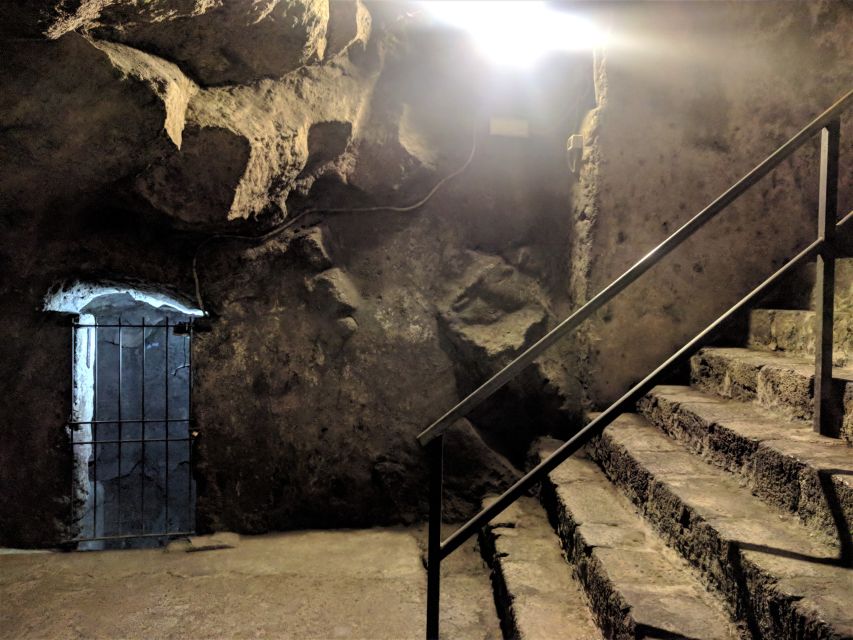
The cathedral basement is another important stop. You get a look below the church rather than only admiring its exterior. As with the other underground locations, expect steps and uneven surfaces. The reward is seeing how sacred buildings can preserve older layers underneath their present form.
Following the Amenano to the thermal baths
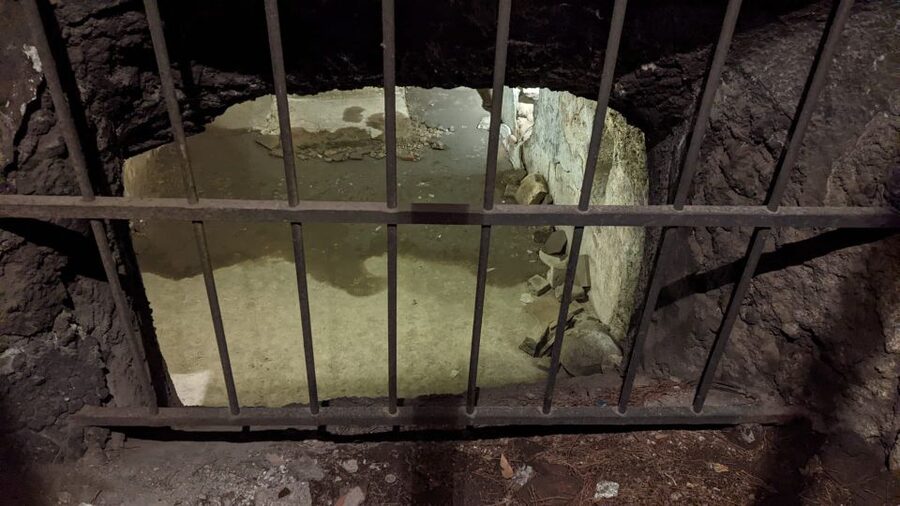
One of the more unusual parts of the experience follows the underground river Amenano toward a thermal bath. The route is designed to show how water, volcanic activity, Roman engineering, and later city building overlap.
The thermal ruins are among the strongest stops for travelers interested in Roman Catania. They are not simply an isolated ancient monument. They help explain the practical side of Roman urban life, including bathing and the use of water in a city shaped by volcanic ground.
Allow about 30 minutes for the thermal-bath visit. The guide’s explanation makes a major difference here because the site may be easier to appreciate as a system than as a collection of walls. Ask questions if you want to understand how the river and baths relate to the streets above.
The route includes about 15 minutes of walking between sections. Since the tour covers several different areas, comfortable shoes are essential. The itinerary is compact, but it is still a walking tour with stairs, uneven steps, and underground access. People prone to motion sickness, claustrophobia, or difficulty with steps should think carefully before booking.
The final mandarino e limone
The tour ends with a typical drink at a kiosk on Via S. Gaetano alla Grotta, listed as mandarino e limone. This citrus drink is a small detail, but it gives the day a distinctly local finish. It is not a formal cocktail stop or a bar crawl. It is a quick, customary refreshment with the guide.
I like this ending because it returns you to street level after so much time beneath it. You have seen ruins, caves, churches, water, and market food. Then you finish with a simple local drink, the sort of everyday ritual that helps a place feel less like a collection of attractions.
The final destination is Piazza del Duomo. That makes the tour easy to combine with further sightseeing in the historic center. You can continue around the square, visit the cathedral area, or use the location as a clear point from which to explore on your own.
How much value do you get?
No price is provided here, so I cannot judge the exact cost against competing tours. The value depends on what you would otherwise pay separately for underground admissions, a guide, and food tastings.
This experience earns its keep when you want access and interpretation in one short outing. Several sites may be difficult to locate or enter without local arrangements, and the guide adds the archaeological explanation that turns scattered ruins into a coherent story. The market food and citrus drink add small but worthwhile local touches.
The price may feel high if you mainly want a cheap snack and a quick orientation walk. One person described the experience as good but rather pricey, which is a fair warning. You are paying for a specialist-led route through places that may not be obvious from the main tourist map, not for a full meal or a long list of major monuments.
With only 2.5 hours, the tour is efficient. You see a broad slice of Catania without committing to a full-day excursion. That makes it useful for a short stay, a port visit, or your first afternoon in town.
Who should book this Catania walk?
I would recommend it to curious first-time visitors, archaeology fans, and anyone who wants to understand why Catania looks the way it does. It also suits people with limited time who want history, food, and a central walking route in one booking.
The tour is especially good for you if you enjoy asking questions. Guides such as Oreste have been praised for explaining details clearly, adding curiosities, and offering tips about what else to eat and see. That personal exchange can be as useful as the official stops.
I would not choose it for a relaxed food experience with lots of sitting. It is also a poor match for wheelchair users and people with serious mobility limits. Large luggage, oversize bags, electric wheelchairs, and other listed restricted items are not allowed.
The tour runs rain or shine, except in prohibitive conditions. Wear shoes suited to uneven ground and bring only what you need. If one site cannot be visited, the organization may substitute another underground location, so keep your expectations focused on the theme rather than one exact doorway.
Should you book it?
Book this tour if you want the Catania that sits below the postcards. The mix of volcanic cave, Roman funeral chapel, cathedral basement, Amenano river, thermal ruins, market food, and mandarino e limone is unusually broad for a 2.5-hour walk.
Skip it if you need step-free access, dislike confined spaces, or want a substantial food tour. For everyone else, this is a practical way to connect Catania’s geology, Roman past, religious buildings, and daily food culture. The strongest reason to choose it is the guide. With Oreste or Matilde leading the way, the city’s broken and buried pieces can become a clear story rather than a pile of disconnected ruins.
FAQ
How long does the Catania Underground and Street Food Walking Tour last?
The tour lasts 2.5 hours.
Where does the tour meet?
Meet at Piazza Stesicoro, at the entrance with two columns to the Roman Amphitheater of Catania. The guide will be holding a nameplate.
Where does the tour finish?
The tour finishes at Piazza del Duomo in central Catania.
What languages are available?
The tour is offered in English, Italian, French, and Spanish.
How large is the group?
It is a small-group tour limited to 10 participants.
What food and drink are included?
The route includes local street food and snacks at the open-air market, plus a typical mandarino e limone drink at a kiosk.
Is the tour suitable for people with mobility impairments?
No. The tour includes a few steps, some of them irregular, and is not suitable for wheelchair users or people with mobility impairments.
What happens if an underground site is closed?
If a planned site is unavailable or inaccessible, the organization may replace it with another underground location. The tour runs in rain unless conditions are considered prohibitive.
More Food and Wine Days in Catania
- Catania: Mount Etna Morning or Sunset Day Trip with Tasting
★ 4.8 · 4,028 reviews - From Catania: Mount Etna Sunset Tour with Tasting and Cave
★ 4.7 · 1,119 reviews - Catania: Etna Morning Excursion with Tasting and Pickup
★ 4.8 · 820 reviews - Catania: Etna Nature Tour with Hiking, Cave Visit, & Tasting
★ 4.7 · 502 reviews
Just added around Catania
- Mt Etna: Winter Trekking Tour with Optional Catania Transfer★ 4.7 · 13 reviews
- Wine tour with wine tasting★ 4.7 · 18 reviews
- Wine tasting in Catania Historic center★ 4.4 · 15 reviews
- Sicilian Soul: Winery Tour, Wine & Food Tasting in Catania★ 5.0 · 4 reviews
- Trekking at 3000 meters on Etna★ 3.8 · 7 reviews
- Private Tour from Catania to Etna Naxos and Taormina★ 4.5 · 7 reviews
- Catania AIRPORT transfer From / To Taormina★ 5.0 · 3 reviews
- Typical Pottery Experience with local Artisans in Catania★ 5.0 · 15 reviews
Sicily Street Food and Market Tours, compared.
Palermo Original Street Food Walking Tour by Streaty
Read our review →
Street Food Walking Tour with Local Guide & Tasting
Read our review →

Night Street Food Tour of Palermo with a Local -For real foodies!
Read our review →
Browse the lists this tour appears in