
Reviewed · NOTO BAROQUE TOURS
Noto Baroque Masterpieces: small-group tour (max 6 Guests)
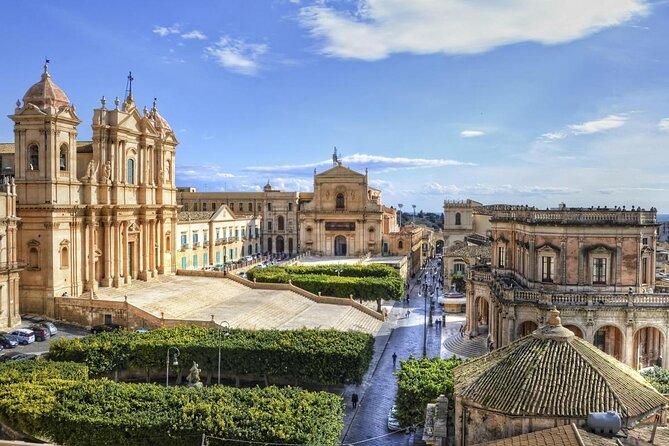
Noto’s Baroque center is compact, handsome, and packed with details that are easy to miss on your own. This small-group walk, limited to six people, connects oval church interiors, carved palace facades, trompe-l’oeil chapels, and the city’s famous flower festival.
I like the way Dr. Enrica De Melio brings both archaeology and local storytelling to the route. I also like the efficient 90-minute plan, which gives you a useful first look at Noto without taking up half your day. The main consideration is that the pace is brisk, and the cathedral ticket information should be confirmed before you go because the tour details list it as both included and not included.
Key points at a glance
- A six-person maximum keeps the walk personal and makes it easier to hear Enrica in narrow streets and church interiors.
- Dr. Enrica De Melio is a licensed tourist guide and PhD archaeologist.
- Seven central stops cover churches, a cathedral, a palace, a theater, and Via Corrado Nicolaci.
- The 90-minute route is a focused introduction rather than a slow, full-day study of Noto.
- The cathedral’s 1996 collapse and rebuilding add an important modern chapter to the Baroque story.
- The annual Infiorata gives Via Corrado Nicolaci a strong link to living local culture, not just architecture.
Why this short Noto walk works
Noto is often admired from a distance, as a row of honey-colored stone buildings glowing in the Sicilian sun. The real pleasure comes when you stop looking only at the grand fronts and begin noticing the odd little touches: a curved church plan, painted architectural tricks, expressive stone faces, and the way a palace announces its owner’s rank.
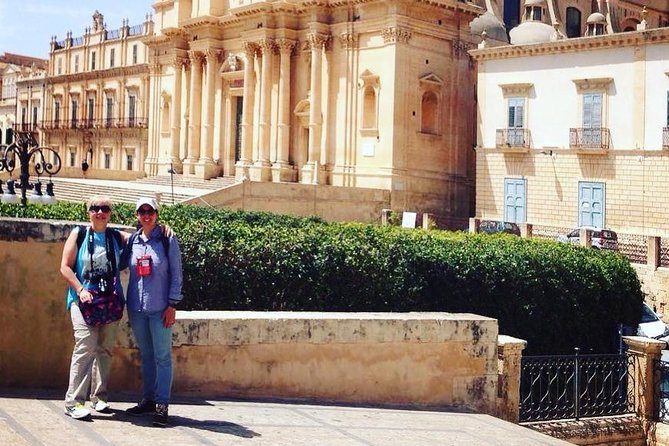
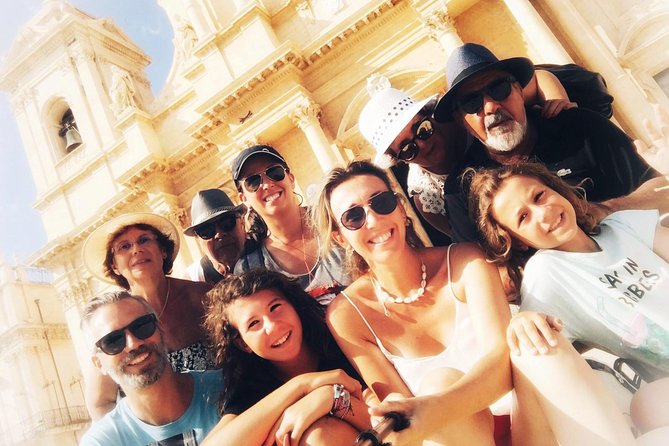
This walk is built for that close look. Enrica De Melio leads you from Porta Reale along the main Baroque center, explaining what you are seeing rather than simply naming buildings. Her academic background matters here, but so does her ability to keep the material moving. The strongest praise connected with her guiding is consistent: she is described as prepared, passionate, friendly, and able to hold a family’s attention while covering plenty of information in a short time.
I would choose this tour early in a Noto visit. It gives you a framework for the city, then leaves you time to return to the church or palace that caught your eye. It also works well for a return visit, especially if your first trip consisted mainly of strolling and taking photographs.
The route is not designed for extended browsing at every stop. Most visits last 10 to 15 minutes, so you will hear an explanation, look around, and move on. That is a fair trade for the compact schedule, but anyone who wants long periods for sketching, photography, or quiet church time may prefer to explore at their own pace afterward.
More baroque days around Noto:
- Catania: Syracuse, Ortigia, and Noto Tour with Brunch
★ 4.6 · 404 reviews - Syracuse, Ortigia and Noto walking tour from Catania
★ 5.0 · 273 reviews - From Catania: Neapolis of Syracuse, Ortygia, and Noto Tour
★ 4.7 · 234 reviews
Starting at Porta Reale
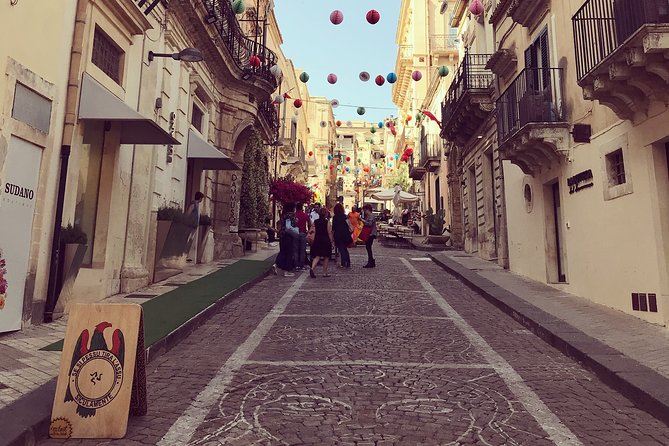
The meeting point is Porta Reale, also called Porta Ferdinandea, on Corso Vittorio Emanuele. This is a practical place to begin because it marks the entrance to Noto’s central historic area and puts you on the main axis of the walk.
From here, you can expect a walking tour rather than a sightseeing ride. Transportation to and from the attractions is not included, though the stops are grouped in the central part of town. Wear comfortable shoes, since the value of the tour comes from moving through the streets and stepping inside several buildings.
The tour is offered in English and uses a mobile ticket. Confirmation is provided at booking. Since the group can contain no more than six people, the setting should feel closer to a private walk than to a large guided circuit, though the exact atmosphere will depend on the other people booked that day.
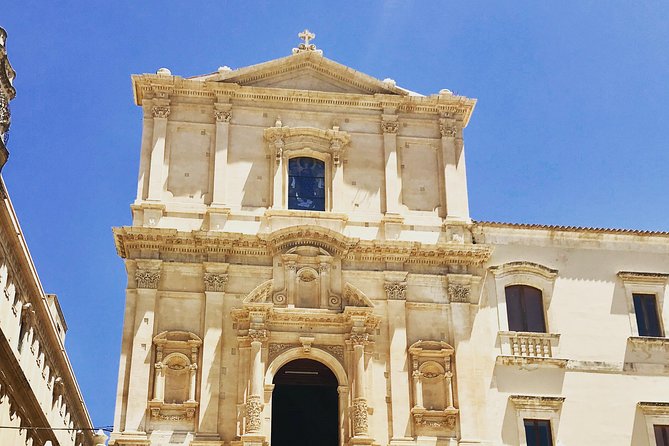
Chiesa Santa Chiara and its unusual oval plan
The first stop is Chiesa Santa Chiara, visited for about 15 minutes. Its particular oval layout is the key feature. Many church interiors are easiest to understand from a straight central aisle, but an oval plan changes the sense of movement and makes the interior feel more carefully composed around the visitor.
Enrica also discusses the church’s paintings. This is where a guide can save you from a quick glance and a mistaken assumption that every church follows the same Baroque formula. Look at how the paintings and architecture work together, and pay attention to the relationship between the building’s shape and the placement of its decorative elements.
Admission is listed as free for this stop. The 15-minute visit is enough for an explanation and a close look, but not for a lengthy examination of every artwork.
Cattedrale di San Nicolo and the 1996 collapse
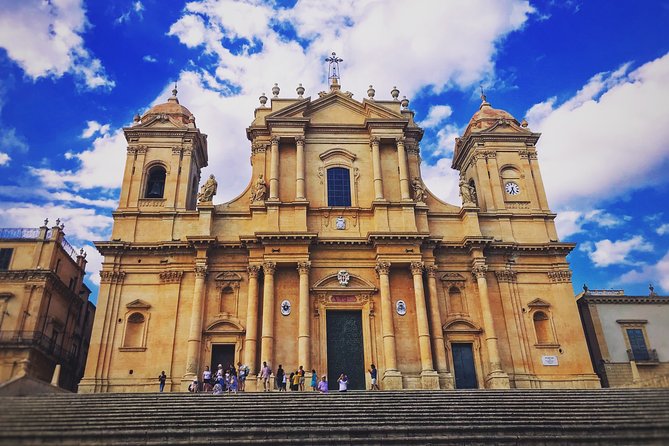
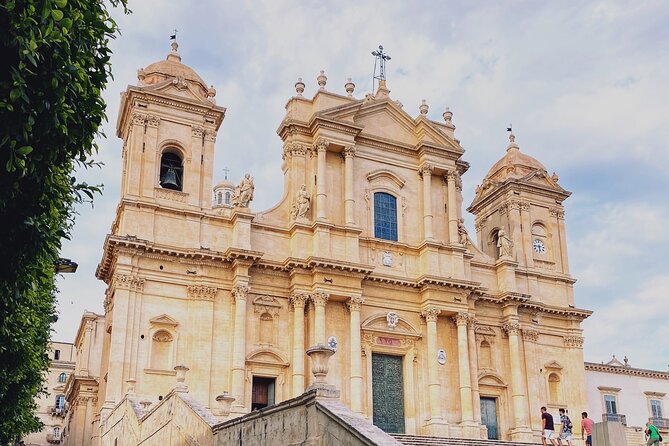
Noto’s cathedral is the route’s most important stop, both for its scale and for the dramatic story of its recent past. The present building was partly reconstructed after the 18th-century dome collapsed in 1996. That event is a reminder that Noto’s Baroque appearance is not simply frozen in time. Its preservation also involves repair, debate, and difficult decisions about how to restore a major monument.
The cathedral visit lasts about 15 minutes. Enrica can help you read the building as more than a grand facade by explaining the collapse and the rebuilding that followed. For many people, this is the point where Noto’s architecture becomes a story of survival as well as style.
There is a small practical issue here. The tour information says the cathedral admission ticket is included, while the itinerary also says admission is not included. Because those details conflict, confirm the ticket arrangement before your visit. Do not assume that every entrance cost is covered until the provider clarifies it.
A few more Sicily days worth weighing up
- Etna Morning Trip
★ 4.5 · 1,241 reviews - Syracuse: Boat Trip of Ortigia Island and Sea Caves
★ 4.7 · 937 reviews - Tour of the island of Ortigia and exploration of sea caves with baths.
★ 5.0 · 668 reviews - Pub Crawl Palermo
★ 5.0 · 595 reviews
Via Corrado Nicolaci and the Infiorata
Via Corrado Nicolaci is one of Noto’s most recognizable streets, and the visit lasts around 10 minutes. Enrica explains the Infiorata, the annual flower festival that turns the street into a temporary display of floral designs.
The timing matters. The tour gives you the cultural context even if your visit does not coincide with the festival. You will understand why the street is more than a handsome approach to Palazzo Nicolaci, and why local celebrations can change the meaning of a familiar urban space.
I like this stop because it connects Noto’s stone architecture with an event that is renewed each year. You are not only looking backward at the city’s Baroque past. You are also hearing about a tradition that continues to shape how people use and present the street.
Palazzo Nicolaci and the family behind the facade
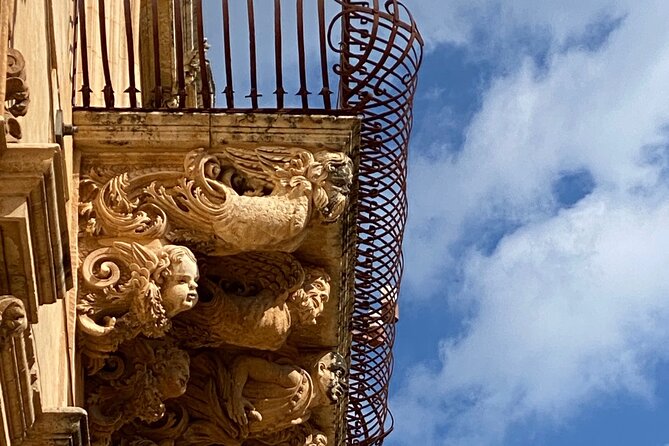
Palazzo Nicolaci receives about 15 minutes, with attention focused on its exterior and the family that lived there. This is a useful distinction: the tour promises an explanation of the facade and the Nicolaci family, not necessarily an extended interior visit.
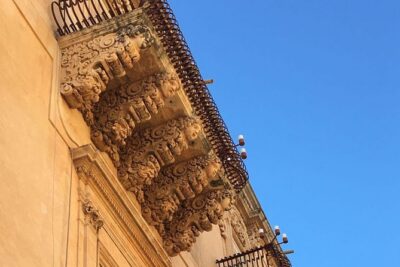
Take time to look upward. Sicilian Baroque palaces often reward a slow scan from doorway to balcony, and the facade is easier to understand when you know something about the people who commissioned it. Enrica’s explanation helps connect decoration with status, ambition, and family identity.
This stop should appeal to anyone who likes architecture with a human story attached. Instead of treating the palace as a pretty background for photographs, you get a reason to notice why its facade looks the way it does.
Trompe-l’oeil inside San Carlo Borromeo
Chiesa di San Carlo Borromeo takes about 10 minutes and includes two side chapels with painted decorations in the trompe-l’oeil technique. Trompe-l’oeil uses painted forms to create the illusion of depth or architectural detail, so the best way to enjoy these chapels is to look closely at where the painted surface tries to fool your eye.
This is a quick stop, but it adds variety to the route. Santa Chiara gives you an unusual floor plan, while San Carlo Borromeo shows how painting can alter the sense of space inside a church.
If you enjoy decorative art, this may be one of the tour’s most rewarding brief visits. If you prefer large, famous monuments, it may seem less important at first. Enrica’s explanation is especially useful here because the effect depends on understanding what the painters were trying to achieve.
San Domenico and Gagliardi’s design
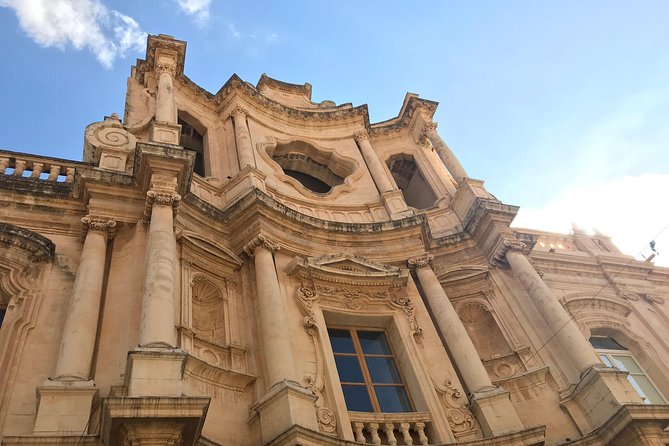
The tour then reaches Chiesa San Domenico, designed by Gagliardi and recently restored. The scheduled visit is about 10 minutes.
The reference to Gagliardi gives the church a place within Noto’s wider Baroque building program. Rather than seeing each church as an isolated stop, you can begin comparing how the city’s architects handled curves, surfaces, entrances, and decorative rhythm.
The recent restoration also matters. Restored buildings can look especially crisp, but the work may raise questions about what is original, what has been repaired, and how a monument is kept in use. This is another point where a trained guide can add useful context in a short space.
Teatro Tina Di Lorenzo and Noto after the churches
The final stop is Teatro Tina Di Lorenzo, built in 1880 and still used for Noto’s theater and concert season. The visit lasts about 15 minutes and broadens the tour beyond churches and aristocratic homes.
That change of subject is welcome. Noto is not only a Baroque city of religious buildings. It also has a civic and performing-arts life, and the theater points to a later period in the city’s development. Its continued use gives the building a practical role rather than leaving it as a monument viewed only from outside.
The tour ends at Piazza XVI Maggio. Ending in a public square is convenient for continuing your own walk, finding a place to eat, or returning to a building you want to see again. No onward transportation is provided, so plan your next move from the square.
What the 90-minute schedule means for you
The total time is about an hour and a half, with the stop times adding up to the full route. That makes this a good choice if you have limited time in Noto or want a guided introduction before exploring alone.
The short format also demands focus. You will not have long breaks between stops, and there is no promise of extended free time inside each building. I would avoid scheduling it when you are already rushing to catch a train, meet a driver, or reach another town.
The maximum group size of six is a real advantage. Enrica can speak to a small circle rather than projecting over a crowd, and you have a better chance of asking a question without losing the group. The small size also helps in churches, where a large gathering can feel intrusive.
The walk is described as suitable for most people, and service animals are allowed. It is near public transportation, but transport to and from the attractions is not part of the booking. Smart casual dress is requested, which is sensible for entering churches. Shoulders and knees are best treated conservatively, even though more detailed church rules are not provided.
Value, timing, and who should book
No price is provided here, so I cannot judge the exact cost in euros. The value depends on how much you want from a guide rather than on the entrance fees alone. You are paying for a small group, an English-language explanation, and Enrica’s background as both a licensed guide and archaeologist.
I think the strongest value comes from the connections between stops. A self-guided walk can show you Santa Chiara, the cathedral, Palazzo Nicolaci, and San Domenico. A guide can explain why their forms differ, how the Nicolaci family fits into the city, why the cathedral had to be rebuilt, and how the Infiorata keeps Via Corrado Nicolaci in public use.
Book it if you want a clear introduction, prefer a small group, or enjoy art and architecture more when someone points out the details. It also suits families, since the route moves often and the guide’s friendly, engaging approach has worked well for mixed-age groups.
You may want to skip it if you dislike guided schedules, want to spend an hour inside one church, or already know Noto’s architecture well. In that case, use the route as a self-guided checklist and spend your time more slowly.
Free cancellation is available when you cancel at least 24 hours before the start time. Changes or cancellations inside that window are not accepted for a refund. The activity requires good weather, so a weather cancellation brings the choice of another date or a full refund.
Should you book this Noto walk?
I would book this tour for a first or second visit to Noto, especially at the start of your stay. The route is short but well chosen, and it covers more than the usual palace-and-cathedral photo stop.
Its best feature is the combination of small-group access and serious local interpretation. Enrica De Melio’s archaeology background adds substance, while her warm, conversational style keeps the walk from becoming a lecture.
Confirm the cathedral admission detail before booking, wear smart casual clothes and comfortable shoes, and leave yourself extra time afterward in Piazza XVI Maggio. If you want a focused look at Noto’s churches, Baroque families, flower festival, and later civic life, this is a sensible way to begin.
FAQ
How long does the Noto Baroque Masterpieces tour last?
The tour lasts approximately 1 hour and 30 minutes.
What language is the tour offered in?
The tour is offered in English.
How many people can join the tour?
The group is limited to a maximum of six people.
Who guides the tour?
The guide is Dr. Enrica De Melio, a licensed tourist guide and PhD archaeologist.
Where does the tour begin?
The meeting point is Porta Reale, also called Porta Ferdinandea, at Corso Vittorio Emanuele 182 in Noto.
Where does the tour end?
The tour ends at Piazza XVI Maggio in Noto.
Is transportation included?
No. Transportation to and from the attractions is not included.
Is the cathedral admission ticket included?
The tour details contain conflicting information. The inclusion list says the cathedral ticket is included, while the itinerary says admission is not included. Confirm this point with the provider before the tour.
Are service animals allowed?
Yes. Service animals are allowed.
Can I cancel for a full refund?
Yes, if you cancel at least 24 hours before the experience start time. Cancellations made less than 24 hours beforehand are not refunded. If poor weather causes the provider to cancel, you can receive a full refund or choose another date.
Just added around Sicily
- Zafferana Etnea:Honey extraction workshop and honey tasting★ 4.7 · 3 reviews
- From Trapani: Favignana and Levanzo Yacht Tour with Stops★ 5.0 · 4 reviews
- Mt Etna: Winter Trekking Tour with Optional Catania Transfer★ 4.7 · 13 reviews
- Wine tour with wine tasting★ 4.7 · 18 reviews
- Sicilian Soul: Winery Tour, Wine & Food Tasting in Catania★ 5.0 · 4 reviews
- Wine tasting in Catania Historic center★ 4.4 · 15 reviews
- Valley Of The Temples By E-Bike With Picnic Included★ 4.7 · 7 reviews
- Valley of the Temples and Villa Romana Multi-Language Tour★ 4.8 · 5 reviews
Noto Baroque Tours, compared.
Syracuse, Ortigia and Noto walking tour from Catania
Read our review →
Noto, Modica and Ragusa: The Baroque Tour from Catania
Read our review →
Syracuse, Ortygia & Noto small group Tour from Catania with lunch
Read our review →Browse the lists this tour appears in