
Reviewed · PALERMO MAFIA HISTORY TOURS
Palermo: NO Mafia Walking Tour
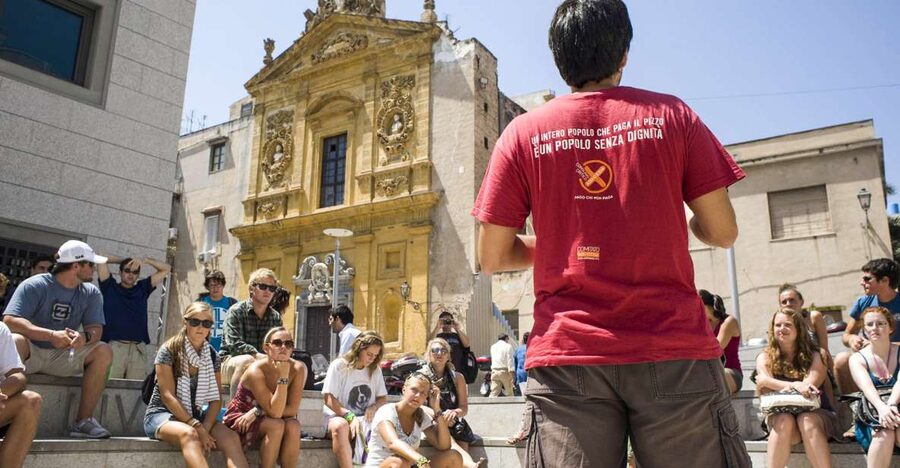
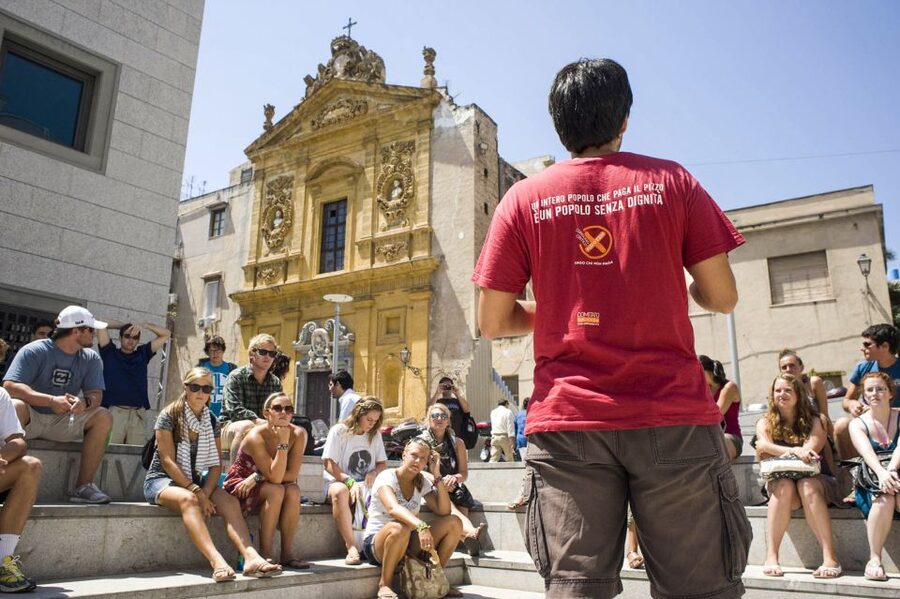
Palermo’s No Mafia Walking Tour does more than point out famous buildings. It uses the city streets to explain how Cosa Nostra affected daily life, politics, business, and public trust, then shows how ordinary Sicilians pushed back. I especially like the orange stickers on shops that refuse extortion and the stop at Piazza Della Memoria, a memorial to judges and prosecutors killed by the Mafia.
I also like the way the tour strips away the movie version of organized crime. Guides such as Valeria, Attilio, Salvatore, Giuseppe, and Marinella have been praised for clear, passionate storytelling, often with a touch of humor. The main drawback is that this is primarily a spoken history walk, not a tour of crime scenes or indoor monuments. Three hours on foot can also feel long if you are not comfortable walking or standing.
Key points to know before booking
- The focus is resistance, not Mafia glamour: Learn how the anti-Mafia movement works and how visitors can support ethical businesses.
- The route links major Palermo sights: Teatro Massimo, Il Capo market, the cathedral, city hall, Piazza Beati Paoli, and the Cassaro all enter the story.
- Orange shop stickers have a meaning: They identify businesses connected with the pago chi non paga, or I pay who does not pay, campaign.
- The guides make or break the experience: Valeria, Attilio, Salvatore, Ermes, Laura, Marinella, Giuseppe, and others have been praised for passion and clear delivery.
- The $40 price supports more than a walk: A contribution goes to Addiopizzo, the charitable anti-Mafia organization behind the experience.
- Bring proper shoes and curiosity: The tour lasts three hours, includes outdoor walking, and does not include admission to monuments.
Palermo’s Mafia story begins beyond the movie version
Popular films often present the Mafia as stylish, secretive, or strangely admirable. This walk takes the opposite view. It explains the harm caused by intimidation, extortion, corruption, and violence, while placing those subjects in the setting where they affected real families, shopkeepers, judges, police officers, and public officials.
I find that approach useful because the word Mafia can become a vague tourist label. Here, you learn about its place in Sicilian society and politics, but also about the people who challenged its power. The emphasis is not on sensational tales. It is on how criminal influence enters ordinary life, how silence can be enforced, and how civic action can weaken that influence.
The tour also gives you a better way to read Palermo after the walk. A business with an orange sticker is not simply displaying a colorful logo. It signals participation in an ethical consumer campaign connected with Addiopizzo. The idea is simple: support businesses that refuse to pay protection money rather than rewarding those who use fear to control commerce.
That connection between sightseeing and present-day choices is one of the strongest parts of the experience. You are not just hearing about past events. You are being shown how the issue still shapes the city and how your spending can support people who say no.
More Walking Tours in Palermo
- Palermo Original Street Food Walking Tour by Streaty
★ 5.0 · 2,105 reviews - Palermo: Street Food and History Walking Tour
★ 4.9 · 1,294 reviews - Palermo No Mafia walking tour: discover the Anti-mafia culture in Sicily
★ 5.0 · 1,011 reviews
Teatro Massimo provides a grand opening
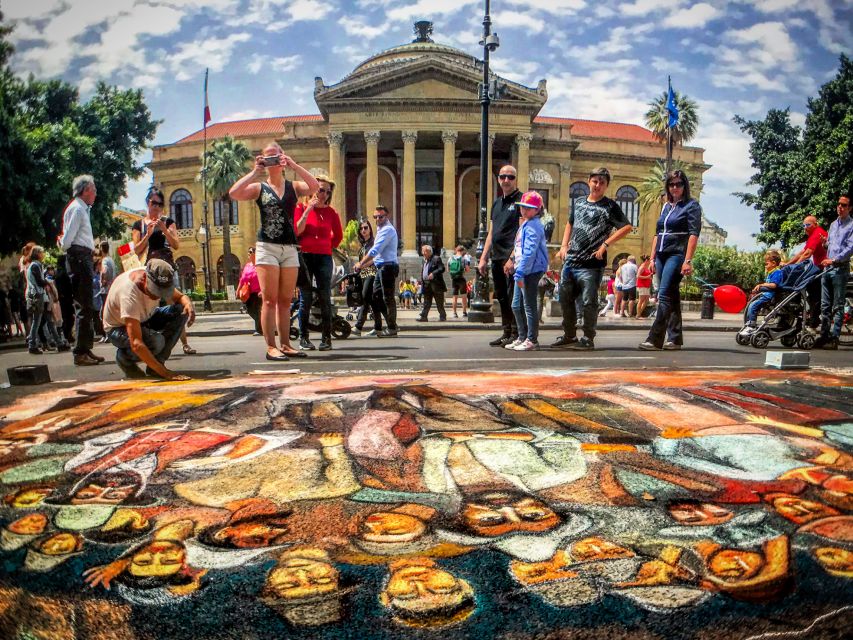
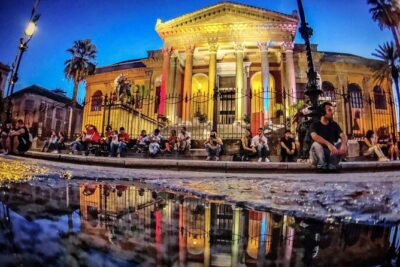
The route includes Teatro Massimo, Palermo’s famous opera house and one of the city’s most recognizable buildings. You see it from the outside as part of the walk, since entrance fees to monuments and museums are not included.
The theater gives the guide a useful starting point. It places you in a major public space before the conversation moves into harder subjects. You can admire the building, get your bearings in central Palermo, and begin connecting the city’s grand architecture with the civic history being explained around you.
Do not expect a full architectural tour or an indoor visit. The value here is the setting and the way the guide uses major landmarks to orient the story. If you want to visit Teatro Massimo inside, plan that separately.
Il Capo market shows Palermo at street level
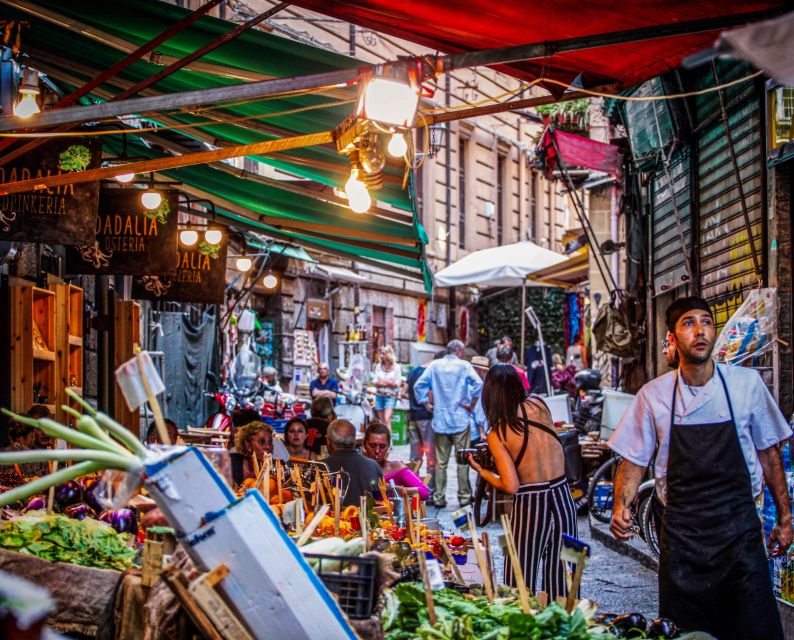
The walk continues through the area around Il Capo, an open-air market. This is a welcome change from hearing about Palermo only through official buildings and memorials. Markets show the city in use, with shops, food, local routines, and the close contact between public life and private business.
The market stop also helps explain why extortion matters. A Mafia story can sound distant when it is reduced to famous names and dramatic court cases. It becomes more understandable when you consider ordinary businesses trying to operate, earn money, and remain independent.
Because this is a working market area, the experience is not staged for the tour. Conditions can be noisy and crowded at times, and the guide may need to pause or gather the group before continuing. That is part of the point, though. You are seeing Palermo as a lived-in city, not a museum set.
Piazza Della Memoria remembers those who resisted
One of the most serious stops is Piazza Della Memoria, a memorial to prosecutors and judges killed by the Mafia. This is where the tour’s human cost becomes especially clear.
The memorial helps move the subject away from abstract words such as corruption or organized crime. Judges and prosecutors who tried to enforce the law paid with their lives. The guide connects these deaths with the broader work of people who fought against Mafia power, including public figures and civic groups.
You should expect a sober section of the walk. The subject includes murders, intimidation, and the damage done to Sicilian society. Still, the tour does not leave you with only despair. Its purpose is also to show courage and the long effort to make public life more honest.
More anti-mafia walks in Palermo:
- Palermo: Anti-Mafia Heroes Evening Walking Tour
★ 4.6 · 172 reviews - The Godfather Origins of Mafia: Corleone & Visit Monreale Duomo
★ 5.0 · 73 reviews - Palermo: Anti-mafia Bike Tour
★ 4.9 · 28 reviews - Corleone Museum of Mafia and Piana degli Albanesi Village
★ 4.0 · 5 reviews
The orange stickers along the Cassaro
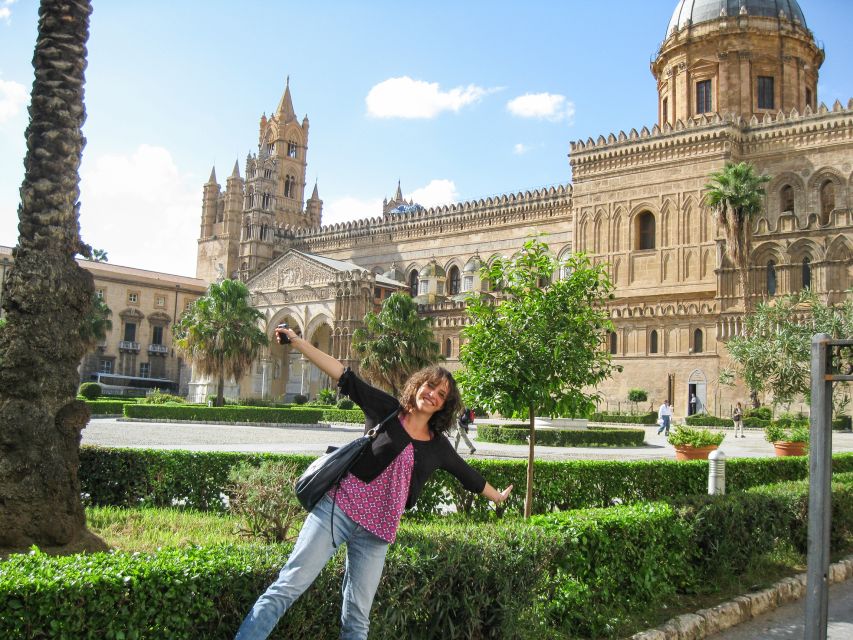
Along the Cassaro, look for businesses displaying orange stickers. These identify owners who have rejected the extortion racket and joined the ethical consumer campaign known as pago chi non paga, translated as I pay who does not pay.
This is one of the most useful details to carry with you after the tour. You can recognize the symbol when choosing shops and businesses during your stay. Your guide explains the campaign’s purpose and the wider idea behind it: collective consumer choices can make it easier for individual owners to resist pressure.
The stickers also make the anti-Mafia movement visible. Instead of treating resistance as something hidden in court files or history books, the tour shows it on shop windows along a normal city street.
The stop is brief in physical terms, but it may be one of the most practical parts of the walk. You leave with a simple way to connect your visit to local civic efforts.
Palermo Cathedral and city hall add political context
The route passes Palermo Cathedral and the city hall, two major landmarks that help broaden the conversation. The cathedral reflects Palermo’s long religious and civic identity, while city hall brings the discussion into public administration and politics.
You will not be entering the cathedral or city hall as part of the tour. Their role is mainly visual and contextual. The guide uses the surrounding streets and buildings to explain how Mafia influence reached beyond isolated criminal acts and into public life.
This is also where the experience works as a city orientation walk. You see central Palermo’s major sights while learning how to interpret them through local history. If you have just arrived, the route can help you understand the old center before returning later for independent visits.
The tour finishes in the heart of Palermo’s old town. Guides also offer suggestions about where to continue your visit and where to eat Sicilian specialties. Those recommendations are a useful bonus, especially because the walk covers several central areas you may want to explore again at your own pace.
Three hours of storytelling, questions, and walking
The advertised duration is three hours, and that length matters. The subject includes the origins and influence of the Mafia, major events, social effects, and the past, present, and future of the anti-Mafia movement. A shorter walk would likely leave the story as a collection of names and dates.
The best guides keep the talk moving between explanation, landmarks, and questions. Attilio has been praised for holding attention for the full three hours, while Valeria is known for combining strong subject knowledge with visible pride in her work. Salvatore, Ermes, Giuseppe, Laura, Marinella, and others have also been described as engaging and clear.
Guide language options include English, Italian, Spanish, and French. English delivery has been praised for being easy to follow, but Polish is not listed as an available language. A small-group option is available, which can make it easier to hear the guide and ask questions.
The route includes places to sit in the shade during at least some of the talk, according to the tour information provided by participants. Still, bring comfortable shoes and prepare for a sustained outdoor walk. Palermo can be warm, and the experience is not designed as a seated lecture.
What this tour does not include
This is not a Mafia movie locations tour. You are not taken through a string of dramatic crime scenes, and the focus is not on recreating famous events for entertainment. One of the tour’s strengths is precisely that it offers a local and civic view rather than a crime-themed spectacle.
It is also not a complete Palermo monument tour. You see important landmarks, but entrance to museums and monuments is not included. If you want to visit Teatro Massimo, Palermo Cathedral, or another interior, schedule a separate visit and budget for any admission cost.
The walk is best for people who want context. If you only want pretty architecture, street food, or a fast introduction to Palermo, a standard sightseeing walk may suit you better. If you want to understand why the city’s recent past still matters, this experience offers far more than a typical landmark circuit.
Is the $40 price fair?
At $40 per person, the tour is not the cheapest way to see Palermo’s center, but the price includes three hours with a live guide and a contribution to Addiopizzo. You are paying for interpretation, not just movement between landmarks.
That distinction matters. The buildings and streets are free to see on your own. What you cannot easily reproduce is the connection between those places, Sicily’s political history, the Mafia’s social effects, and the anti-Mafia campaign. A guide who can explain that clearly gives the walk its real value.
The contribution to Addiopizzo also changes the character of the purchase. Your money supports an organization tied to the anti-Mafia cause rather than treating the subject as a commercial theme. I would consider the price fair for visitors who care about local context and want their activity to support a civic effort.
If your budget is tight, you can explore the historic center without booking a tour. But you will miss the organized story, the explanation of the orange stickers, and the chance to ask a local guide direct questions.
Who should book this Palermo walk?
I would recommend it to first-time visitors who want to understand Palermo beyond churches, markets, and grand facades. It is especially useful early in your stay, because the route introduces several central sights and gives you a better sense of what you are seeing afterward.
It also suits adults and older children who can stay focused through a serious three-hour discussion. One family found that the tour held a teenager’s attention, but the subject includes murder, violence, intimidation, and corruption. Parents should decide if that material fits their children.
This is a strong choice for you if:
- You want a serious explanation of the Sicilian Mafia beyond films and myths.
- You care about local civic action and ethical tourism.
- You enjoy walking tours built around storytelling and discussion.
- You want to see central Palermo while learning about recent history.
- You are willing to spend three hours outdoors with comfortable shoes.
You may want another activity if you prefer indoor exhibits, a short route, or a tour focused only on art and architecture. The physical sights are important, but the spoken narrative is the main event.
Practical details that affect your day
The meeting point can vary according to the option you book, so check the exact location before setting out. Wear comfortable shoes, and leave enough time to reach the starting point without rushing.
Free cancellation is available up to 24 hours before the start time, and a reserve-now, pay-later option is offered. Those terms can help if your Palermo schedule is still changing.
The tour is offered in English, Italian, Spanish, and French. Small-group availability is useful if you want a quieter experience, though group size depends on the option selected. There is no admission to museums or monuments, so treat the walk as an outdoor experience rather than a bundled sightseeing pass.
Should you book the No Mafia Walking Tour?
Book it if you want Palermo to make more sense. The walk connects Teatro Massimo, Il Capo, the cathedral, city hall, the Cassaro, and Mafia memorials with a clear account of power, fear, resistance, and civic responsibility.
I would not choose it for a lighthearted introduction to the city. The subject is painful and sometimes grim. But the tour is also hopeful because it gives attention to the people and organizations working against Mafia control.
With a 4.8 rating from 2,431 reviews, a three-hour format, multilingual guides, and an Addiopizzo contribution included, this is a strong value for the right audience. Book it near the start of your Palermo visit, wear good shoes, and listen for the practical details you can use afterward, especially the orange stickers that show where your spending can support businesses that refuse extortion.
FAQ
How long does the Palermo No Mafia Walking Tour last?
The tour lasts three hours and takes place on foot through Palermo’s historic center.
How much does the tour cost?
The listed price is $40 per person.
Which languages are available?
The tour is offered in English, Italian, Spanish, and French.
Which Palermo sights are included?
The route includes Teatro Massimo, Il Capo open-air market, Piazza Della Memoria, the Cassaro, Piazza Beati Paoli, Palermo Cathedral, and city hall.
Does the tour include entry to monuments or museums?
No. Entrance to museums and monuments is not included.
What should I bring?
Bring comfortable shoes for the three-hour walking route.
Does the price support an anti-Mafia organization?
Yes. The experience includes a contribution to the Addiopizzo charitable organization.
Just added around Palermo
- Valley of the Temples and Villa Romana Multi-Language Tour★ 4.8 · 5 reviews
- Valley of the Temples★ 5.0 · 43 reviews
- Sicilian Winery Tour with Wine Tasting from Palermo★ 5.0 · 12 reviews
- Palermo: Medieval castles of Caccamo & Cefalù. Small Group Tour★ 5.0 · 24 reviews
- Traditional Sicilian Recipes in Palermo★ 5.0 · 4 reviews
- Private Transfer from/to Castellammare del Golfo★ 5.0 · 24 reviews
- UNESCO Day Trip – Monreale & Cefalù★ 5.0 · 6 reviews
- Palermo on a plate: Traditional Food & Wine tour (by Streaty)★ 5.0 · 119 reviews
Palermo Mafia History Tours, compared.
Palermo No Mafia walking tour: discover the Anti-mafia culture in Sicily
Read our review →
Godfather vs Mafia Tour & Pasta Lunch (Small Group or Private)
Read our review →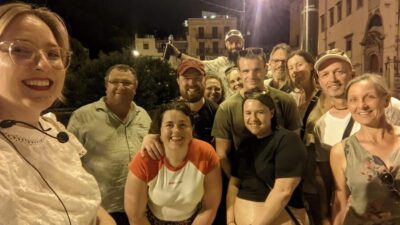
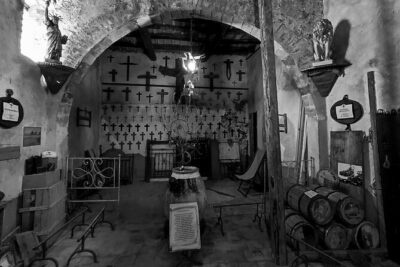
The Godfather Origins of Mafia: Corleone & Visit Monreale Duomo
Read our review →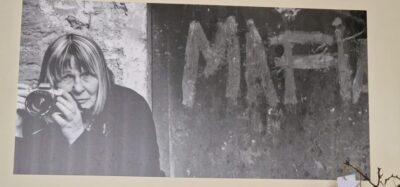
Corleone: Guided Tour of the C.I.D.M.A – Anti-Mafia Movement
Read our review →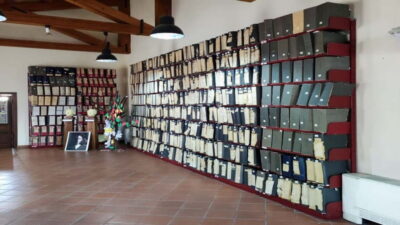
Browse the lists this tour appears in