
Reviewed · HISTORICAL TOURS
Pantalica nature history and archeology
Pantalica packs thousands of years into a short walk. You move from a 5,000-tomb Bronze Age necropolis to Byzantine rock churches, a Greek trench, and the remains of a narrow-gauge railway, all cut into a limestone and marl gorge shaped by the Anapo and Calcinara rivers. Gregorio Chiarenza leads the visit with archaeology, local plants, and plenty of context.
I like two things right away: the small group, capped at 12 people, and the way the tour joins ancient sites with living nature. I also like that the route can include a swim in the Calcinara River or a visit to an active karst cave when conditions allow.
The main consideration is the three-hour limit. Pantalica is large, and the advertised walk can reach five kilometers, so you will see a strong selection of the site rather than every corner. Warm weather, uneven paths, and the occasional climb may also affect your pace.
Key points at a glance
- 5,000 artificial cave tombs: Pantalica contains Europe’s largest final Bronze Age necropolis.
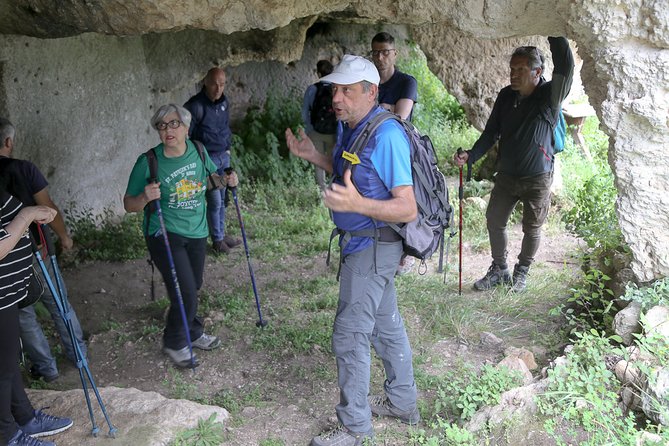
- Gregorio Chiarenza as your guide: Expect explanations covering archaeology, plants, traditional remedies, food uses, and toxic species.
- Four thousand years in one outing: The route reaches from the 12th century BC to the railway era of the last century.
- Byzantine rock villages: San Micidiario and San Nicolicchio include churches cut into the rock and linked to the area’s later settlement.
- A possible river swim: If weather and conditions permit, you may bathe in the cool waters of the Calcinara.
- Small-group format: Up to 12 people makes it easier to hear the guide and ask questions on a narrow trail.
Pantalica puts archaeology inside the countryside
Many archaeological sites ask you to look at stones in a museum-like setting. Pantalica is different. Its tombs, villages, churches, and fortifications sit inside a dramatic limestone-marl massif, with the Anapo River and its Calcinara tributary cutting through the area.
That setting changes how you read the past. The tombs are not isolated displays. They are part of cliffs, ravines, paths, trees, and water. You can see why people used this difficult ground for burial, settlement, protection, and transport over many centuries.
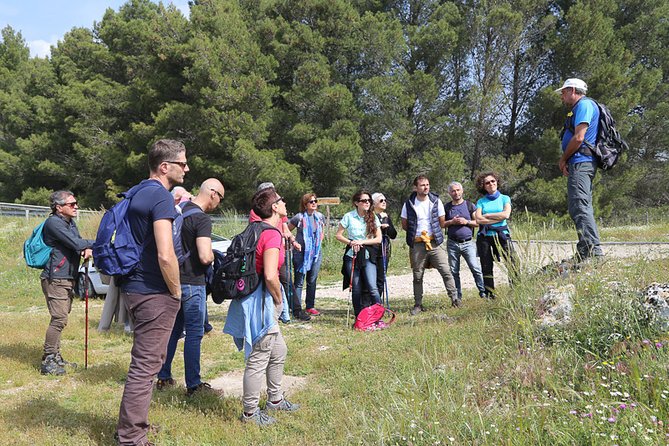
The visit begins at 9:30 am in Piazza San Sebastiano in Ferla. From there, Gregorio leads the walk and builds the story in time order, beginning around the 12th century BC and moving forward to the present. That approach helps you connect the major remains instead of treating each one as a separate stop.
The walk is listed at a maximum of five kilometers. That is manageable for many people, but it is still a real outdoor route, not a paved stroll between monuments. Ask for trekking poles if you want extra help with balance or descents. They are available on request.
More Historical Tours in Sicily:
- Palermo: Street Food and History Walking Tour
★ 4.9 · 1,294 reviews - Palermo: UNESCO World Heritage Sites Guided Walking Tour
★ 4.8 · 548 reviews - Palermo: Walking Tour of Historic Markets and Monuments
★ 4.9 · 478 reviews
The Bronze Age necropolis and its thousands of tombs
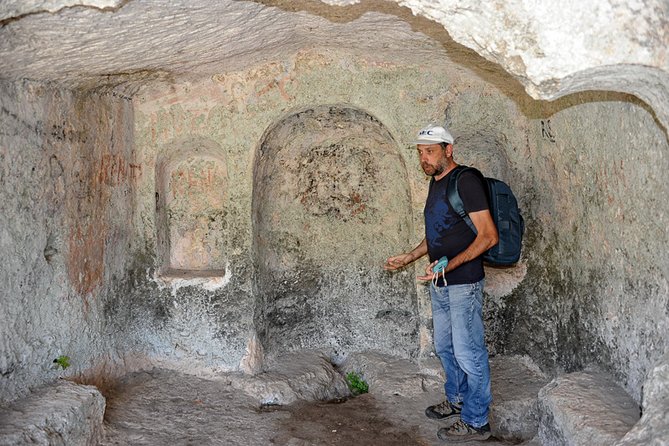
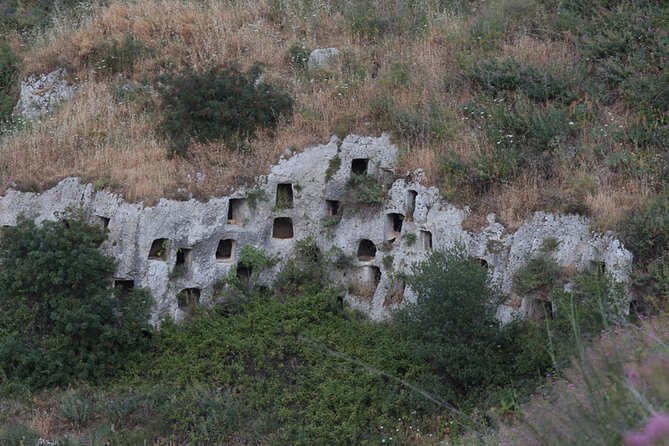
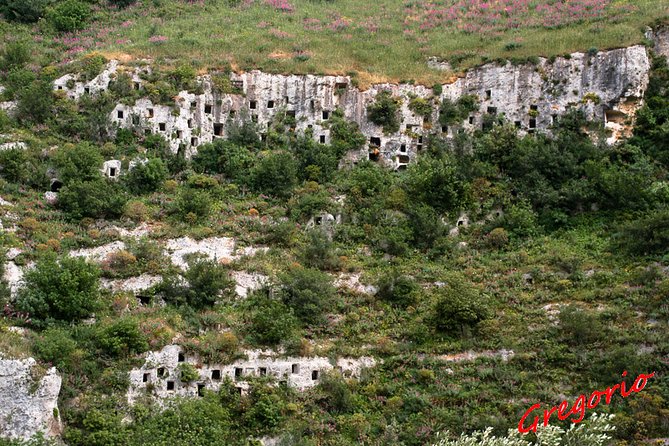
The main draw is the necropolis. Around 5,000 artificial cave tombs are cut into the rock, making Pantalica the largest final Bronze Age necropolis in Europe. The scale is hard to grasp from a single viewpoint. You understand it better as the path reveals more openings across the cliffs.
The tombs are the remains of a society that used the rocky plateau and gorges for many generations. Their simple appearance can fool you. A dark opening in pale stone may look modest, but repeated across the slopes, the tombs become the defining feature of the site.
Gregorio’s role matters here. Without context, you may see only rows of holes in a cliff. With an explanation of dates, use, and position, the necropolis becomes a record of how an ancient community organized its dead and its territory.
Do not expect a polished museum visit. This is an outdoor archaeological area, and the experience depends on where the route goes and what the guide points out. That is part of the appeal, but it also means you should wear shoes suited to walking on natural paths.
Anaktoron, the prince’s palace, and the oldest layers
The Anaktoron is described as the prince’s palace and the seat of local power in the 12th century BC. It gives the ancient settlement a political center, not just a burial ground.
This is an important stop because it adds a human scale to the necropolis. The tombs tell you how people treated the dead. The Anaktoron suggests where authority and administration were concentrated among the living.
The remains are not presented as a full palace you can walk through with intact rooms and decoration. You are visiting archaeological remnants in a rugged setting. That means your imagination has to do some work, but the guide’s explanation helps make sense of what you are seeing.
You will also encounter the remains of a Greek trench. It is a smaller feature than the tombs or palace, but it shows that later groups continued to use and adapt the area. Pantalica rewards attention to these less famous details. They show the site as a place used again and again, not a single-period monument.
San Micidiario and San Nicolicchio
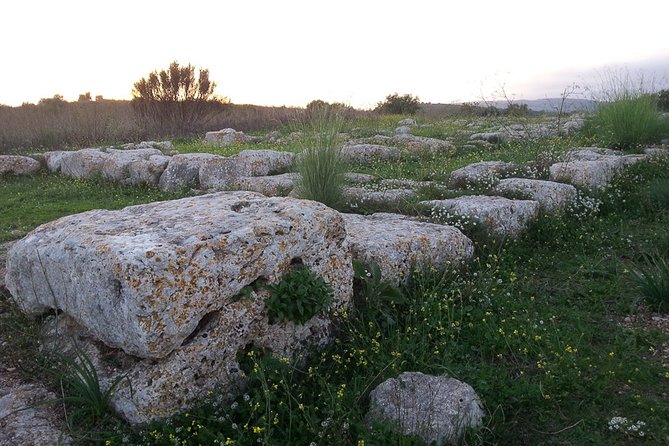
The Byzantine villages of San Micidiario and San Nicolicchio add another chapter. Their rock churches are dated to the 4th century, and they show how people later shaped the same cliffs for Christian worship and settlement.
These stops are especially useful if you want more than Bronze Age archaeology. The rock-cut churches connect Pantalica to the long period when communities lived in caves and carved spaces directly into the stone.
You may find the remains less immediately legible than a freestanding church. There are no grand facades to guide your eye. The interest is in the way rooms, openings, and religious spaces fit into the rock. Gregorio’s comments can help you distinguish a church from a dwelling or another carved space.
The Byzantine villages also give the walk a welcome change of pace. After looking across large areas of tombs, you begin to notice smaller signs of daily life and worship. That variety keeps the outing from becoming a single-note archaeology lecture.
A few more Sicily days worth weighing up
- Etna Morning Trip
★ 4.5 · 1,241 reviews - Syracuse: Boat Trip of Ortigia Island and Sea Caves
★ 4.7 · 937 reviews - Tour of the island of Ortigia and exploration of sea caves with baths.
★ 5.0 · 668 reviews - Pub Crawl Palermo
★ 5.0 · 595 reviews
Plants, remedies, and the working knowledge of the Iblean plateau
The natural side of the tour is not filler between ruins. Gregorio discusses the Iblean flora, spontaneous orchids, and plants of the Mediterranean scrub. He also explains therapeutic, officinal, food-related, and toxic uses.
That last part gives the plant walk a practical edge. You are not simply being shown attractive vegetation. You are learning how particular species have been understood and used, and why some should be treated with care.
The oriental plane tree is one of the notable plants associated with the reserve. The area also supports varied fauna, including the very rare Macrostigma Trout. You may not see every species during a three-hour outing, so treat these as part of the reserve’s natural setting rather than guaranteed sightings.
The combination of botany and archaeology suits anyone who likes to understand how people lived with their surroundings. You may come for the tombs and end up remembering a plant, a riverbank, or a detail about traditional use. That mix gives the route more depth without making it feel like a formal classroom.
The Anapo and Calcinara rivers add a cooler side
Pantalica’s gorges are shaped by the Anapo River and the Calcinara tributary. Water changes the feel of the site, especially during warmer months, when the river can offer a welcome contrast to exposed rock and sun.
If the weather permits, the outing may include bathing in the cool waters of the Calcinara. The wording matters: swimming is possible, not guaranteed. Weather and local conditions control this part of the visit, so bring suitable swimwear only if you are comfortable with a possible change of plan.
The river stop can be one of the most memorable parts of the day, but it should not be the reason you book the tour. The core activity is the guided nature and archaeology walk. The swim is an extra benefit when conditions line up.
You may also visit one active karst cave in the area. Again, this depends on conditions and the route chosen that day. It adds a geological element to a tour already covering archaeology, plants, and rivers.
The railway detail that connects Pantalica to recent Sicily
The narrow-gauge railway known as Ciccio Pecora operated until the last century. Its remains bring the story much closer to modern times and prevent the visit from ending with the Byzantine period.
Railway traces can seem minor beside an ancient necropolis, but they are useful reminders that Pantalica was not frozen in antiquity. People continued to travel through, work in, and adapt the area long after the rock tombs were made.
This is one of the tour’s more unusual details. Many guided visits would focus only on the famous ancient remains. Including the railway creates a wider timeline, from Bronze Age power to Christian communities and modern transport.
What the three-hour format really gives you
Three hours is enough for a focused introduction, but not enough to explore every route in the reserve. The maximum walking distance is five kilometers, and the paths vary in difficulty. The tour can suit families and experienced hikers, but your comfort will depend on your fitness and the route selected.
I would choose this outing if you want a guided overview with a moderate amount of walking. You get a clear selection of major archaeological features, time for nature interpretation, and the possibility of river or cave activities.
I would choose a longer visit if your main goal is extended hiking or slow photography. Pantalica has enough paths and scenery to reward more time, and the three-hour schedule may leave you wishing you could continue. One enthusiastic response to the outing specifically wished for more hours and more kilometers, which is a fair point for an area this large.
The small group helps. With a maximum of 12 people, Gregorio can keep the pace more personal than a large coach excursion. That is useful when you are standing beside a barely visible archaeological feature or asking about a plant that grows along the trail.
Price, meeting point, and practical value
The price is $85.97 per person. That is not a budget walk, but the value depends on what you want from Pantalica.
You are paying for a guide who covers archaeology, local history, botany, geology, and the practical character of the reserve. A self-guided visit may cost less, but it would be harder to connect the tombs, Byzantine churches, Anaktoron, railway, plants, and rivers into one story.
The price makes the most sense for people who want interpretation rather than simple access. It also has more value when the group reaches several different types of sites and Gregorio can explain details you might otherwise pass without noticing.
Breakfast is not included, so eat beforehand or make your own plans around the 9:30 am start. The meeting point is Piazza San Sebastiano in Ferla, and the activity ends back there. The listing does not include transport from another Sicilian town, so you should arrange your own way to Ferla.
Confirmation is sent within 48 hours of booking, subject to availability. Service animals are allowed, and most participants can take part. Since the route is outdoors and may include uneven ground, ask about the planned route if you have specific mobility concerns.
Free cancellation is available until 24 hours before the start time for a full refund. Poor weather or failure to reach the minimum number of participants can lead to a new date, another experience, or a full refund.
Who should book Pantalica with Gregorio
I would recommend this tour to you if you enjoy archaeology but do not want to spend the day inside museums. It also suits people who want a guide to explain plants and local ecology rather than simply point out ruins.
Families may appreciate the flexible difficulty and the simple route, though parents should judge the terrain and heat for their own children. Experienced hikers may enjoy the scenery and the chance to add a cave or river stop, but you should know that the advertised route is limited to about five kilometers.
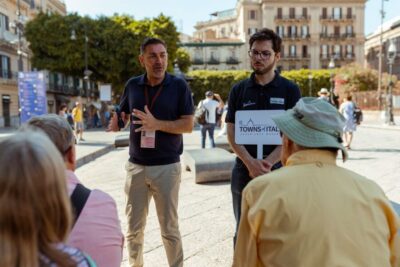
The tour is also a good fit if you want a small group and direct access to a local guide. Gregorio is described as prepared, reliable, witty, and strong on the surrounding environment. His explanations are a major part of what you are buying.
You may want to skip it if you dislike outdoor walking, want a fully scheduled monument-by-monument tour, or need a guaranteed swim. The route can change with weather, and Pantalica’s appeal depends on being outside in a rugged setting.
Should you book this Pantalica tour?
Book it if you want Pantalica explained as a living place shaped by people, water, plants, and time. The 5,000 tombs are the headline, but the Anaktoron, Byzantine villages, rock churches, rare trout, traditional plant uses, river, cave, and railway remains give the visit its real range.
At $85.97, the tour is best value for someone who wants a well-rounded introduction and does not want to decode the site alone. If you have only a few hours in the area, Gregorio’s small-group walk should help you use them well. If you have a full day and mainly want long-distance hiking, book extra time beyond this three-hour experience.
FAQ
Where does the Pantalica tour begin and end?
It begins at Piazza San Sebastiano, Piazza S. Sebastiano, 96010 Ferla SR, Italy, at 9:30 am. The activity ends back at the same meeting point.
How long is the Pantalica experience?
The tour lasts approximately three hours. The walking route has a maximum length of five kilometers.
How many people can join the group?
The activity has a maximum of 12 participants.
Is swimming included?
Swimming in the cool waters of the Calcinara may be possible if the weather permits. It is not guaranteed for every departure.
Are trekking poles available?
Trekking poles are available on request.
What is the cancellation policy?
You can cancel at least 24 hours before the start time for a full refund. Cancellations or changes made less than 24 hours before the start are not refunded or accepted. If poor weather or an insufficient number of participants cancels the activity, you will be offered another date or experience, or a full refund.
Just added around Sicily
- Zafferana Etnea:Honey extraction workshop and honey tasting★ 4.7 · 3 reviews
- From Trapani: Favignana and Levanzo Yacht Tour with Stops★ 5.0 · 4 reviews
- Mt Etna: Winter Trekking Tour with Optional Catania Transfer★ 4.7 · 13 reviews
- Wine tour with wine tasting★ 4.7 · 18 reviews
- Sicilian Soul: Winery Tour, Wine & Food Tasting in Catania★ 5.0 · 4 reviews
- Wine tasting in Catania Historic center★ 4.4 · 15 reviews
- Valley Of The Temples By E-Bike With Picnic Included★ 4.7 · 7 reviews
- Valley of the Temples and Villa Romana Multi-Language Tour★ 4.8 · 5 reviews
Historical Tours, compared.

UNESCO World Heritage Sites Guided Walking Tour
Read our review →
Walking Tour and street food Tour Palermo / History and Food
Read our review →
Discover Palermo in 3 hours. Art, history, markets and street food
Read our review →
Palermo in 2 hours Main monuments and historic markets
Read our review →
Browse the lists this tour appears in