
Reviewed · PALERMO MAFIA HISTORY TOURS
Palermo No Mafia walking tour: discover the Anti-mafia culture in Sicily
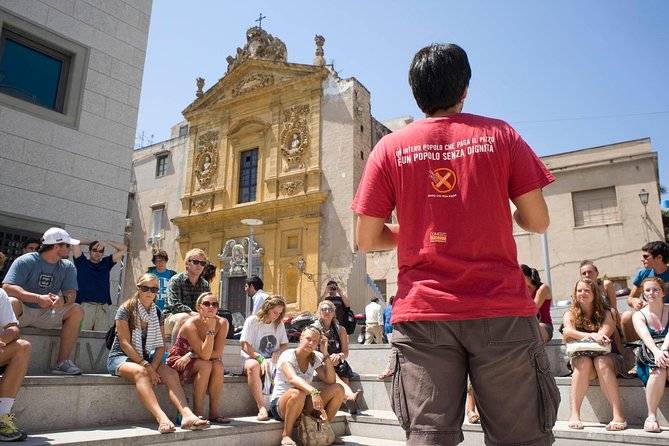
Palermo’s No Mafia walking tour is less about gangster legends and more about the people who pushed back. You’ll connect Teatro Massimo, the courthouse memorial, the cathedral, a street market, and a pizzo-free gelateria while guides such as Sylvia, Valeria, Federico, and Salvatore explain how organized crime shaped daily life. I like the clear anti-mafia purpose and the small group limit of 15, which gives the discussion room to breathe.
I also like that part of your $39.30 fee supports Addiopizzo, the local group behind the tour. The main thing to consider is that this is not a standard art-and-architecture walk. You’ll spend time standing and listening, and one section can feel repetitive if you wanted a broad survey of Palermo’s monuments.
Key points to know before booking
- The message comes first: This tour examines resistance to Cosa Nostra, not Mafia glamour or movie trivia.
- The route links major sights: You’ll see Teatro Massimo, Palermo Cathedral, Palazzo di Giustizia, Palazzo Pretorio, and Fontana Pretoria.
- The Wall of Legality is a moving stop: Its 70-meter mural honors people killed by the Mafia.
- Addiopizzo gives the tour a practical side: Your contribution supports a local anti-extortion organization, and you can buy from participating businesses.
- Expect a serious, talk-focused walk: Comfortable shoes, water, and patience for standing are useful.
- It works well early in your stay: The route ends in the old town, with tips for food and further sightseeing.
Why this Palermo walk is different from a Mafia movie tour
The most useful thing about this experience is its point of view. Palermo is often marketed through images of gangsters, secret codes, and movie scenes. This walk works to correct that picture. The focus is on extortion, political corruption, violence, public memory, and the civic groups that resisted those forces.
That distinction matters. You will hear about Mafia-related events, but the aim is not to make criminal organizations seem stylish or mysterious. The guides explain how the Mafia affected shopkeepers, judges, prosecutors, churches, politicians, families, and children. They also describe the anti-mafia movement as an ongoing effort, not a finished chapter.
The tour is run by Addiopizzo Travel, linked to the grassroots Addiopizzo movement. A small solidarity contribution is included in the price. That makes this more than a themed walk. You are helping support an organization that promotes businesses refusing to pay pizzo, the extortion money demanded by organized crime.
The English-language guides are central to the experience. Names that have appeared among the guiding team include Sylvia, Valeria, Federico, Salvatore, Francesco, Mariela, Ermes, and Mariannella. The guide you receive can vary, but the strongest part of the experience is plainly the human delivery. Guides are expected to explain the subject with care and answer questions, rather than simply recite dates.
More Walking Tours in Palermo
- Palermo: NO Mafia Walking Tour
★ 4.8 · 2,431 reviews - Palermo Original Street Food Walking Tour by Streaty
★ 5.0 · 2,105 reviews - Palermo: Street Food and History Walking Tour
★ 4.9 · 1,294 reviews
Teatro Massimo: beginning with a familiar image
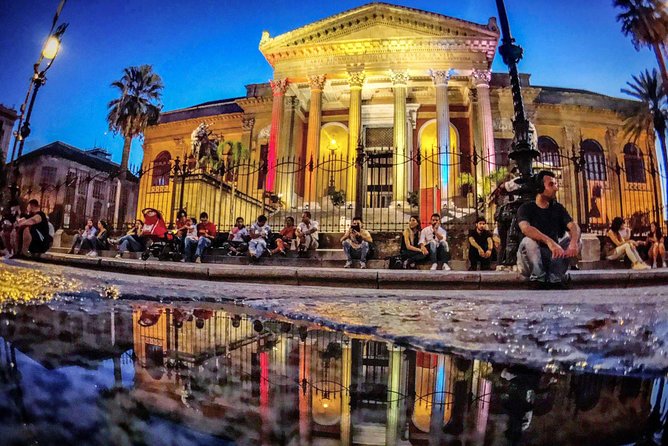
The walk begins at Piazza Giuseppe Verdi, beside Teatro Massimo. The opera house is famous to film fans as the setting for the final scene of The Godfather Part III. That connection may bring you here, but it is not the heart of the stop.
Your guide presents Teatro Massimo as a symbol of Palermo’s attempt to recover after decades marked by Mafia violence. The building gives the opening conversation a useful contrast: a grand public monument associated with culture, civic pride, and renewal, rather than with crime alone.
Plan on about 30 minutes here. That is a fairly long opening stop, so expect a proper explanation rather than a quick photograph and move-on. If you have already spent the morning visiting churches and palaces, the standing may feel slow. If you want to understand the tour’s theme before entering the older streets, this is a sensible place to begin.
The meeting point is easy to pair with a visit to central Palermo. The walk later ends near Fontana Pretoria, so you do not return to the opera house. That one-way route is useful for planning a full day in the historic center.
The Wall of Legality and the faces behind the statistics
One of the tour’s most striking stops is the Wall of Legality, a 70-meter mural described as the longest wall painting in Italy. It portrays well-known victims of the Mafia and forms part of an urban renewal project.
This is where the subject becomes personal. Instead of hearing only about institutions and criminal structures, you see faces connected to the cost of resistance. The mural gives your guide a natural opening to explain who these people were and why their deaths mattered to Palermo.
You have roughly 10 minutes here, enough for photographs and a focused explanation. Do not expect a full museum visit or a long period to study every image. The value is in seeing public memory placed directly into the city rather than kept inside a gallery.
Bring a camera, but keep the tone in mind. This is not simply a colorful street-art stop. The mural honors victims, and the guide may frame it as part of Palermo’s effort to teach younger generations what happened and why silence helped organized crime.
The market and the price of refusing pizzo
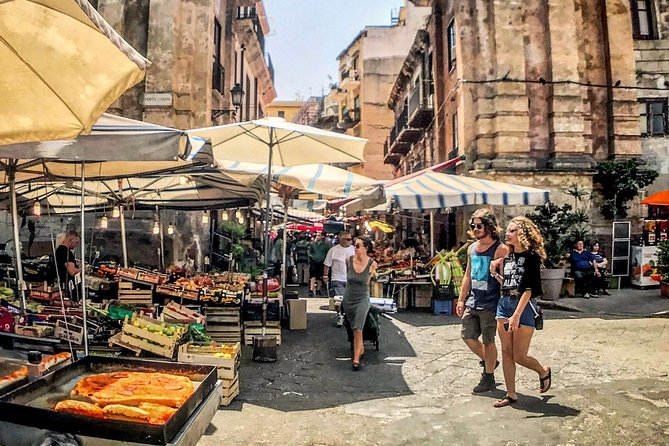
The route passes through a colorful old open-air market. This is one of the best places to connect the subject to ordinary life. Markets are about small businesses, family income, regular customers, and local relationships. That makes the discussion of extortion more immediate than a lecture in a formal room.
Your guide explains the relationship between the Mafia and shopkeepers, including the pressure to pay pizzo. The issue is not just a secret criminal payment. It can shape who feels safe opening a store, who controls local trade, and how people respond when authorities ask them to testify or resist.
The market is also one of the noisiest parts of the route. You may hear vendors, shoppers, traffic, and other street activity while the guide speaks. Stay close and listen carefully. The setting is authentic, but it is not always ideal for hearing every sentence.
This stop helps explain why the anti-mafia movement focuses on consumption and business choices. Buying from a store that refuses extortion is presented as a civic act, not just a shopping decision. That is a useful idea to carry through the rest of your stay in Palermo.
More anti-mafia walks in Palermo:
- Palermo: Anti-Mafia Heroes Evening Walking Tour
★ 4.6 · 172 reviews - The Godfather Origins of Mafia: Corleone & Visit Monreale Duomo
★ 5.0 · 73 reviews - Palermo: Anti-mafia Bike Tour
★ 4.9 · 28 reviews - Corleone Museum of Mafia and Piana degli Albanesi Village
★ 4.0 · 5 reviews
Palazzo di Giustizia and Piazza della Memoria
At Palazzo di Giustizia, the group pauses in Piazza della Memoria. The square is a memorial to judges and prosecutors killed by the Mafia.
This stop shifts the conversation from street-level pressure to the legal system. Judges and prosecutors who challenged organized crime faced extraordinary danger, and the memorial gives the guide a place to discuss their work and sacrifice.
The planned visit lasts about 15 minutes. As with the Wall of Legality, the stop is outdoors and centered on explanation. There is no admission ticket, and you do not need to arrange a separate courthouse visit.
I find this part valuable because it shows that the fight against the Mafia was not carried out by one heroic figure alone. Courts, investigators, civic groups, shopkeepers, journalists, politicians, and ordinary residents all played roles. The guide’s job is to help you see those links without reducing Palermo’s story to a few famous names.
Palermo Cathedral and the church’s difficult role
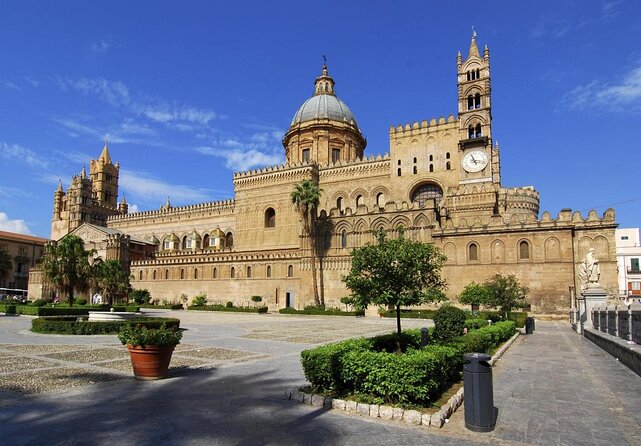
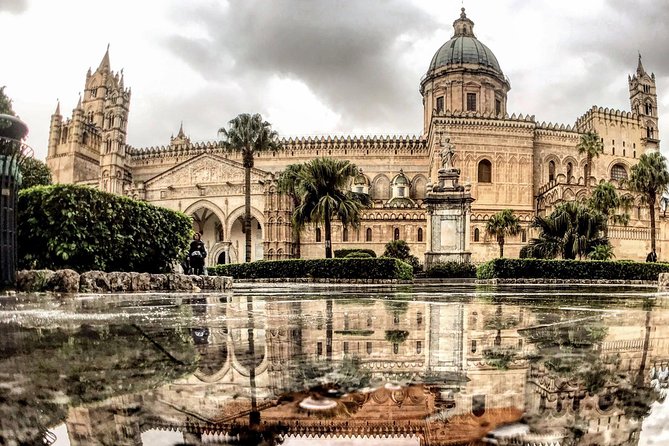
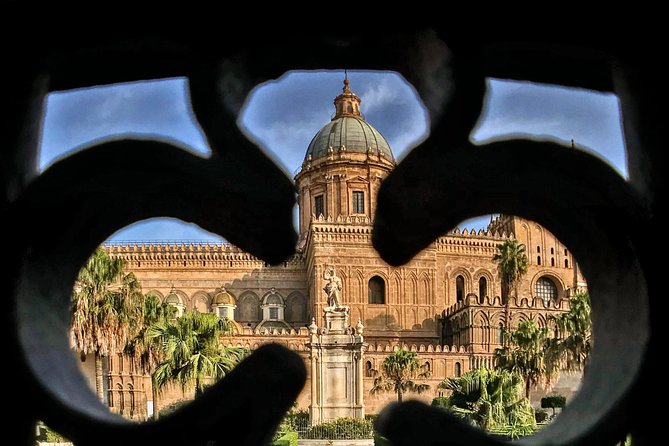
In front of Palermo Cathedral, the guide discusses the relationship between the Catholic Church and the Mafia. The location is well chosen. The cathedral is one of Palermo’s major Arab-Norman monuments, so you receive a powerful piece of the city’s architectural identity while considering the influence of religious institutions.
The subject is not simple. Churches and religious leaders have held different positions, and the discussion looks at how the church related to Mafia power and to later efforts to oppose it. This is an important correction to any easy story in which every institution either supported or defeated organized crime.
The stop lasts about 15 minutes. You may want to return later for a fuller look at the cathedral itself, since the tour does not function as an architecture visit. It gives you context outside the building, then moves on.
That division can be a plus. You do not spend the walk trying to absorb Norman, Arab, Byzantine, and later Sicilian details at the same time. You get a clear social and political explanation, then can explore the cathedral at your own pace.
Cappadonia Gelati and the meaning of a sticker
Along the Cassaro, the route reaches Cappadonia Gelati. Look for the orange sticker on the window. It identifies a business that has refused to pay pizzo and joined the Addiopizzo critical-consumption campaign.
This is the most practical stop on the tour. You can support the idea with a purchase, and gelato gives the lesson an immediate, enjoyable form. The guide explains that choosing participating businesses helps create an economy less willing to accept extortion as normal.
The stop is listed at about 15 minutes, with no separate admission charge. Your own gelato purchase is not included, so bring a little spending money if you want to take part. The tour does not include lunch, but this is a pleasant point to sample one of Sicily’s best-known treats.
I like this stop because it avoids leaving the anti-mafia movement in the past. The orange sticker represents a current choice made by a real business. It also gives you a way to participate without pretending that a single purchase solves a large social problem.
Palazzo Pretorio and the final walk to Fontana Pretoria
The final major stop is Palazzo Pretorio, Palermo’s city hall, before the walk ends at Fontana Pretoria. The guide discusses the building’s connection with both corrupt politicians and officials who fought Mafia influence.
That contrast brings the route back to public power. The tour has moved from theaters and markets to courts, churches, businesses, and now city government. The stops are not random sights. Together, they show how organized crime can affect many parts of civic life.
Fontana Pretoria places you in the center of Palermo’s old town. The tour ends here rather than taking you back to Teatro Massimo. Your guide offers suggestions for continuing your visit and for trying Sicilian specialties, which makes the afternoon easy to extend.
This ending also gives you a useful chance to reset. The subject is often painful, so having the walk finish among central streets and food options keeps the experience from ending on a purely grim note.
What three hours feels like on foot
The tour lasts about three hours and has a maximum group size of 15. That is small enough for questions and personal attention, though it is not a private tour. The guide may need to project their voice in the market or pause until the group gathers.
The pace is not a fast sightseeing march. You will stop for explanations at each location, with some standing around while the guide speaks. One critic found the repeated standing less effective than walking with headphones, and that is a fair point for anyone who prefers constant movement.
Wear comfortable shoes. The organizers advise an umbrella and a dry jacket in rainy weather. Since the activity is outdoors, weather can change how enjoyable the route feels. Most people can participate, and the experience is near public transportation.
The tour is offered in English and uses a mobile ticket. Confirmation comes at booking. You do not get hotel pickup or drop-off, so plan your own way to Piazza Giuseppe Verdi and from Fontana Pretoria.
Is the $39.30 price good value?
At $39.30 per person, this is not the cheapest way to walk around Palermo. You could see the cathedral exterior, the fountain, markets, and public squares without paying a guide.
The value comes from the interpretation and the cause. You are paying for about three hours of guided discussion, a small-group format, and a contribution to Addiopizzo. The route also saves you the work of finding memorials and connecting them into a coherent story.
I would not choose this tour mainly for sightseeing. Several stops are public spaces you can visit independently, and the tour does not include museum admissions, food, or lunch. I would choose it if you want to understand how Palermo’s anti-mafia movement works and why local business choices matter.
The strong 4.8 rating from 1,011 reviews and 95 percent recommendation rate fit the experience’s main strength: guides who care about the subject and communicate it with energy. The weaker point is also clear: if you want a wider history of Palermo, you may find the focus narrow or the message repetitive.
Who should book this experience?
This tour suits you if you are interested in modern Sicilian society, civic resistance, Italian politics, or the gap between film stereotypes and daily life. It is also a good first activity in Palermo because it introduces several central areas and gives you ideas for what to see afterward.
Families can take part. One account describes a pleasant experience with a four-year-old, though the serious subject and three-hour duration may not suit every young child. Use your judgment, especially because the route includes extended explanations rather than child-focused activities.
The walk is also useful for anyone who has already seen Mafia films and wants to correct the picture. It explains that the real issue is not glamorous secrecy but coercion, corruption, violence, and the long work of opposition.
You may want a different tour if your main goal is Palermo’s art, architecture, food, or street markets. This walk visits those settings, but only as they relate to the anti-mafia story.
Should you book the Palermo No Mafia walking tour?
Book it if you want a serious, local perspective on Palermo and are willing to listen closely. The best parts are the Wall of Legality, the courthouse memorial, the discussion of pizzo at the market, and the chance to support a participating business at Cappadonia Gelati.
Skip it if you expect a traditional sightseeing tour or a sensational Mafia-themed adventure. The pace includes standing, the subject can be heavy, and the focus stays firmly on resistance rather than entertainment.
For most visitors who want to understand the city beyond its postcard sights, I think it earns a place near the start of your Palermo schedule. Book at least 24 hours ahead if your plans may change, since free cancellation is available until that point. You can cancel for a full refund when you do so at least 24 hours before the local start time.
FAQ
Where does the Palermo No Mafia walking tour start?
It starts at Piazza Giuseppe Verdi, 455, in Palermo.
Where does the tour end?
It ends at Fontana Pretoria in Palermo’s old town center.
How long does the walking tour last?
The experience lasts approximately three hours.
What language is the tour offered in?
The tour is offered in English.
What is the maximum group size?
The group is limited to a maximum of 15 people.
Is hotel pickup included?
No. Hotel pickup and drop-off are not included.
Is lunch included?
No. Lunch is not included. The route does stop at Cappadonia Gelati, where you can choose to buy gelato.
What should I wear?
Comfortable shoes are suggested. In rainy weather, bring an umbrella and a dry jacket.
Does the tour include an Addiopizzo contribution?
Yes. A small solidarity contribution to the local Addiopizzo organization is included.
Can I cancel for a full refund?
Yes. You can cancel at least 24 hours before the experience starts for a full refund. Changes or cancellations made less than 24 hours before the start time are not accepted for a refund.
Just added around Palermo
- Valley of the Temples and Villa Romana Multi-Language Tour★ 4.8 · 5 reviews
- Valley of the Temples★ 5.0 · 43 reviews
- Sicilian Winery Tour with Wine Tasting from Palermo★ 5.0 · 12 reviews
- Palermo: Medieval castles of Caccamo & Cefalù. Small Group Tour★ 5.0 · 24 reviews
- Traditional Sicilian Recipes in Palermo★ 5.0 · 4 reviews
- Private Transfer from/to Castellammare del Golfo★ 5.0 · 24 reviews
- UNESCO Day Trip – Monreale & Cefalù★ 5.0 · 6 reviews
- Palermo on a plate: Traditional Food & Wine tour (by Streaty)★ 5.0 · 119 reviews
Palermo Mafia History Tours, compared.
Godfather vs Mafia Tour & Pasta Lunch (Small Group or Private)
Read our review →
The Godfather Origins of Mafia: Corleone & Visit Monreale Duomo
Read our review →
Corleone: Guided Tour of the C.I.D.M.A – Anti-Mafia Movement
Read our review →
Browse the lists this tour appears in