
Reviewed · ETNA SUMMIT CRATER TREKS
Etna – Trekking to the summit craters (only guide service) experienced hikers
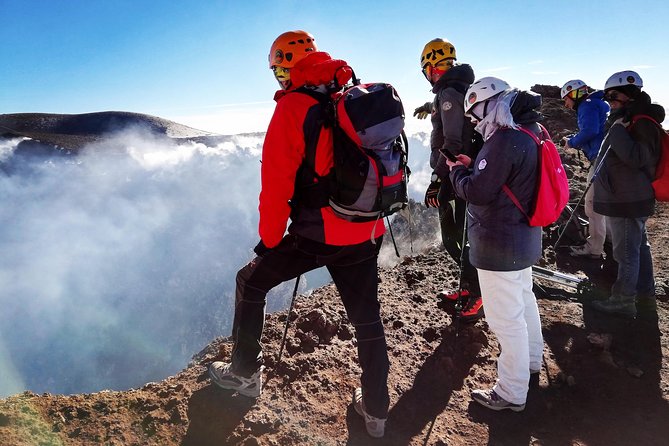
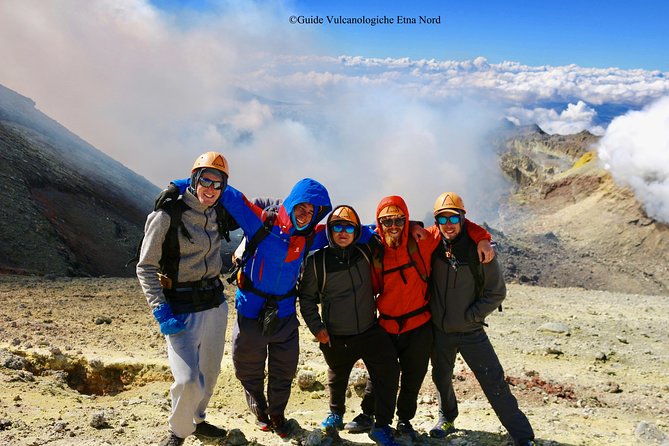
Mount Etna saves its most serious walking for the top. This summit-crater hike from Piano Provenzana takes you up the quieter north side, across black scoria and recent lava, then toward the active summit area at roughly 3,300 meters. It is not a quick photo stop. You are signing up for a real mountain day.
I like two things here. First, the north slope feels wilder and less packaged than Etna’s busy southern station. Second, the licensed guides, including Poldo, Nikos, Daniele, and Paolo, explain the volcano as you walk, while choosing a safe route around gas, heat, fractures, and changing activity. You also get useful gear such as boots, poles, a helmet, and a warm jacket.
The catch is simple: this is hard on the legs, especially on the long descent. The advertised duration is about five and a half hours, but the full outing can run closer to six or six and a half hours, and the extra off-road transport fee is not included in the headline price.
Key points to know before you book
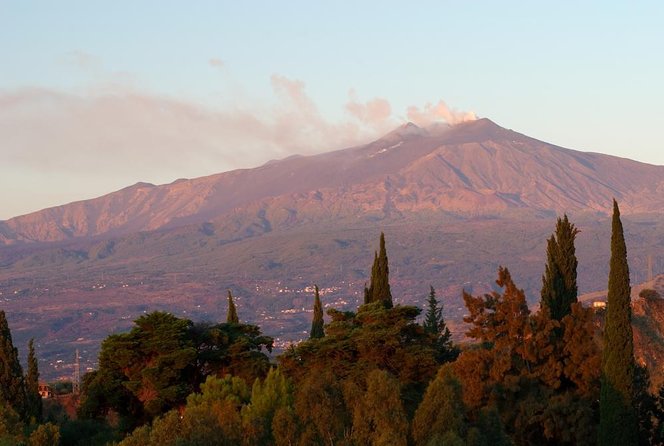
- The hike starts high, but the descent is the real test: You climb from about 2,960 meters, then walk roughly 7 kilometers downhill to Piano Provenzana.
- Piano Provenzana is Etna’s quieter northern base: Cafés, restrooms, parking, pine woods, and the scar of the 2002 eruption make it a useful and atmospheric meeting point.
- The route changes with the volcano: Your guide may stop below 3,323 meters or alter the path if explosions, gas, snow, ice, or unstable ground make the summit unsafe.
- The group is capped at 12 people: That gives the guide a better chance to set a steady pace and answer questions.
- Budget for an extra transport charge: The supplied details list €50 per person for the one-way off-road vehicle ride, with a €70 public transport option in certain circumstances.
- Bring warm layers and long trousers: Wind, cold, ash, and loose lava stones can make the high section uncomfortable even on a sunny day.
Starting at Piano Provenzana after the 2002 eruption
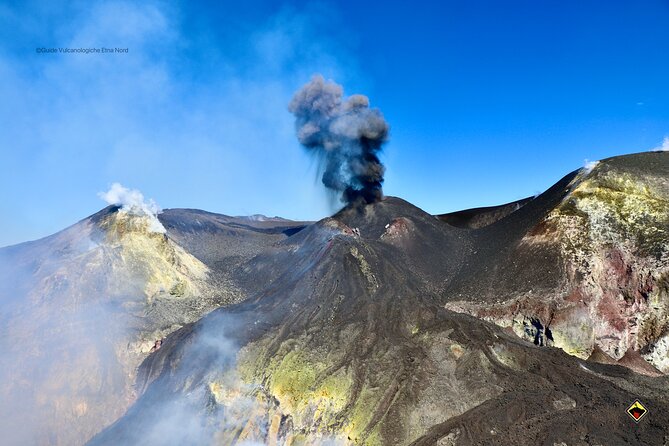
Your morning begins at 7:45 a.m. at the Chiosco Bar Mareneve di Ferraro in Piano Provenzana. The meeting point sits at about 1,800 meters on Etna’s north side, reached by paved public roads from Linguaglossa. A car is the practical way to get there, since transport from your accommodation is not included.
Arrive early enough to use the toilets and grab coffee, tea, and a pastry. There are cafés, bars, souvenir shops, and places to refill water bottles, but do not treat this as a full breakfast stop. You will need food for the mountain, and there is no restaurant meal built into the excursion.
Piano Provenzana tells part of Etna’s recent story. The original tourist facilities were destroyed by the October 27, 2002 eruption, and the area now sits within the old lava flow. Pine trees, black volcanic rock, and scattered facilities give the place a raw feel that the more developed south side lacks.
After check-in, the guides give a safety briefing and sort out equipment. The supplied kit includes trekking poles, hiking shoes, a helmet, a warm jacket, extra socks, and a spare backpack. That is useful if you are arriving in Sicily without serious mountain gear, though you should still bring your own hat and gloves in autumn, winter, and spring.
The parking charge is separate: €5 for a weekday or €8 on Sundays and public holidays. Blue-lined spaces accommodate cars and camper vans.
More treks to the summit craters:
- Mount Etna: Guided Volcano Summit Hiking Tour with Cable Car
★ 4.7 · 3,784 reviews - Etna Volcano: South Side Guided Summit Hike
★ 4.7 · 1,545 reviews - From Taormina: Etna Upper Craters Day Tour
★ 4.1 · 505 reviews
A 4×4 ride across Etna’s northern flank
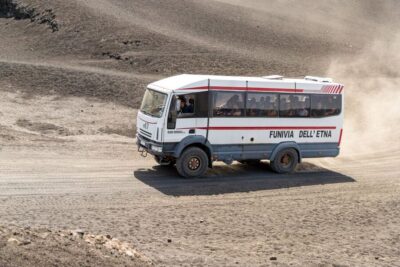
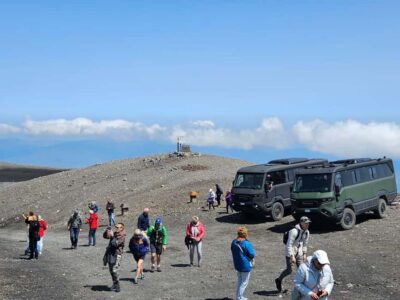
The road up is part of the experience, not just a transfer. Authorized 4×4 vehicles follow an approximately 9.5-kilometer route from the northern base toward the high starting point. The drive crosses forests, old and recent lava flows, eruptive cracks, side craters, and a lava-flow channel.
The route climbs toward roughly 2,825 to 2,960 meters, depending on the operating arrangements and volcanic conditions. From the vehicle, you may see northern Sicily, Calabria, the Strait of Messina, the Aeolian Islands, and both the Ionian and Tyrrhenian seas. On exceptionally clear days, views can reach toward the Madonie range, the Gulf of Catania, Syracuse, Augusta, and the Valle del Bove.
The ride also helps explain Etna’s changing character. At Piano Provenzana, you begin among trees and old facilities. Higher up, vegetation fades and the ground becomes a broad field of ash, scoria, lava ridges, and craters. You are not simply being driven to a viewpoint. You are watching the mountain strip away its lower-world comforts.
There is an important cost detail here. The headline price is $139.13 per person, but the off-road vehicle is listed separately at €50 per person for the one-way ride from the lower station toward the high route. The supplied information also gives a €70 public transportation option for those returning by bus from about 2,850 meters to 1,800 meters. The exact transport arrangement should be confirmed when you book, since the route details describe a 4×4 journey while the inclusions list the vehicle as an extra.
The summit trek from 2,960 meters
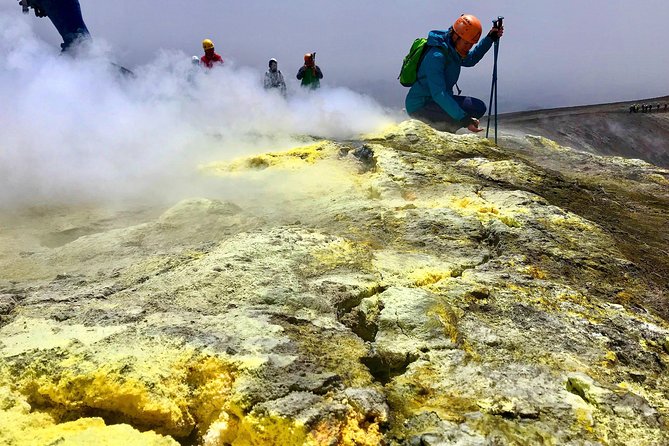
The walking section begins high, but high altitude makes even familiar uphill work feel different. The route climbs around 5 kilometers with approximately 550 meters of ascent, reaching the summit area somewhere between 2,960 and 3,323 meters.
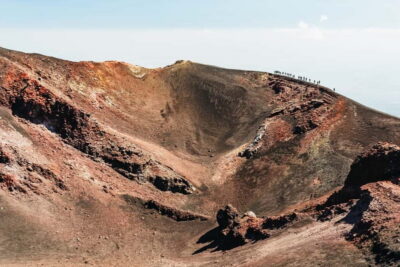
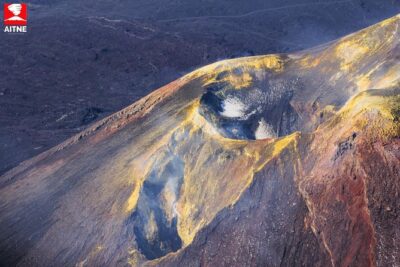
You may approach the four main summit craters: the Northeast Crater, Voragine, Bocca Nuova, and Southeast Crater. You should not expect a fixed path that reaches every one. Etna is active, and the guide chooses the safest route toward a currently active and accessible area.
That may mean adjusting the plan because of gas, heat, fresh fractures, explosions, snow, ice, or unstable volcanic rock. A route that was safe the previous day may not be suitable when you arrive. The guide’s job is not to force a promised altitude. It is to get you as close as conditions allow while respecting official restrictions.
This point matters when you compare Etna excursions. A tour advertised as reaching 3,323 meters cannot guarantee that exact height. One excursion reached only around 3,000 meters after an area was restricted because of continuing activity. The safer and more honest way to view the tour is as a guided summit-area hike, with the final height decided on the mountain.
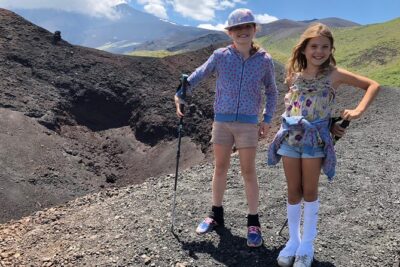
The walking surface is loose and awkward in places. You cross soft scoria, sandy gullies, fresh lava, and rough volcanic ground. Near the upper craters, the wind can be fierce, and the cold arrives quickly. A sunny morning at sea level tells you little about the conditions above 3,000 meters.
The guides are a major part of the value. Nikos and Daniele are praised for explaining Etna’s eruptive history, crater formations, and current activity in clear English. Poldo is described as both highly informed and personable, while Paolo has helped with practical matters such as finding suitable boots and arranging transport. The group limit of 12 keeps the outing small enough for questions and regular checks on the pace.
Why the way down deserves your respect
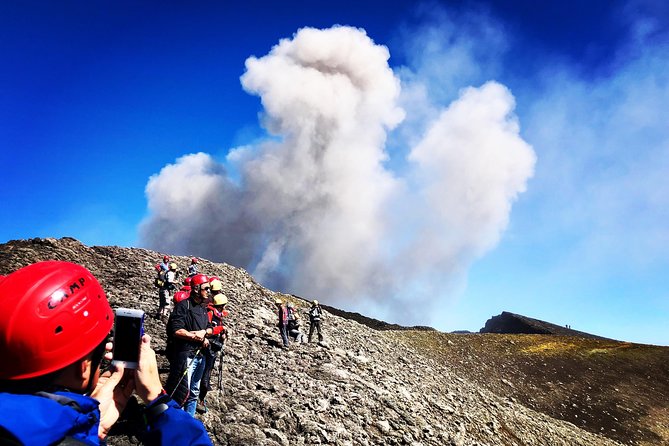
Many fit people focus on the uphill climb and underestimate the return. That is the mistake to avoid here.
After reaching the summit area, you descend from roughly 3,300 meters to 1,800 meters, with about 1,500 meters of negative elevation gain over approximately 7 kilometers. The total route is listed at around 12 to 13 kilometers. The descent may feel harder than the ascent, particularly if your knees are sensitive or you are not used to loose volcanic ground.
The upper route drops through sandy channels where your boots can slide and small stones can pour inside. Wear long trousers and long socks. Pants that cover the tops of your boots are especially helpful, and gaiters would be practical if you already own them. Contact lenses are discouraged because of ash and volcanic gases.
Lower down, the route crosses about 2.5 kilometers of ski slopes with rougher, stony footing. That section is less dramatic than the summit craters, but it can be tiring after hours of walking. Trekking poles are genuinely useful here, not just a nice extra.
Guides set a manageable pace and stop to explain the terrain. They also watch for people falling behind, which matters on a route where the scenery can tempt you to push too hard. Still, the tour requires good physical health, strong knees, and enough stamina for a long descent. It is not suitable for children under 12, and it is specifically not intended for people with serious breathing conditions or hypertension.
More Trekking Tours in Sicily:
- Catania: Mount Etna Trekking Trip off the Tourist Path
★ 4.9 · 1,351 reviews - From Taormina: Etna Tour with Hiking, Cave Visit, & Tastings
★ 4.7 · 518 reviews - Etna excursion 3000 meters with 4×4 cable car and Trekking
★ 4.5 · 504 reviews - From Taormina: Half-Day Mount Etna Morning Trek
★ 4.9 · 504 reviews
What the price gives you, and what it does not
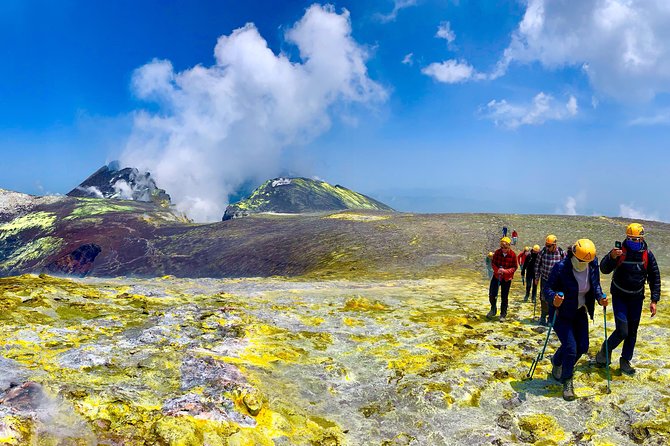
At $139.13 per person, the price is reasonable for a small-group, guide-led ascent on an active volcano, particularly because it includes a licensed volcano guide, safety insurance, Etna admission, and a useful set of mountain equipment.
The guide is the key value. You are not merely following a path to a crater. You are learning why the ground changes color, how lava flows form channels, why some craters are closed, and how current activity affects the route. The equipment also saves you from buying or packing specialist items for one day.
But the price is not the full budget. You must account for:
- The one-way off-road vehicle charge listed at €50 per person
- The €70 public transport option if you choose the specified return bus
- Parking at Piano Provenzana
- Food and water for the hike
- A hat and gloves in cooler seasons
- Any gear you choose to rent rather than bring
Some people consider the transport charge high for a short ride. Others find it worthwhile because the road gains a huge amount of altitude and avoids a much longer approach on foot. I would judge the total cost against the specialized guide service, not the headline number alone.
Weather, volcanic rules, and honest expectations
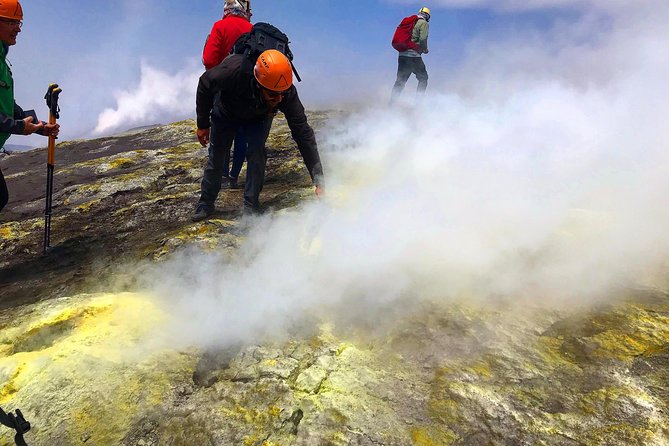
Etna is not a normal mountain park. Volcanic activity changes, sometimes quickly. The guides must follow official orders, and they can shorten, move, or cancel the outing when conditions threaten group safety.
Bad weather can also stop the trip. Heavy snow, ice, high winds, fog, or a storm may make the summit route unsafe. One winter outing was abandoned after worsening conditions, which is exactly the kind of decision you want from a mountain operator, even when it ruins your day.
The drawback is that you may pay for a summit-crater tour and end up below the advertised maximum height. That is frustrating if you expect a guaranteed summit. It is also part of visiting an active volcano. The responsible choice is to accept that safety rules control the itinerary.
You receive confirmation when booking, and free cancellation is available up to 24 hours before the start time. If poor weather or an insufficient number of bookings cancels the experience, you are offered another date or a full refund. Changes made inside 24 hours are not accepted, so keep an eye on the forecast before that deadline.
Who will enjoy this Etna hike most
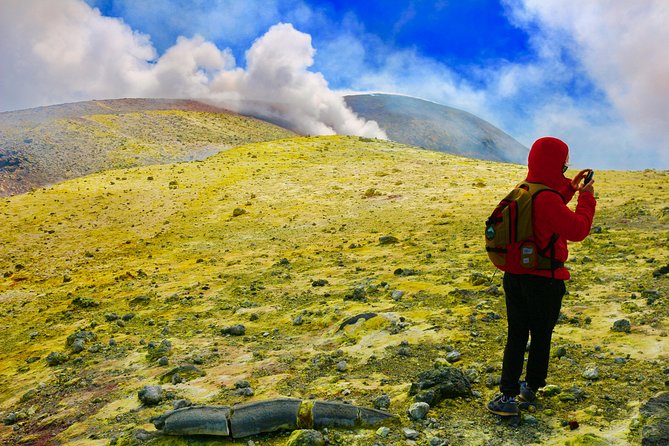
This excursion suits you if you already hike regularly, can handle a long descent, and want a close look at Etna’s active upper zone rather than a quick visit to a lower crater.
It is a strong choice for:
- Fit adults who want a demanding half-day mountain outing
- Visitors interested in geology and volcanic activity
- People who prefer the quieter northern slope
- Anyone who values a licensed guide and supplied safety equipment
- Small groups that want time for questions and a controlled pace
Think twice if you dislike loose ground, cold wind, steep descents, or uncertain final destinations. You should also choose another Etna experience if you need a guaranteed summit height, hotel pickup, or a short and easy walk.
Bring water, lunch, sunscreen, warm layers, gloves, a hat, long trousers, and sturdy footwear. Even with supplied boots and a jacket, the mountain can feel cold and exposed. Your lunch will likely taste better after the hardest climb, so pack something you will enjoy outdoors.
Should you book the summit-crater trek?
Book it if you want Etna at its most physical and volcanic, and if you are prepared for a 12 to 13-kilometer route with a punishing downhill finish. The north side, the lava fields, the small group, and the guide’s explanations give this outing more substance than a simple scenic ride.
Do not book it expecting a guaranteed walk to one exact crater or a five-hour stroll. Allow six hours or more, budget for the separate transport charge, and accept that the guide may stop lower down when Etna becomes unsafe.
For a fit hiker who values access, geology, and a quieter approach, this is one of the stronger ways to experience Mount Etna. Your reward is not just the view from the top. It is the long change from pine forest to ash, lava, crater rims, and open sky.
FAQ
Where does the Etna summit hike start?
The meeting point is Chiosco Bar Mareneve di Ferraro at Piano Provenzana on Etna’s north side. You should meet the guides at 7:45 a.m.
How long does the excursion take?
The listed duration is about five hours and 30 minutes, but the detailed route takes roughly six hours, and some outings can last about six and a half hours from meeting time to return.
Is the off-road vehicle included in the price?
No. The supplied details list an additional €50 per person for the one-way off-road vehicle service from about 1,800 meters toward the high route. A specified public transport return option is listed at €70.
What equipment is provided?
The service provides trekking poles, trekking shoes, helmets, warm jackets, extra socks, and an extra backpack. Hats and gloves are not included during autumn, winter, and spring.
Is the hike suitable for children?
The excursion is not suitable for children under 12. It requires strong physical fitness and is intended for people in good health who can manage high altitude, loose rock, and a long descent.
Can the route reach the summit craters every time?
No. The guides adjust the route and final height according to volcanic activity, official restrictions, gas, heat, fractures, weather, snow, and ice. The excursion may be shortened or stopped when conditions are unsafe.
Just added around Sicily
- Zafferana Etnea:Honey extraction workshop and honey tasting★ 4.7 · 3 reviews
- From Trapani: Favignana and Levanzo Yacht Tour with Stops★ 5.0 · 4 reviews
- Mt Etna: Winter Trekking Tour with Optional Catania Transfer★ 4.7 · 13 reviews
- Wine tour with wine tasting★ 4.7 · 18 reviews
- Sicilian Soul: Winery Tour, Wine & Food Tasting in Catania★ 5.0 · 4 reviews
- Wine tasting in Catania Historic center★ 4.4 · 15 reviews
- Valley Of The Temples By E-Bike With Picnic Included★ 4.7 · 7 reviews
- Valley of the Temples and Villa Romana Multi-Language Tour★ 4.8 · 5 reviews
Etna Summit Crater Treks, compared.
Guided Volcano Summit Hiking Tour with Cable Car
Read our review →
North Upper Craters Guided Tour by 4×4 with Trek
Read our review →Browse the lists this tour appears in