
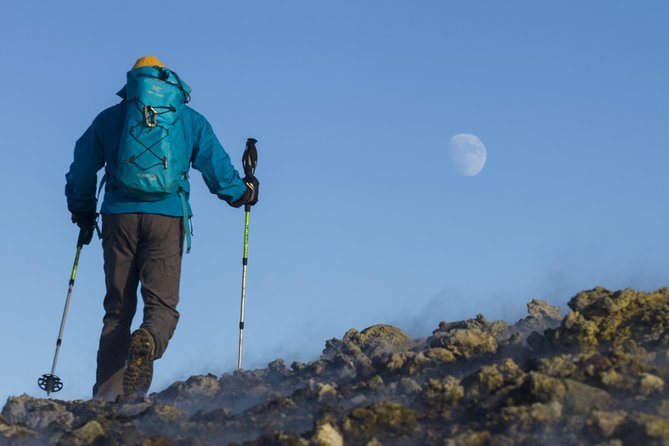
Reviewed · ETNA SUMMIT CRATER TREKS
Etna Volcano: South Side Guided Summit Hike
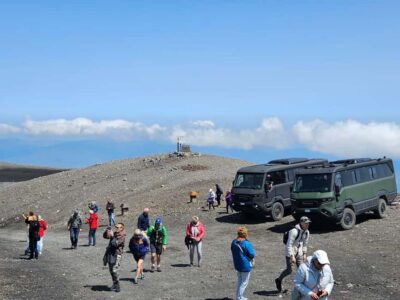
Mount Etna is not a tame mountain with a tidy trail to the top. It is an active volcano, and this six-hour outing takes you across black lava, loose volcanic sand, gas-streaked ground, and crater rims where conditions can change fast. The reward is a close look at Etna’s summit zone, plus broad views toward Catania, the sea, and the clouds below.
I like the serious volcano guidance and the practical gear, especially the provided boots, helmet, and poles. I also like that you walk through several different volcanic areas instead of simply riding up, taking a photo, and riding down. The main catch is the effort: this is a medium-high difficulty hike, and the €65 cable car and 4×4 cost is separate from the advertised tour price.
- Summit craters at roughly 2,800 to 3,000 meters: Walk beside Etna’s Central, Northeast, and Southeast craters, subject to safety conditions.
- A real volcanic hike: Cross lava flows, volcanic sand, Barbagallo craters, and a lava flow channel.
- Certified volcano guides: Guides such as Antonio, Max, Fabio, Marco, Angelo, Simon, Massimo, and Filippo have led groups on this route.
- Safety equipment included: Helmet, trekking boots, hiking poles, insurance, and volcanological guidance are provided.
- Cable car and 4×4 extra: Budget another €65 per person for the ride from Rifugio Sapienza to the high trailhead.
- Weather can rewrite the plan: High gas activity, wind, snow, or poor visibility may shorten or change the route.
Why Etna’s summit hike feels different
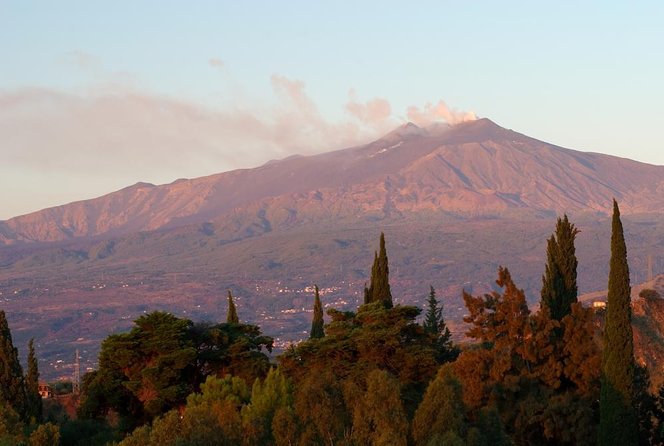
Many Mount Etna outings stay near the lower craters and scenic viewpoints. This one aims higher. After meeting at Piazzale Rifugio Sapienza on Etna’s south side, you use the cable car and a 4×4 vehicle to reach roughly 2,800 meters, sometimes described as about 2,900 meters depending on the day’s route.
From there, the walking section takes about two hours uphill toward the summit craters, followed by more exploration and the descent. The full outing lasts about six hours, though active volcano work is not governed by a Swiss railway timetable. Safety decisions and weather can change the plan.
I like the way this route turns Etna into a geology lesson you can walk through. You see volcanic bombs, old lava channels, fresh-looking flows, crater walls, and ground colored by sulfur and other minerals. The mountain is not just a big cone in the distance. It is a working volcanic system, and the guide helps you understand what you are seeing.
The tour has a 4.9 rating from 311 reviews, with 97 percent of customers recommending it. The strongest praise goes to the guides, who are repeatedly described as careful, energetic, and good at explaining both the science and the risks. Antonio, Max, Fabio, Massimo, Filippo, Marco, Angelo, and Simon are among the guides named in the feedback, but your assigned guide may be different.
Starting at Rifugio Sapienza at 8 a.m.
Your meeting point is Ashàra Etna & Stromboli Guides at Piazzale Rifugio Sapienza, near Nicolosi. The activity starts at 8 a.m. and ends back at the same general meeting point.
This is useful if you have your own rental car, since the tour does not include pickup from Catania or nearby towns. The meeting area is also served by public transportation, according to the tour information, but you should plan the morning carefully. The hike begins at altitude, and a late arrival would create needless stress.
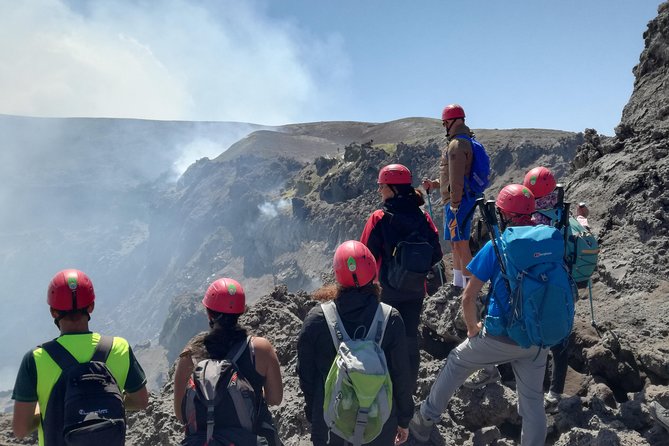
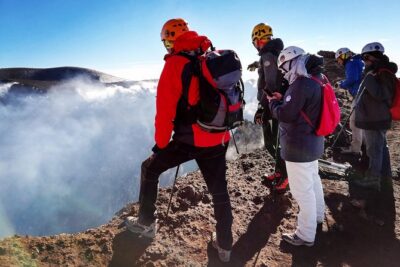
At the meeting point, the company provides the included equipment: helmet, trekking boots, hiking poles, insurance, and volcanological guides. Some of the feedback also refers to gloves and other clothing being available, but the formal inclusion list does not include a wind jacket. One section of the tour details says windbreakers and gloves are provided, while another says a wind jacket is not included. I would bring your own warm outer layer rather than count on borrowing one.
You can buy a sandwich or similar food at the refuge before setting off, according to the practical advice from previous outings. Still, bring water and snacks. Bottled water, lunch, and food are not included, and there is no reason to begin a strenuous mountain hike underfed.
More Trekking Tours in Catania
- Catania: Etna Nature Tour with Hiking, Cave Visit, & Tasting
★ 4.7 · 502 reviews - Mount Etna: North Upper Craters Guided Tour by 4×4 with Trek
★ 4.6 · 243 reviews - Catania: Sunset Trekking on Mount Etna with Wine Tasting
★ 5.0 · 66 reviews
Paying €65 for the high-altitude transfer
The advertised tour price is $78.64 per person, but the real cost is higher because the cable car and 4×4 jeep tickets are extra. The stated local charge is €65 per person.
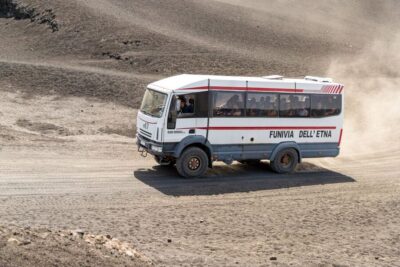
That additional payment covers the transport from the south-side base area to the high trailhead, around 2,800 meters. It saves you from walking the entire lower section and allows the group to spend its time in the more unusual upper volcanic zone.
I consider the overall price reasonable for a specialist guided hike, safety equipment, insurance, and several hours with a certified volcano guide. But you should compare the full cost, not just the headline price. Add the €65 transfer, food, water, and any transportation you need to reach Rifugio Sapienza.
The separate cable car and 4×4 charge also makes the tour less appealing if you only want a quick view of Etna. For that, a shorter excursion may fit better. This outing earns its cost through the walking, geology, and access to the summit area.
Walking across Etna’s black volcanic sand
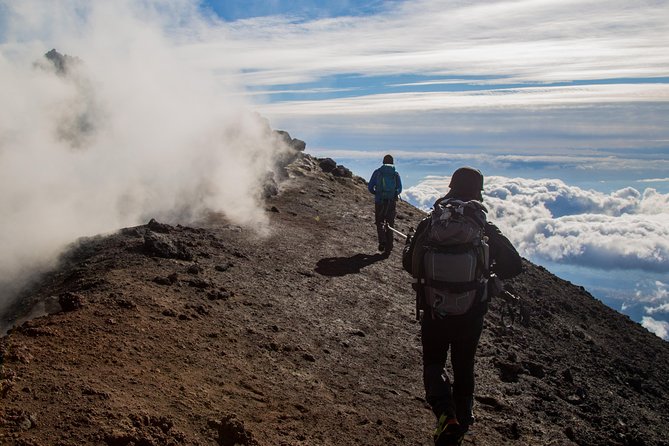
The climb begins after the cable car and 4×4 transfer. Expect uneven ground, loose black sand, gravel, and lava rock. Some sections are steep. Going uphill can feel like two steps forward and one sliding step back, especially where the surface is soft.
The supplied trekking boots and poles are more than a nice extra here. They give you better footing and support on the rough ground. One person who completed roughly 8 to 10 kilometers of walking described the route as demanding because of the uneven surface. Another found the ascent strenuous and the descent particularly slippery.
Take the breaks seriously. The guides stop along the way so you can rest, drink, and take photos. These pauses also help the group stay together. A medium-sized group can move at different speeds, and the guides appear to make an effort to help slower hikers without turning the outing into a race.
The high altitude adds another layer. The route reaches around 3,000 meters, where wind and cold can arrive even when the base area feels mild. One outing began in T-shirt weather and changed quickly to conditions requiring a hat, gloves, and an extra jacket. Another reached minus 10 degrees Celsius with snow near the summit. Pack for change, not for the weather you see at breakfast.
The summit craters and active volcano safety
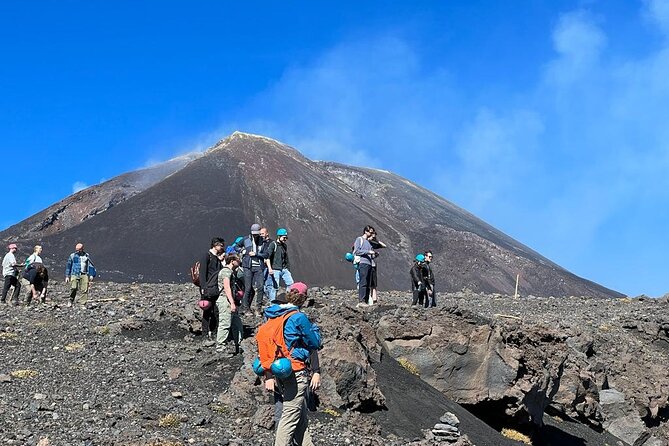
The summit section is the heart of the trip. The route can include the rim of the Central Crater, views toward the steep Northeast Crater, and the Southeast Crater, which has produced some of Etna’s most recent and dramatic eruptions.
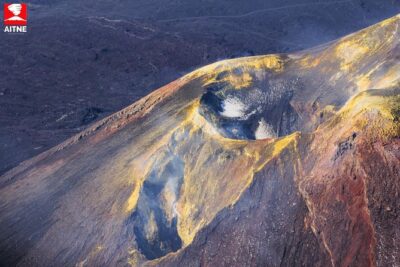
You may see gas emissions, volcanic bombs, mineral colors, and sulfur deposits. The ground can sparkle or show yellow tones where sulfur and other elements have collected. These details are easy to miss if you are focused only on reaching the highest point, so stay close enough to hear the guide.
The guides also explain the danger. This is not a staged volcanic show, and you should not expect to approach active vents simply because you paid for a summit tour. Gas, heat, wind, ash, and unstable ground can force a change in route.
A very important point: reaching the exact summit craters is not guaranteed. On one outing, heavy vapor and gas from the main crater made the summit unsafe, so the group explored older craters, lava flows, lava lakes, lava tubes, lava bombs, and spatter cones instead. That was still a substantial volcanic experience, but it was not the original summit plan.
This is the right attitude for Etna: the mountain makes the final decision. If the guide changes the itinerary, that is a sign of responsible guiding, not a failed tour.
More treks to the summit craters:
- Etna Summit Craters Excursion
★ 5.0 · 33 reviews - Tour to the Summit Craters of Etna 2920 meters with cable car and Jeep
★ 5.0 · 23 reviews - Etna excursions at sunset ancient craters and lava flows
★ 4.9 · 16 reviews - Mt. Etna Summit: Official box-office for Ascent to the Top
★ 4.5 · 11 reviews
Barbagallo craters and the descent
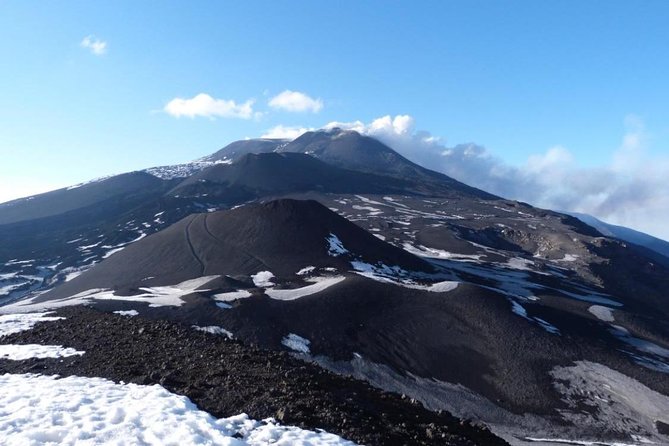
The return route includes the Barbagallo craters and a lava flow channel. These features add variety after the summit area, and the descent can be more tiring than expected.
Volcanic sand is loose beneath your boots, so poles are especially useful on the way down. Go slowly, keep your weight controlled, and do not treat the descent as an easy stroll. Several accounts describe slippery ground and a total walking distance of roughly 8 to 10 kilometers, though the exact route depends on conditions.
The Barbagallo area also gives you another look at how eruptions build new cones and channels. Instead of seeing only one giant crater, you begin to understand Etna as a collection of eruption sites shaped over time.
The group eventually returns toward about 2,500 meters and uses the cable car to reach the starting area. The outing ends back at Piazzale Rifugio Sapienza.
The guides are the strongest part
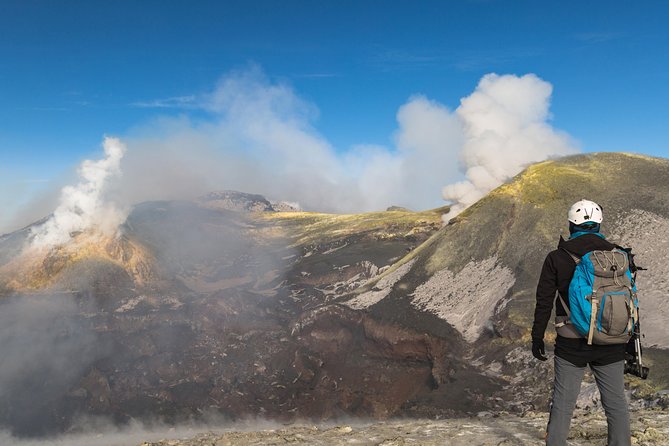
The company uses certified mountain and volcano guides, and the human side of the experience receives unusually consistent praise. Antonio is described as energetic and good at explaining volcano science. Max is noted for his professionalism, clear explanations, and calm leadership. Fabio is praised for being attentive and informative, while Marco and Angelo are credited with watching the whole group and helping slower hikers.
That does not mean every guide will have the same personality. It does mean you can expect the guiding to be central rather than decorative. The point is not simply to follow a flag through the dust. You are there to learn why the ground looks the way it does and why the route may change.
The group can include up to 20 people. That is not a tiny private hike. If everyone gathers closely, the guide’s explanations should be easy to follow. At other times, a large group may make it harder to hear, especially in strong wind. Stay near the front when the guide stops to explain a crater or lava feature.
What to wear and carry for Etna
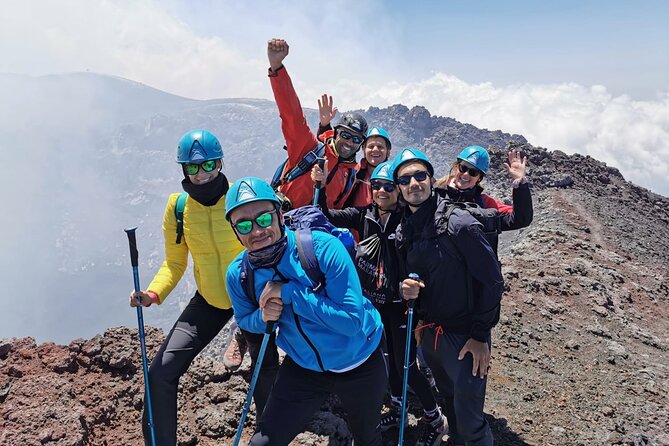
You receive boots and poles, but you still need to dress properly. The most useful packing list is practical:
- Warm layers, including a windproof outer jacket
- Long trousers
- Tall socks
- Hat or thin cap
- Gloves
- Scarf or neck warmer
- Sturdy clothing that can handle black volcanic dust
- Plenty of water
- Lunch or a substantial snack
Black volcanic grit gets onto clothing, so dark colors are sensible. Sun protection also matters. At altitude, the air can feel cold while the sun remains strong.
Do not rely on the base temperature. Etna can shift from mild and clear to cold, windy, snowy, or foggy in a short time. The supplied boots help, but they do not replace warm clothing or sensible preparation.
Who should book this hike
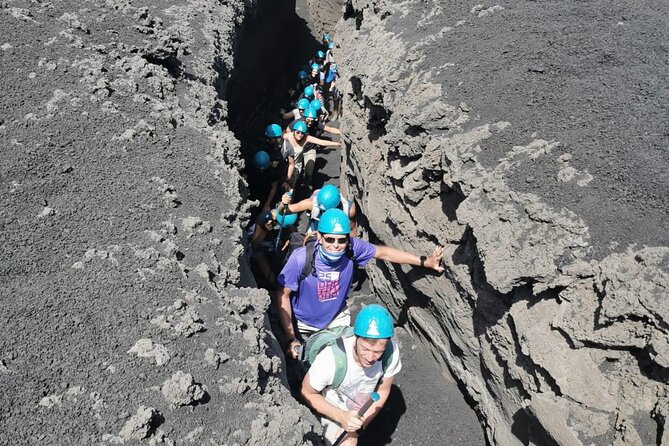
This tour suits you if you enjoy a physically active day and want more than a viewpoint. You should be comfortable walking on steep, uneven, and sometimes slippery ground for several hours. The official guidance calls for moderate fitness, but the more candid description is medium-high difficulty.
Fit older hikers have completed it, but age is less important than balance, stamina, and comfort at altitude. If you have limited mobility, dislike loose ground, or want a relaxed sightseeing trip, choose a different Etna experience.
It is also a good match for anyone interested in volcanoes. The guides explain gas activity, lava, sulfur, crater formation, and the benefits of volcanic soil to Sicily. You do not need a geology degree, but curiosity helps.
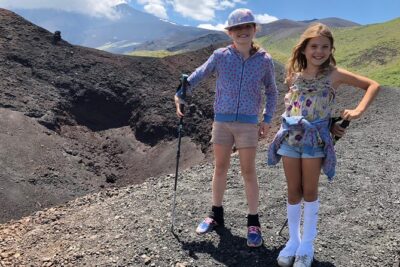
Families with older children may find it appealing, though the physical demands and changing conditions matter. The tour is not recommended for someone who expects a guaranteed summit view or a fixed route.
Booking, cancellation, and changing conditions
Confirmation is sent when you book, and the tour is offered in English with a mobile ticket. You can cancel for a full refund up to 24 hours before the start time. Cancellations or changes inside that 24-hour window are not refunded or accepted.
The activity depends on suitable weather and a minimum number of participants. If poor weather or low enrollment cancels the tour, you are offered another date or experience, or a full refund.
Most important, the itinerary can change because Etna is active. Even with clear weather, gas or volcanic activity may make a crater unsafe. Go for the mountain experience, not a guaranteed checklist.
Should you book the South Side summit hike?
Book it if you want a serious half-day walk through Etna’s upper volcanic zone, with a guide who can explain what you are seeing and keep an eye on safety. The included boots, helmet, poles, insurance, and specialist guidance add real value.
Before booking, accept three conditions: the €65 transfer is extra, the hike is strenuous, and the exact summit route is never guaranteed. Bring warm clothes, water, lunch, and patience for changing conditions.
If those terms suit you, this is one of the more rewarding ways to meet Mount Etna. You get the cable car views, but you also earn the upper mountain on foot, one loose black step at a time.
FAQ
Where does the Mount Etna summit hike begin?
The meeting point is Ashàra Etna & Stromboli Guides at Piazzale Rifugio Sapienza, 95030 Nicolosi, on Etna’s south side.
What time does the tour start?
The tour starts at 8 a.m.
How long does the activity last?
The experience lasts approximately six hours.
Is the cable car included in the tour price?
No. The cable car and 4×4 jeep transfer cost €65 per person and are paid locally.
What equipment is provided?
The formal inclusions are a helmet, trekking boots, trekking poles, insurance, and a volcanological guide.
Is food or water included?
No. Bottled water, snacks, and food are not included. Bring your own supplies or buy food at the refuge before starting.
Do I need to be physically fit?
Yes. The tour requires good physical condition and a medium-high fitness level because the route includes steep, uneven, loose, and sometimes slippery ground.
Will I definitely reach Etna’s summit craters?
No. The route can change because Etna is active. Gas, weather, or other safety conditions may prevent access to the planned summit area.
What happens if bad weather cancels the tour?
If poor weather cancels the activity, you are offered a different date or experience, or a full refund.
Just added around Catania
- Mt Etna: Winter Trekking Tour with Optional Catania Transfer★ 4.7 · 13 reviews
- Wine tour with wine tasting★ 4.7 · 18 reviews
- Sicilian Soul: Winery Tour, Wine & Food Tasting in Catania★ 5.0 · 4 reviews
- Wine tasting in Catania Historic center★ 4.4 · 15 reviews
- Trekking at 3000 meters on Etna★ 3.8 · 7 reviews
- Catania: Underground and Street Food Walking Tour★ 4.7 · 56 reviews
- Private Tour from Catania to Etna Naxos and Taormina★ 4.5 · 7 reviews
- Catania AIRPORT transfer From / To Taormina★ 5.0 · 3 reviews
Etna Summit Crater Treks, compared.
Guided Volcano Summit Hiking Tour with Cable Car
Read our review →
Trekking to the summit craters (only guide service) experienced hikers
Read our review →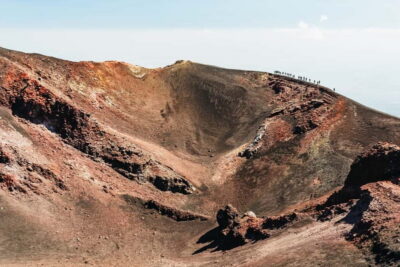
North Upper Craters Guided Tour by 4×4 with Trek
Read our review →Browse the lists this tour appears in