
Reviewed · MARSALA WINE AND SALT PAN TOURS
Guided tour of the salt pans of Trapani and the Salt Museum
Trapani’s salt pans turn a basic kitchen ingredient into a surprisingly good hour of sightseeing. You’ll walk beside shallow pools in shades of white, gray, pink, and blue, watch sea water become salt, and finish inside a family-run museum with a 15th-century mill. The working salt pans are the real star.
I like two things here: the clear, hands-on explanation of salt making, and the setting inside the protected Riserva Naturale Saline di Trapani e Paceco. You can see salt forming in the ponds and, when conditions allow, collect a little with your hands. The small tasting helps connect the old farming work to the salt on your table.
The main drawback is getting there. The meeting point is in Nubia, about a 15-minute drive from central Trapani, and public transport is not provided. A taxi can be expensive, so you should solve transportation before booking.
Key points to know before you book
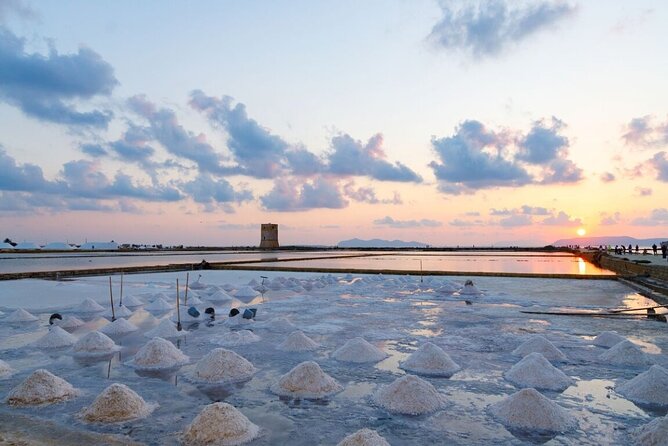
- Working salt pans, not just a display: You follow the process from sea water to salt beside active evaporation ponds.
- A protected nature reserve: The walk passes salt pools, sea views, clay, plants, and bird habitat.
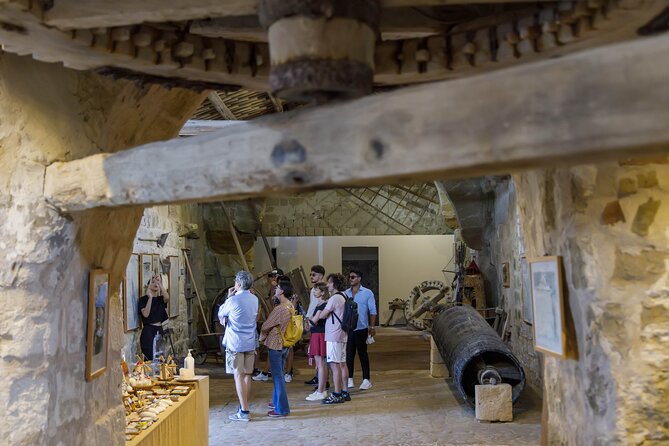
- A family-run museum: The old baglio and mill explain generations of salt work through tools and local stories.
- A short but useful tour: Plan on about 50 minutes outside and 25 minutes in the museum.
- Best light at sunset: Late afternoon can bring striking reflections and soft color across the pools.
- Transport needs planning: The site is outside Trapani, with no public transportation supplied by the tour.
Why Trapani’s salt pans are worth your time

At first glance, a salt pan may sound less exciting than a Greek temple or a hill town. Then you see the pools. Flat water reflects the sky, narrow banks divide the pans, and piles of salt catch the sun like snow in a place that otherwise feels thoroughly Sicilian.
The appeal is not only visual. This is a working place where sea water is gradually reduced by sun and wind until salt crystals remain. The tour gives you a simple explanation of each step, so the scene becomes more than a pretty view. You begin to understand why Trapani has been tied to salt production for so long.
I especially like the contrast between the delicate colors and the hard physical work behind them. White salt, gray clay, pinkish water, and blue sky make a calm picture. Yet the process depends on moving water, managing levels, clearing pans, and collecting the finished product.
The setting is part of a WWF nature reserve, so you are also seeing a protected area with plants and birds. This is not a formal wildlife excursion, and bird sightings are not promised, but the reserve adds a natural side to what could otherwise be a purely industrial visit.
More Marsala wine and salt pan trips:
- Segesta, Erice and Salt Pans Full-Day Excursion from Palermo
★ 4.2 · 1,791 reviews - Guided tour of the Trapani Salt Pans and Salt Museum
★ 4.7 · 423 reviews - Trapani: 2-Hour Salt Flats Tour
★ 4.9 · 286 reviews
Walking the Culcasi salt pans
The first part lasts about 50 minutes. Your guide leads you along the perimeter of the salt pan toward the banks where the water becomes a mirror for the sky. The route is gentle and suitable for most people, with plenty to look at without requiring a strenuous hike.
Expect a series of shallow ponds rather than one large body of water. Each pool plays a role in the production process, and the changing concentration of the sea water helps explain the different shades. The guide points out how the sun and evaporation transform the water as it moves through the pans.
One of the most useful parts is seeing the production close up. You can follow the stages that lead from sea water to salt, rather than hearing a general lecture after the fact. In places, you may collect salt with your hands, which gives children and curious adults a direct feel for the work.
The famous Archimedes screw is another highlight. This old-style device moves water between levels, and seeing it in use makes the engineering easy to understand. It is a small detail, but it shows how much practical design is packed into the salt works.
The guide’s role matters here. The best explanations keep the process moving and connect each pond to the next. The English tour is offered with guides who explain the work clearly, though English availability can be less frequent than Italian sessions. If you need the tour in English, check the time carefully when booking.
The open setting also means weather matters. The experience requires good weather, and the operator may offer another date or a full refund if poor conditions cancel the visit. On a warm, bright day, bring sun protection and water. The white salt reflects light strongly, and there is little reason to expect deep shade along the ponds.
Why sunset changes the experience
Several of the strongest details about this tour come from its timing. Around sunset, the pools can take on soft pink, gold, and violet tones, while the water reflects the changing sky. The low light makes the salt banks and narrow channels more graphic.
A late tour may be especially rewarding if you have already spent the day visiting Trapani’s churches and old streets. The salt pans offer a very different view of the area: wide, quiet, and shaped by sea and sun.
The published tour lasts about 75 minutes, with 50 minutes outside and 25 minutes in the museum. If you choose a start around 6 p.m. when available, you may be able to stay afterward to watch the sunset. Do not assume every time slot will have the same light, though. The best colors depend on the season and the weather.
The walk is also a good choice for people who prefer a slower activity. You are not racing from one landmark to another. The pleasure comes from watching small changes in water, light, and color while the guide explains the work.
Inside the salt museum and the old mill
The second part moves indoors for about 25 minutes. The Museo del Sale sits inside an old baglio, a traditional Sicilian farm courtyard complex. Its setting helps place the salt operation within the family and agricultural life of the area.
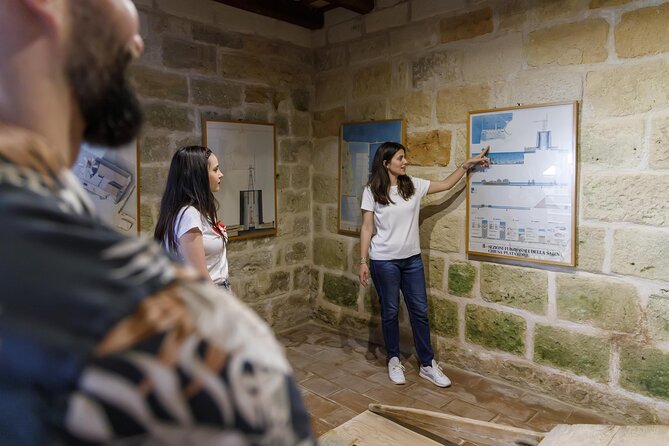
The museum focuses on the tools and methods used in salt farming, along with the people who carried out the work. You learn about the physical effort involved, the routines of the salt pan, and the family that has managed the site for generations.
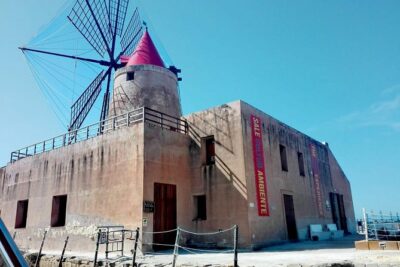
The ancient mill, dating from the 1400s, gives the visit a strong historical anchor. It is not a large museum packed with rooms and displays. That is part of its appeal, but it also means the museum section is more modest than the outdoor portion.
A guide explains the objects and the story of the salt works. On a good visit, this makes the old tools feel practical rather than decorative. You can see how salt production once relied on simple machines, human labor, and close attention to water levels.
There is also a small salt tasting. It is not a meal or a cooking class, but it gives the visit a pleasant finish. After seeing how much work goes into producing salt, tasting it becomes a useful reminder that this familiar ingredient has a place, a method, and a local identity.
One point to keep in mind is sound. The outdoor visit is generally easier to follow because the group is spread along the pans. Inside the museum, there may be more people nearby, and one part of the explanation can be harder to hear. Stay close to the guide if clear English is important to you.
More museums and sites in Sicily:
- Tile Museum – Majolica Museum – Rooms at the Genius
★ 5.0 · 85 reviews - Enchanted Castle of Sciacca – Museum Tickets
★ 3.5 · 63 reviews - Syracuse: Museum Guided Tour with Sicilian Puppet show
★ 4.1 · 27 reviews - Tecnoparco Archimede Museum Exhibition Ticket
★ 4.8 · 14 reviews
The guides and the English experience

The guides are central to the success of this tour. The strongest part of the experience is not a polished multimedia presentation. It is the human explanation of how the salt pans operate and why the family continues the work.
The English guides are described as friendly, prepared, and easy to understand. One guide may speak English more fluently than another, and accents can vary. This is normal for a family-run working site, but it is worth knowing if you need highly polished English throughout.
The tour can also run longer than the advertised time when the guides have more to explain or the group has questions. That is usually a benefit here, since the subject becomes more interesting once you start asking how water moves between the pans or how the salt is collected.
The booking information describes this as a private activity, with only your group participating. That makes the experience more personal and gives you a better chance to ask questions. Still, the museum portion can feel less private if other people are present in the indoor area, so do not expect the entire visit to feel like a one-family museum appointment.
Getting there from Trapani
This is the practical issue most likely to affect your decision. The meeting point is at Via Salina Chiusa 1, in Paceco, with the ticket redemption point listed at Via Chiusa in Nubia. The site is roughly a 15-minute drive from central Trapani.
There is no public transportation provided from Trapani to the salt pans. The operator runs a salt business and guided visits, not a shuttle service. If you do not have a car, arrange a taxi before you go and confirm the return plan.
A round trip by taxi can cost far more than the tour itself. At about $21.77 per person, the admission is reasonably priced for a guided walk, museum visit, and tasting. But the total cost can change sharply once you add transport, especially for a solo visitor or couple.
If you have a rental car, the value is much better. The tour can then fit neatly into a wider visit to western Sicily, perhaps alongside Trapani, Erice, or the coast. If you are relying on public transport, this is not a convenient spontaneous stop.
Allow a little extra time to find the correct entrance and meet the guide. The address information uses both Salina Chiusa and Via Chiusa, so check your confirmation carefully and use the exact location supplied for your booking.
How the price measures up
The $21.77 price is fair for a 75-minute guided experience, especially because it includes admission to both the salt pans and the museum. You are paying for an explanation of an active local trade, not only access to a viewpoint.
The value is strongest if you care about place-based experiences. You see the process, meet people connected with the work, enter an old mill, and taste the finished product. That is more meaningful than simply photographing salt piles from the roadside.
It is less compelling if you are looking for a long excursion or a full meal. The tour is short, and the museum is small. You should book it for the story and setting, not because it fills an entire afternoon.
Transportation is the deciding factor. A taxi may cost more than the admission, and that can make the total feel poor value. If you are splitting a ride with several people, the numbers improve. If you are already driving, the price is easy to justify.
Who will enjoy this visit most
I would recommend the tour to families, photographers, history fans, and anyone who likes seeing how ordinary products are made. Children can follow the water-to-salt process, and the chance to touch the salt gives the visit a simple hands-on element.
It also suits people who want a quieter break from city sightseeing. The walk is not demanding, and most travelers can take part. Service animals are allowed, and the activity is designed for broad participation.
The tour may appeal particularly to visitors who have already seen Sicily’s major monuments. Salt farming gives you a view of the region’s working life, not just its famous buildings. You leave with a better sense of how the coast, climate, and local families fit together.
I would be more cautious if you have limited time in Trapani and no car. The activity itself is short, but the transfer can complicate the day. I would also check the English departure before paying, since English times may be limited.
Booking, weather, and cancellation details
You receive confirmation at booking, and free cancellation is available until 24 hours before the start time. Canceling less than 24 hours ahead, or making changes inside that period, does not qualify for a refund.
Weather is important because much of the experience happens outside. If the operator cancels due to poor weather, you can choose another date or receive a full refund.
The tour is often booked about 10 days ahead. That does not mean you must reserve exactly 10 days in advance, but it is a useful sign that planning ahead makes sense, especially if you want an English departure or a sunset time.
Should you book the Trapani salt pans tour?
Yes, if you have a car or a confirmed taxi, and you want an unusual, locally rooted experience near Trapani. The outdoor portion is the reason to come: the colors, the reflections, the working ponds, and the clear explanation of how sea water becomes salt.
The museum adds useful context, though it is smaller and less impressive than the salt pans themselves. The $21.77 price is good for the combination, but transport can change the value.
I would book a late afternoon time when possible, check that the guide will speak English, and arrive with your return ride arranged. If you do that, this compact tour offers a memorable look at one of Sicily’s oldest coastal trades.
FAQ
Where does the salt pans tour begin?
The tour begins at Via Salina Chiusa 1, 91027 Paceco, in the Trapani area. The ticket redemption point is listed as Via Chiusa, Nubia.
How long does the experience last?
The visit lasts about 1 hour and 15 minutes. Around 50 minutes are spent walking through the salt pans, followed by about 25 minutes in the Salt Museum.
Is the tour offered in English?
Yes. English is offered, although English departure times may be less frequent than Italian sessions. Check the available time carefully when booking.
Is transportation from Trapani included?
No. The tour does not provide public transportation or a transfer from Trapani. The salt pans are about a 15-minute drive from central Trapani, so you need a car or taxi.
Is this a private tour?
Yes. The activity is described as private, with only your group participating. The museum area may still feel busier if other people are present indoors.
Is the tour suitable for most people?
Yes. Most people can participate, and service animals are allowed. The visit includes a relaxed walk around the salt pans and a museum visit.
What happens if the weather is bad?
The experience requires good weather. If poor weather causes cancellation, you will be offered another date or a full refund. You can also cancel for a full refund if you do so at least 24 hours before the start time.
Just added around Sicily
- Zafferana Etnea:Honey extraction workshop and honey tasting★ 4.7 · 3 reviews
- From Trapani: Favignana and Levanzo Yacht Tour with Stops★ 5.0 · 4 reviews
- Mt Etna: Winter Trekking Tour with Optional Catania Transfer★ 4.7 · 13 reviews
- Wine tour with wine tasting★ 4.7 · 18 reviews
- Sicilian Soul: Winery Tour, Wine & Food Tasting in Catania★ 5.0 · 4 reviews
- Wine tasting in Catania Historic center★ 4.4 · 15 reviews
- Valley Of The Temples By E-Bike With Picnic Included★ 4.7 · 7 reviews
- Valley of the Temples and Villa Romana Multi-Language Tour★ 4.8 · 5 reviews
Marsala Wine and Salt Pan Tours, compared.
Segesta, Erice and Salt Pans Full-Day Excursion from Palermo
Read our review →
Guided tour of the Trapani Salt Pans and Salt Museum
Read our review →



From Palermo Sicilian Retreat Erice & Marsala Tour with Lunch
Read our review →Browse the lists this tour appears in