
Reviewed · MUSEUMS
Tecnoparco Archimede Museum Exhibition Ticket
Archimedes’ inventions make far more sense when you can see their size and moving parts. At Tecnoparco Archimede, life-size replicas turn ancient science into something you can grasp, from a catapult and ballista to the famous screw and burning mirrors. The visit also explains how Archimedes helped defend Syracuse against Roman attack.
I like the clear six-part layout and the chance to learn from a live guide in English or Italian. I also like the price: at $9 per person, this is an easy add-on for families, curious adults, and anyone who wants more than another room of glass cases. The main drawback is the outdoor heat, so take shade breaks and plan your visit at a comfortable time of day.
Key points to know before you go
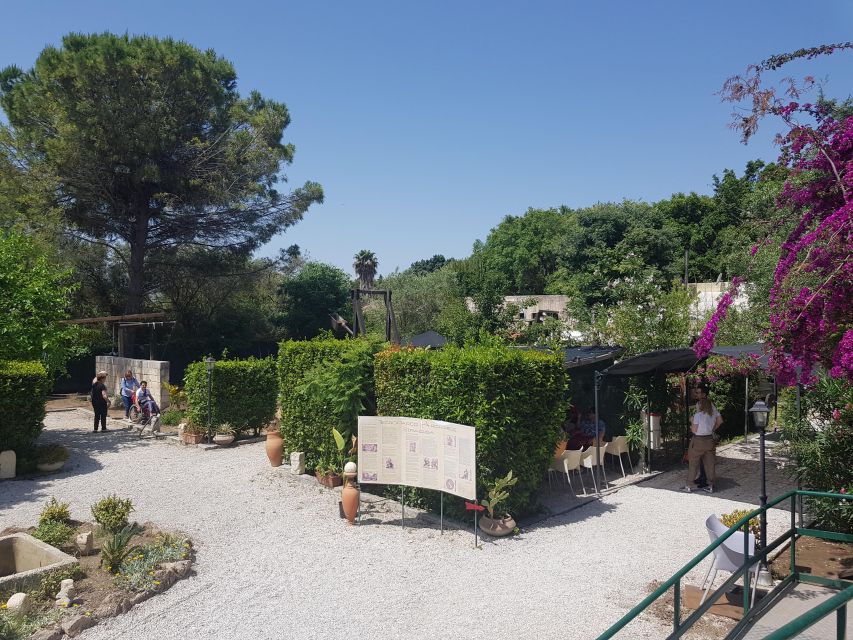
- Full-size ancient machines: See replicas built at the natural scale of the 3rd century BC machinery.
- Six practical science areas: Move from levers and pulleys to war engines, cranes, hydrostatics, mirrors, and water clocks.
- A guide brings the machines to life: Tours are offered in English and Italian, with scientific guides such as Martina and Erika appearing in recent visits.
- Good for curious children: The displays are designed around movement, force, water, and simple machines rather than long text panels.
- A look at Syracuse under attack: The war-machine section links Archimedes’ engineering to the city’s defense against Rome.
- Flexible language support: Multilingual audio guides are available in English, French, German, Russian, Spanish, and Portuguese.
Why Archimedes makes a good museum visit
A museum about a mathematician can sound dry on paper. This one has a useful advantage: the subject is built around things that move, lift, pull, launch, and measure.
Archimedes lived in the 3rd century BC, and his work reached well beyond abstract mathematics. The exhibition presents his ideas through machines and experiments. You see how a small force can move a heavy load, how water can be raised, and how a machine can turn a basic physical principle into a working tool.
I find that approach far more memorable than a wall of dates. You do not simply hear that Archimedes studied levers. You see the lever system, the pulleys, and the winches that make the idea practical. The replicas give the visit a physical quality, with the engineering in front of you instead of hidden in a diagram.
The exhibition also connects science with the defense of Syracuse. Archimedes is remembered not only as a thinker, but as an inventor whose machines were linked to the city’s resistance during a Roman attack. That gives the war section a clear purpose. You are not looking at random ancient weapons. You are seeing how engineering could shape a siege.
More museums and sites in Syracuse:
- Syracuse: Museum Guided Tour with Sicilian Puppet show
★ 4.1 · 27 reviews - Guided tour of the Trapani Salt Pans and Salt Museum
★ 4.7 · 423 reviews - Guided tour of the salt pans of Trapani and the Salt Museum
★ 5.0 · 188 reviews
Starting with levers, pulleys, and winches
The first thematic area focuses on levers. It also includes pulleys and winches, three simple devices that explain much of the mechanical thinking behind the rest of the exhibition.
This is a strong place to begin because the principles are easy to follow. A lever changes how force is applied. A pulley can redirect or reduce the effort needed to lift something. A winch uses rotation to help raise a load. The museum presents these ideas through replicas rather than only through written explanations.
You can expect the guide to explain what each machine does and why its design matters. The English and Italian tours are led by a scientific guide, while audio guides are available in several other languages.
For children, this section gives the visit an immediate hook. They can see that ancient engineering was not magic or guesswork. It was careful observation turned into useful machinery. For adults, it offers a quick reminder that many modern tools still rely on the same basic ideas.
The section is educational rather than grand. If you are hoping for a large archaeological collection, this is not that kind of museum. Its value comes from the machines and the explanations, not from precious objects.
Archimedes’ war machines and the defense of Syracuse
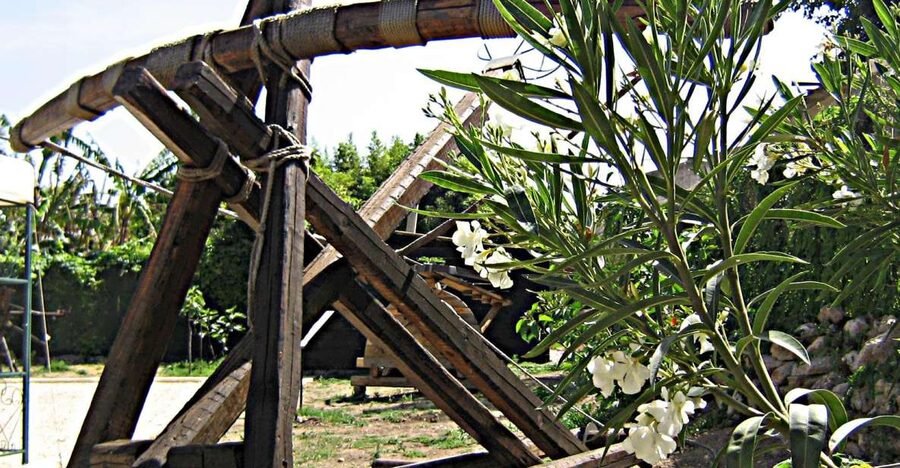
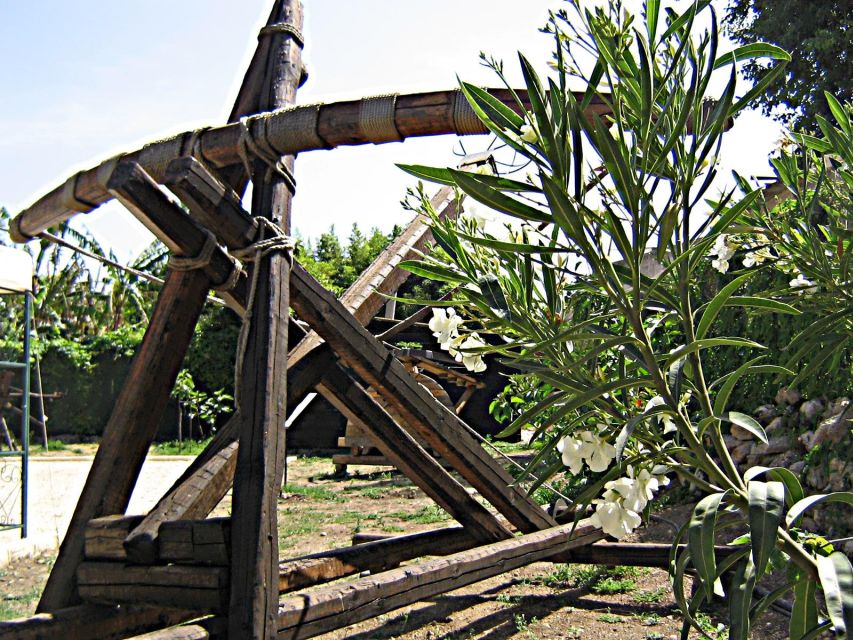
The war-machine section is likely to be the most dramatic part of the exhibition. It includes a catapult, ram, crossbow, scorpion, onager, and ballista.
These names can blur together if you only read about ancient weapons. Seeing full-size or scale replicas gives you a better sense of their purpose and construction. You can compare the machines and understand how tension, leverage, impact, and stored force were used in warfare.
The guide’s explanation matters here. Without context, the machines could look like a collection of oversized wooden mechanisms. With a clear explanation, they become part of Syracuse’s defense against the Romans. The display shows how Archimedes’ practical skill was connected to a real military problem.
I would give this section extra time if you are visiting with children or teenagers. Recent guides have been especially good at explaining the machines to older children and keeping them involved. That interactive style helps prevent the visit from becoming a passive walk past equipment.
There is also a useful balance to the presentation. The exhibition highlights Archimedes’ defensive inventions, but it does not require you to be a military-history specialist. The machines are interesting on their own, and the historical setting adds meaning without taking over the visit.
Lifting machines, cranes, and the manus ferrea
The third section looks at lifting machines. You will see two types of cranes and the manus ferrea, a machine associated with Archimedes’ defense of Syracuse.
Cranes are a natural follow-up to levers and winches. The earlier section introduces the basic tools. Here, you see how those tools can be combined into a larger machine capable of lifting heavy objects.
The manus ferrea is one of the exhibition’s more unusual inventions. Its name means iron hand, and it is linked to the defense of the city. The machine is presented as part of the wider group of devices used to challenge attacking ships.
This section helps you understand the practical side of ancient construction and warfare. Large stone blocks, ships, and heavy materials all required a way to control weight. The replicas show that ancient engineers had several answers to the same problem.
Do not expect a modern amusement-park ride or a large performance. This is a guided museum experience. Its strength is the explanation of how the machines worked and how the parts fit together.
A few more Syracuse days worth weighing up
- Syracuse: Boat Tour with Captain Mirko, Snorkeling & Caves
★ 4.7 · 746 reviews - Siracusa: Ortigia Boat Tour with Marine Grotto
★ 4.7 · 617 reviews - Siracusa: Ortigia & Sea Caves Speedboat Tour with Swim Stop
★ 4.9 · 499 reviews - Syracuse: Neapolis Archaeological Park Small Group Tour
★ 4.7 · 350 reviews
Hydrostatics, water, and the Archimedes screw
The hydrostatics area is one of the broadest sections. It includes the Archimedes screw, demonstrations of Archimedes’ principle, corobates, presses, and worm screws.
The Archimedes screw is perhaps the best-known object in the entire museum. Its basic purpose is to raise water, and its design remains easy to understand once you see the shape. A rotating screw carries water upward through a tube or channel. The replica gives you a much clearer idea of this process than a small illustration would.
The experiments linked to Archimedes’ principle provide another useful point of contact. They show how water affects objects and how buoyancy can be observed rather than simply memorized. This is the type of display that can help a child understand a science lesson, while also giving adults a quick, practical refresher.
The corobates, presses, and worm screws widen the picture. You are not only seeing one famous invention. You are looking at a range of devices connected to measurement, water, pressure, and mechanical advantage.
This is a section where the guide’s pacing can make a real difference. Ask for the purpose of each machine if the explanation moves quickly. The exhibition contains many names and mechanisms, and a live guide can help you separate the key ideas from the smaller details.
Burning mirrors and the famous fire story
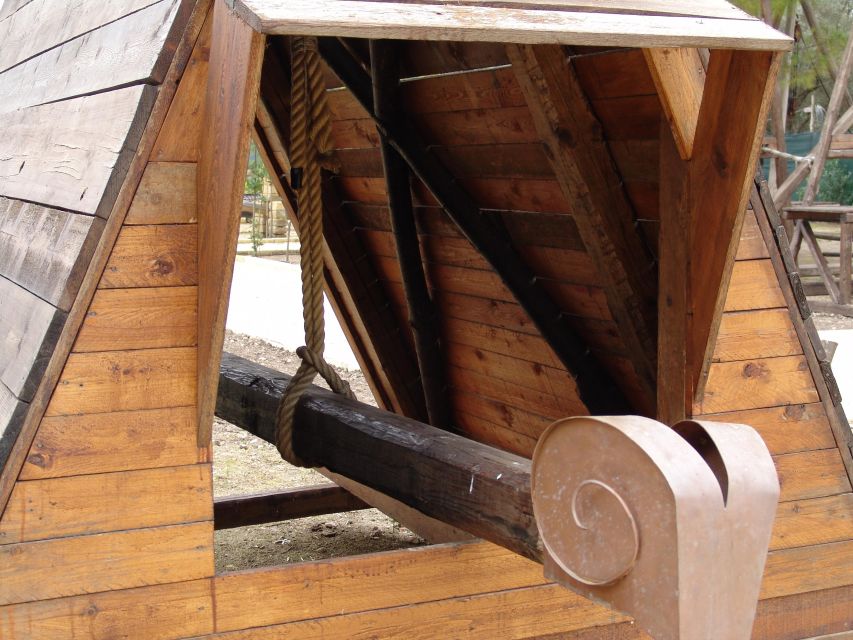
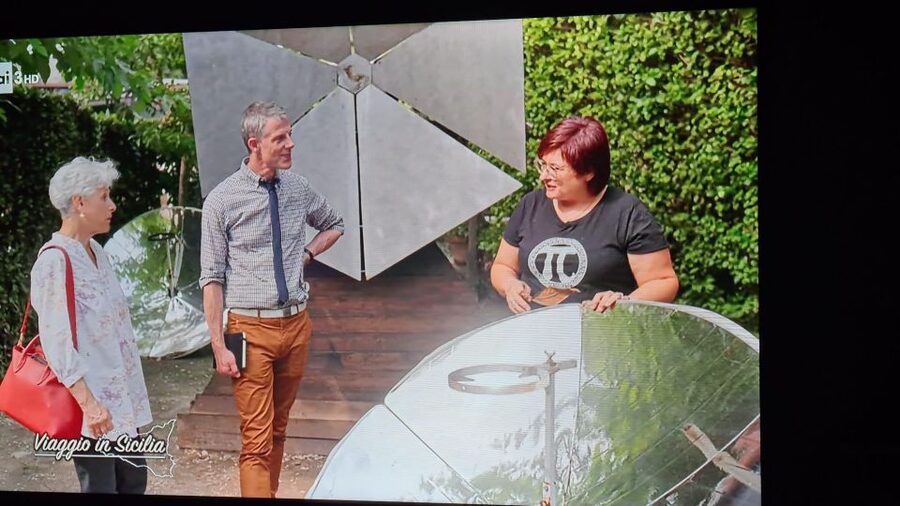
The burning-mirrors section focuses on one of Archimedes’ most famous inventions. You can see two different models of the burning mirror.
The idea has long been tied to the defense of Syracuse. The mirrors are presented as an example of how reflected sunlight might be concentrated. It is an eye-catching subject, and the two models let you compare different approaches to the same concept.
This is one of the exhibition’s most memorable stops because it combines optics, engineering, and military history. You do not need advanced physics to understand the central question: how can mirrors direct and concentrate light?
At the same time, keep your expectations sensible. The supplied information confirms the presence of two models, but it does not promise a full-scale outdoor demonstration or a dramatic ignition show. The value is in seeing the designs and hearing how the idea fits into Archimedes’ work.
I would listen closely to the guide here. The burning mirror is famous, but fame can make an invention seem simpler than it is. An explanation of the models helps you appreciate the engineering problem rather than treating the display as a story about a mysterious super-weapon.
Water clocks and more uses of the screw
The final area contains water clocks and several applications of the Archimedes screw. It is a fitting ending because it returns to water, one of the main themes of the exhibition.
Water clocks measure time through the controlled movement of water. The machines show how ancient engineers used a steady flow to create a practical measuring device. You can also see how the screw had more than one possible use, depending on its design and setting.
This section gives the visit a quieter finish after the war machines and lifting devices. It also reinforces a central lesson of the museum: Archimedes’ work was not limited to one invention. His ideas could be adapted for timekeeping, lifting, water management, and mechanical work.
If you have moved quickly through the earlier displays, slow down here. The water clocks may seem less dramatic than the catapults, but they help show the range of problems ancient engineers were trying to solve.
What the guides add to the visit
A guide is included in English or Italian, and that is one of the strongest reasons to book this rather than simply look at machinery on your own. The machines have unusual names and several have overlapping purposes. A clear explanation makes the layout easier to follow.
Recent visits have singled out guides named Martina and Erika for warm, energetic explanations. Martina was described as smiling, prepared, and especially effective at making the visit instructive. Erika was praised for her enthusiasm and passion, including her care with shade breaks during hot weather.
Guide availability can change, so I would not book on the assumption that one particular person will lead your visit. Still, the comments point to the kind of guiding style you can expect: friendly, engaged, and willing to explain the machines to children as well as adults.
You also receive access to multilingual audio guides in English, French, German, Russian, Spanish, and Portuguese. This is useful if your preferred language is not English or Italian, though the live guided tour itself is listed in English and Italian.
The experience is listed as a private group. That can be helpful if you prefer a more focused visit or are booking for family and friends. The supplied information does not give a fixed group size, so I would not assume a particular number of people.
Heat, timing, and practical comfort
The exhibition is in Sicily, and heat can matter. One recent visit specifically noted that the guide looked for shaded places and took the heat into account. That is useful advice for planning your day.
If the weather is hot, bring water for before and after the visit, since food and drinks are not included. The museum is wheelchair accessible, which makes the attraction easier to consider for visitors with mobility needs.
The ticket is valid for one day, with starting times based on availability. The experience itself is described as a permanent exhibition rather than a one-time event, so you are booking access to the museum and its guided presentation.
Transportation to and from the museum is not included. You will need to arrange your own way there and back, and the ticket does not cover meals or refreshments.
A recent visitor also received a warm welcome close to closing time. I would not treat that as a promise that late arrivals will always be accepted, but it suggests the staff may be accommodating when possible. For a relaxed visit, book a time that gives you enough room rather than cutting it close.
Is $9 a fair price?
At the listed price of $9 per person, I consider this a good-value short cultural stop. You get access to six sections, replicas of ancient machinery, a live guide in English or Italian, and multilingual audio-guide support.
The value is strongest if you enjoy seeing how things work. Someone looking for original ancient artifacts may find the visit less satisfying, since the main focus is on replicas and scale reproductions. The machines are the point, not a large collection of excavated objects.
Families also get a good return for the price. The displays cover simple forces and visible mechanisms, and the guide can explain them in a way that keeps older children involved. Adults who remember Archimedes mainly from school lessons may also find the visit more engaging than expected.
The ticket includes a full day of validity, but that does not mean you need to spend an entire day inside. The exhibition is best viewed as a focused stop that can fit into a wider Syracuse itinerary.
Who should book this Archimedes experience?
I would recommend it to families, science fans, engineering students, and anyone interested in how ancient cities solved practical problems. It also works well for visitors who want a change of pace from churches, ruins, and art collections.
Children are likely to get the most from the moving machinery and war engines, especially with a guide who invites questions. Adults may appreciate the connection between mathematics, mechanics, water systems, and the defense of Syracuse.
You may want to skip it if you strongly prefer original archaeological objects or a silent, self-guided museum. The exhibition is built around replicas, explanations, and machines, so its appeal depends on your interest in process and invention.
Should you book Tecnoparco Archimede?
Book it if you want an affordable, hands-on look at Archimedes’ inventions and can spare a focused visit in Syracuse. The best reasons are the natural-scale replicas, the six well-defined sections, and the English or Italian scientific guide.
Plan for the heat, remember that transport and refreshments are separate, and allow the guide time to explain the machines rather than rushing through for photographs. At $9, this is an easy choice for families and curious adults, especially if you want to understand how Archimedes’ ideas worked in practice.
FAQ
Where is the Tecnoparco Archimede experience located?
It is located in Sicily, Italy.
How much does the ticket cost?
The listed price is $9 per person.
How long is the ticket valid?
The ticket is valid for one day.
Is a guided tour included?
Yes. A live guided tour is available in English and Italian, and a scientific guide explains Archimedes’ inventions and the six exhibition areas.
Are audio guides available?
Yes. Multilingual audio guides are included in English, French, German, Russian, Spanish, and Portuguese.
What can I see at the exhibition?
You can see replicas and scale reproductions of 3rd-century BC machinery, including levers, pulleys, winches, catapults, cranes, the manus ferrea, the Archimedes screw, water clocks, presses, worm screws, and two burning-mirror models.
Is the experience wheelchair accessible?
Yes. The experience is listed as wheelchair accessible.
Is transportation or food included?
No. Transportation to and from the museum, food, and drinks are not included.
Just added around Syracuse
- Etna and Taormina tour from Syracuse with private driver★ 4.5 · 9 reviews
- Vendicari – Sicily’s best coast nature reserve ( Birdwatching & Archeology )★ 5.0 · 8 reviews
- Tour of Montalbano★ 4.5 · 7 reviews
- Etna tour from Syracuse with private driver★ 5.0 · 4 reviews
- Noto, Portopalo and Marzamemi tour from Syracuse with private driver★ 4.5 · 10 reviews
- Syracuse Private Shore Excursion: Archaeological Park and Ortigia★ 5.0 · 5 reviews
- Siracusa Walking Tour with Audio and Written Guide by a Local★ 5.0 · 59 reviews
- Syracuse Scavenger Hunt & Highlights Self Guided Audio Tour★ 4.5 · 4 reviews
Museums, compared.

Guided tour of the Trapani Salt Pans and Salt Museum
Read our review →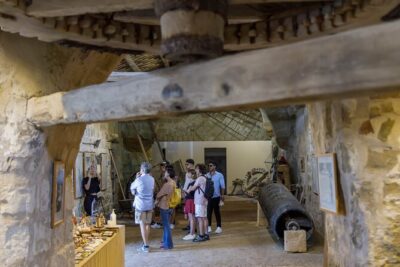
Guided tour of the salt pans of Trapani and the Salt Museum
Read our review →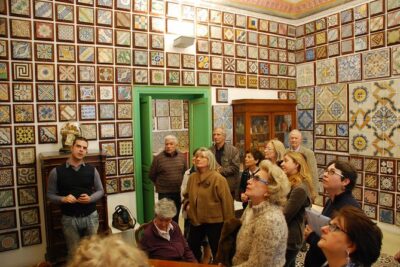
Tile Museum – Majolica Museum – Rooms at the Genius
Read our review →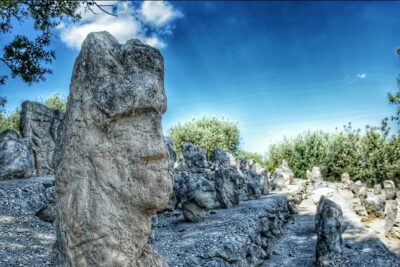
Tour and Soap personalization at the Soap Museum in Sciacca
Read our review →
Guided tour of the Archaeological Museum of Aidone Morgantina.
Read our review →Browse the lists this tour appears in