Reviewed · SICILY TOURS
SALT TOUR-all inclusive: salt tour: Trapani, Paceco, Nubia
Trapani’s salt pans turn a simple mineral into a fine Sicilian story. On this 2.5-hour outing, you visit three working salt areas, see an old windmill and a 600-year-old mill, then taste crystal salt and fleur de sel while learning how sea water becomes the white gold of western Sicily. The sunset views can be superb, especially when the pans reflect the evening sky.
I like the way guide Alessio connects salt making with local life, old tools, trade, and family work. I also like the tasting, which lets you compare plain salt with fleur de sel flavored with orange, lemon, rosemary, and oregano. The main caution is value: at $60.46 per person, you are paying for transport, guiding, museum entry, and tasting, but a self-drive visit to the salt museum would cost less. An optional aperitivo has also been offered at extra cost, so ask before extending your evening.
Key points to know before booking
- Three salt pans in one short outing: You visit Maria Stella, Salina Calcara, and Saline Culcasi rather than stopping at only one museum.
- Alessio gives the tour: His talks cover salt production, local customs, old measurement systems, tools, and the work done by generations of salt workers.
- The Culcasi stop carries the most weight: It includes the salt museum, a tasting, and the path of the salt worker through the pans.
- Wildlife may appear along the water: Flamingos, herons, egrets, and Italian knights are listed as possible sightings, though nature never promises a schedule.
- Sunset adds atmosphere: The evening light can make the salt ponds and old buildings especially photogenic.
- The group-size details need checking: The tour is described as limited to eight for an intimate outing, while the additional information allows up to 16 people.
Why Trapani’s salt pans are worth your time
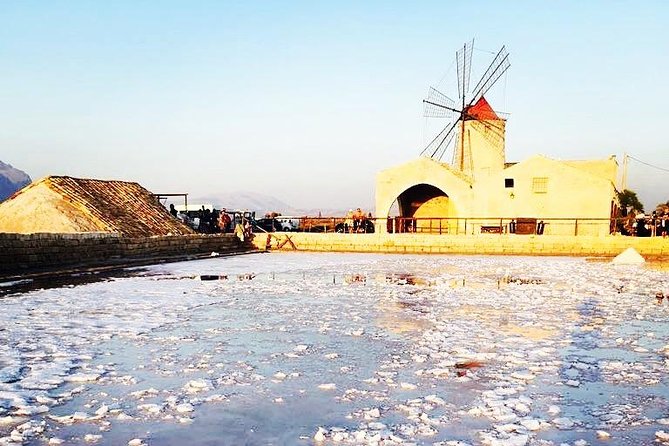
Western Sicily has long looked to the sea for more than fish and shipping. In the shallow ponds outside Trapani and Paceco, sun and wind remove water from sea water until salt crystals remain. The process sounds plain, but the ponds, channels, mills, workers, and harvest tools form a carefully managed system.
That is what makes this outing better than a quick photo stop. You are not simply looking at white mounds beside a road. You are shown how the salt pans are arranged, how water moves through different tanks, and why some salt is more prized than other salt.
The area also has a protected natural side. The Saline di Trapani and Paceco nature reserve includes shallow water that can attract flamingos, herons, egrets, and Italian knights. Sightings depend on the day, season, and conditions, but the birdlife gives the visit a second focus beyond industry.
I would set aside this tour for the day you want a change from churches, ruins, and crowded Sicilian streets. It offers open views, working traditions, and a quiet sense of place. The subject is narrow, but Alessio’s approach makes it surprisingly broad.
A few more Sicily days worth weighing up
- Etna Morning Trip
★ 4.5 · 1,241 reviews - Syracuse: Boat Trip of Ortigia Island and Sea Caves
★ 4.7 · 937 reviews - Tour of the island of Ortigia and exploration of sea caves with baths.
★ 5.0 · 668 reviews
Meeting Alessio at Trapani’s port
The tour begins at the Vigili Del Fuoco Distaccamento Portuale Trapani, the fire station at Via Ammiraglio Staiti 101. This is a practical starting point near the port, and you return to the same place at the end.
An air-conditioned vehicle takes you between the salt pans. That matters in Sicily, since the open ponds offer little shade and the roads between the sites are more easily handled by minivan than by a visitor trying to connect everything alone.
The ride also gives Alessio room to set the scene. He has worked in hospitality, lived and traveled in different parts of the world, and returned to Sicily. His strongest quality is his enthusiasm for the subject. He explains salt in clear terms and adds small details that make the work easier to picture.
Past talks have included the old use of 12 as a divisor instead of the decimal system of 10, and the way roof tiles were shaped to fit an artisan’s thigh. These details may sound minor, but they show how salt production reached into tools, buildings, measurements, and everyday work.
The advertised duration is about two hours and 30 minutes. Timing can shift, especially if the group adds the optional aperitivo. If you have dinner booked afterward, protect some extra time or confirm the planned finish before setting off.
Maria Stella and Trapani’s oldest mill
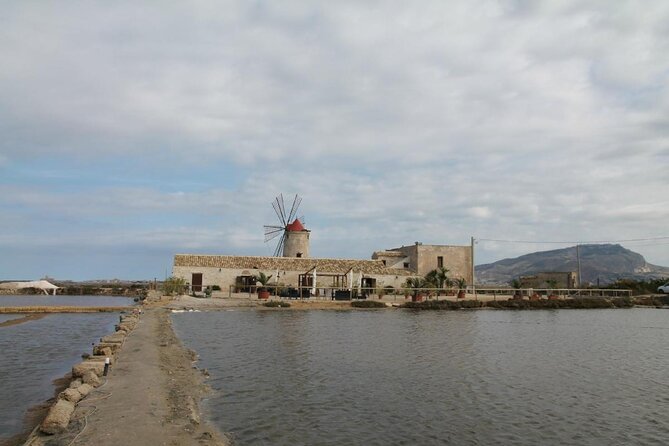
After roughly 10 minutes, the first salt pan is Maria Stella. The key sight here is the first mill built in Trapani, dating from the end of the 15th century.
This is a good opening stop because it gives you an immediate picture of the industry’s age. You see that salt production here is not a recent tourist display. The mill belongs to a long chain of work that shaped the coast and supported entire families.
Do not expect a long museum visit at this point. The stop is mainly about seeing the site and hearing the first explanation of the mills and ponds. The tour moves on after a short introduction, so listen closely as Alessio lays out the basic process.
The mill also helps explain why the area has its distinctive buildings. Wind power was central to moving water through the pans and handling the work. As you pass from one stop to the next, look for how the old structures fit into the low, open setting.
Salina Calcara and the four orders of ponds
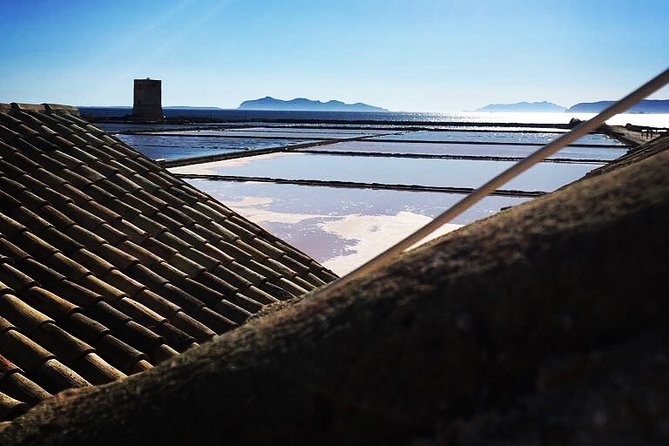
At Salina Calcara, also described as Salina Chiusicella, the focus shifts from one historic mill to the design of the salt pans. You learn about the four orders of tanks and the gradual transformation of sea water into salt.
This is the part of the tour that makes the process click. Sea water does not simply sit in one pond until salt appears. It passes through stages, with evaporation changing the water as it moves from one tank to another. Alessio explains how the system works and why each section has a role.
The birds are an added pleasure here. Flamingos, herons, egrets, and Italian knights may be seen around the water. You should treat them as a possible bonus rather than a guaranteed feature, but bring your attention as well as your camera. The ponds are valuable as habitat, not just as scenery.
This stop lasts about 30 minutes. That is enough time to follow the explanation and look around without turning the tour into a long nature walk. If birdwatching is your main goal, this outing may feel too brief and too focused on salt production. If you want a useful introduction to both, the balance works well.
Booked from the same base, and a completely different kind of day:
- Catania: Mount Etna Morning or Sunset Day Trip with Tasting
★ 4.8 · 4,028 reviews - Mount Etna: Guided Volcano Summit Hiking Tour with Cable Car
★ 4.7 · 3,784 reviews - Palermo: NO Mafia Walking Tour
★ 4.8 · 2,431 reviews - Palermo: Hop-on Hop-off Bus Tour 24-hour Ticket
★ 3.9 · 2,410 reviews
The Culcasi salt museum and a 600-year-old mill
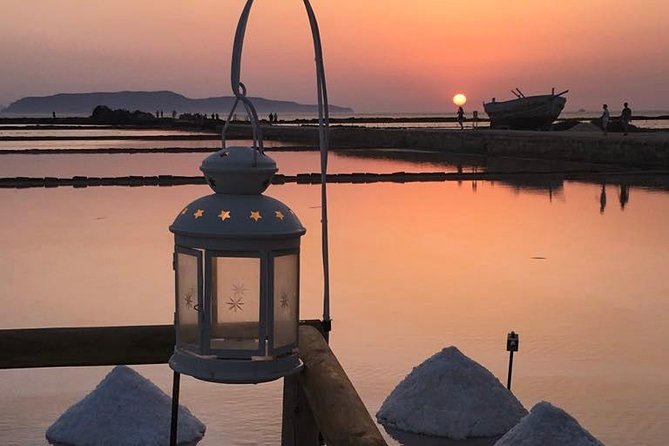
The longest visit is at Saline Culcasi, and this is where the $60.46 price makes the most sense. You enter an ancient mill more than 600 years old, now used as a salt museum. The ticket is included, along with the guide and tasting.
Inside, you learn how salt was collected, how the mill worked, and which tools were used. Alessio also explains the old hierarchy of the workplace and the part salt played in the local economy. The tour connects the machinery with human labor, rather than treating the building as an empty relic.
That human detail is important. Generations of salt workers kept the system running, often through partly manual work. You hear about the roles people held and the contrast between older methods and present-day production.
The museum is small, but that suits the subject. You can focus on the tools, mill, and working method without needing half a day. Visitors interested in industrial history, rural work, or traditional food production will get more from this stop than someone looking only for a pretty view.
The old mill and family salt farm setting also give you a sense of how production and home life once sat close together. The building is not merely a backdrop for photographs. It helps show how local buildings, tools, and labor were built around the salt harvest.
Tasting crystal salt and fleur de sel
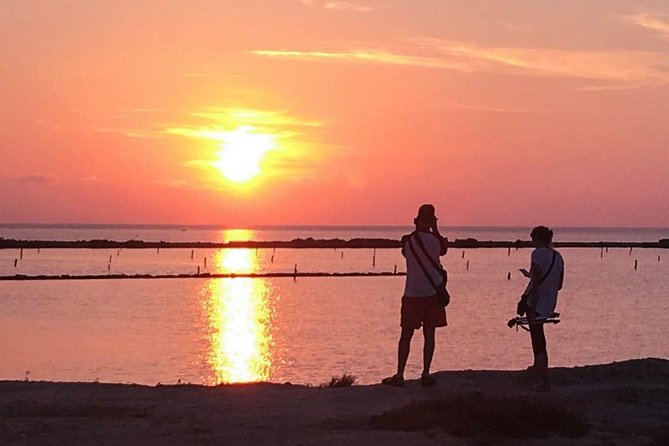
The tasting is more than a quick pinch of salt. You compare different salt crystals and try fleur de sel, the delicate top layer valued for its texture and flavor.
The experience includes natural fleur de sel and flavored versions with orange, lemon, rosemary, and oregano. These samples help you notice that salt is not one uniform product. Crystal size, texture, and added ingredients change how it works at the table.
Alessio also talks about Trapani’s integral salt and its place in local food. If you cook, this is one of the most useful parts of the outing because it turns an abstract production lesson into something you can taste.
Still, keep the tasting in proportion. This is not a full meal or a cooking class. The included sample is a pleasant part of the visit, not the reason to book the whole tour. You are paying mainly for access, transport, and interpretation.
Walking the path of the salt worker
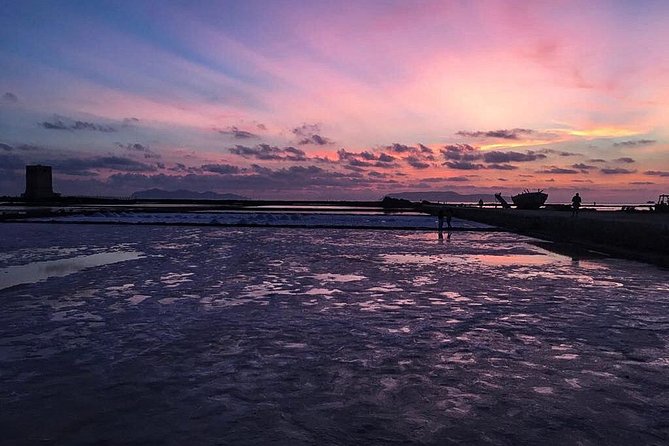
After the museum and tasting, you follow the path of the salt worker through the pans. This gives the visit a more physical finish. Instead of looking at the production process from the edge, you walk inside the working area and get a closer sense of the distances and conditions involved.
The walk is described as suggestive rather than strenuous. Exact footing and conditions can vary, so sensible shoes are a good idea. The open setting can also be bright and exposed, particularly before the evening cools.
This is where the tour’s story of labor becomes easier to grasp. You can picture workers moving between tanks, tools, and piles of salt instead of seeing only a finished product in a jar. The path also provides some of the best views for photographs.
If your tour runs near sunset, the light may become the visual high point. Clouds can block the sunset, and no guide can control the sky, but the ponds remain atmospheric in changing light. The reflective water and pale salt can make the setting feel almost otherworldly without any artificial show.
Sunset, optional aperitivo, and the timing question
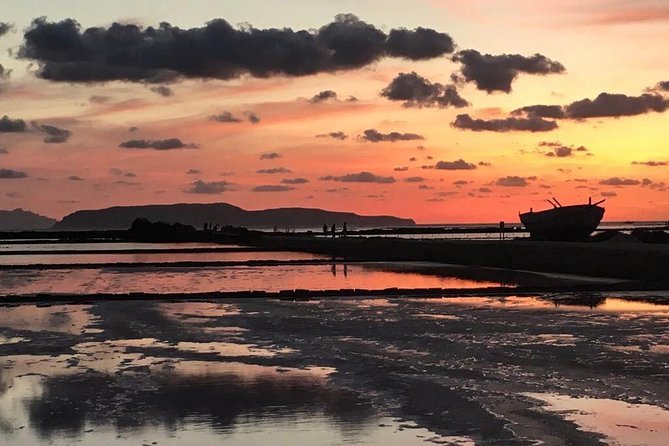
Sunset trips are popular for a reason. The salt pans take on warmer color, the old mills look more sculptural, and the water can mirror the sky. Several comments about the outing praise the evening views, though cloudy weather can remove the sunset itself.
One practical issue deserves attention. An aperitivo at the salt pans may be offered after the planned tour, at an additional cost of €10. It can be a pleasant idea in a beautiful setting, but it is not part of the included price and can push the finish well past the expected two-and-a-half hours.
If you have a restaurant booking, ask whether the aperitivo is optional and when the vehicle will return. The group may decide together, so it is wise to make your own schedule clear early. The salt tour works best when the sunset is a bonus, not when it causes you to miss dinner.
Is $60.46 a fair price?
The price is not bargain-level for a two-and-a-half-hour outing. You can likely spend less by driving or taking a taxi to the salt museum, especially if you are already comfortable navigating the area.
The comparison changes if you value interpretation and transport. The price includes an air-conditioned vehicle, all listed fees and taxes, museum admission, a salt tasting, visits to three salt pans, the worker’s path, and a guide. You also avoid working out how to link Maria Stella, Salina Calcara, and Saline Culcasi on your own.
For one person or a couple without a car, that convenience has real value. The small-group format is another reason to consider it, although the supplied group information is not fully consistent. One description limits places to eight, while the additional information allows a maximum of 16. Confirm the expected group size if that matters to you.
The tour is also a good buy for anyone who wants context rather than a quick stop. Alessio’s explanations are the main product. Without them, the ponds may look attractive but confusing. With them, you understand why the tanks differ and how the work fits into Trapani’s past and present.
Who will enjoy this salt tour most?
I would recommend it to couples seeking a quiet evening activity, families who enjoy hands-on learning, and food lovers curious about where salt comes from. The tasting gives children and adults a clear point of connection, while the guide can explain the process in simple terms.
It also suits visitors who have already seen Trapani’s main urban sights and want to explore outside the center. The nature reserve, birds, mills, and salt ponds offer a different side of Sicily.
You may want to skip it if you have a rental car, limited interest in guided tours, or a very tight evening schedule. A self-guided visit to the museum may give you the basic sights for less money, and a cloudy evening may not deliver the sunset you hoped to photograph.
The tour is offered in English, with Italian also used by Alessio. If English is not your first language, the explanations may require some concentration, but the subject is visual and practical enough to follow with attention.
Booking, weather, and cancellation details
Confirmation is received at booking, and mobile tickets are accepted. The meeting and return point is the port fire station at Via Ammiraglio Staiti 101.
The activity requires good weather. If poor weather cancels it, you can choose another date or receive a full refund. It also requires a minimum number of participants, so a cancellation for that reason comes with the choice of another date or experience, or a full refund.
Free cancellation is available up to 24 hours before the start time. Changes or cancellations made less than 24 hours before departure are not accepted for a refund. Service animals are allowed, public transportation is nearby, and most people can participate.
Should you book the Trapani salt tour?
Book it if you want the salt pans explained by someone who cares about the work, and if you value transport, the old mill, the tasting, and the chance to see three sites in one outing. Alessio’s enthusiasm appears to be the heart of the trip, and the mix of history, food, nature, and sunset gives the experience more range than its narrow subject suggests.
Skip it if your main goal is simply to see the salt museum as cheaply as possible. You can also pass if an extra aperitivo or a late finish would disrupt your dinner plans.
For most visitors with one free evening in Trapani, I think the tour is worth considering, especially from July through September when salt harvesting can add more activity and better photographic interest. Just confirm the group size, ask about the finish time, and treat the sunset as luck rather than a promise.
FAQ
Where does the salt tour begin?
It begins at Vigili Del Fuoco Distaccamento Portuale Trapani, Via Ammiraglio Staiti 101, at the port in Trapani.
Where does the tour end?
The activity returns to the same meeting point at the Trapani port fire station.
How long does the experience last?
The scheduled duration is approximately two hours and 30 minutes.
What language is the tour offered in?
The tour is offered in English. Alessio also speaks Italian.
How many salt pans do you visit?
You visit three salt pans: Maria Stella, Salina Calcara, and Saline Culcasi.
Is museum admission included?
Yes. Admission to the Salt Museum at Saline Culcasi is included.
Is salt tasting included?
Yes. The tasting includes salt crystals and natural and flavored fleur de sel, including flavors such as orange, lemon, rosemary, and oregano.
Is transportation included?
Yes. An air-conditioned vehicle transports you between the meeting point and the salt pans.
Is the tour available for wheelchair users?
The supplied information says most people can participate, but it does not provide specific wheelchair-access details.
Can I cancel for a full refund?
Yes, if you cancel at least 24 hours before the experience starts. Poor weather or failure to meet the minimum number of participants can also lead to a different date or a full refund.
Just added around Sicily
- Zafferana Etnea:Honey extraction workshop and honey tasting★ 4.7 · 3 reviews
- From Trapani: Favignana and Levanzo Yacht Tour with Stops★ 5.0 · 4 reviews
- Mt Etna: Winter Trekking Tour with Optional Catania Transfer★ 4.7 · 13 reviews
- Wine tour with wine tasting★ 4.7 · 18 reviews
- Sicilian Soul: Winery Tour, Wine & Food Tasting in Catania★ 5.0 · 4 reviews
- Wine tasting in Catania Historic center★ 4.4 · 15 reviews
- Valley Of The Temples By E-Bike With Picnic Included★ 4.7 · 7 reviews
- Valley of the Temples and Villa Romana Multi-Language Tour★ 4.8 · 5 reviews
Sicily Tours, compared.
Tour of the island of Ortigia and exploration of sea caves with baths.
Read our review →
Mt. Etna nature and flavors half day Tour from Catania
Read our review →
Boat tour Giardini Naxos Taormina Isola Bella Blue Grotto
Read our review →
Etna excursion 3000 meters with 4×4 cable car and Trekking
Read our review →