
Reviewed · PALERMO MAFIA HISTORY TOURS
Anti-Mafia Heroes (Cool Hours) Morning Walking Tour
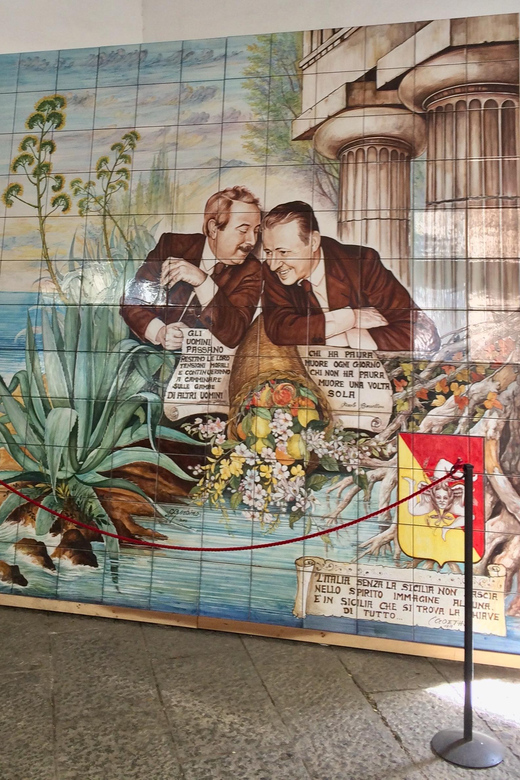
Palermo’s Kalsa neighborhood tells the anti-mafia story best on foot. Here, you visit the birthplace area of Giovanni Falcone, the streets tied to major crimes, and places reclaimed through Sicily’s fight against organized crime. The tour connects public events with the ordinary streets, cafés, bakeries, and squares where people lived through them.
I especially like the real locations and the way the guide ties them to specific people, rather than giving you a vague lecture about Cosa Nostra. I also like the focus on Sicily’s courage and renewal, which helps you see that the mafia was an aberration, not the defining feature of the island. The main drawback is practical: the morning route has little shade, and the subject matter can be heavy.
Key points to know before booking
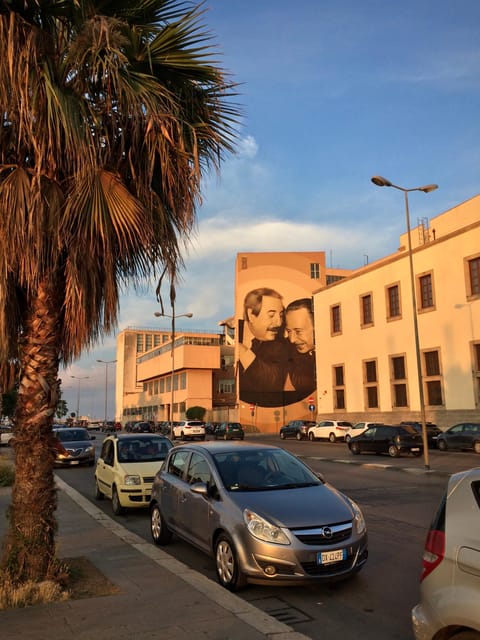
- Three major crime sites: The walk visits locations tied to important mafia crimes, not just general landmarks.
- Ten meaningful stops: You move through Falcone and Borsellino’s Kalsa, anti-mafia sites, historic streets, and restored public spaces.
- Guide Angela’s personal approach: Angela is praised for tailoring the walk to a small group and explaining both mafia figures and the people who fought them.
- Only 1.6 kilometers: The distance is modest, but the tour lasts 2.5 hours because the stories and discussions take time.
- Morning sun matters: Much of the route is unshaded, so a hat, sunscreen, water, and closed-toe shoes are sensible.
- A useful reading list included: You receive Gobo Tours Italy’s recommendations for books and films about the anti-mafia struggle.
Why the Kalsa makes the right setting
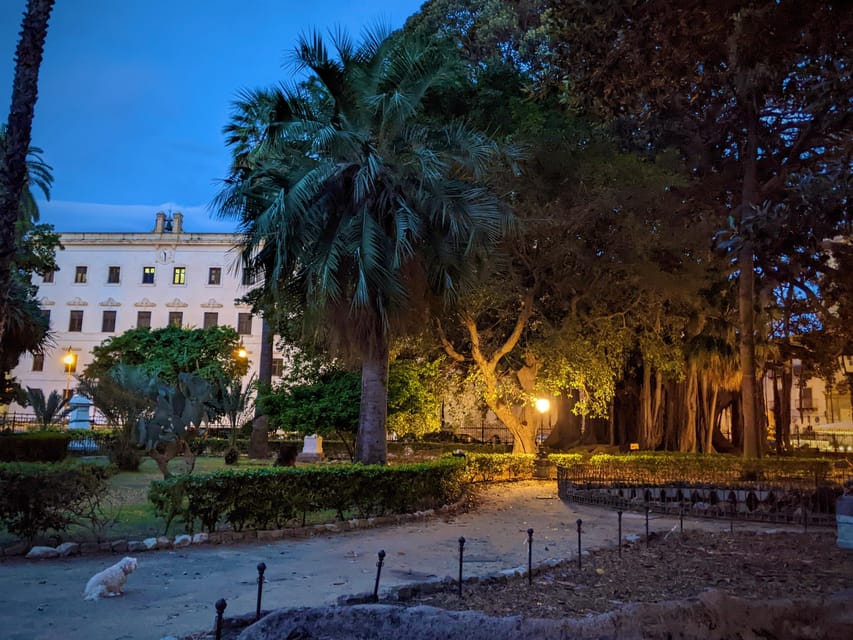
The Kalsa is one of Palermo’s oldest neighborhoods, and this tour uses its streets as a kind of open-air classroom. You are not being taken from one isolated attraction to another. Instead, you walk through a lived-in part of the city where old buildings, cafés, churches, public gardens, and worn streets sit beside newer efforts at repair and renewal.
That setting matters. The anti-mafia movement did not happen in an abstract courtroom or only in newspaper headlines. It took place in neighborhoods like this one, among families, shopkeepers, police officers, judges, activists, and residents who had to decide how much fear would control daily life.
The route also gives you a more useful picture of Sicily. Cosa Nostra is part of the island’s modern story, but it is not the whole story. The guide explains the organization’s actual origins and separates fact from the legends that have grown around it. You come away with a clearer sense of how unusual and destructive the mafia was within Sicilian society.
The tour is conducted in English, which makes the storytelling accessible if you want more than a quick sightseeing walk. You should expect questions, discussion, and human stories rather than a nonstop list of dates.
More Walking Tours in Palermo
- Palermo: NO Mafia Walking Tour
★ 4.8 · 2,431 reviews - Palermo Original Street Food Walking Tour by Streaty
★ 5.0 · 2,105 reviews - Palermo: Street Food and History Walking Tour
★ 4.9 · 1,294 reviews
Starting at Falcone’s birthplace
The meeting point is in front of Ciccio Passami l’Olio on Via Castrofilippo. Across the street, in a park, a plaque marks the birthplace of Giovanni Falcone, the famous anti-mafia judge and one of the central figures of the tour.
The listed meeting point is identified on Google Maps as Ruderi della casa natale del giudice Falcone. Give yourself a few extra minutes to find the plaque, especially if you are unfamiliar with Palermo’s narrow streets. The guide waits by the plaque, not inside the restaurant.
Starting here immediately gives the walk a personal focus. Falcone was not a distant historical figure connected to some other part of Italy. He was born and raised in the Kalsa, the same neighborhood you are about to cross. The tour also connects the area with Paolo Borsellino, another major anti-mafia figure who came from the neighborhood.
This opening is useful because it puts faces and biographies ahead of mythology. You begin with people who made difficult choices, not with the glamorous image of the mafia sometimes presented in films.
Piazza Magione and the neighborhood’s everyday life
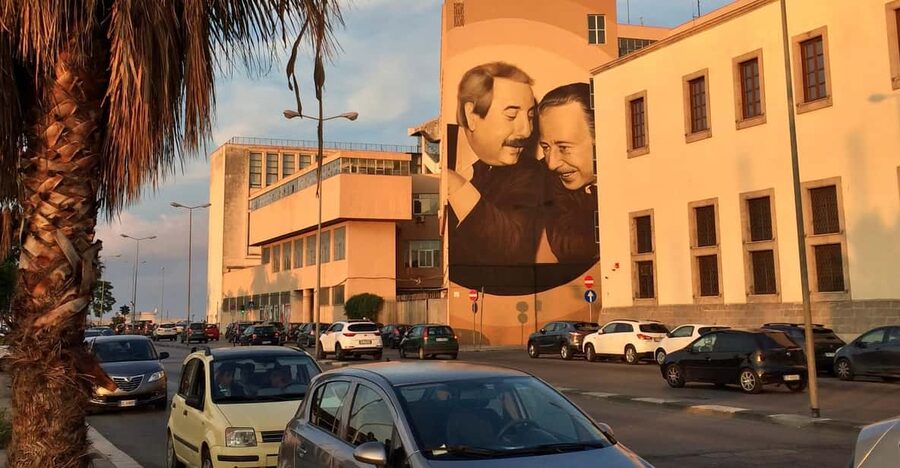
Piazza Magione is one of the main guided stops. Here, the guide adds another layer to the story by showing how a public square can carry both the weight of the past and the energy of present-day Palermo.
The value of this stop depends heavily on the explanation. On your own, you might simply see a pleasant urban square. With the guide, you learn how places in the Kalsa connect to the wider story of organized crime, resistance, and public renewal.
You also get a sense of the neighborhood’s everyday character. The tour is not confined to official memorials. You hear the sounds of the streets, notice the smells from bakeries and cafés, and see the contrast between old fabric and newer attempts to restore neglected spaces.
That contrast is one of the walk’s strengths. It shows you Sicily at several levels at once: beautiful, worn, proud, damaged, and determined to recover.
Antica Focacceria San Francesco and public memory
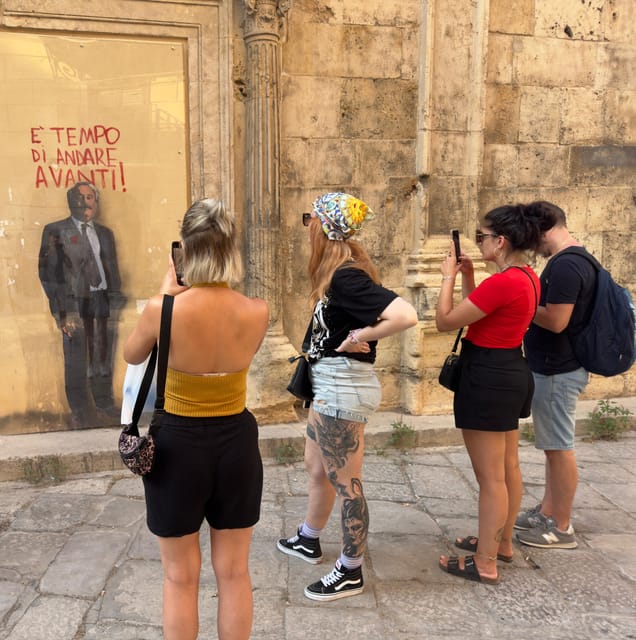
The route continues to Antica Focacceria San Francesco, a well-known Palermo food stop with a place in the city’s public life. The guide uses it as part of the anti-mafia story, not simply as a chance to look at a historic restaurant.
This is where the tour’s social focus becomes clear. Anti-mafia action involved organizations, businesses, and citizens who challenged the pressures placed on ordinary people. A stop connected with a food establishment makes the subject feel closer to daily life. Resistance was not only the work of judges and police officers.
You will not want to rush this part. The point is not just to collect another address, but to understand how businesses and communities fit into the long conflict with organized crime. The guide can also answer questions about the people and events connected with the location.
Food is part of the experience in a modest way, but refreshments are not included in the ticket. The mid-tour stop later at Cagliostro Bakery is a better opportunity to buy something if you want a small taste of Palermo during the walk.
More anti-mafia walks in Palermo:
- Palermo No Mafia walking tour: discover the Anti-mafia culture in Sicily
★ 5.0 · 1,011 reviews - Palermo: Anti-Mafia Heroes Evening Walking Tour
★ 4.6 · 172 reviews - The Godfather Origins of Mafia: Corleone & Visit Monreale Duomo
★ 5.0 · 73 reviews - Palermo: Anti-mafia Bike Tour
★ 4.9 · 28 reviews
Punto Pizzo Free and the choice to resist
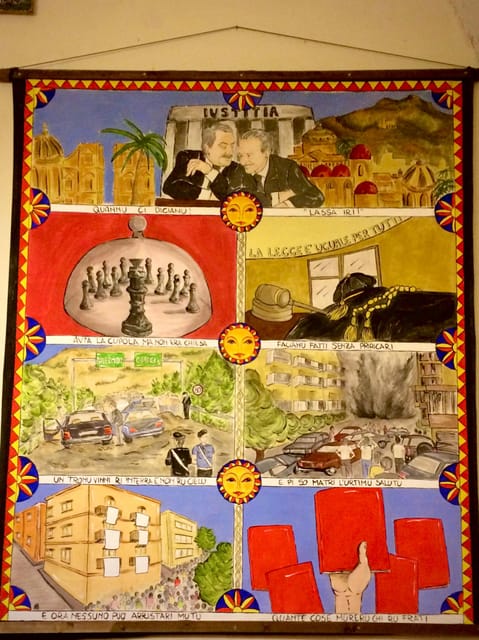
Punto Pizzo Free is another guided stop. The name points to the anti-racket movement and to the refusal to treat mafia demands as a normal cost of doing business.
For you, this stop helps shift the focus from famous judges to civic action. Falcone and Borsellino are central to the tour, but they did not fight alone. Shops, associations, and ordinary residents also played a part in changing what people would accept.
The guide explains how these efforts fit into the larger anti-mafia movement. That makes the stop especially useful if you know the names of Falcone and Borsellino but have less understanding of the wider network of people and organizations around them.
This is also one reason the tour offers better value than a standard sightseeing walk. You are not simply being shown attractive streets. You are being given a framework for understanding why certain places matter and how local action can affect a city’s public life.
Cagliostro Bakery and the halfway pause
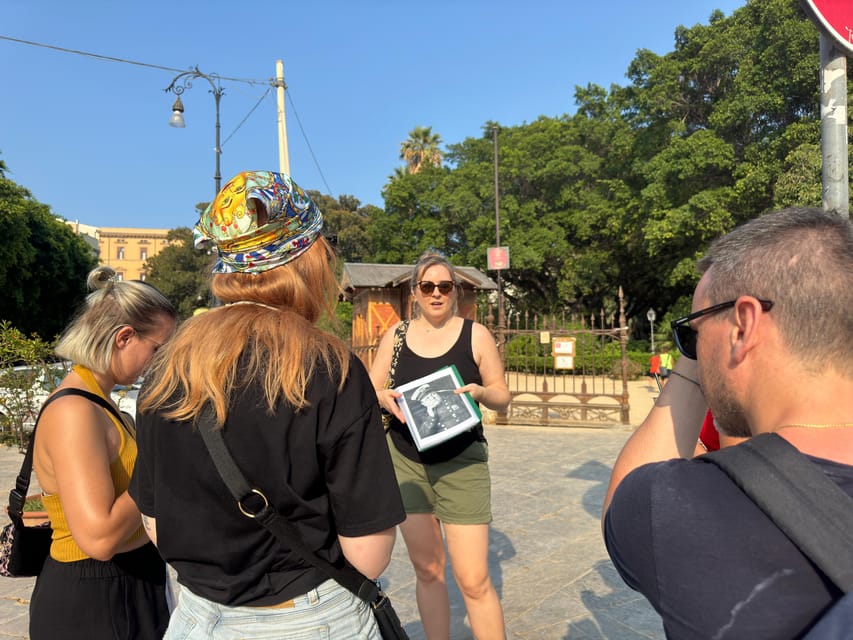
Around the midpoint, the walk pauses at Cagliostro Bakery. A bathroom is available halfway through, which is helpful on a 2.5-hour route.
The break is not included as a meal or tasting. Refreshments are optional, and gelato costs about 3 euros. You should carry enough money if you want to buy something, but you do not need to purchase anything to continue the tour.
I like this pause because the subject is serious and the walking is steady. A short stop gives you time to collect your thoughts, ask questions, and experience a normal Palermo food setting between heavier stories.
The morning route has no reliable shade, including during parts of this break and the walk around it. Wear a hat and sunscreen, and bring water. The route is only 1.6 kilometers, but Palermo’s sun can make a short city walk feel longer than expected.
Giardino Garibaldi and the city’s layers
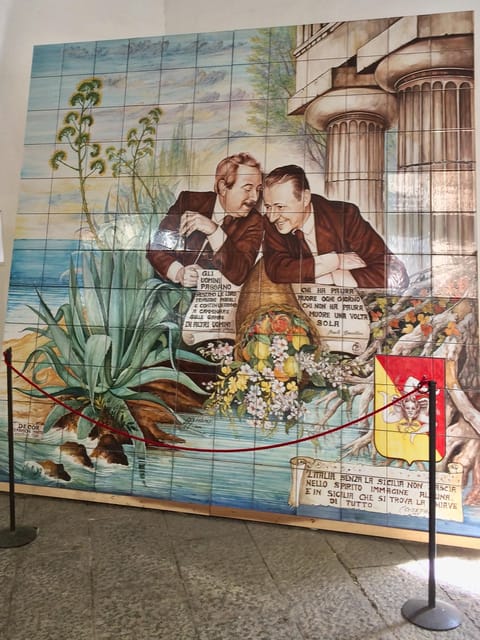
Giardino Garibaldi is another important guided stop. The garden gives you a change of pace and a chance to look at Palermo’s layered urban character.
This part of the route helps balance the crime sites with the wider history of the Kalsa. You see how public gardens and restored spaces can contribute to urban renewal. The tour is interested not only in what happened here, but also in how people have worked to improve places marked by neglect or fear.
The setting also helps explain why a walking tour works so well. Palermo’s history is not arranged in neat museum rooms. A garden, a bakery, a plaque, a square, and an old street can all carry different pieces of the same story.
You should listen for the connections between the stops. The tour becomes most useful when you consider the places together, rather than treating each one as a separate fact.
Finishing in Piazza della Kalsa
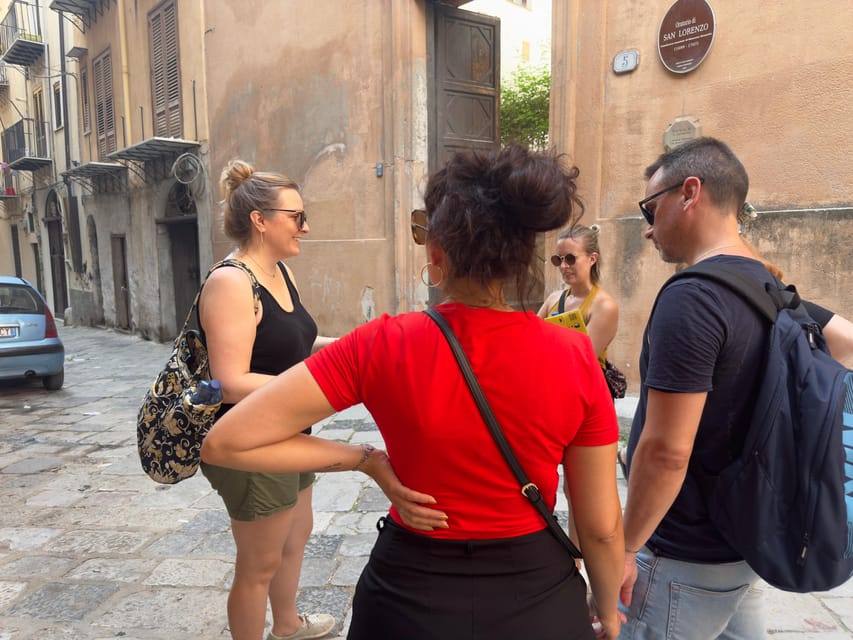
The route finishes in Piazza della Kalsa. This gives the walk a natural ending in the neighborhood where the story began, rather than leaving you at a distant transport hub.
The supplied meeting details also describe the activity as ending back at the meeting point, so check the exact end arrangement when you book. In either case, the route remains concentrated within the Kalsa and covers about one mile in total.
At the end, you should have a better sense of the neighborhood’s links with Falcone and Borsellino, the locations of three major crimes, and the groups working against organized crime today. You also have a useful starting point for further reading and films, since Gobo Tours Italy provides a book and movie recommendation list.
How the guide affects the experience
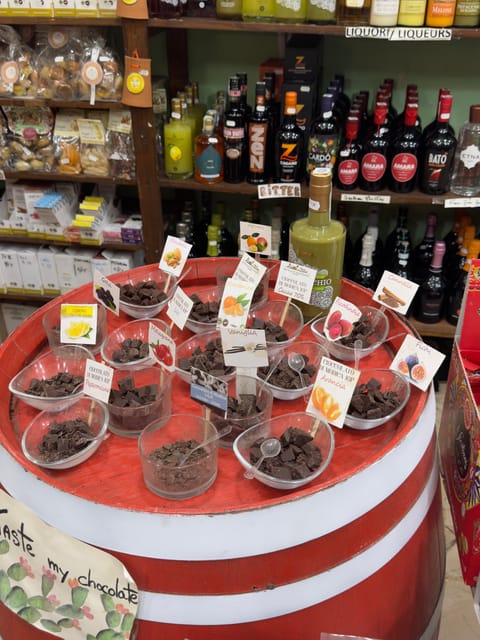
The guide is the most important part of this tour. The walk covers familiar names, but a weak presentation could turn the subject into a dry sequence of dates. The available description of Angela’s guiding shows the kind of approach you should hope for: personal explanations, attention to the personalities on both sides of the conflict, a comfortable pace, and time for questions.
Angela is described as exceptionally well informed about mafia figures, police officers, and the long battle to bring people to justice. That balance matters. The tour does not reduce the story to heroes and villains without context, but it also does not romanticize the criminals.
A small group can make this kind of tour much better. You have more room to ask about details, pause at difficult subjects, and follow the guide’s explanation instead of standing at the back of a large crowd. Group size can change by departure, so you should not assume every outing will be intimate.
The experience has received a top rating from the small number of ratings supplied, with particular emphasis on the explanations and the extra time spent with the group. That points to the tour’s strongest feature: the quality of the storytelling, not the number of buildings you see.
Price, pace, and practical value
At $39.86 per person, this is not the cheapest way to spend a morning in Palermo, but the distance alone is not the measure of its value. You are paying for a 2.5-hour English-language guide, visits to ten significant sites, explanations of three major crimes, and a reading and film list for further study.
I would consider the price reasonable if you want historical context and personal stories. It is less suitable if your main goal is fast sightseeing or food sampling. The tour moves only 1.6 kilometers, but it takes time because the guide stops to explain the meaning of each place.
There are also practical savings built into the format. You do not need museum admission, private transport, or a full-day commitment. Optional refreshments cost extra, with gelato around 3 euros, but no meal is required.
The route is not suitable for wheelchair users, and large bags or luggage are not allowed. Wear closed-toe shoes. The walking distance is short, but Palermo’s streets and the standing time make sensible footwear worthwhile.
You can cancel up to 24 hours before the start for a full refund, and the reserve-now, pay-later option gives you some flexibility while planning a Sicily trip.
Who should book this Kalsa walk
I would recommend it most strongly if you are interested in modern Sicilian history, civic courage, organized crime, or the lives of Falcone and Borsellino. It also suits you if you prefer a neighborhood walk where the guide explains why ordinary places matter.
Families with older children and teenagers may find the subject valuable, provided they are ready for serious material about violence and crime. The tour is educational rather than light entertainment.
You may want to skip it if you are looking for a relaxed morning of architecture, markets, or food. The Kalsa is attractive and lively, but the central subject is difficult. You should also choose the evening version if shade is important, since the evening route is described as shaded while the morning walk is not.
Should you book Anti-Mafia Heroes?
Book this tour if you want Palermo to make more sense beyond its churches, street food, and grand buildings. The strongest reason to go is the storytelling around real locations, especially when guide Angela is leading a small group and has time for questions.
Do not book it simply because it is a short walk. The distance is easy, but the subject asks for attention. Bring a hat, sunscreen, closed-toe shoes, and an open mind, then let the Kalsa show you a side of Sicily built around courage, memory, and resistance.
FAQ
How long is the Anti-Mafia Heroes morning tour?
The tour lasts 2.5 hours and covers about 1.6 kilometers, or one mile, on foot.
What language is the tour conducted in?
The tour is conducted in English with a live guide.
Where does the tour begin?
It begins at Ruderi della casa natale del giudice Falcone on Via Castrofilippo, 4, Palermo. Meet in front of Ciccio Passami l’Olio, by the plaque across the street marking Giovanni Falcone’s birthplace.
Where does the tour finish?
The stated route finishes at Piazza della Kalsa. The activity details also describe the tour as ending back at the meeting point, so confirm the exact end location when booking.
How many sites does the tour visit?
The tour visits ten important sites, including three locations connected with major mafia crimes.
Are refreshments included?
No. The stop at Cagliostro Bakery is a break where you can purchase optional refreshments. Gelato costs about 3 euros.
What should I bring?
Bring a sun hat, sunscreen, and closed-toe shoes. The morning route is not shaded.
Can I bring luggage or a large bag?
No. Luggage and large bags are not allowed on the tour.
Is the tour suitable for wheelchair users?
No. The activity is not suitable for wheelchair users.
More Morning in Palermo
- Catania: Mount Etna Morning or Sunset Day Trip with Tasting
★ 4.8 · 4,028 reviews - Etna Morning Trip
★ 4.5 · 1,241 reviews - Catania: Etna Morning Excursion with Tasting and Pickup
★ 4.8 · 820 reviews - Catania: Amazing Etna Morning Tour with Pickup and Drop-Off
★ 4.9 · 799 reviews
Just added around Palermo
- Valley of the Temples and Villa Romana Multi-Language Tour★ 4.8 · 5 reviews
- Valley of the Temples★ 5.0 · 43 reviews
- Sicilian Winery Tour with Wine Tasting from Palermo★ 5.0 · 12 reviews
- Palermo: Medieval castles of Caccamo & Cefalù. Small Group Tour★ 5.0 · 24 reviews
- Traditional Sicilian Recipes in Palermo★ 5.0 · 4 reviews
- Private Transfer from/to Castellammare del Golfo★ 5.0 · 24 reviews
- UNESCO Day Trip – Monreale & Cefalù★ 5.0 · 6 reviews
- Palermo on a plate: Traditional Food & Wine tour (by Streaty)★ 5.0 · 119 reviews
Palermo Mafia History Tours, compared.
Palermo No Mafia walking tour: discover the Anti-mafia culture in Sicily
Read our review →
Godfather vs Mafia Tour & Pasta Lunch (Small Group or Private)
Read our review →
The Godfather Origins of Mafia: Corleone & Visit Monreale Duomo
Read our review →
Corleone: Guided Tour of the C.I.D.M.A – Anti-Mafia Movement
Read our review →
Browse the lists this tour appears in