
Reviewed · ETNA SUMMIT CRATER TREKS
Excursion on the summit craters of Etna, with cable car and 4×4 bus
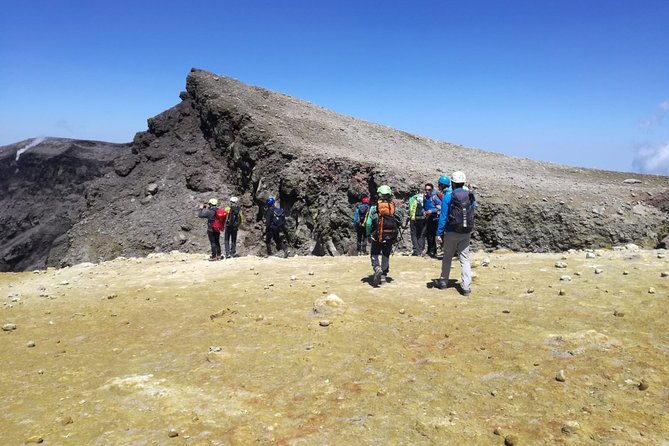
Etna saves its biggest sights for the end: after a cable-car ride and 4×4 climb, you hike across fresh lava and black volcanic sand to about 3,340 meters, where four active craters may send up steam, ash, and small explosions. It is a serious mountain outing, not just a scenic ride.
I like the efficient combination of cable car, 4×4 minibus, and guided trekking, which gets you high on the volcano without spending the whole day on the lower slopes. I also like the close look at recent eruptions, including lava from January 2024 and the 2002 to 2003 craters.
The main caution is weather. Wind and cloud can erase the views and make the summit section unpleasant. One reported outing had very poor visibility, wet rented clothing, and limited English from some guides, so confirm the forecast and bring your own dependable gear if possible.
Key points to know before you book
- You reach roughly 3,340 meters: The route goes far above the cable-car station and requires a moderate level of fitness.
- The transport saves time and energy: A cable car carries you from 1,900 to 2,500 meters, followed by a 4×4 minibus to about 2,800 meters.
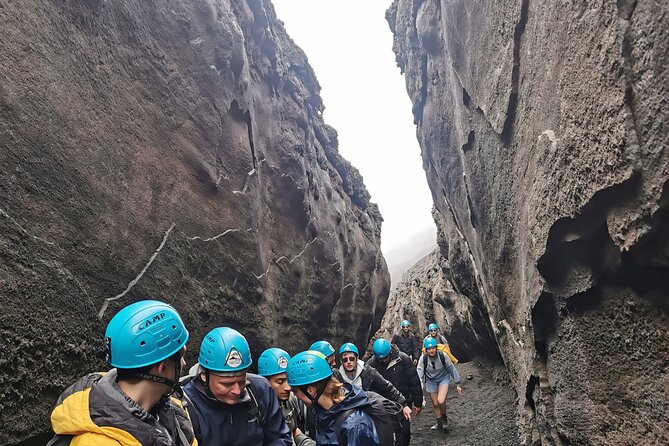
- The summit section is a real hike: You cross recent lava, loose volcanic sand, and rough ground with an Alpine and volcanological guide.
- Valle del Bove adds volcanic drama: The route includes a stop at this large volcanic depression and other points tied to Etna’s eruptions.
- Weather can change the experience: Wind, cloud, ash, and poor visibility are real possibilities at high altitude.
- Pickup costs extra: Transport from your round-trip accommodation costs 30 euros per person, while the regular meeting point is at Rifugio Sapienza.
From Rifugio Sapienza to Etna’s upper slopes
The excursion begins at about 1,900 meters in the Rifugio Sapienza area, also called Nicolosi Nord. The meeting point is Monte Gebel Di Mariangela Carbonaro, Contrada Cantoniera, Nicolosi.
This is the practical starting point for the upper Etna experience. You are already above the towns and vineyards of eastern Sicily, but the serious climb still lies ahead. The tour begins at 9:00 am and lasts about five and a half hours, returning to the same meeting point.
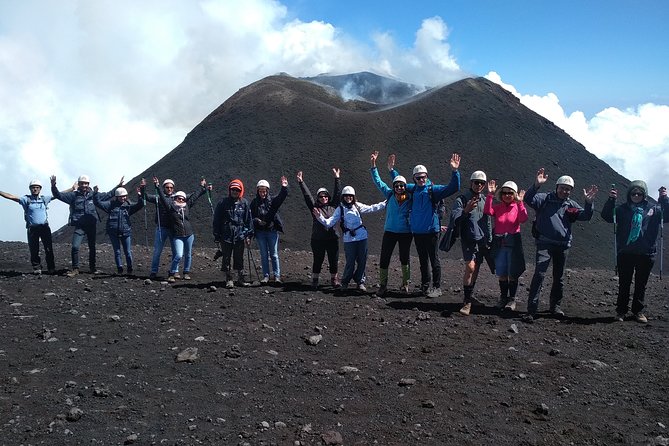
The group is limited to 15 people. That is a useful size for a mountain outing. You are not wandering among a huge crowd, and the guide should be able to keep track of the group on loose, uneven ground.
The guides are described as Alpine and volcanological guides, the professional figures authorized to accompany people on active volcanoes. That matters here. Etna is not simply a high hill with a good view. Its surface changes, its craters can release gas and ash, and conditions near the top can turn quickly.
The activity is conducted in English, but you should keep your expectations realistic. English is available, yet one account described some difficulty understanding the guides because Italian was used more often. If volcanic science and safety explanations are a major reason you are booking, ask at the start how much of the commentary will be in English.
More treks to the summit craters:
- Mount Etna: Guided Volcano Summit Hiking Tour with Cable Car
★ 4.7 · 3,784 reviews - Etna Volcano: South Side Guided Summit Hike
★ 4.7 · 1,545 reviews - From Taormina: Etna Upper Craters Day Tour
★ 4.1 · 505 reviews
The cable car to 2,500 meters
The first major lift takes you from 1,900 to 2,500 meters. The return cable-car ticket is included, so you do not need to arrange this separately.
I like this part of the plan because it removes a long, tiring lower-altitude climb. You quickly gain height and reach the volcanic zone where the ground becomes much more stark and unusual. From the cable car, you are positioned for the 4×4 ride and the upper hike rather than spending your morning on access roads and broad lower slopes.
The cable car is also where the weather begins to matter more. A calm morning at Rifugio Sapienza does not guarantee calm conditions higher up. You can encounter stronger wind, cloud, or cold as you gain altitude.
That is why the recommended equipment is important. Wear proper hiking shoes, not casual sneakers, and bring a windbreaker. The operator recommends hiking shoes and wind protection, and that advice is worth following even if the weather at your hotel feels warm.
Trekking poles are available on request. Ask for them before leaving if you are unsure on loose ground or find steep descents hard on your knees. The return route is mainly sandy, and poles can help with balance.
The 4×4 ride to 2,800 meters
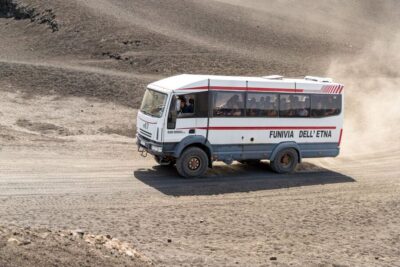
From the cable-car station, special off-road minibuses carry the group to about 2,800 meters. This second transfer is more than a convenience. It places you close to the area where the actual trek begins.
The 4×4 ride means you can reserve your energy for the high-altitude section. You will still need to walk over volcanic ground, but you are not using your legs for the full approach from the base area.
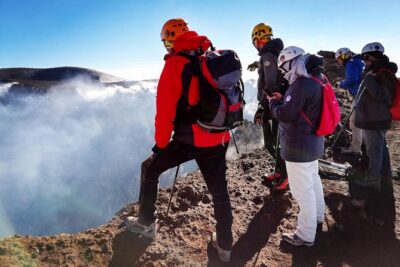
A protective helmet becomes mandatory from 2,900 meters. The equipment requirement reflects the character of this part of Etna. You are entering a zone where active volcanic features and loose material require more care.
The tour includes the helmet, insurance, cable car, 4×4 minibus, and guide. At $168.58 per person, it is not a low-cost mountain excursion. Still, the price covers several major components that would otherwise be separate, along with specialist supervision on an active volcano.
The value depends on what you want. If you mainly want a view from Etna, a lower and shorter visit may cost less. If you want to reach the high craters with transport already organized and a qualified guide leading the way, this package is easier to justify.
Hiking across fresh lava and black volcanic ground
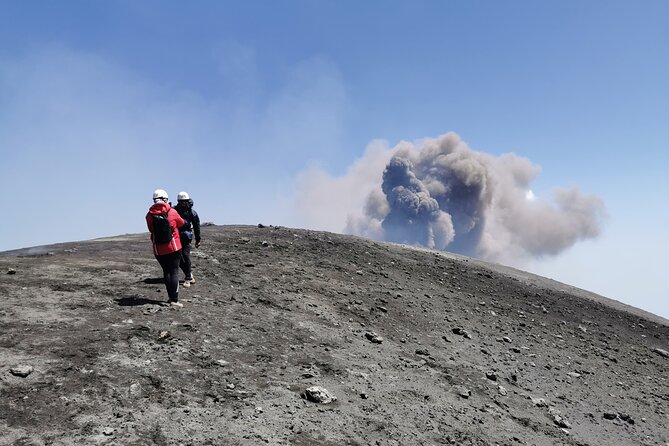
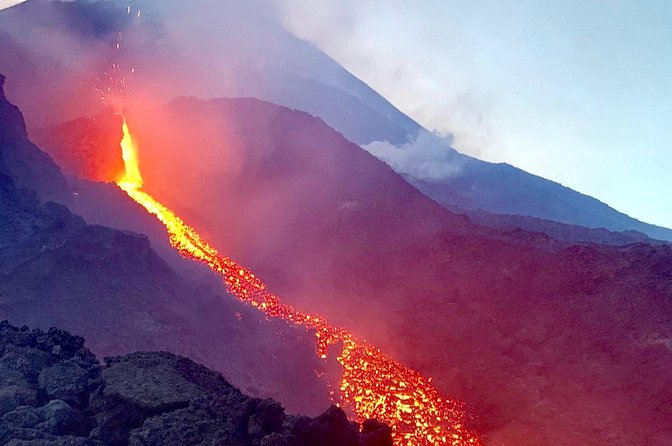
At about 2,800 meters, the walking begins. The route crosses very recent lava, including material from an eruption in January 2024. That detail gives the outing a strong sense of place. You are not just looking at old volcanic rock preserved as scenery. Etna is still changing.
The surface can be rough and uneven. The route also passes through black, sandy volcanic terrain that gives the upper slopes their stark appearance. The descent is mainly on this sandy surface, which can make the return faster and more playful, but it can also feel unstable underfoot.
The walking section is the part to take seriously. The operator asks for a moderate level of physical fitness, and that is a fair description. You do not need to be a technical mountaineer based on the information provided, but you should be comfortable walking uphill and downhill on uneven ground at high altitude.
The altitude adds another challenge. At approximately 3,340 meters, even a familiar walk can feel harder than expected. Move at the group’s pace, use the poles if needed, and tell the guide if you are struggling.
The trip is strictly unsuitable for anyone with cardiovascular problems. That warning should not be treated as a minor note. You should also think carefully about booking if you have trouble with exertion, altitude, or steep loose surfaces.
More jeep and quad runs on Etna:
- Catania: Sunset Jeep Tour of Mount Etna and Lava Flow Caves
★ 4.8 · 2,113 reviews - Catania: Morning Jeep Tour of Mount Etna and Lava Flow Caves
★ 4.7 · 774 reviews - Etna Tour in 4×4
★ 5.0 · 583 reviews - Etna excursion 3000 meters with 4×4 cable car and Trekking
★ 4.5 · 504 reviews
Valle del Bove and Etna’s eruption story
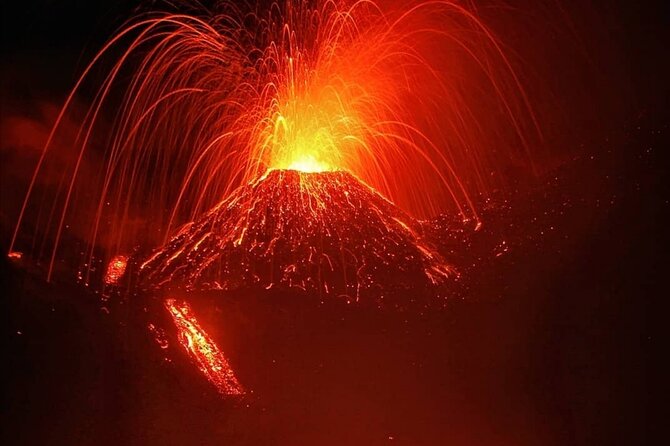
Valle del Bove is listed as the tour’s main stop. This vast volcanic depression is one of the important visual features of Etna, and it helps explain how the volcano has been shaped by eruptions and collapse.
The route also passes the craters created during the 2002 and 2003 eruptions. These sections give you a useful comparison between older recent activity and the very newest lava higher on the mountain.
I appreciate that the tour includes several kinds of volcanic evidence rather than rushing straight to a single viewpoint. You see eruption craters, fresh lava, fumaroles, ash, and steam. The geology is easier to understand when the guide connects these sights to Etna’s continuing activity.
Conditions can affect how much you take in. In heavy wind or cloud, Valle del Bove and the larger views may disappear. The volcanic ground is still there, but the visual reward can be much smaller.
One outing had strong wind and almost no visibility near the top. In that situation, continuing upward may feel less worthwhile, especially if the conditions are worsening. You should be prepared for the guide’s judgment to control the pace and route, since safety on an active volcano has to come first.
The upper craters at about 3,340 meters
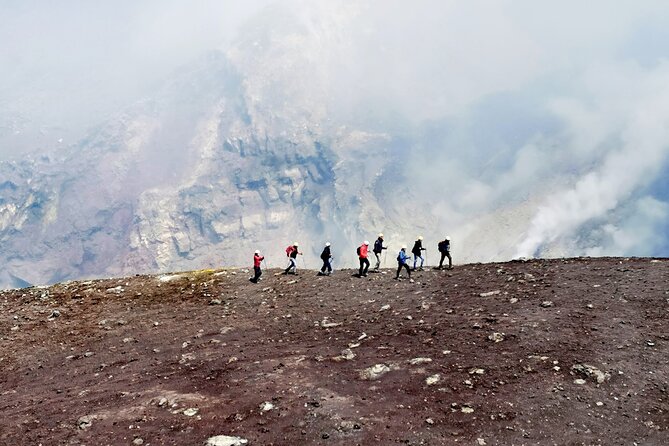
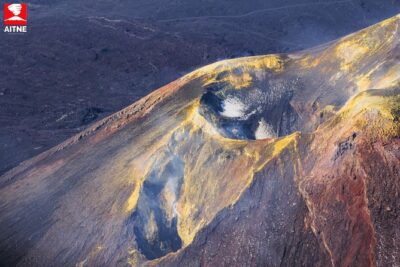
The goal is the upper area at approximately 3,340 meters. From there, you may see four active craters, with fumaroles, ash, steam, and ongoing small explosions.
This is the tour’s strongest point. It brings you close to the workings of one of Europe’s most active volcanoes, rather than offering only a distant view of a smoking summit. The sight can be powerful, but it is also dependent on volcanic and weather conditions.
Do not book this expecting a guaranteed clear panorama. The mountain can produce cloud, wind, and poor visibility even when the lower meeting point looks pleasant. The operator requires good weather and may cancel or offer another date if conditions are poor.
The description of continuous explosions and ash should also set your expectations correctly. Etna’s activity is part of the reason for the guide requirement and helmet rule. You are visiting a living volcanic area, not a static monument.
The guide’s role is particularly important here. You need someone who can interpret what you are seeing and manage the group around fumaroles and unstable volcanic surfaces. Since English communication has been a weak point on at least one outing, make sure you understand the safety instructions before the hike begins.
The sandy descent back to the cable car
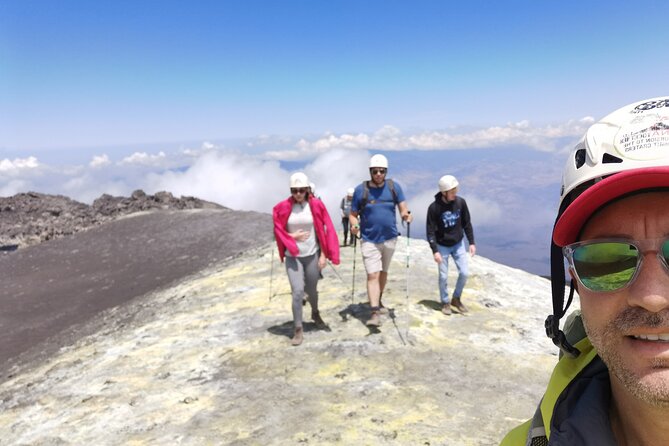
The return walk takes a mainly sandy route toward 2,500 meters. Loose volcanic sand can make the downhill journey quicker, and the operator describes it as an easy and fun way back to the valley.
I would still treat the descent with care. Sand can slide beneath your boots, and tired legs make small slips more likely. Good hiking shoes matter just as much on the way down as they do during the climb.
Along the descent, you pass the 2002 and 2003 eruption craters and other points of volcanic interest. This gives the return trip some purpose instead of making it a simple retracing of the morning route.
At around 2,500 meters, you take the cable car back to the starting area. The activity ends where it began, so you can leave your vehicle there or arrange your own onward transport after returning.
Clothing, food, and pickup details
Food is not included. You can buy something to eat at the meeting point before departure, so arrive with enough time to purchase supplies. The excursion lasts about five and a half hours, and the combination of altitude and exercise makes it sensible to bring food and water for the day.
The recommended clothing is simple but important:
- Sturdy hiking shoes
- A windbreaker
- Warm layers suitable for high altitude
- Sun protection
- Trekking poles, if you want them
Protective helmets are supplied and mandatory from 2,900 meters. Trekking poles are available on request.
Pickup from your round-trip accommodation is not part of the standard arrangement. It costs an additional 30 euros per person. If you can reach Rifugio Sapienza on your own, the extra cost is avoidable. If you are staying farther away or do not have convenient transport, the paid pickup may be worth the simplicity.
The meeting point is near public transportation, though the exact convenience depends on where you are staying. Check your route carefully before booking, since the regular tour begins at the mountain meeting point rather than from central Catania.
Weather, language, and the tour’s overall value
The experience has a strong approval record, with a 4.8 rating from 12 reviews and 92 percent recommending it. Those figures suggest that the basic format works well for many people, particularly those who want the upper mountain without organizing each transfer themselves.
The main variables are outside the operator’s control. High wind can make the summit uncomfortable. Cloud can hide the view. Fresh rain can leave clothing provided by the operator damp, and one reported outing found some of the available clothing still wet from the previous day.
For that reason, I would bring my own windproof and warm layers rather than rely on rented or supplied clothing. Ask about the English commentary and the day’s conditions before setting off. Clear communication is worth a few minutes at the start.
At $168.58, the tour is best viewed as a full-service high-altitude outing. You pay for the return cable car, 4×4 access, guide, helmet, insurance, and a planned route through several volcanic areas. That is reasonable if the summit craters are your main goal.
You can cancel for a full refund up to 24 hours before the start time. Changes made less than 24 hours ahead are not accepted, and poor weather can lead to a new date or full refund.
Who should book this Etna excursion?
I would choose this tour if you want to reach Etna’s upper volcanic zone, prefer having transport arranged, and are comfortable with a moderate hike at high altitude. It suits people who care more about active geology and recent lava than about a relaxed sightseeing day.
I would think twice if you have cardiovascular problems, dislike strong wind, need guaranteed views, or want a gentle cable-car outing with little walking. The climb to about 3,340 meters is the central feature, not a small add-on.
Book it with proper shoes, your own windproof layers, food, and realistic weather expectations. If conditions are clear, the route offers an unusual mix of recent lava, old eruption craters, fumaroles, ash, and wide Sicilian views. If the summit is hidden by cloud, you may still see remarkable volcanic ground, but the tour will not deliver its full visual reward.
FAQ
Where does the Etna excursion begin?
It begins at Monte Gebel Di Mariangela Carbonaro, Contrada Cantoniera, Nicolosi, in the Rifugio Sapienza area at about 1,900 meters.
What time does the tour start?
The stated start time is 9:00 am.
How high does the tour go?
The route reaches approximately 3,340 meters, after the cable car to 2,500 meters, the 4×4 minibus to about 2,800 meters, and a guided hike from there.
Is hotel pickup included?
No. Pickup from your round-trip accommodation is available for an additional 30 euros per person.
Is lunch included?
No. You can buy something to eat at the meeting point before the excursion begins.
Can I cancel for a full refund?
Yes. You can cancel at least 24 hours before the start time for a full refund. If poor weather causes the operator to cancel, you will be offered another date or a full refund.
More Taormina Cable Car Tickets
- Mount Etna: Summit Trek with Cable Car and snack included
★ 4.7 · 278 reviews - Mount Etna: Return Funivia dell’Etna Cable Car Ticket
★ 4.0 · 240 reviews - Mount Etna South Slope: Ticketing for the Etna Cable Car
★ 3.5 · 39 reviews - Tour to the Summit Craters of Etna 2920 meters with cable car and Jeep
★ 5.0 · 23 reviews
Just added around Sicily
- Zafferana Etnea:Honey extraction workshop and honey tasting★ 4.7 · 3 reviews
- From Trapani: Favignana and Levanzo Yacht Tour with Stops★ 5.0 · 4 reviews
- Mt Etna: Winter Trekking Tour with Optional Catania Transfer★ 4.7 · 13 reviews
- Wine tour with wine tasting★ 4.7 · 18 reviews
- Wine tasting in Catania Historic center★ 4.4 · 15 reviews
- Sicilian Soul: Winery Tour, Wine & Food Tasting in Catania★ 5.0 · 4 reviews
- Valley Of The Temples By E-Bike With Picnic Included★ 4.7 · 7 reviews
- Valley of the Temples and Villa Romana Multi-Language Tour★ 4.8 · 5 reviews
Etna Summit Crater Treks, compared.
Guided Volcano Summit Hiking Tour with Cable Car
Read our review →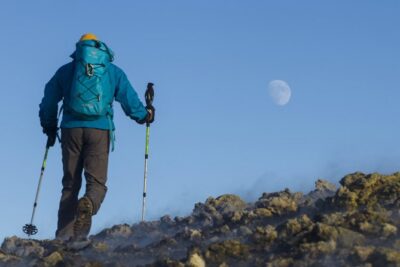
Trekking to the summit craters (only guide service) experienced hikers
Read our review →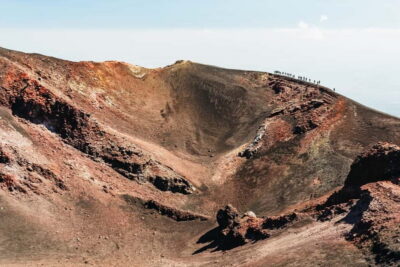
Browse the lists this tour appears in