Reviewed · SICILY TOURS
Half Day Tour of Syracuse
Syracuse packs Greek theaters, Roman ruins, ancient quarries, and a handsome island old town into one remarkably compact visit. This three-hour tour connects the Neapolis Archaeological Park with Ortigia, giving you both the major ancient sites and the living heart of the city.
I like the private format and the guide’s flexibility. Letizia can adjust the pace and focus to your interests, and she has even slowed the walk on very hot days. I also like the way the tour links archaeology with daily Sicilian life, including wild herbs, food traditions, and the layers of cultures that shaped Syracuse.
The main drawback is simple: three hours goes fast. Entrance tickets are extra, transportation is not provided, and the archaeological park deserves time on its own. Still, for a first look at Syracuse, this is a well-planned introduction.
Key points to know
- Two major sides of Syracuse: Spend about two hours among the ancient ruins and one hour in Ortigia.
- A private English-language tour: Your group has the guide to itself, with room to ask questions and change the pace.
- Letizia leads the experience: She is praised for clear English, local insight, patience, and an easy manner.
- The archaeological park is the main event: The Greek Theater, Roman Amphitheater, stone quarries, and Dionysius’ Ear are all part of the visit.
- Ortigia finishes the tour: See the ancient Temple of Apollo, Syracuse Cathedral, and the freshwater Spring of Arethusa.
- Budget for extras: The $141.40 per person price covers the guide, but not entrance fees, snacks, or private transport.
Why this short Syracuse tour works
Syracuse can feel scattered if you are seeing it for the first time. The archaeological park sits on the mainland side of the city, while Ortigia is the small island at its historic center. This tour handles both areas in one outing, so you do not have to choose between ancient ruins and the old town.
That pairing is the real strength. The Neapolis Archaeological Park shows Syracuse as a major Greek and Roman city. Ortigia shows how the city continued to develop, with temples reused as churches, narrow streets shaped by centuries of building, and public spaces that still serve everyday life.
I would think of this as an orientation tour rather than a full archaeological study. You get the main sights, a guide to explain what you are seeing, and a useful sense of how the city fits together. If you want long museum stops or detailed time at every ruin, you will need to add another visit.
The private format matters here. You are not trying to keep up with a large group or wait while someone takes endless photographs. Letizia can respond to questions, adapt the walk, and give more attention to the parts that interest you most.
A few more Sicily days worth weighing up
- Etna Morning Trip
★ 4.5 · 1,241 reviews - Syracuse: Boat Trip of Ortigia Island and Sea Caves
★ 4.7 · 937 reviews - Tour of the island of Ortigia and exploration of sea caves with baths.
★ 5.0 · 668 reviews
Starting among Greek and Roman ruins
The tour begins at Largo Anfiteatro, 2, beside the archaeological area. The first two hours focus on Parco Archeologico della Neapolis, the largest and most historically dense part of the outing.
The Greek Theater is the headline sight. It is described as the biggest Greek theater in Sicily, and its scale helps explain Syracuse’s importance in the ancient Mediterranean world. From the stone seating and open setting, you can picture performances taking place here long before the modern city grew around it.
A guide adds value because ruins do not always explain themselves. Letizia’s role is to show how the structures worked, identify the cultures that shaped them, and help you picture the park as more than a collection of broken stones. Her explanations also connect ancient Syracuse with present-day Sicilian customs.
The park includes the stone quarries, known as the Latomiae. These deep-cut quarries were used to extract stone, but they also became places of confinement. The famous Dionysius’ Ear, or Dionysius’ Grotto, is one of the most memorable features. Its name comes from the unusual shape and acoustic qualities of the cavern, though the stories surrounding it are part of the site’s long tradition.
You will also see the sacrificial altar of Hieron II. This enormous structure gives you a sense of the scale of religious ceremonies in ancient Syracuse. It is not just another isolated ruin. With a good explanation, it helps you understand how public ritual, political power, and city life were connected.
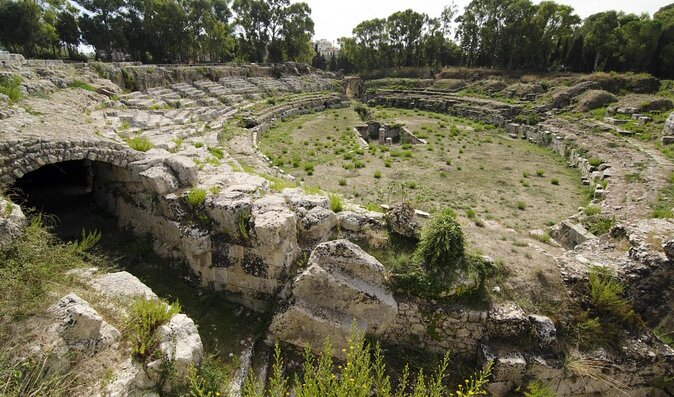
The Roman Amphitheater adds another chapter. Greek theater and Roman entertainment served different purposes, and seeing both in the same park makes the change in culture easier to grasp. The contrast is one of the best reasons to visit Neapolis with a guide rather than simply walk through it alone.
The park can involve uneven ground and plenty of sun. The experience requires a reasonable ability to participate, and you should plan for a walking tour rather than a seated sightseeing trip. A slower pace is possible, especially in hot weather, but the tour still covers a fair amount of ground.
Letizia’s local approach
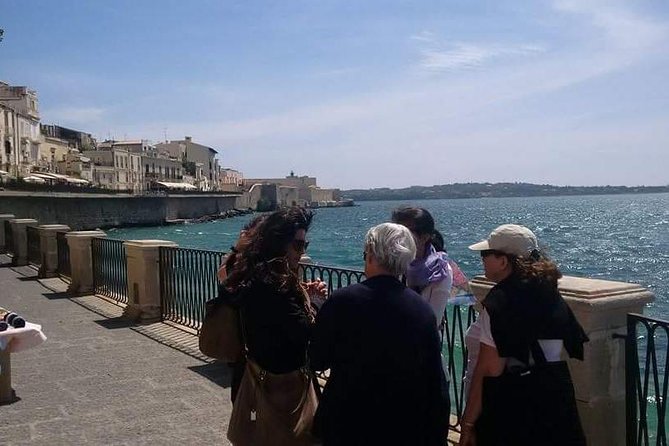
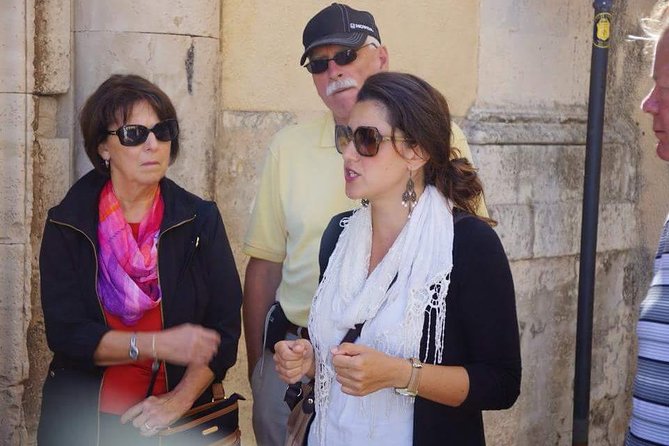
The guide can make or break a short historical tour. Letizia is repeatedly praised for her English, patience, friendliness, and strong command of Syracuse and its surrounding area. She comes from a family of tour guides, and that local connection shows in the way she brings the ancient sites into the present.
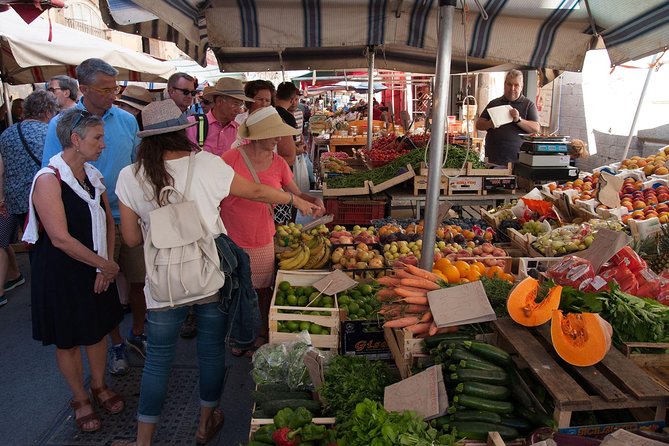
Her approach is not limited to dates and names. She points out local spices growing along the route and explains how older traditions connect with modern culture. That detail may sound small, but it gives the walk a more personal feel. You begin to notice Syracuse as a place where history is still part of ordinary life.
She is also comfortable handling different interests. You can ask detailed questions about archaeology, focus on the city’s cultures, or keep the pace relaxed. Some participants have used the tour as a starting point for restaurant suggestions, food experiences, and later visits around Sicily.
The private setup makes this especially useful for couples, families, or friends who do not all want the same kind of tour. You can spend more time on the Greek Theater, ask about the quarries, or shift the conversation toward food and local customs without holding up a larger group.
Crossing into Ortigia
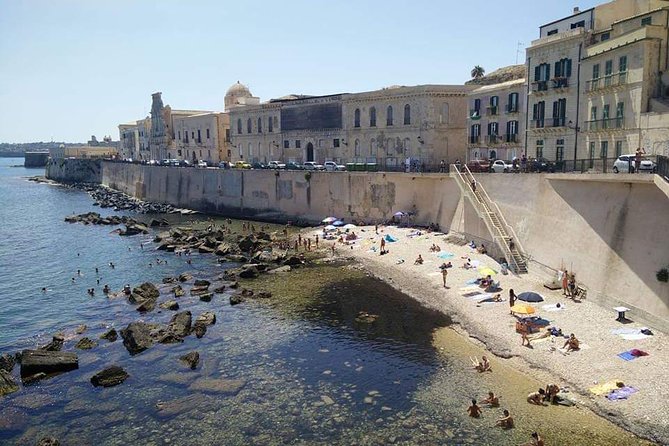
After the archaeological park, the tour moves to Ortigia for about an hour. The island is compact, but its past is layered. The short visit focuses on three important sights: the ancient Temple of Apollo, the Cathedral, and the Spring of Arethusa.
The Temple of Apollo is identified as the oldest temple in Sicily. Even in its ruined state, it helps you understand how much older Syracuse is than the Baroque streets and churches that often attract the eye today. Its position in Ortigia makes the ancient city feel close to the modern one.
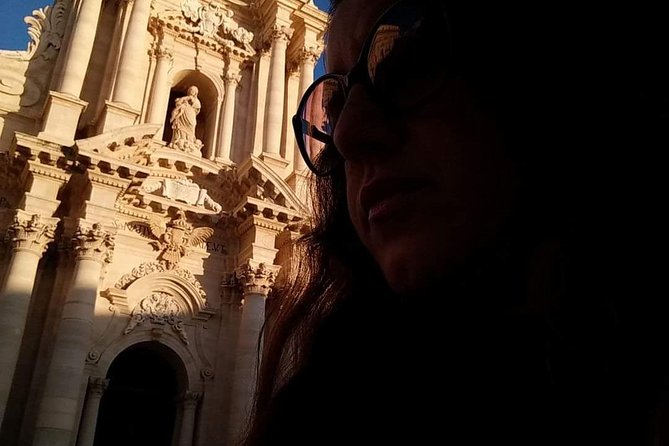
The Cathedral is one of the island’s most striking buildings because several styles are visible in one place. It incorporates the structure of an earlier Greek temple, while later changes added Christian and Baroque elements. The result is not a perfectly uniform building, and that is precisely what makes it interesting. You can read Syracuse’s changing beliefs and rulers in the walls.
The final stop is the Spring of Arethusa, the symbol of Ortigia. This freshwater spring sits close to the sea and has long been tied to Greek mythology and the identity of the island. Ending here is practical as well as scenic, since the tour finishes at Fonte Aretusa.
You will not return to the starting point. The route ends in front of the spring, inside Ortigia. That makes this tour useful if you want to continue exploring the island, find lunch, or visit the market and old streets afterward. It also means you should plan your day around an open-ended finish rather than expecting transport back to the archaeological park.
Booked from the same base, and a completely different kind of day:
- Catania: Mount Etna Morning or Sunset Day Trip with Tasting
★ 4.8 · 4,028 reviews - Mount Etna: Guided Volcano Summit Hiking Tour with Cable Car
★ 4.7 · 3,784 reviews - Palermo: NO Mafia Walking Tour
★ 4.8 · 2,431 reviews - Palermo: Hop-on Hop-off Bus Tour 24-hour Ticket
★ 3.9 · 2,410 reviews
How much value does $141.40 provide?
At $141.40 per person, this is not a bargain walking tour. The price reflects a private experience with a local English-speaking guide, not a group outing. If you are traveling with several people, the cost may feel easier to justify because the attention is shared only among your own group.
The value rests mainly in the guide’s interpretation. The archaeological park is large enough that you could spend time wandering without understanding the connections between the Greek, Roman, religious, and civic remains. A strong guide helps you see why each stop matters and keeps a short visit focused.
Remember that admission tickets are not included. Snacks and private transportation are also extra. You should check the ticket cost before booking so the total fits your budget, especially if you are traveling with a family.
The tour does not include a meal or a food tasting. That is not a flaw for everyone. It keeps the schedule focused on the two major historic areas, and the finish in Ortigia leaves you well placed to choose your own restaurant afterward. Letizia has provided restaurant suggestions to some participants, but a specific meal is not part of the booked experience.
Timing, meeting point, and pace
The stated duration is about three hours, with two hours at Neapolis and one hour in Ortigia. The listed operating window is Monday through Saturday, from 10:00 a.m. to 4:00 p.m., for the dates shown through February 18, 2027.
You meet at Largo Anfiteatro, 2, in Syracuse. Since no private transportation is included, you need to arrange your own way to the meeting point. The tour finishes at Fonte Aretusa in Ortigia, so allow for a one-way route through the city.
A mobile ticket is provided, and confirmation is received when you book. The experience is offered in English. Service animals are allowed, and the meeting area is near public transportation.
I would avoid treating this as a hurried checklist. Syracuse is hot at times, and the park has open areas with little shade. Letizia can adapt the pace, but comfortable walking shoes, water, and sun protection are sensible choices. Snacks are not included, so bring what you need or plan to eat after the tour.
The experience requires good weather and a minimum number of participants. If poor weather cancels it, you are offered another date or a full refund. The same applies if the minimum number is not met.
Who should book it?
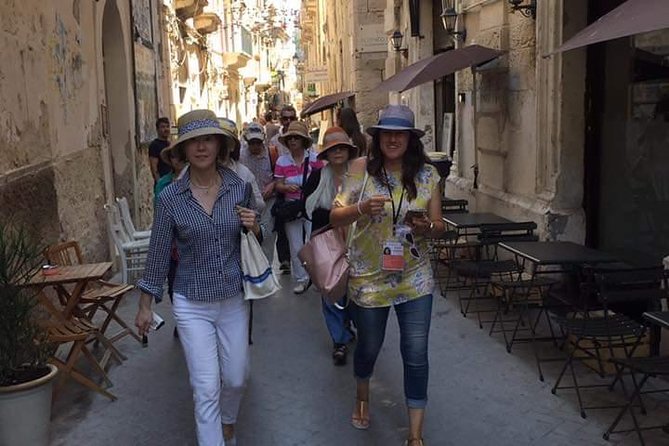
I would choose this tour if you have only a morning or afternoon in Syracuse and want the city’s key sights explained in person. It suits first-time visitors, couples, families, and anyone who prefers asking questions instead of reading through signs alone.
It is also a good fit if you want a private pace. The guide can slow down in the heat, adjust the emphasis, and respond to your interests. The experience has earned a 4.9 rating from 37 reviews, with 97 percent of participants recommending it, and the strongest praise centers on Letizia’s personal attention and command of local history.
You may want something else if your priority is low cost, a full-day archaeological visit, or included admission and transport. Three hours gives you a smart overview, not an exhaustive examination of Syracuse.
The final call
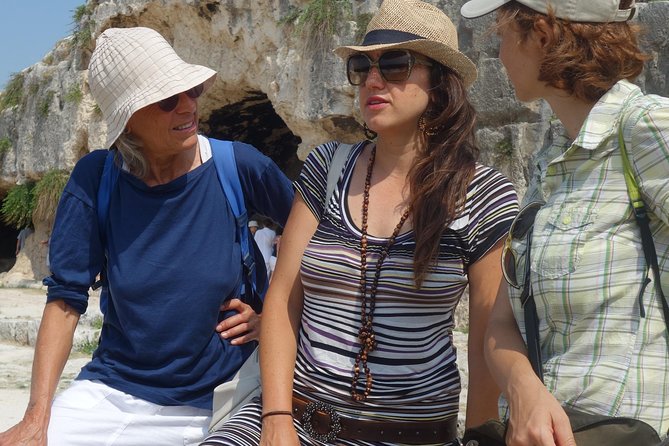
Book this tour if you want the Greek Theater, ancient quarries, Roman Amphitheater, Temple of Apollo, Cathedral, and Spring of Arethusa tied together by one local guide. The private format and flexible pace are the best reasons to pay more than you would for a basic group walk.
Before booking, confirm the total cost of entrance tickets and make sure the meeting and ending points fit your plans. If they do, this is a practical way to get your bearings in Syracuse while still leaving time for lunch, the market, and more wandering in Ortigia.
FAQ
How long does the Half Day Tour of Syracuse last?
The tour lasts approximately three hours. About two hours are spent at the Neapolis Archaeological Park and one hour in Ortigia.
What places are included?
The tour includes the Greek Theater, stone quarries, Dionysius’ Grotto, the sacrificial altar of Hieron II, and the Roman Amphitheater at Neapolis. In Ortigia, it includes the Temple of Apollo, Syracuse Cathedral, and the Spring of Arethusa.
Are entrance tickets included?
No. Entrance tickets are not included in the tour price.
Is transportation included?
No. Private transportation is not included. The meeting point is at Largo Anfiteatro, 2, and the tour ends at Fonte Aretusa in Ortigia.
Is the tour private?
Yes. Only your group participates in the activity.
Is the tour offered in English?
Yes. The experience is offered in English, and Letizia is described as speaking English fluently.
Where does the tour finish?
The tour finishes at Fonte Aretusa, in front of the Spring of Arethusa inside Ortigia.
Can I cancel for a refund?
You can cancel at least 24 hours before the start time for a full refund. Cancellations or changes made less than 24 hours before the start time are not accepted for a refund.
Just added around Sicily
- Zafferana Etnea:Honey extraction workshop and honey tasting★ 4.7 · 3 reviews
- From Trapani: Favignana and Levanzo Yacht Tour with Stops★ 5.0 · 4 reviews
- Mt Etna: Winter Trekking Tour with Optional Catania Transfer★ 4.7 · 13 reviews
- Wine tour with wine tasting★ 4.7 · 18 reviews
- Sicilian Soul: Winery Tour, Wine & Food Tasting in Catania★ 5.0 · 4 reviews
- Wine tasting in Catania Historic center★ 4.4 · 15 reviews
- Valley Of The Temples By E-Bike With Picnic Included★ 4.7 · 7 reviews
- Valley of the Temples and Villa Romana Multi-Language Tour★ 4.8 · 5 reviews
Sicily Tours, compared.
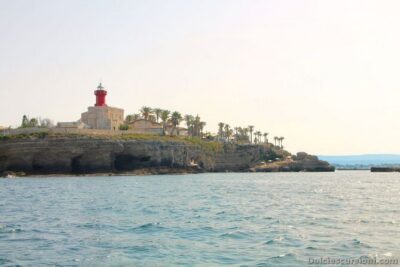
Tour of the island of Ortigia and exploration of sea caves with baths.
Read our review →

SALT TOUR-all inclusive: salt tour: Trapani, Paceco, Nubia
Read our review →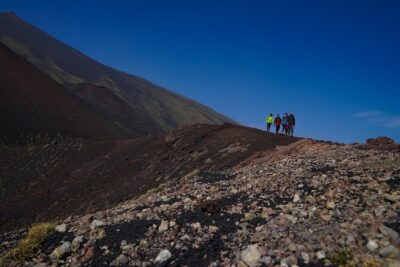
Mt. Etna nature and flavors half day Tour from Catania
Read our review →
Boat tour Giardini Naxos Taormina Isola Bella Blue Grotto
Read our review →