
Reviewed · PALERMO NORMAN PALACE TOURS
Tour Cappella Palatina e palazzo Reale: patrimonio Unesco
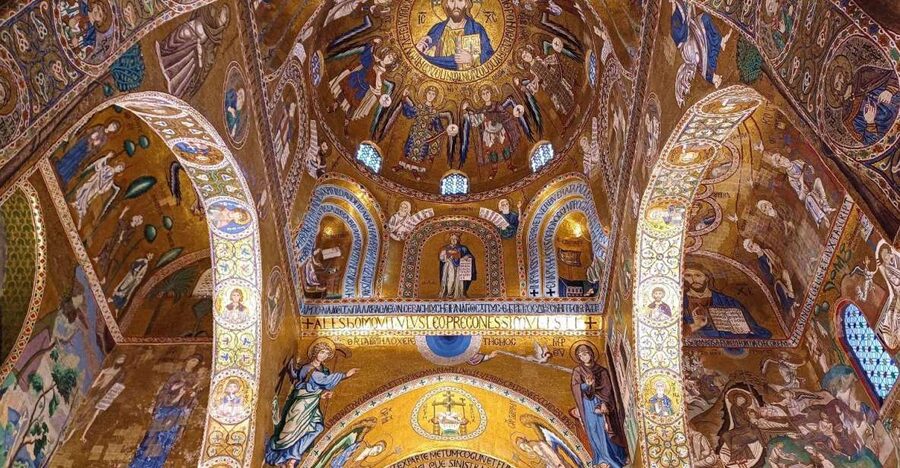
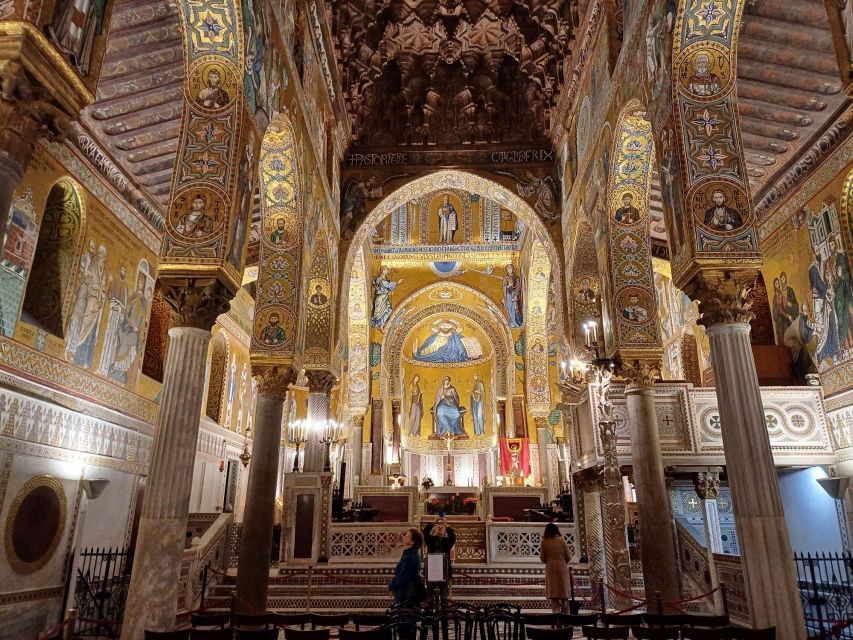
The real prize here is the Palatine Chapel, a small royal church covered in gold Byzantine mosaics, with an Islamic muqarnas ceiling and a patterned marble floor. I like that the tour also places the chapel inside the much larger story of Palermo’s Royal Palace, a building shaped by Norman kings, Frederick II, viceroys, and the Sicilian Parliament. The main drawback is simple: the guide speaks only Italian, and your entrance ticket is not included.
I also like the human touch. Guides Fabrizio and Claudio are specifically named by the provider, and Fabrizio is praised for explaining the palace rooms and the chapel’s mosaic scenes with care and energy. Plan for some time on your feet, since there are few places to sit, and dress modestly for entry.
Key points to know before booking
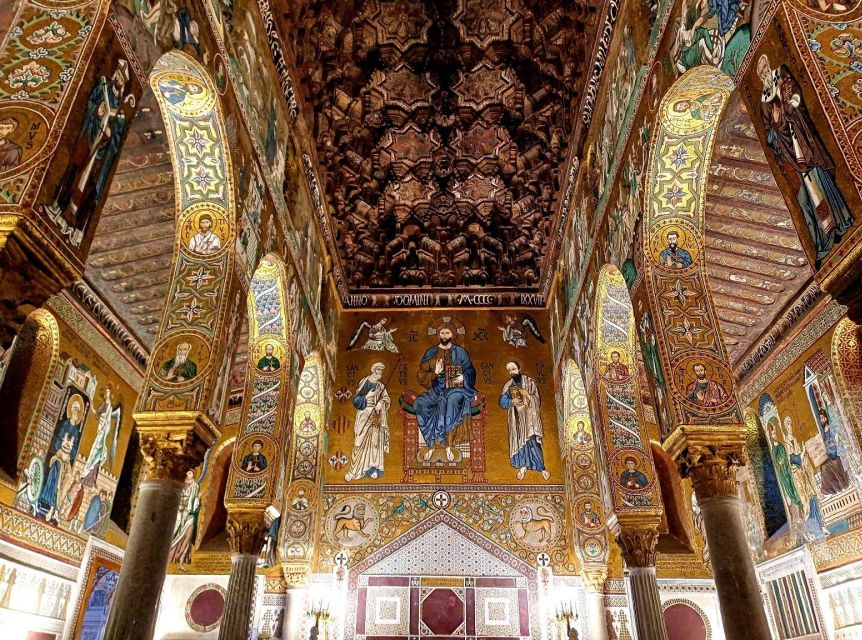
- The Palatine Chapel is the main event: Gold mosaics, Islamic ceiling work, and Romanesque marble decoration meet in one extraordinary interior.
- The setting is the Royal Palace: You are visiting Europe’s oldest royal residence, with more than 2,700 years of history.
- The tour is in Italian only: This matters greatly if you want detailed explanations rather than a quick look around.
- Your $14 pays for the guide service: The palace and chapel admission ticket must be purchased separately online or at the ticket office.
- Fabrizio and Claudio guide the visits: Fabrizio is especially praised for his clear account of the mosaics, royal rooms, and palace history.
- Expect limited seating: Wear suitable clothing, avoid shorts and sleeveless tops, and be ready to stand for much of the visit.
Why the Palatine Chapel deserves your time
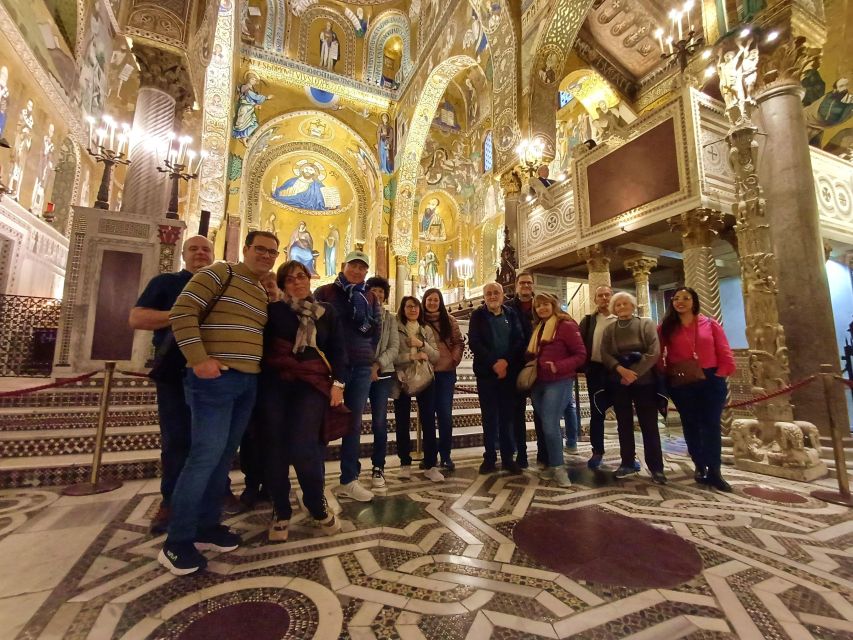
Palermo has no shortage of grand churches, but the Palatine Chapel has a rare visual balance. Norman rulers commissioned it, Byzantine artists created much of its mosaic decoration, and Islamic craftsmen shaped the ceiling. Romanesque marble work completes the picture.
You do not need to be an art expert to see why this place is special. The gold mosaics catch your eye first, but the chapel rewards a slower look. Biblical scenes cover the walls, and the arrangement tells a story through images rather than long explanations. A guide can help you follow that story instead of simply gazing upward and moving on.
The chapel was built in 1140 by Roger of Hauteville, the first king of Sicily. It was not only a place of worship. It also announced royal power. The combination of Christian imagery, Byzantine artistic skill, Islamic design, and Norman ambition reflects the mixed culture of medieval Sicily.
That blend is what makes the visit more than a stop for pretty photographs. You can see several traditions sharing one building, not separated into different rooms or periods. The result feels unusually coherent, even though its ingredients came from different parts of the Mediterranean world.
More Norman Palace and Palatine Chapel visits:
- Palermo: Norman Palace and Palatine Chapel Tour with Tickets
★ 4.7 · 298 reviews - Palermo: Cappella Palatina and Palazzo dei Normanni Tour
★ 4.8 · 214 reviews - Palermo: Norman Palace & Palatine Chapel – Small Group or Private
★ 4.5 · 73 reviews
Entering the Royal Palace of Palermo
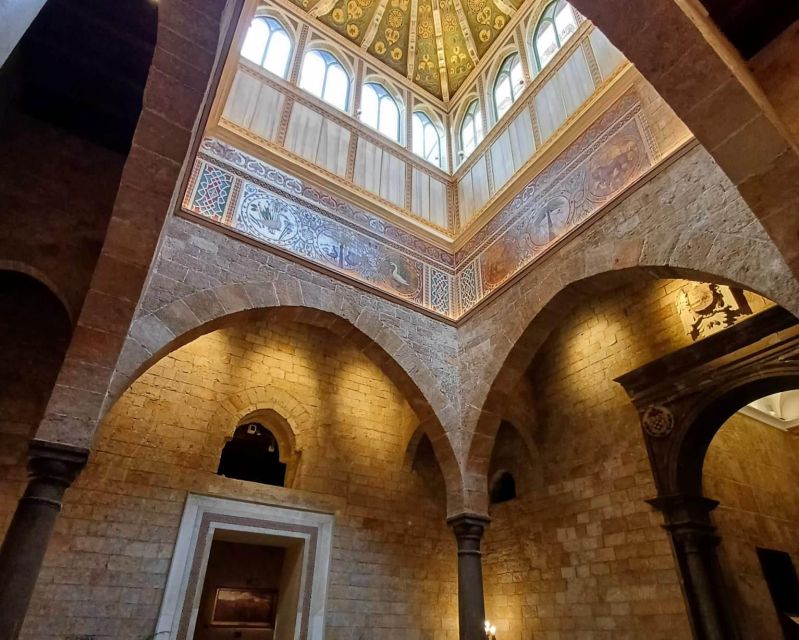
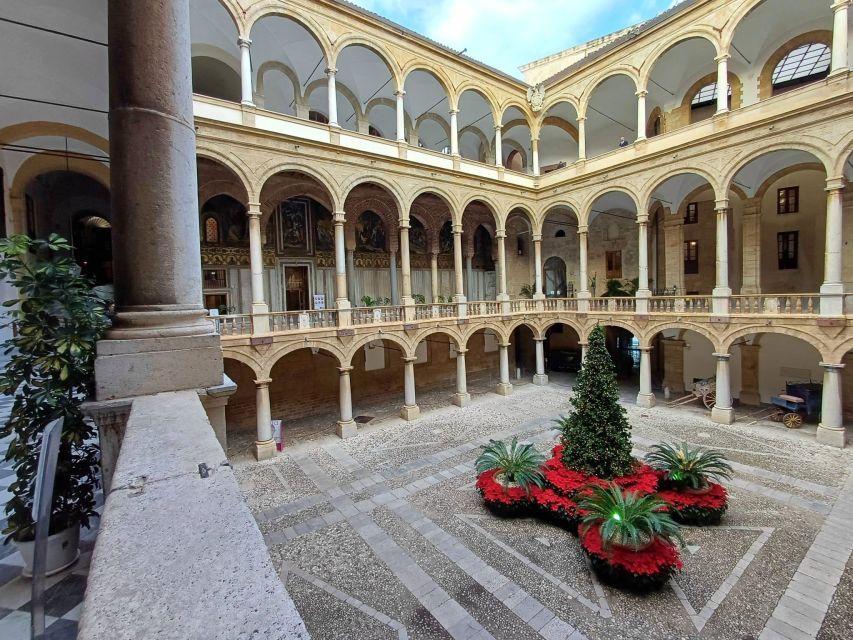
The Royal Palace, also called the Palazzo dei Normanni, has a long story that begins before the Norman period. The site has more than 2,700 years of history, and over time it served as a fortified settlement, royal residence, court, treasury, workplace, and political center.
The Normans greatly expanded and rebuilt the earlier structure. They turned it into their main seat in Sicily, with space for government, royal ceremonies, and daily court life. When you walk through the palace, you are not visiting a single-period monument. You are moving through a building that changed as rulers and institutions changed.
Frederick II is an important part of the story. During his reign, the palace hosted the Sicilian Poetic School, a major center for the development of Italian poetry. The palace later served for a short period as the Court of the Inquisition, then became the seat of the viceroy and the Sicilian Parliament.
A good guide makes these shifts easier to follow. Without context, the palace can seem like a collection of rooms with grand names. With a clear explanation, you begin to understand why its walls mattered to kings, poets, religious authorities, and lawmakers.
The visit also gives you a useful counterpoint to the chapel. The chapel is concentrated and decorative. The palace is broader and more political. One shows royal devotion and artistic ambition; the other reveals the machinery of power behind the throne.
The Palatine Chapel’s gold mosaics
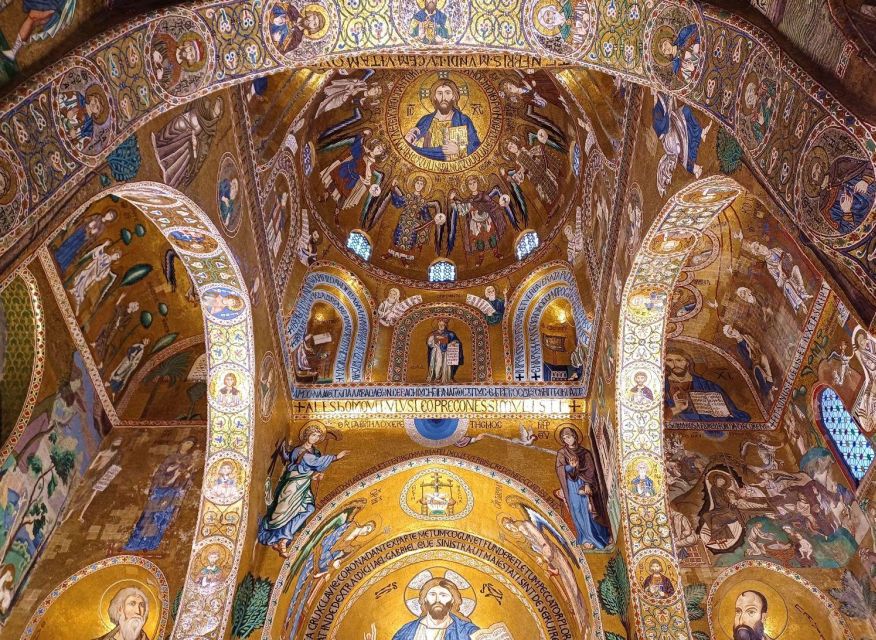
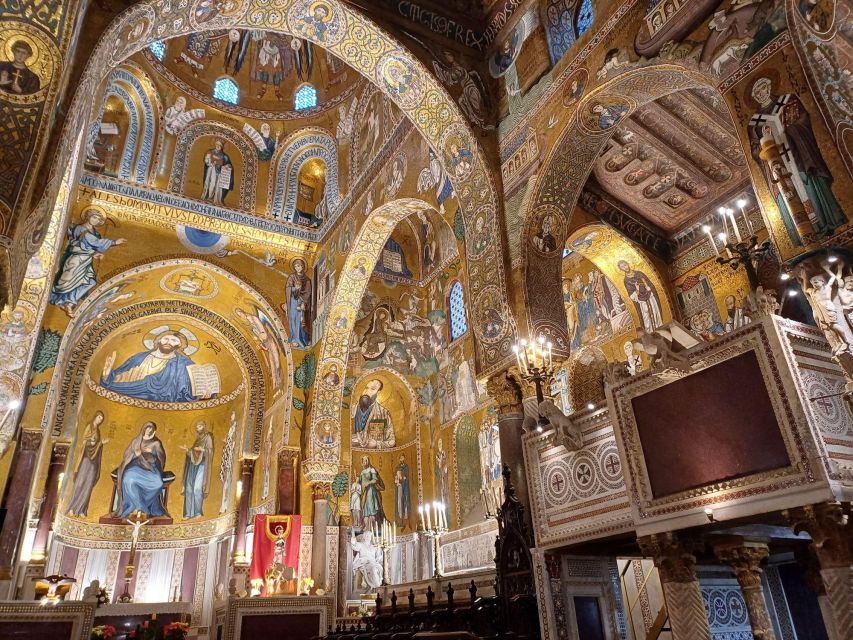
The chapel’s mosaics are the visual high point, and you should allow yourself time to look beyond the shine. Gold backgrounds give the interior a warm glow, while the figures and scenes create a carefully ordered religious narrative.
The guide service is especially useful here because the imagery may not be immediately easy to read. Fabrizio is praised for explaining the narrative cycle represented in the mosaics, which can turn a beautiful but confusing ceiling and wall into a connected sequence.
Look for the way the decoration covers almost every available surface. The chapel does not depend on one isolated painting or one spectacular object. Its effect comes from the complete environment: walls, ceiling, floor, columns, and light working together.
The ceiling is just as important as the mosaics. Islamic muqarnas create a honeycomb-like pattern of small, geometric forms overhead. This is one of the details that makes the chapel different from many European churches. Look up slowly and notice how the ceiling changes the shape and mood of the room.
Underfoot, the marble floor uses inlaid patterns associated with the Romanesque tradition. It can be easy to ignore because the gold above demands attention, but the floor gives the chapel a firm visual base. The building is not decorated in one style from top to bottom. Its power comes from the way several forms of craftsmanship work together.
Royal rooms and the Chinese-style queen’s chamber
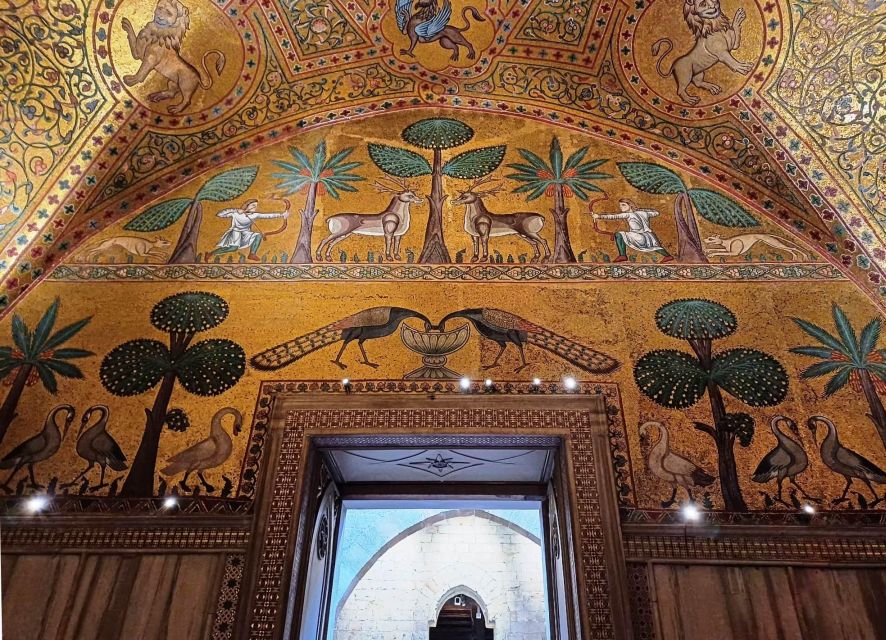
The tour also takes you through royal rooms, including a chamber decorated in Chinese style. This room provides a useful change of pace after the chapel’s medieval religious art.
The queen’s chamber shows that the palace continued to absorb new tastes long after the Norman kings. Its Chinese-style decoration belongs to a later chapter of the building’s life, when royal interiors were shaped by changing fashion and court culture.
That contrast is worth paying attention to. In one part of the visit, you are looking at a chapel commissioned in the twelfth century. In another, you are seeing a room influenced by a very different decorative language. The palace works well as a lesson in how royal buildings are rarely frozen in one moment.
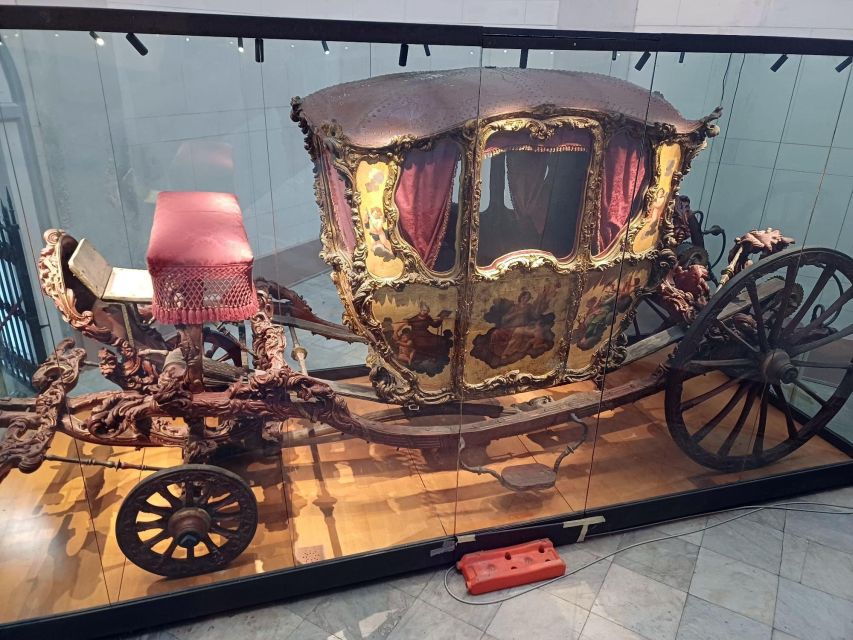
The rooms also help you picture the palace as a lived-in residence rather than only a historic monument. The mosaics may be the headline attraction, but the royal chambers explain how rulers and their households used the complex.
The amount of information you receive will depend on your guide and your Italian comprehension. Fabrizio is described as precise and engaging when discussing both the palace rooms and the chapel. Claudio is also praised for an energetic presentation. If you understand Italian well, this added explanation should make the rooms much more meaningful.
A few more Palermo days worth weighing up
- Palermo: NO Mafia Walking Tour
★ 4.8 · 2,431 reviews - Palermo: Hop-on Hop-off Bus Tour 24-hour Ticket
★ 3.9 · 2,410 reviews - Palermo Original Street Food Walking Tour by Streaty
★ 5.0 · 2,105 reviews - Segesta, Erice and Salt Pans Full-Day Excursion from Palermo
★ 4.2 · 1,791 reviews
What the Italian-only guide service is like
This is not the right choice if you need an English-language tour. The service is conducted only in Italian, with no alternative language listed.
For Italian speakers, the format can be a good fit. The tour focuses on explanation rather than simply handing you a map and sending you through the complex. You can ask questions, follow the story of the mosaics, and connect the palace’s different periods.
You should also know that the provider does not give a fixed duration beyond saying the activity is valid for one day. Starting times depend on availability. That makes it important to check the time before booking and to allow enough room in your Palermo schedule for the palace visit.
The meeting point is in front of the ticket office, at a kiosk about 100 meters from the palace entrance. That detail matters because the guide does not meet you at some distant city landmark. Still, you should identify the ticket office and kiosk before the appointed time, particularly if you are unfamiliar with the area.
The service includes a professional tourist guide, but not admission. This distinction is central to the price. You are paying $14 per person for guided interpretation, then buying the palace ticket separately at the ticket office or through the official website.
Is $14 good value?
At $14, the guide service is reasonably priced for anyone who wants more than a self-guided look. The chapel and palace contain a lot to take in, and the most valuable part of the service is the explanation of what you are seeing.
The price is not the full cost of entry, though. You need to add the admission ticket to your budget. Since the ticket price is not provided here, check the official palace website before you book so you know the total.
I would view the $14 as a supplement to admission, not as a bargain entrance ticket. If you already plan to visit the palace and understand Italian, a guide can add useful structure for a modest extra cost. If you do not understand Italian, the fee is unlikely to help much because the central benefit is the spoken explanation.
The reserve now and pay later option is useful if your Palermo plans are still shifting. You can hold a place without paying immediately, and cancellation is allowed up to 24 hours in advance for a full refund. Those terms give you some flexibility, but they do not remove the need to arrange the separate entrance ticket.
Clothing, comfort, and access
Dress for a religious site. Shorts, short skirts, and sleeveless shirts are not allowed. Choose clothing that covers your shoulders and reaches an appropriate length so you do not risk trouble at the entrance.
Comfort is also worth planning. The palace and chapel are not described as a seated experience, and there are few places to sit. One French visitor specifically warns that the tour may be difficult for people who cannot stand for long periods.
The information about accessibility is mixed. The activity details describe it as wheelchair accessible, but the separate suitability information says it is not suitable for wheelchair users. Because those statements conflict, contact the provider before booking if you use a wheelchair or need step-free access. Do not rely on the general accessibility label alone.
For anyone else, comfortable shoes and a little patience will help. The tour is not a fast photo stop. You will spend time standing while the guide explains the palace and chapel, and the best details are often above eye level.
Who will enjoy this Palermo tour most?
This experience suits you best if you meet three conditions: you speak Italian, you want historical explanation, and you plan to visit the Royal Palace anyway.
It is particularly useful for:
- Italian-speaking visitors who want the mosaic scenes explained in sequence
- First-time visitors to Palermo who want the palace’s political story made clear
- Art and architecture fans interested in Norman, Byzantine, Islamic, and Romanesque elements
- Visitors who prefer a professional guide instead of exploring the complex alone
- People who want to see both the famous chapel and the royal rooms
It is less suitable if you want an English tour, dislike standing, or are looking for a ticket-only activity with no extra planning. It is also not ideal for anyone who expects the $14 price to include admission.
The strongest reason to choose it is the combination of place and interpretation. The palace is worth seeing on its own, but the chapel’s images, ceiling, floor, and political meaning are easier to appreciate when someone explains how they fit together.
My advice for planning the visit
Buy or check your admission ticket before arriving, either online through the official website or at the palace ticket office. Since the guide meeting point is at a kiosk about 100 meters from the entrance, give yourself time to locate it and confirm where the group gathers.
Check the language before you commit. Italian is not a minor detail here. It determines how much of the tour you can follow and whether the $14 guide fee will feel worthwhile.
Wear respectful clothing from the start. You do not want to lose time finding a cover-up or risk being refused entry because of shorts, a short skirt, or bare shoulders.
Finally, avoid squeezing this into a rushed schedule. The activity is valid for one day, but the palace and chapel deserve your attention. A little extra time makes it easier to look at the mosaics, listen to the story, and notice the sharp contrast between the medieval chapel and later royal rooms.
Should you book the Royal Palace and Palatine Chapel tour?
Book it if you speak Italian and want the chapel explained rather than merely photographed. The $14 guide fee is a fair add-on to the separate entrance ticket, especially if Fabrizio or Claudio is leading the visit and you value clear discussion of the mosaics, palace rooms, and royal history.
Skip it if you need English, cannot stand for long, or want a simple admission-only visit. In that case, the Italian-only format and limited seating may frustrate you.
For the right visitor, this is a focused way to see one of Palermo’s most important monuments. The golden chapel is the draw, but the Royal Palace gives it context, showing how art, religion, royal power, and Sicily’s mixed cultural past meet in one remarkable complex.
FAQ
Is the entrance ticket included in the $14 price?
No. The $14 price covers the professional tourist guide service only. You must buy the entrance ticket separately at the Royal Palace ticket office or through the official website.
What language is the tour in?
The tour takes place only in Italian. No other guide language is listed.
Where is the meeting point?
Meet in front of the ticket office, at a kiosk about 100 meters from the entrance to the Royal Palace.
How long does the activity last?
The activity is listed as valid for one day, but no exact tour duration is provided. Starting times depend on availability.
Who are the named guides?
Fabrizio and Claudio are named guides for this experience. Fabrizio is noted for explaining the palace, royal rooms, and Palatine Chapel mosaics in detail.
What should I wear?
Shorts, short skirts, and sleeveless shirts are not allowed. Wear clothing that provides suitable coverage for entry to the palace and chapel.
Is the experience suitable for wheelchair users?
The information is inconsistent. One part describes the activity as wheelchair accessible, while another says it is not suitable for wheelchair users. Contact the provider before booking to confirm your specific access needs.
Can I cancel the booking?
Yes. You can cancel up to 24 hours in advance for a full refund. A reserve now and pay later option is also available.
Just added around Palermo
- Valley of the Temples and Villa Romana Multi-Language Tour★ 4.8 · 5 reviews
- Valley of the Temples★ 5.0 · 43 reviews
- Sicilian Winery Tour with Wine Tasting from Palermo★ 5.0 · 12 reviews
- Palermo: Medieval castles of Caccamo & Cefalù. Small Group Tour★ 5.0 · 24 reviews
- Traditional Sicilian Recipes in Palermo★ 5.0 · 4 reviews
- Private Transfer from/to Castellammare del Golfo★ 5.0 · 24 reviews
- UNESCO Day Trip – Monreale & Cefalù★ 5.0 · 6 reviews
- Palermo on a plate: Traditional Food & Wine tour (by Streaty)★ 5.0 · 119 reviews
Palermo Norman Palace Tours, compared.
Norman Palace and Palatine Chapel Tour with Tickets
Read our review →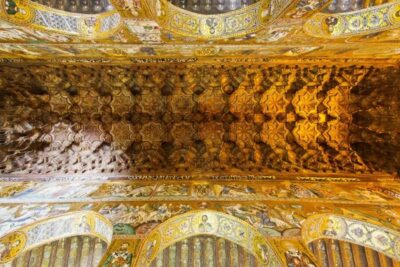
Cappella Palatina and Palazzo dei Normanni Tour
Read our review →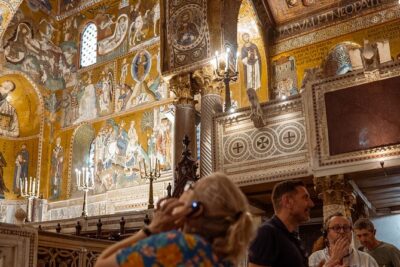
Norman Palace & Palatine Chapel – Small Group or Private
Read our review →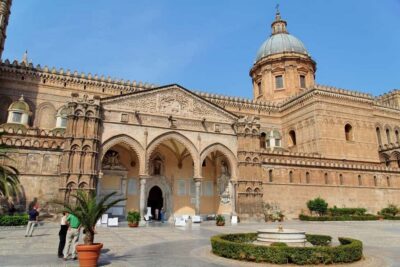
City & Palazzo dei Normanni Guided Walking Tour
Read our review →
Palatine Chapel: Private Walking Tour & Sicilian Lunch
Read our review →
Private Tour to the Norman Palace Palatine Chapel in Palermo
Read our review →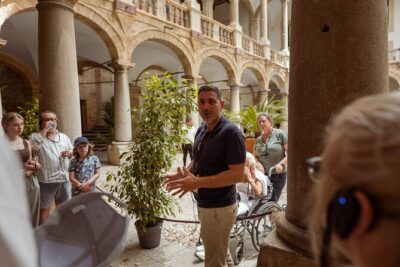
Palermo Walking Tour and Guided Visit to Palazzo dei Normanni
Read our review →Browse the lists this tour appears in