
Reviewed · CITY TOURS
WalkingTour CATANIA – discovering the city of lava with a licensed guide
Catania makes a strong first impression because lava is part of the city itself. You see it in the black-and-red stone, in the elephant fountain, in the castle walls, and in the story of streets rebuilt after the 1693 earthquake. This walking tour gives you a clear route through the old center while a licensed local guide explains how Etna, earthquakes, religion, and daily Sicilian life shaped the city.
I like the lively stop at A’ Piscaria, Catania’s working fish market, and the way the walk joins famous sights with ordinary street life. I also like the small group limit of 15, the modest $24.19 price, and the chance to get practical advice about food and customs from guides such as Giuseppe, Enza, Tiziana, Maria Luisa, and Ivan.
The main thing to consider is the weather. Catania can be very hot, and a few sidewalks are old and rough. The tour is also offered in English, but the quality of the experience depends on the particular guide and the size of the crowd around you. Ursino Castle is viewed from outside unless you pay its separate admission.
What makes this Catania walk worthwhile
- A lava-built city: See how Etna’s eruptions changed the location of Ursino Castle and supplied the dark stone used throughout Catania.
- A working market, not just a monument: The morning route includes A’ Piscaria, with fish, meat, cheese, cured foods, fruit, and vegetables.
- Licensed local guides: The GuidingSicily team includes guides such as Giuseppe, Enza, Tiziana, Maria Luisa, Alicia, and Ivan.
- A compact old-center route: In roughly two to three hours, you cover the cathedral, Town Hall, castle, Baroque street, and university square.
- Good value for first-time visitors: At $24.19 per person, it costs little compared with a private tour and gives you useful orientation for the rest of your stay.
- Small by city-tour standards: The maximum group size is 15, though busy streets and market noise can still make it hard to hear at times.
Starting in Piazza Duomo with Catania’s elephant
Meet your guide at the GuidingSicily infopoint in Piazza del Duomo at 10:30 in the morning. This is an easy place to begin because the square gathers several of Catania’s main symbols in one view.
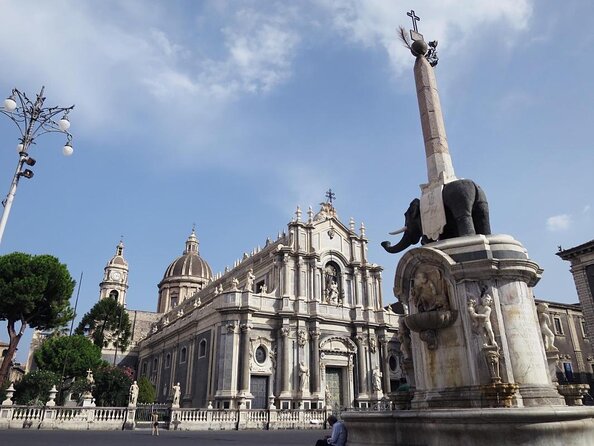
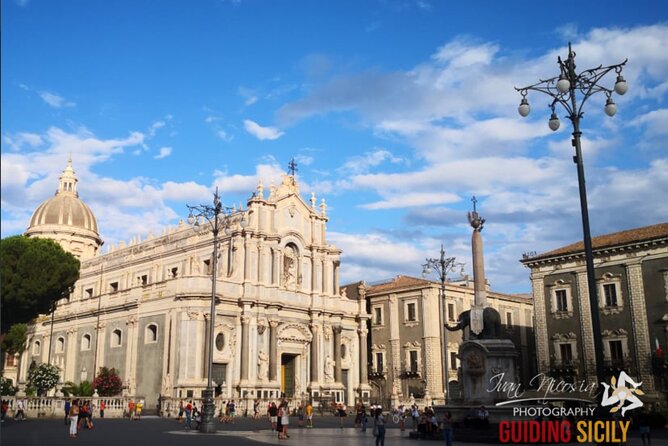
The cathedral, officially dedicated to Saint Agatha, has Norman roots but a Baroque appearance today. Earthquakes and eruptions damaged Catania more than once, so the building you see is the result of many periods of construction and repair. Your guide uses the cathedral to explain the city’s long story rather than treating it as a quick photo stop.
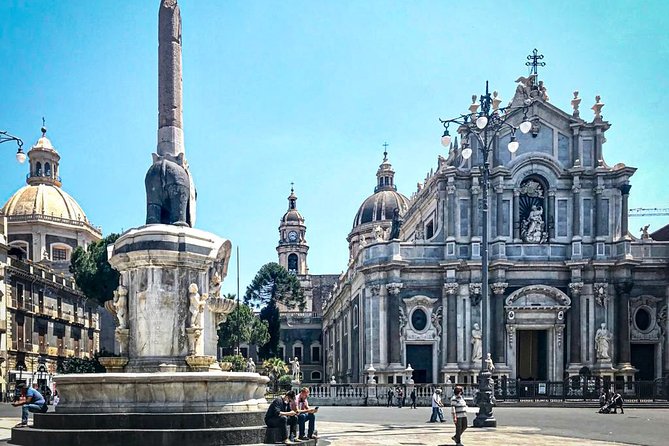
In the center of the square is the famous liotru, a lava-stone elephant carrying an obelisk. The elephant has become Catania’s emblem, and the black volcanic stone gives the monument a look that feels tied to the ground beneath the city. It is a useful introduction to the tour’s main idea: Catania is not simply near a volcano. It has been built, damaged, repaired, and visually defined by one.
The square also contains Palazzo degli Elefanti, Catania’s Town Hall. Look up at the balconies and gables for the elephant figures that give the building its name. The guide can help you separate the city’s civic symbols from its religious ones, which is useful in a square packed with details.
A few more Sicily days worth weighing up
- Etna Morning Trip
★ 4.5 · 1,241 reviews - Syracuse: Boat Trip of Ortigia Island and Sea Caves
★ 4.7 · 937 reviews - Tour of the island of Ortigia and exploration of sea caves with baths.
★ 5.0 · 668 reviews
A’ Piscaria, where the city gets noisy and real
If you take this morning tour, the adjacent fish market is one of its best stops. A’ Piscaria is not a polished museum display. It is a daily market where local food is bought and sold, and its sounds, smells, colors, and shouted prices give you a fast lesson in everyday Catania.
The market handles more than fish. You can expect to see meat, cured foods, cheeses, fruit, and vegetables, with some produce sold at very low prices. The point is not to spend a long time shopping. It is to understand how food fits into local life and to notice the difference between a working market and a tourist food hall.
This is also the part of the walk where the guide’s local advice can be especially useful. Maria Luisa, for example, was praised for explaining Sicilian food, specialties, and customs, while Giuseppe was careful to give the market its proper place in the city story. Ask about foods you see rather than waiting for a formal tasting, since this is a guided visit, not a food tour.
Market noise is the main drawback. One guide received praise for clear English, but another visitor felt that a guide was difficult to hear and suggested using earphones. No audio equipment is listed as included, so stay near the guide and speak up if you miss an explanation.
Palazzo degli Elefanti and the civic heart of town
After the cathedral and market, the walk returns to Palazzo degli Elefanti. The building is free to view from the outside, and the short stop helps you understand how Piazza Duomo functions as more than a church square.
The elephant motif appears again in the architecture. It is a small detail, but it gives the square a sense of identity. Catania’s symbols are not hidden away in a museum. They appear on buildings, fountains, and street decorations as you move through town.
This is where a local guide can add value beyond a printed description. Guides including Enza and Ivan have been especially praised for making Catania’s story personal and for explaining the affection locals feel for their city. You are not simply memorizing dates. You are learning why the same volcanic material appears again and again in the city’s buildings and public art.
Ursino Castle and the lava that moved the shoreline
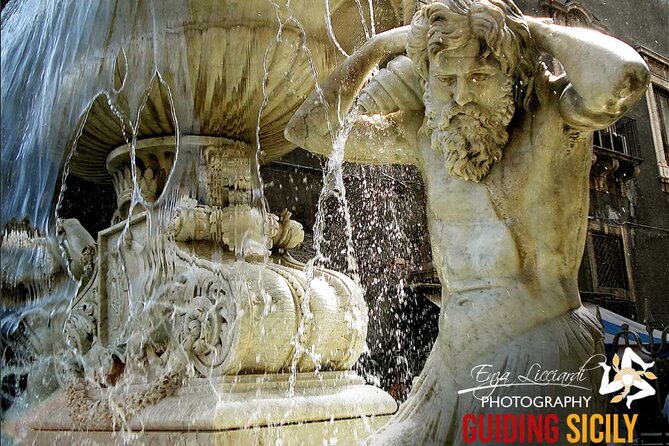
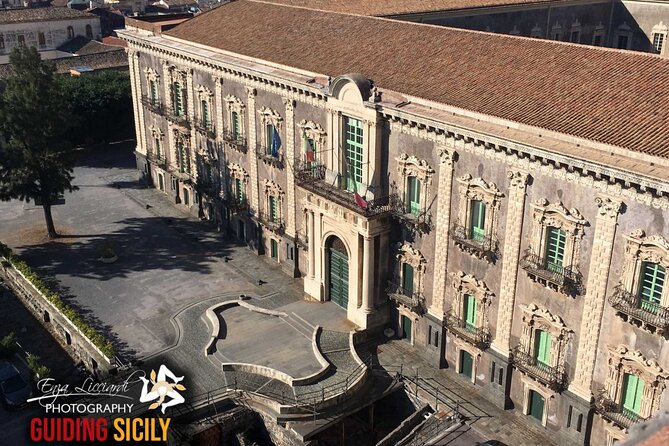
Ursino Castle is one of the most striking stops because its setting tells a dramatic geological story. The Swabian fortress once stood beside the sea. In the 17th century, a lava flow filled the moat and surrounded the castle. What had been a coastal defensive position became part of the inland historic center.
The black basalt remains visible, and your guide points out how the lava changed the castle’s relationship to the city. This is one of the clearest places to connect Mount Etna with Catania’s streets. The volcano is not just a distant view on a clear day. Its past eruptions altered the city’s shape.
The tour does not include admission to the castle. You visit the exterior as part of the walk, so plan a separate visit if you want to enter. For many people, the outside view is enough on a short orientation tour. If you are particularly interested in medieval architecture or museum collections, you will need extra time and a separate ticket.
The castle stop also gives the group a chance to slow down. On a hot day, this matters. Giuseppe was praised for finding shade and taking breaks when needed, and that practical care can make a two-hour walk far more pleasant.
Booked from the same base, and a completely different kind of day:
- Catania: Mount Etna Morning or Sunset Day Trip with Tasting
★ 4.8 · 4,028 reviews - Mount Etna: Guided Volcano Summit Hiking Tour with Cable Car
★ 4.7 · 3,784 reviews - Palermo: NO Mafia Walking Tour
★ 4.8 · 2,431 reviews - Palermo: Hop-on Hop-off Bus Tour 24-hour Ticket
★ 3.9 · 2,410 reviews
Via dei Crociferi and Catania’s Baroque rebuild
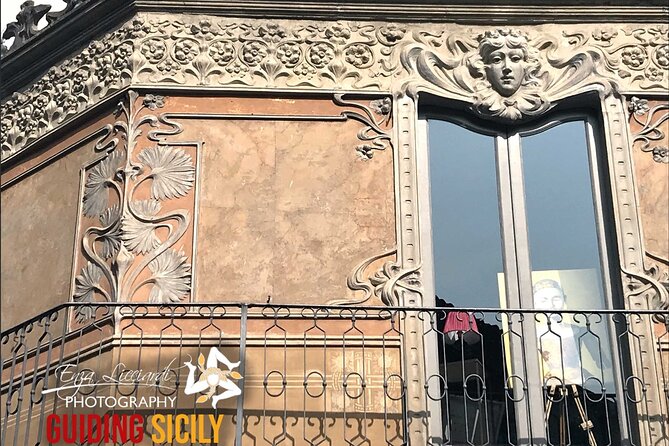
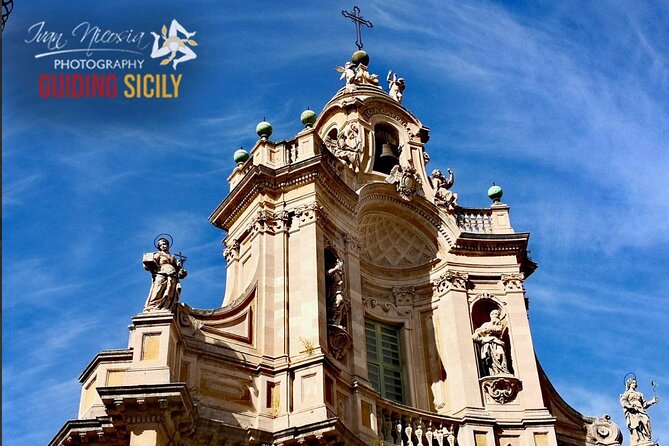
Via dei Crociferi is the visual high point for many visitors. Churches and former monasteries line the street, their Baroque facades rising one after another. Most of this rebuilding followed the destructive earthquake of 1693, which reshaped Catania and much of southeastern Sicily.
The street works best when you take time to look upward. Stone balconies, carved details, columns, and religious decorations compete for your attention. A guide helps you see how the buildings relate to one another instead of treating them as a row of unrelated facades.
This is also a good section for stories about Saint Agatha and local religious traditions. One guide helped a visitor understand the story of Saint Agatha in a way that made Catania’s history more engaging. If that subject interests you, ask for the local details rather than settling for a quick architectural description.
Via dei Crociferi is a street for looking, not rushing. The walk is generally easy, but the route includes old surfaces and uneven sidewalks. Wear shoes with a firm sole, especially if you plan to continue exploring on your own afterward.
Piazza Università and the city’s student life
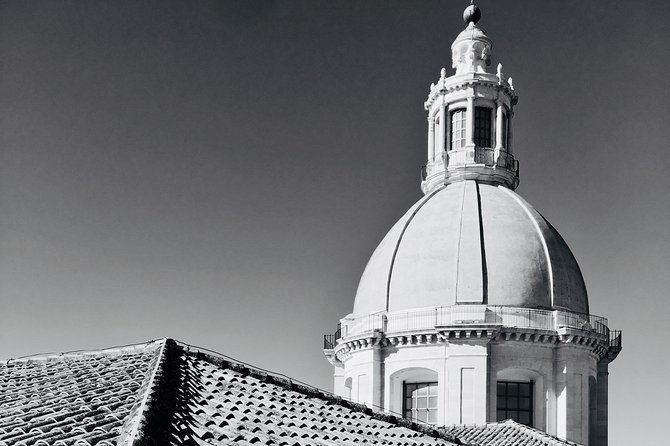
The final major stop is Piazza Università, where Catania’s academic past remains part of the city center. The Palazzo del Rettorato belongs to the University of Catania, founded in 1434, one of Sicily’s oldest universities.
Inside is a courtyard paved with lava pebbles. Generations of students have crossed it, and the volcanic material links this quiet academic space to the cathedral, castle, and market. Across the square is Palazzo San Giuliano, another university building that once belonged to one of Sicily’s most powerful and wealthy families.
This stop gives the tour a useful change of mood. You have seen religious buildings, a food market, a fortress, and a grand Baroque street. Here, the guide can show you Catania as a living university city rather than a collection of monuments.
The walk ends back at the starting point. That makes the tour easy to pair with lunch, a museum visit, or an independent return to the fish market. It also means you finish with a clear sense of the old center rather than being dropped in an unfamiliar part of town.
How the guides shape the experience
The company uses authorized guides with official licenses, but no two guides tell the story in exactly the same way. That can be a strength. Guides named in feedback include Tiziana, Maria Luisa, Giuseppe, Alicia, Enza, Ivan, Totò, and Ester.
Several were singled out for clear explanations, humor, local pride, and storytelling. Enza was praised for covering Catania from its origins to the present day. Maria Luisa added advice about food and Sicilian customs. Giuseppe handled the heat thoughtfully and gave a clear introduction to the city. Alicia was valued for her grasp of local history, while Ivan conveyed a strong affection for Catania.
The practical lesson is simple: stay close, ask questions, and tell the guide if you cannot hear. One Italian-language group found the explanations warm and detailed, while some English-speaking participants appreciated guides who spoke clearly and kept the information at the right level for a first visit.
Price, pace, and who should book
At $24.19 per person, this is good value if you are visiting Catania for the first time. You get a licensed guide, a route through the city center, local context, and a chance to ask where to eat and what to see next. A private guide would cost far more, while exploring alone can mean missing the connections between lava, earthquakes, religion, and architecture.
The tour lasts about two to three hours. That is long enough to cover the main old-center sights without taking your entire day. It is also short enough to fit into a cruise stop or a brief visit, though you should allow extra time if you want to enter Ursino Castle afterward.
The group maximum is 15 people. That is a reasonable size for a city walk, though the fish market and busy streets can make any group feel larger. A 4.7 rating from 133 published ratings and a 93 percent recommendation rate suggest a dependable experience, especially for visitors looking for an introduction rather than a specialist architectural lecture.
This tour suits you best if:
- You want a first look at Catania before exploring alone.
- You like local markets as much as churches and monuments.
- You want the Etna and lava story explained on the ground.
- You prefer a short, guided walk to a full-day excursion.
- You appreciate practical tips about Sicilian food and customs.
It may not suit you if you want extensive interior visits. Only the exterior of Ursino Castle is included, and most stops are brief. It is also not the best choice for very hot weather unless you are comfortable walking outdoors and taking breaks.
The activity is close to public transportation, accepts service animals, and is suitable for most people. Good weather is required, and the operator can cancel if conditions are poor or if the minimum number of participants is not reached. In either case, you are offered another date or experience, or a full refund. You can cancel for a full refund up to 24 hours before the 10:30 start.
Should you book the Catania lava-city walk?
I would book this tour as an opening lesson in Catania. The route is compact, the price is fair, and the best stops are not just pretty buildings. The fish market shows daily life, Ursino Castle explains the power of Etna, and Via dei Crociferi shows how the city rebuilt after disaster.
Go early in your Sicily trip so you can use the food suggestions and orientation later. Wear sturdy shoes, bring water, and stay close to the guide in the market. If your main goal is to enter churches and museums at length, choose a longer specialist tour instead. If you want the city to make sense quickly, this is a sensible place to start.
FAQ
Where does the Catania walking tour begin?
It begins at the GuidingSicily infopoint in Piazza del Duomo, Catania, at 10:30 am.
Where does the tour end?
The activity ends back at the original meeting point in Piazza del Duomo.
How long does the walking tour last?
The tour lasts approximately two to three hours.
What language is the tour offered in?
The tour is offered in English.
What sights are included?
The route includes Piazza del Duomo, Catania Cathedral, Palazzo degli Elefanti, A’ Piscaria fish market, Ursino Castle, Via dei Crociferi, and Piazza Università.
Is admission to Ursino Castle included?
No. The tour visits Ursino Castle, but admission is not included in the tour price.
How many people can join the tour?
The maximum group size is 15 participants.
Is the tour suitable for most people?
Yes. Most people can participate, and service animals are allowed. The walk includes outdoor city streets and some old, rough sidewalks.
What happens if the weather is poor or the tour does not reach its minimum group size?
You are offered a different date or experience, or a full refund if the activity is canceled for poor weather or because the minimum number of participants is not reached.
Just added around Sicily
- Zafferana Etnea:Honey extraction workshop and honey tasting★ 4.7 · 3 reviews
- From Trapani: Favignana and Levanzo Yacht Tour with Stops★ 5.0 · 4 reviews
- Mt Etna: Winter Trekking Tour with Optional Catania Transfer★ 4.7 · 13 reviews
- Wine tour with wine tasting★ 4.7 · 18 reviews
- Sicilian Soul: Winery Tour, Wine & Food Tasting in Catania★ 5.0 · 4 reviews
- Wine tasting in Catania Historic center★ 4.4 · 15 reviews
- Valley Of The Temples By E-Bike With Picnic Included★ 4.7 · 7 reviews
- Valley of the Temples and Villa Romana Multi-Language Tour★ 4.8 · 5 reviews
City Tours, compared.

Guided City Walking Tour w/Customizable Itinerary
Read our review →
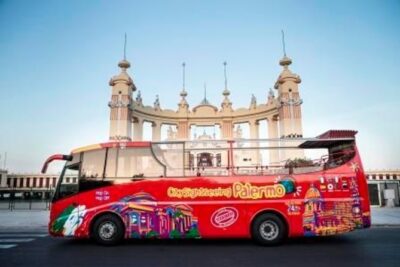
City Sightseeing Palermo Hop-On Hop-Off Bus Tour
Read our review →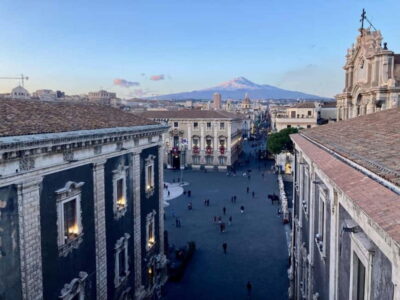
The heart of the City – Tour guidato in Italiano
Read our review →
Palermo Airport ⇄ Palermo City: Private Transfer Service
Read our review →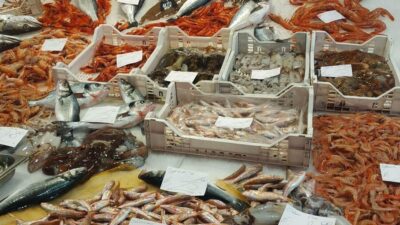
Catania Street Food Tour: Fish Market & City Centre
Read our review →Browse the lists this tour appears in