
Reviewed · WALKING TOURS
3-hour walking tour Discovering Ragusa Baroque
Ragusa is best understood on foot, and this tour makes a smart choice: you begin at the cathedral in upper Ragusa and walk downhill toward Ibla, the older lower town. Along the way, Serena brings the churches, balconies, earthquakes, and local traditions into one clear story, rather than treating each building as a separate stop.
I like two things especially. First, the route uses the hillside well, so you gain views of Ibla as you descend. Second, the group is capped at 10 people, giving Serena room to answer questions and adjust her pace. The catch is equally clear: this is a stair-heavy walk, with roughly 300 steps mentioned by one participant, so it is not suitable for anyone with reduced mobility.
Key points to know before booking
- A downhill route from upper Ragusa to Ibla: You start at San Giovanni Battista’s Cathedral and finish near the Iblean Gardens.
- Serena leads in clear English: Her focus is on Sicilian history, Baroque architecture, churches, and local stories.
- Several church interiors may be included: Access depends on the time of day and the season.
- Expect many stairs: Comfortable sneakers are essential, and the route is not recommended for people with reduced mobility.
- A small group capped at 10: This suits visitors who want questions answered without the feel of a large coach tour.
- The price is $78.44 per person: That is a fair price if you value a personal guide and historical context, but less appealing if you mainly want a quick sightseeing walk.
Starting at San Giovanni Battista in upper Ragusa
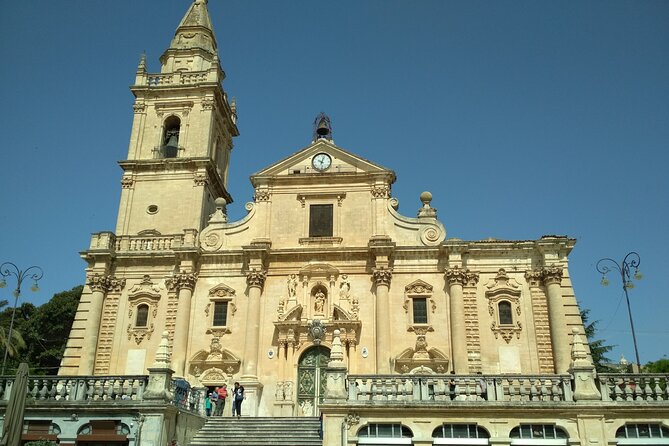
The tour begins at Cattedrale di San Giovanni Battista in Piazza San Giovanni, in Ragusa Superiore. This is a useful starting point because it places you in the newer upper part of the city before the route drops toward Ragusa Ibla.
The cathedral’s late Baroque facade gives Serena an immediate way to explain the local style. Look for the broad exterior, the balustraded terrace, and the gardens along the side. The church is part of the UNESCO-recognized Baroque area, so the opening stop is not just a photo opportunity. It sets the artistic and historical frame for the rest of the walk.
You also go inside the cathedral, with about 30 minutes planned here. Serena explains the church’s story, its patron saint, and the feast connected with him. That local festival detail matters because it ties the building to daily life and town identity, not just architectural dates.
I like beginning here because you get your bearings before the route becomes more physical. The tradeoff is that the tour does not begin in Ibla itself. If you are staying in the lower town, you need to allow time to reach the upper meeting point. One practical option is to leave your car in the lower town and use a bus to get to Ragusa Superiore, then walk downhill during the tour.
More Walking Tours in Ragusa:
- Ragusa Walking tour
★ 5.0 · 13 reviews - Ragusa Ibla: Walking Tour with Local Guide
★ 4.4 · 8 reviews - Ragusa Ibla Walking and Photography Tour
★ 5.0 · 3 reviews
Santa Maria delle Scale and the first big view
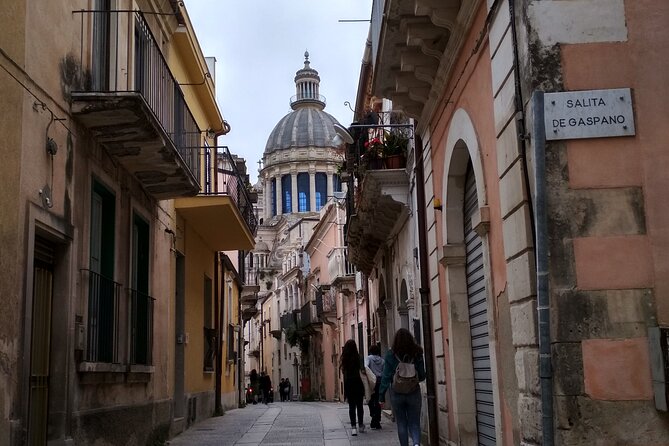
From the cathedral, the route heads down toward Chiesa di Santa Maria delle Scale. The name gives you a warning: stairs are part of the experience from the start.
This church is another UNESCO-recognized building and may be open inside, depending on the season and the time of day. Its special value is that it preserves architectural evidence from before the earthquake that reshaped Ragusa. Serena uses the church to explain the contrast between the older city and the Baroque rebuilding that followed.
The route pauses here for about 20 minutes, including a view toward Ibla. This is one of the strongest parts of the walk because the city begins to make visual sense. From above, you can see how the lower town sits beneath the upper district and why Ragusa feels like two cities connected by slopes and steps.
Bring water and wear shoes with a firm grip. The stairs are not presented as a rushed challenge, but they do require steady footing. If your knees are sensitive, this is the point to think honestly about the rest of the route.
Baroque balconies, masks, and Ragusa’s street theater
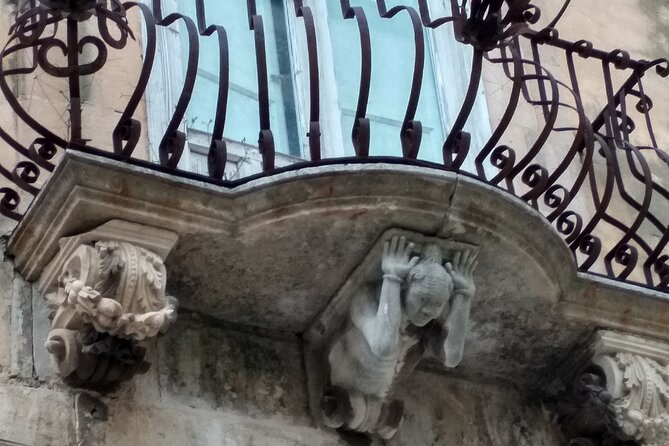
The walk continues past several late Baroque palaces. The exact names of these stops are less important than the details Serena points out: balconies supported by carved brackets, grotesque masks, and facades designed to be read from the street.
The grotesque faces are among Ragusa’s most memorable features. They can look comic, stern, or downright strange, and they give the palaces a playful edge. At several buildings, Serena draws attention to the masks and richly decorated balconies, showing how much visual work went into spaces that were once part of private homes.
This is where a guide adds real value. On your own, you can admire a balcony and move on. With Serena, you learn to look upward and notice the carved figures, the arrangement of the facade, and the way Baroque decoration turns a practical building into a display of status.
The tour also passes Palazzo Cosentini, whose facade is decorated with the typical masks and balconies of the period. These details are not random ornaments. They help you recognize the local version of late Baroque architecture as you continue toward Ibla.
Santa Maria dell’Itria and Palazzo Cosentini
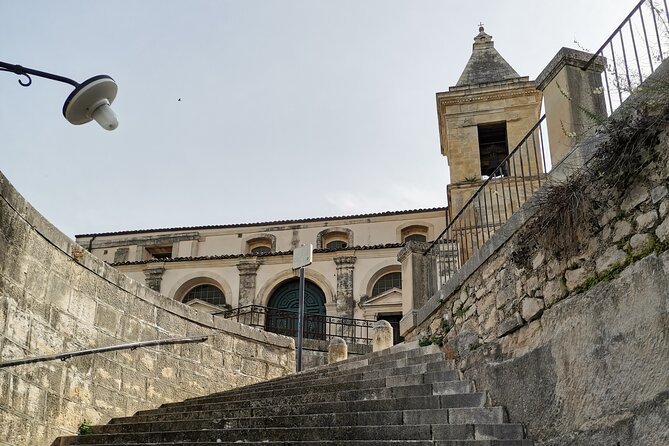
At Chiesa di Santa Maria dell’Itria, Serena explains the church’s story and its connection with Palazzo Cosentini. The palace was once linked internally to the church, an unusual detail that gives the stop more substance than a simple facade viewing.
The church may be open inside, depending on the time and season. If it is, you get another chance to compare interior spaces with the exteriors you have been studying. If it is closed, the stop still works because the palace facade and the church’s place in Ragusa’s history carry the discussion.
Plan on roughly 20 minutes here. That sounds brief, but the route has many stops, and the short pauses help keep the three-hour walk moving. If you prefer to spend a long time inside each church, this tour may feel brisk. If you want a broad view of Ragusa’s architecture and history, the pace is useful.
A few more Ragusa days worth weighing up
- Discover Palermo in 3 hours. Art, history, markets and street food
★ 5.0 · 352 reviews - Discover the Charm of Palermo: A 3-Hour UNESCO Sites Walking Tour
★ 5.0 · 264 reviews - Boat excursion in Cefalù and snorkeling 3 hours fruit and drink
★ 4.5 · 85 reviews - 3-Hour Dolphin watching at sunset with aperitif
★ 5.0 · 67 reviews
Descending toward Duomo di San Giorgio
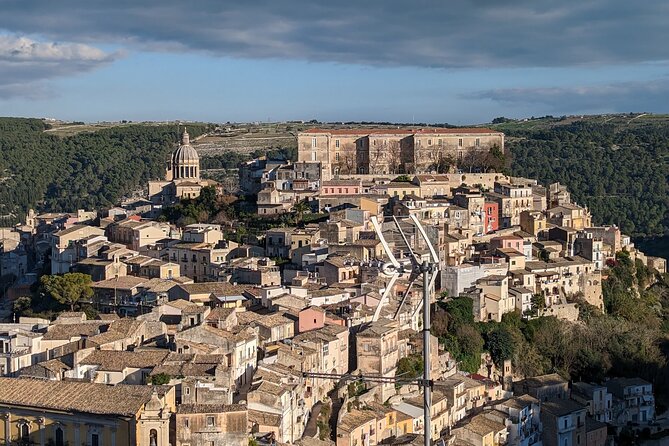
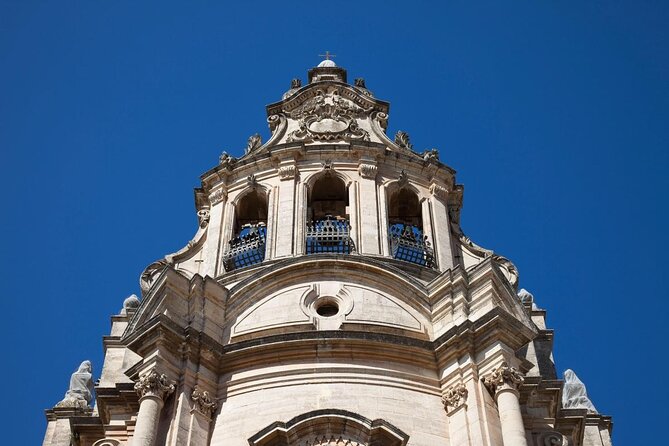
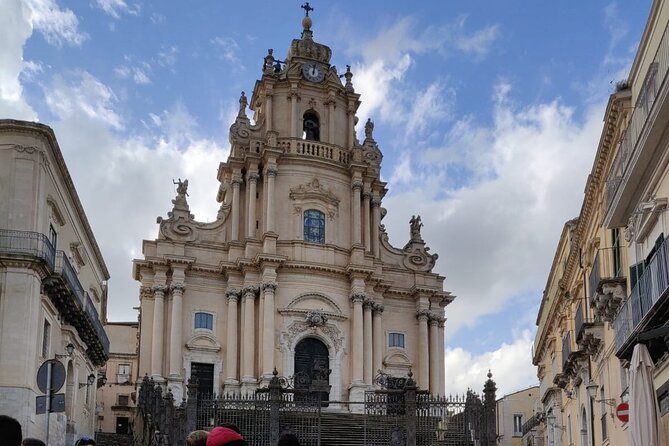
The route eventually reaches Duomo di San Giorgio, the major church in Ragusa Ibla. Its facade rises above a staircase, creating one of the city’s most recognizable views.
Serena covers the church, its saint, and the feast connected with him. Depending on the time of day and season, you may also go inside. Allow about 30 minutes for this stop, which gives you time to look at the facade, climb or view the approach, and hear the story behind the building.
The staircase is also a reminder of the tour’s physical demands. You are not simply walking along level streets between monuments. Ragusa is built on a steep hillside, and the route uses that terrain to show how the two districts connect.
I like the way this stop arrives after the descent. By now, you have seen older architectural traces, rebuilt Baroque facades, and the view of Ibla from above. The cathedral gives the lower town a strong focal point and helps the route feel like a gradual arrival rather than a series of unrelated churches.
Film locations, Benedictine Baroque, and an older church portal
Near the cathedral, the tour passes the conversation club, also known as the Café of the Knights. It is known as a location used for scenes from the Inspector Montalbano television series. If you know the show, this adds a bit of fun to the historical route. If you do not, it remains a quick cultural footnote rather than a central stop.
You also see the late Baroque facade of a Benedictine church. Its oval-shaped interior may be open, depending on the time and season. The oval form gives Serena another architectural feature to explain and offers a useful contrast with the more conventional church layouts along the route.
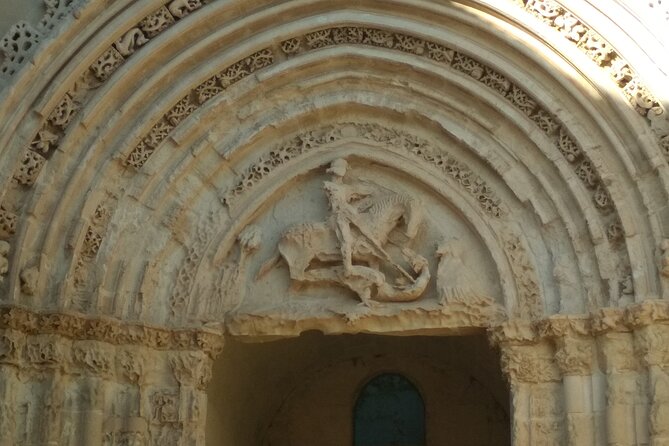
The ancient portal of Saint George church provides a different kind of interest. It survives as evidence of the architectural style that existed before the earthquake. That contrast is one of the tour’s strongest themes: Ragusa is not only a display of Baroque rebuilding. It also preserves fragments of what came before.
You should not expect every interior to be open. Church access is specifically dependent on the time of day and period of the year. That is worth remembering if your main goal is to see interiors rather than understand the city from its streets.
Finishing in the Iblean Gardens
The tour ends at Giardini Iblei, the green heart of Ragusa Ibla. The gardens provide a welcome change after the stone facades, stairs, and narrow streets. They also offer a calmer place to finish the walk and continue exploring at your own pace.
The gardens include three churches. Depending on the timing and season, the route may include visits to the church of St. James and the church of St. Agata. As with the other churches, interior access is not guaranteed.
This final stop takes about 30 minutes, though the overall schedule includes walking time and transitions between sites. The end point is near the urban bus stop and taxi stand on Via Giardino, which is helpful if you are tired or need to return to upper Ragusa.
Finishing in Ibla also gives you a good base for further wandering. You can use the remaining day to look for a restaurant, revisit a facade that caught your eye, or simply enjoy the lower town without trying to navigate the entire route alone.
How Serena shapes the experience
The strongest reason to book this walk is Serena’s approach. She focuses on history, architecture, art, and local customs, but keeps the information tied to what you can see in front of you.
Her English is clear, and she explains complicated subjects in an easy-to-follow way. She is also willing to answer questions, give restaurant suggestions, and recommend places to visit elsewhere in the area. Before the walk, she may contact you through WhatsApp with advice about reaching the meeting point, which can be useful if you are staying in the lower town.
The small group limit matters here. With no more than 10 people, you should be able to hear the guide and ask questions without fighting for attention. Private or very small bookings may also feel more flexible. One participant described the pace as casual and noted that the guide was not concerned about going slightly over time, but you should not assume every departure will run long.
The tone is friendly and focused rather than theatrical. Serena brings energy to the stories, but the tour remains centered on the buildings and the city’s past.
Price, pace, and practical value
At $78.44 per person, this is not the cheapest way to see Ragusa. You are paying for about three hours with an English-speaking local guide, a small group, historical explanation, and a carefully arranged route from upper Ragusa to Ibla.
I think the price makes sense if you have limited time or want more than photographs. Ragusa’s churches and palaces can blur together when you explore without context. Serena helps you understand the earthquake, the split between upper and lower Ragusa, the Baroque rebuilding, and the details on the facades.
The value is weaker if you prefer to move quickly, avoid churches, or read about architecture on your own. One useful criticism of the experience is that it can feel long because there are many religious buildings. If your main interest is the town itself rather than church interiors, you may wish for fewer church stops and more time on general city life.
The average booking lead time is 26 days, so reserve ahead if your schedule is fixed. Free cancellation is available until 24 hours before the start time. The walk requires good weather, and if poor weather forces cancellation, you are offered another date or a full refund.
Who should take this Ragusa walking tour?
I would choose this tour if you are visiting Ragusa for the first time, have only a few hours, or want the city’s architecture explained as you walk. It is also a good fit if you enjoy churches, carved stone, local festivals, and the way history appears in ordinary streets.
It suits couples and small groups especially well, since the maximum group size keeps the experience personal. It may also suit older visitors who can manage stairs at a relaxed pace, but reduced mobility is a real concern. The route is not step-free, and comfortable sneakers are more important than stylish footwear.
Families with children could enjoy the masks and film locations, though the amount of historical detail and the long descent may not suit every child. Anyone hoping for a flat stroll should choose a different activity.
Should you book it?
Book this tour if you want Ragusa explained, not simply photographed. The route links upper Ragusa, Santa Maria delle Scale, Palazzo Cosentini, Duomo di San Giorgio, the Montalbano location, and the Iblean Gardens into one clear walk.
Skip it if stairs are difficult, you dislike a church-focused schedule, or you want to explore at your own pace. For most first-time visitors who can handle the climb and descent, the small group, strong English, scenic route, and personal guidance from Serena make the $78.44 worthwhile.
FAQ
How long does the Ragusa Baroque walking tour last?
The tour lasts approximately three hours, including walking time and time between attractions.
Where does the tour begin?
It begins at Cattedrale di San Giovanni Battista, at Piazza San Giovanni 41/45 in Ragusa Superiore.
Where does the tour end?
It ends near the Iblean Gardens in Ragusa Ibla, close to the urban bus stop and taxi stand.
Is the tour offered in English?
Yes. The experience is offered in English, and Serena leads the tour in clear English.
How many people can join the tour?
The group has a maximum of 10 travelers.
Are church admission tickets included?
Admission to the listed churches is free. Interior visits depend on the time of day and the period of the year.
Is the tour suitable for people with reduced mobility?
No. The route includes many steps and is not recommended for people with reduced mobility.
What should I wear for the walk?
Wear comfortable sneakers. The route includes many stairs, with roughly 300 steps noted during the walk.
Can I cancel for a full refund?
Yes, if you cancel at least 24 hours before the experience begins. Cancellations made less than 24 hours in advance are not refunded.
Just added around Ragusa
- Tour Ragusa Ibla, Modica and Noto, from Syracuse★ 5.0 · 3 reviews
- HALF DAY excursion – Tour Montalbano – Ragusa Ibla and Modica★ 5.0 · 10 reviews
- Small Group Market tour and Cooking class in Ragusa★ 5.0 · 3 reviews
- Ragusa, Noto and Chocolate Tasting – Day tour from Siracusa★ 5.0 · 9 reviews
- Ragusa Walking tour★ 5.0 · 13 reviews
- Ragusa and Modica – Montalbano Tour (departure from Siracusa)★ 4.0 · 9 reviews
- Ragusa Ibla Walking and Photography Tour★ 5.0 · 3 reviews
- Ragusa coast: Private Sailing tour★ 4.5 · 3 reviews
Walking Tours, compared.
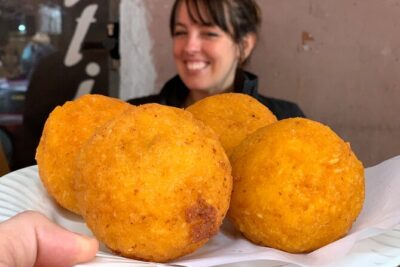
Palermo Original Street Food Walking Tour by Streaty
Read our review →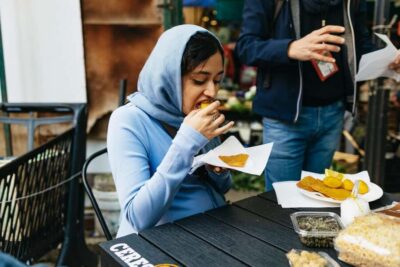
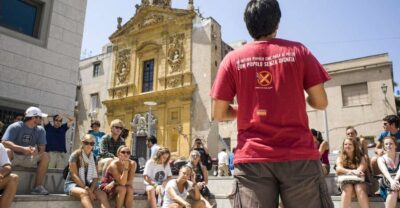
Palermo No Mafia walking tour: discover the Anti-mafia culture in Sicily
Read our review →
Street Food Walking Tour with Local Guide & Tasting
Read our review →Browse the lists this tour appears in