
Reviewed · MUSEUMS
Guided tour of the Archaeological Museum of Aidone Morgantina.
Morgantina gives you a rare look at a Greek Sicilian city away from the island’s crowded coastal sights. This tour connects its agora, the museum at Aidone, and Villa Romana del Casale through the myth of Demeter and Kore, with guide Zagara Palermo bringing the archaeology and competing theories to life.
I like the focus on three major sites and the guide’s ability to explain them in both Italian and English. I also like the quiet inland setting, where the story feels tied to Sicily’s fields, villages, and old religious traditions rather than presented as a quick checklist of ruins.
The main drawback is practical: the advertised price is $149.18 per group, but admission is extra at €8 per person at each site. The listed stops add up to about three and a half hours, while the general duration says 30 minutes to two hours, so confirm the schedule before booking.
Key points to know before you book
- Morgantina’s Greek agora: Spend about an hour among the civic spaces of an ancient Sicilian city.
- Aidone’s remarkable museum pieces: See the Venus, acrolites, and Silver Treasure connected with Morgantina.
- A Demeter and Kore theme: The route links archaeology with one of Sicily’s most important ancient myths.
- Zagara Palermo’s guiding style: Expect detailed explanations, discussion of theories, and tours offered in Italian and English.
- Villa Romana del Casale: Allow about 90 minutes for its 3,500 square meters of mosaic flooring.
- Separate entrance fees: The guide is included, but admission costs €8 for each site.
Why Morgantina is the heart of the experience
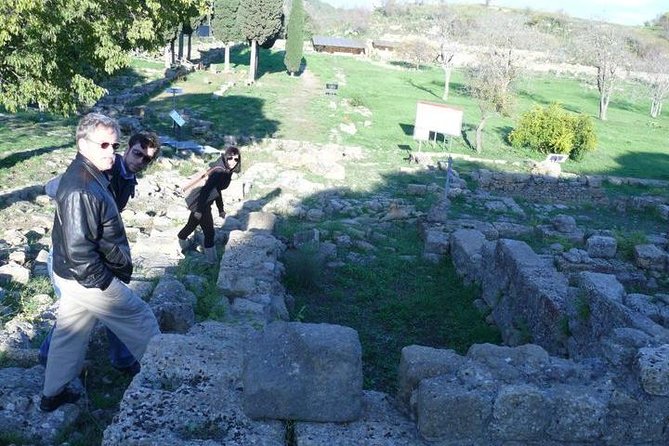
The tour begins at the Area Archeologica di Morgantina, the remains of a Greek Sicilian city. The main draw is its agora, the public center where the city’s civic, commercial, and social life once gathered.
You should allow about an hour here. That is enough time to get a sense of the site without reducing it to a quick photo stop. The ruins are spread across an archaeological area, and the value of a guide becomes clear when blocks, foundations, and partial structures need a larger explanation.
I like this opening because it gives you the place before the objects. At the museum, you will see individual works in a controlled setting. At Morgantina, you begin with the city itself and can better understand where those objects belonged.
Zagara Palermo’s approach is especially useful here. She explains Morgantina’s history, points out the different parts of the site, and discusses theories connected with what archaeologists have found. That last point matters. Ancient ruins rarely answer every question, and a good explanation should show you where evidence ends and interpretation begins.
The city dates from the sixth to the third century BC, according to the tour information. That long span means you are looking at layers of occupation and change rather than one frozen moment. Zagara’s role is to help you follow those layers without turning the visit into a list of dates.
The main limitation is that the admission ticket is not included. You pay €8 for each site, so the archaeological area is one of three separate charges. If you are planning the full route, include those costs when comparing the group price with a self-guided visit.
More museums and sites in Sicily:
- Guided tour of the Trapani Salt Pans and Salt Museum
★ 4.7 · 423 reviews - Guided tour of the salt pans of Trapani and the Salt Museum
★ 5.0 · 188 reviews - Tile Museum – Majolica Museum – Rooms at the Genius
★ 5.0 · 85 reviews
Aidone Museum and the objects that explain the city
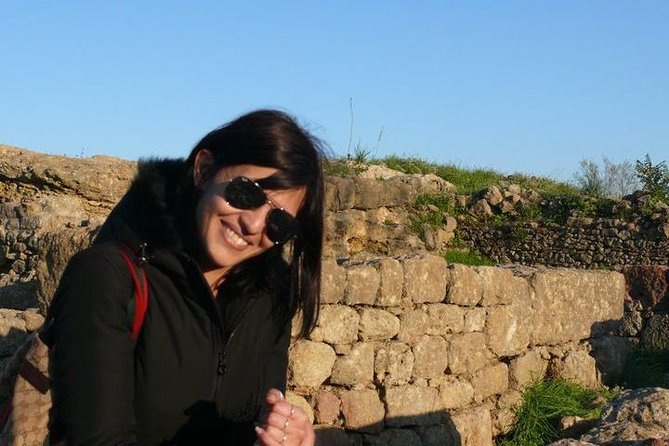
The Museo Archeologico di Aidone is the natural second stop. Here, the finds from Morgantina are brought together, making it easier to connect the ancient city with the objects once used, displayed, or valued there.
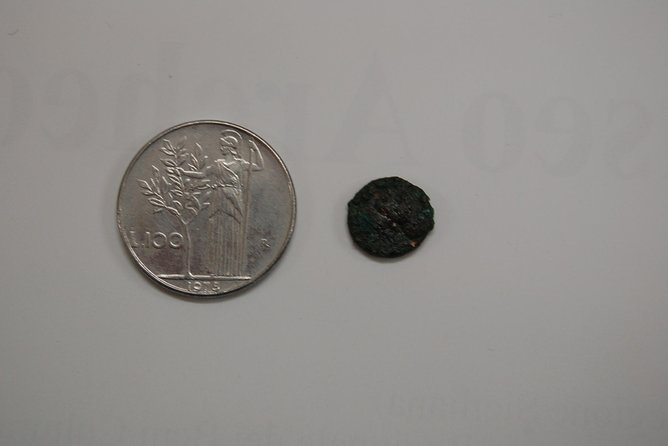
Three groups receive special attention: the Venus, the acrolites, and the Silver Treasure. These are not minor additions to a ruins visit. They give the tour its strongest visual focus and help show the artistic and economic importance of the ancient community.
The Venus is likely to be the museum’s best-known piece for many people, but the experience is not limited to one famous sculpture. The acrolites are also important because they represent a particular type of ancient statuary made with stone for exposed body parts and other materials for the rest of the figure. The Silver Treasure adds a very different angle, showing the value placed on precious objects.
You will get more from these pieces if you listen for the links between object and place. Morgantina is not simply an archaeological field, and the museum is not simply a collection of attractive fragments. Together, they show how a city’s public spaces, art, religious practices, and wealth can be read through both ruins and artifacts.
This is where Zagara’s enthusiasm seems most helpful. Her explanations focus on individual finds and the ideas behind them, while also making room for different interpretations. Her style is described as empathetic and engaging, not just technical. That should suit you if you want the meaning behind an object rather than a label and a date.
The guide can explain in Italian and English, which is important for an experience built around detailed interpretation. The supplied information does not specify the exact language arrangement for your booking, so confirm your preferred language when reserving.
Admission to the museum is also separate and listed at €8. The extra fee is easy to overlook because the group price covers the guide rather than entry. The museum itself is a strong reason to accept the added cost, especially if sculptures and ancient objects interest you more than open-air ruins.
Following Demeter and Kore through inland Sicily
The tour’s unifying idea is the myth of Demeter and Kore. In Greek mythology, Demeter is associated with agriculture and the earth, while Kore is the name used for Persephone before her descent into the underworld. Sicily is closely tied to this story in ancient tradition, and the route uses the myth to connect sites, objects, and the island’s agricultural identity.
This is more interesting than treating the three stops as unrelated attractions. The myth gives you a way to think about why ancient communities cared so much about seasonal change, fertility, death, and renewal.
You should not expect a theatrical performance or a standalone mythology lesson. Instead, the story works as a thread through the archaeology. It helps place the sites in a cultural setting and gives the visit an emotional center.
I like this approach because it points you toward a less obvious side of Sicily. The island is famous for Greek temples, Baroque towns, beaches, and food, but the inland connection between myth and archaeology can feel more personal and rooted in local traditions.
The wording of the tour also promises the flavors and colors of a quieter Sicily, though the supplied details do not include a specific food tasting or meal. Do not book it expecting an included culinary activity. The confirmed focus is the archaeological route and the guide’s interpretation.
Villa Romana del Casale and its 3,500 square meters of mosaics
The third stop is Villa Romana del Casale, known for about 3,500 square meters of mosaic flooring. The villa has UNESCO World Heritage status, granted in 1997, and its scale gives the final part of the tour a different feel from Morgantina and Aidone.
You should plan about an hour and a half here. That is the longest individual stop, and it needs to be. A large mosaic complex can be visually overwhelming at first, with patterns, scenes, and rooms competing for attention. A guide helps you slow down and notice what matters.
The villa also broadens the timeline of the day. Morgantina and its museum center on a Greek Sicilian city and its finds, while Villa Romana del Casale presents a major Roman-era residence. The contrast lets you see how Sicily absorbed different cultures over time.
The mosaics are the clear reason to come. Their scale is impressive, but size alone is not the whole point. Floors can reveal how rooms were used, what themes mattered to the people who commissioned them, and how much skill and labor went into decorating a private residence.
The ticket is again not included, with admission listed at €8. That means the full route requires three separate entrance payments. The tour price may make good sense for a private group that wants one guide across all three locations, but a solo visitor should calculate the full cost carefully.
There is also a timing issue worth taking seriously. The itinerary gives one hour for Morgantina, one hour for Aidone Museum, and 90 minutes for Villa Romana del Casale. That is about three and a half hours before allowing for movement between sites. Yet the general duration is shown as 30 minutes to two hours. Ask for the exact plan so you are not forced to rush or left unsure about how the day is structured.
A few more Sicily days worth weighing up
- Etna Morning Trip
★ 4.5 · 1,241 reviews - Syracuse: Boat Trip of Ortigia Island and Sea Caves
★ 4.7 · 937 reviews - Tour of the island of Ortigia and exploration of sea caves with baths.
★ 5.0 · 668 reviews - Pub Crawl Palermo
★ 5.0 · 595 reviews
What Zagara Palermo adds to the visit
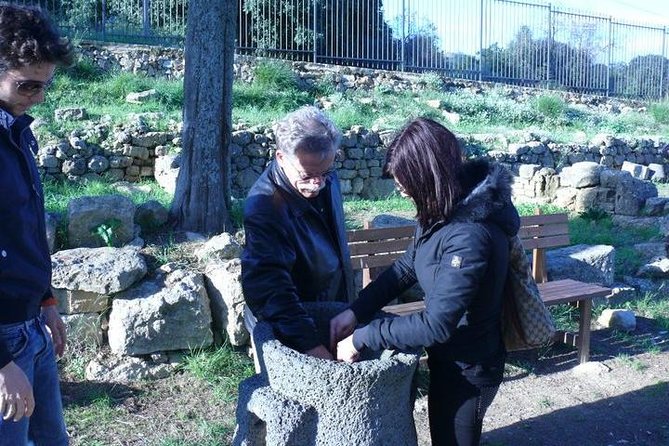
A guide can make or break an archaeological tour. Here, the guide identified for the experience is Zagara Palermo, and the strongest praise centers on her passion, professionalism, and ability to make difficult material understandable.
That matters most at Morgantina, where the remains are not self-explanatory. It also matters at the museum, where several important objects deserve more than a passing glance. A guide who can explain the history of a site, discuss theories, and relate separate finds to one another gives you a clearer picture of ancient Sicily.
Her work is also described as effective in both Italian and English. If you are booking in English, that is a useful point to confirm in advance, but the available information specifically says she explains the sites and finds in both languages.
I would choose this tour if you prefer a guide who spends time on interpretation rather than simply leading you from room to room. The tone appears serious but enthusiastic, with attention to the emotion that works of art can create. That should appeal to anyone who wants archaeology explained in human terms.
The tour can serve a group of up to 15 at the stated price of $149.18. Separate activity information gives a maximum of 54 participants, so the group-size details are not perfectly clear. Since the price is specifically described as being for a group of up to 15, confirm the number included in your booking and ask how larger groups are handled.
Price, timing, and the real value
At $149.18 per group, the value depends heavily on how many people are in your party. A full group of 15 would bring the guide cost down to roughly $10 per person before admission. A couple would pay much more per person, although they would still receive a dedicated guide for the route if the booking terms confirm that arrangement.
The three €8 entrance fees add another €24 per person for the complete itinerary. That makes a full day more expensive than the headline price suggests, but the guide’s role covers three different kinds of heritage: an archaeological city, a museum collection, and a Roman villa.
I see the price as easier to justify for families or groups who want one person to connect the sites. It is less compelling if you only want to see one attraction, since the guide is being hired for a route that covers all three.
The duration needs clarification before you commit. The individual stop times indicate a substantial outing, while the broad duration range begins at only 30 minutes and ends at two hours. The route also involves three places, so the published timing does not fully align.
The stated operating hours are Monday through Sunday, 10:00 a.m. to 4:00 p.m., for the listed operating period. That window may affect how comfortably the three stops can fit into one visit. Ask about the start time, travel between locations, and whether every stop is included in the same booking.
Who should book this archaeological route
I would recommend it to you if you have a genuine interest in ancient Sicily and want context at each site. It is especially suitable for people who prefer a human guide to reading isolated museum labels or walking among ruins without a clear story.
The route also suits visitors who want to get beyond Sicily’s busiest attractions. Morgantina and Aidone offer a quieter inland focus, while Villa Romana del Casale brings a major UNESCO site into the same cultural plan.
Families with older children may appreciate the myth of Demeter and Kore as a way into the archaeology. The route has a clear narrative, and the change from open-air ruins to museum displays to mosaics can keep the day varied.
I would think twice if you have very limited time or only want a short activity. The three-site plan is not a quick introduction, and the admission fees are paid separately. It may also be a poor fit if you want a food tour, since no meal or tasting is included in the confirmed details.
The activity is listed as suitable for most people, with service animals allowed and public transportation nearby. No special physical requirements are given, so ask directly if you have mobility concerns or need specific access information at the archaeological area and villa.
Cancellation and booking details to keep in mind
Free cancellation is available if you cancel at least 24 hours before the experience begins. Changes made less than 24 hours before the start time are not accepted, and a late cancellation is not refunded.
The experience requires good weather and a minimum number of participants. If poor weather or low enrollment cancels the outing, you are offered another date or experience, or a full refund.
Confirmation is provided when you book. The activity returns to its meeting point at the end, though the supplied information does not identify a separate pickup service or a precise meeting address.
Should you book this tour?
Book it if you want interpretation, not just admission. Morgantina, the Aidone Museum, and Villa Romana del Casale make a strong trio, and Zagara Palermo’s focus on history, theories, and artistic meaning gives the route a clear purpose.
Before paying, confirm the actual duration, language, group size, meeting point, and whether the three €8 entrance fees apply exactly as listed. If those details work for you, this is a thoughtful way to explore inland Sicily and see how Greek myth, ancient cities, museum objects, and Roman mosaics fit together.
FAQ
How much does the guided tour cost?
The listed price is $149.18 per group for up to 15 people. Entrance tickets are not included and are listed at €8 for each site.
How long does the experience last?
The general duration is listed as approximately 30 minutes to two hours. The individual stops are scheduled for one hour at Morgantina, one hour at the Aidone Museum, and 90 minutes at Villa Romana del Casale, so confirm the exact schedule before booking.
Which places are included?
The route includes the Area Archeologica di Morgantina, Museo Archeologico di Aidone, and Villa Romana del Casale. The guide is included, but admission to each site is separate.
Who is the guide?
The experience is provided by Zagara Palermo Tourist Guide Villa Romana del Casale. The guide is identified as Zagara Palermo and can explain the sites in Italian and English.
Is the tour available every day?
The listed opening hours are Monday through Sunday from 10:00 a.m. to 4:00 p.m. The operating period shown is November 5, 2019 through June 17, 2026.
Can I cancel for a full refund?
Yes, if you cancel at least 24 hours before the experience starts. Cancellations made less than 24 hours in advance are not refunded, and poor weather or failure to meet the minimum number of participants may result in an alternative date or a full refund.
Just added around Sicily
- Zafferana Etnea:Honey extraction workshop and honey tasting★ 4.7 · 3 reviews
- From Trapani: Favignana and Levanzo Yacht Tour with Stops★ 5.0 · 4 reviews
- Mt Etna: Winter Trekking Tour with Optional Catania Transfer★ 4.7 · 13 reviews
- Wine tour with wine tasting★ 4.7 · 18 reviews
- Sicilian Soul: Winery Tour, Wine & Food Tasting in Catania★ 5.0 · 4 reviews
- Wine tasting in Catania Historic center★ 4.4 · 15 reviews
- Valley Of The Temples By E-Bike With Picnic Included★ 4.7 · 7 reviews
- Valley of the Temples and Villa Romana Multi-Language Tour★ 4.8 · 5 reviews
Museums, compared.
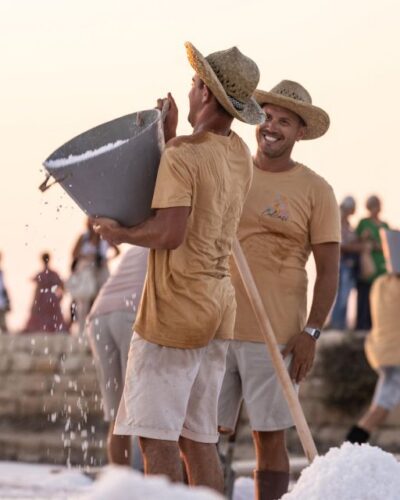
Guided tour of the Trapani Salt Pans and Salt Museum
Read our review →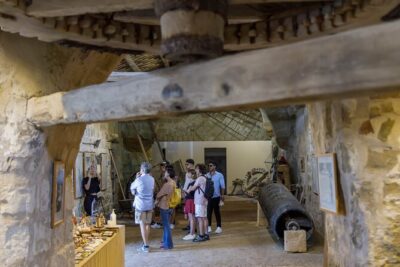
Guided tour of the salt pans of Trapani and the Salt Museum
Read our review →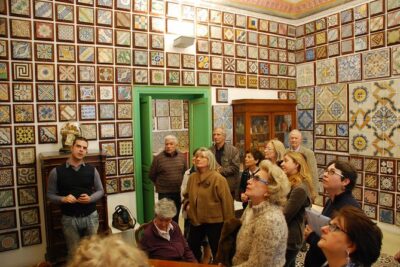
Tile Museum – Majolica Museum – Rooms at the Genius
Read our review →
Tour and Soap personalization at the Soap Museum in Sciacca
Read our review →
Browse the lists this tour appears in