
Reviewed · SICILIAN COOKING CLASSES
Cooking Class Arancini in Catania
Catania’s famous arancino is more than a snack here. You learn how to cook the rice, prepare fillings, shape the rice, and build the crisp coating that gives this Sicilian specialty its appeal. You also make almond paste, then sit down to taste the results with Sicilian wine and coffee.
I like the small groups of up to six, which leave room for questions and hands-on help. I also like the mix of savory and sweet cooking: several arancini fillings followed by almond paste gives you a fuller picture of Sicilian food than a class focused on one dish. The main drawback is the recipe booklet. One participant found the copies incomplete, with no quantities for the rice, so take careful notes during the lesson.
Key points at a glance
- Cook arancini from rice to crust: Learn the rice base, fillings, shaping, and crunchy breading rather than simply watching a demonstration.
- Make Sicilian almond paste: The class includes a second local specialty, giving you a sweet finish as well as a savory main dish.
- Work with a professional chef: Instruction is available in English and Italian, and Agata is one instructor praised for her teaching.
- Taste several versions: Vegetarian fillings are possible, and you can sample different types of arancini at the end.
- A truly small class: With no more than six participants, the format can feel personal, especially when attendance is low.
- Leave with food and recipes: Wine, water, coffee, leftovers when available, and a recipe booklet are part of the experience.
Why arancini make a good Catania cooking class
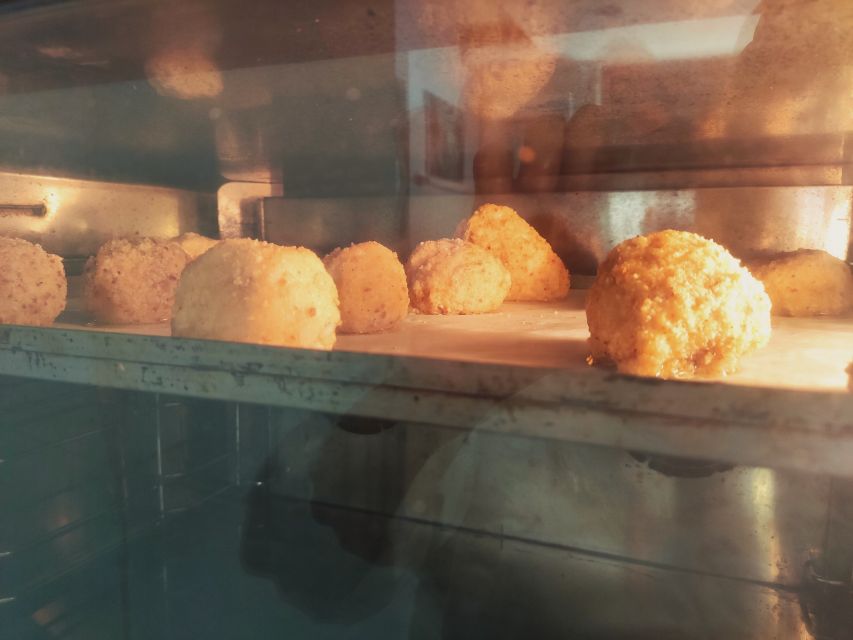
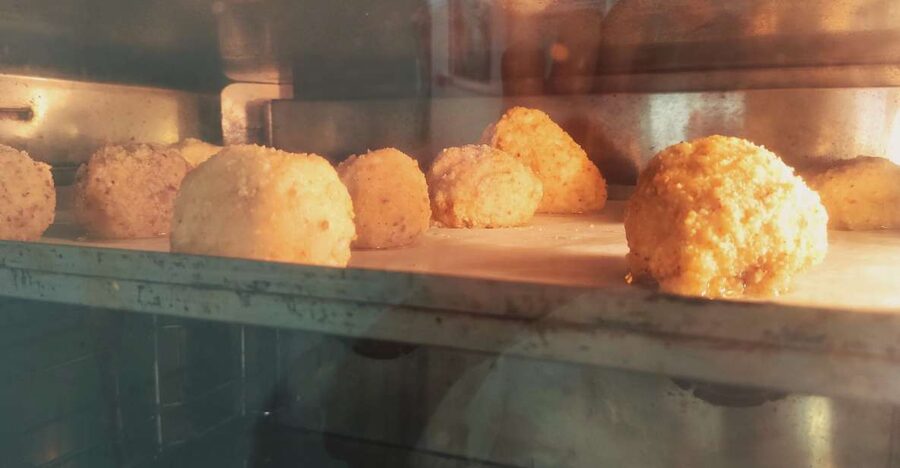
Arancini look simple from the outside: a golden ball of fried rice with a savory center. The work is hidden inside. The rice has to hold together, the filling needs the right balance, and the coating must turn crisp without losing the shape.
That makes this a useful class for you if you want to understand how Sicilian street food is made, not just eat it from a paper cone. The chef explains how the rice is prepared before you begin filling and shaping it. That step matters because poorly cooked or badly cooled rice can make the arancino fall apart.
You also get a choice of fillings, with vegetarian options available. The exact selection can vary, but the format gives you more to compare than a single finished sample. You can pay attention to how different fillings work with the rice and how the crust changes the bite.
The class takes place in a cooking laboratory in Catania, at coordinates 37.51484298706055, 15.102240562438965. Check your booking details for the precise meeting instructions and starting time, since the class runs for three hours and available start times can vary.
More Cooking Classes in Catania
- Catania: Pistachio Ravioli, Pasta Home Cooking Class w/ Wine
★ 4.7 · 204 reviews - Cooking lesson in Catania with lunch or dinner
★ 5.0 · 154 reviews - Catania: Market Tour and Cooking Class with Chef Riccardo
★ 5.0 · 40 reviews
A small cooking laboratory, not a crowded food tour
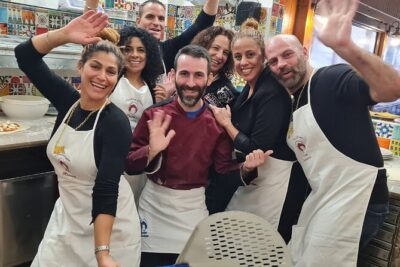
The group limit is six people. That number makes a real difference in a practical cooking class. You can ask the chef to repeat a step, get help with shaping, and see what other people are doing without standing at the back of a large room.
Some sessions may be even smaller. One class had only two participants, creating a particularly personal setting with plenty of space for conversation and instruction. A small group also makes it easier to share what you prepare with the other people in the room.
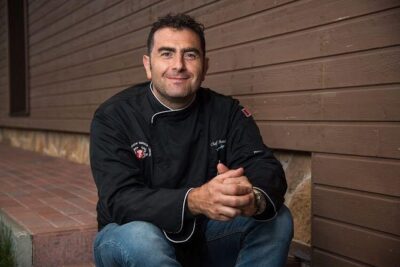
Instruction is offered in English and Italian. Agata is one chef associated with the class, and her teaching received especially strong praise. You should still expect the lesson to involve demonstrations, kitchen work, and food preparation rather than a formal lecture.
The small format works well for couples, friends, solo visitors, and families with older children who enjoy cooking. It is not designed for very young children. The activity information lists babies under one and children under two, three, and four as unsuitable, so confirm the age rules before booking for a family group.
Cooking the rice, the foundation of the arancino
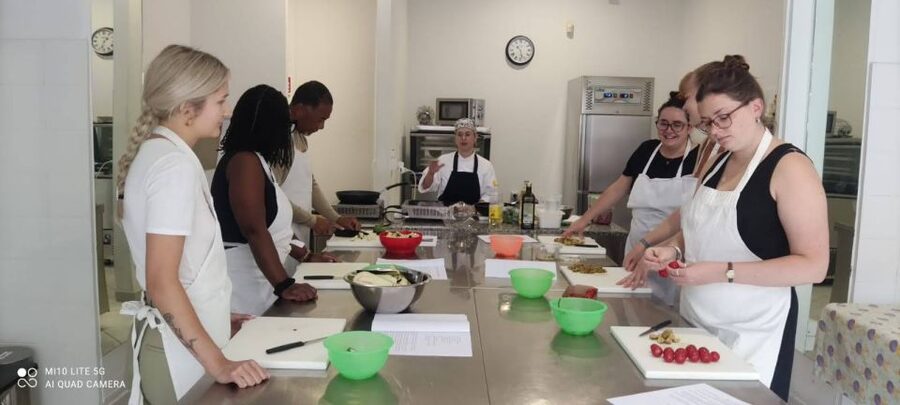
The first important lesson is the rice. The chef explains how it should be cooked so it can become the firm outer shell of the arancino. This is the technical heart of the class, and you should pay close attention here.
A recipe booklet may not give you enough detail to recreate this step on its own. One participant specifically found that the rice instructions were missing and received only a brief explanation involving cheese, butter, and saffron, without quantities. That is useful warning: write down the rice method and measurements while the chef is explaining them.
This is also where the class offers value beyond a restaurant meal. At a restaurant, you taste the finished rice and crust. Here, you see how texture is built. You learn why the rice must be cohesive but not mushy, and how it becomes workable enough to hold a filling.
If you are serious about repeating the recipe at home, ask questions as you go. Note the rice type, cooking time, seasoning, resting time, and approximate quantities. The cooking team may answer questions clearly in English, but your own notes will help fill any gaps in the booklet.
Fillings, shaping, and the crunchy coating
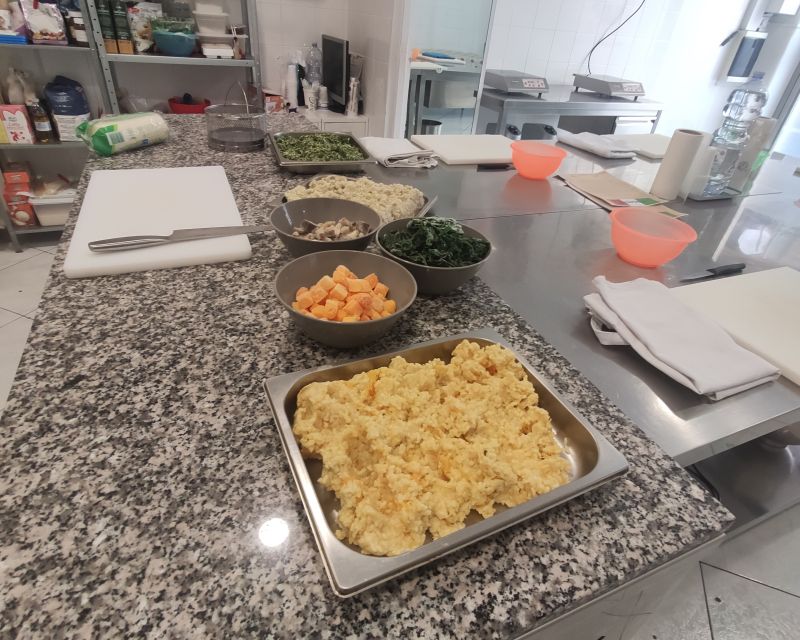
Once the rice is ready, you prepare different fillings. The option of vegetarian fillings is helpful for anyone who avoids meat or simply wants to compare styles. You then learn how to place the filling inside the rice and form the arancino without letting it split.
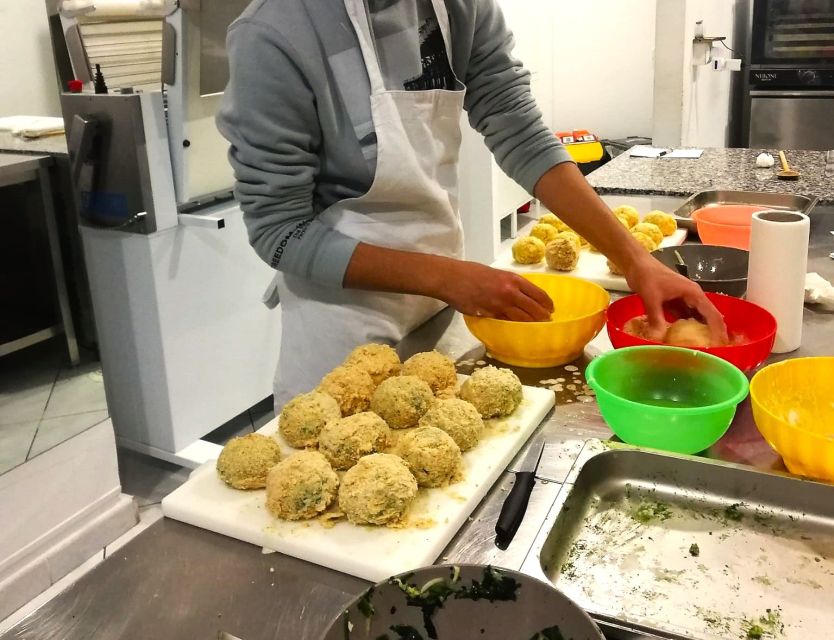
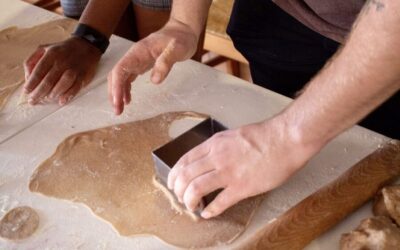
The shaping stage is likely to be the most hands-on part of the class. Arancini require enough rice to surround the filling, but too much pressure can make the shell dense. The chef can correct your technique in a way a printed recipe cannot.
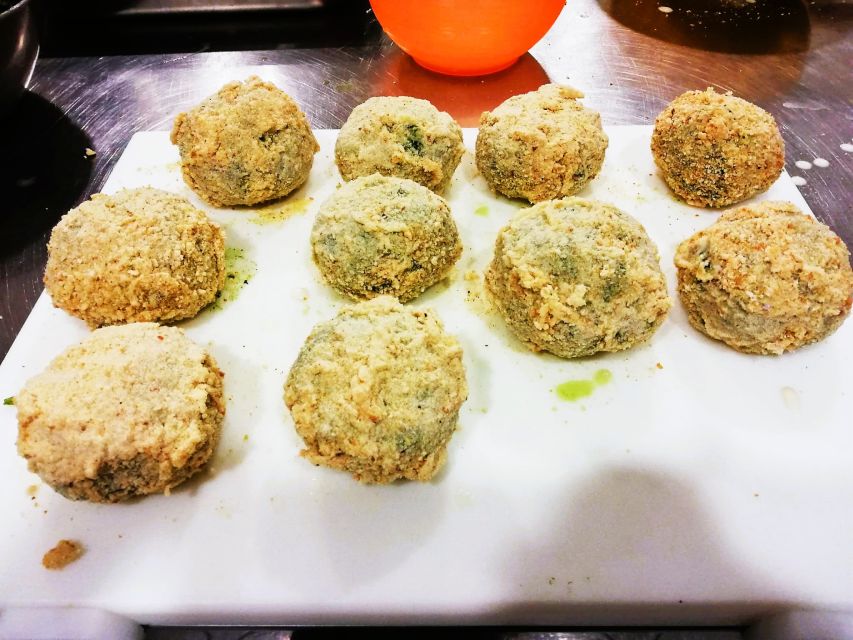
Next comes the breading. You learn how to create the typical crunchy outer layer, which gives the arancino its contrast: crisp outside, tender rice, and a warm center. This is a practical skill worth remembering because the coating helps protect the shape during cooking.
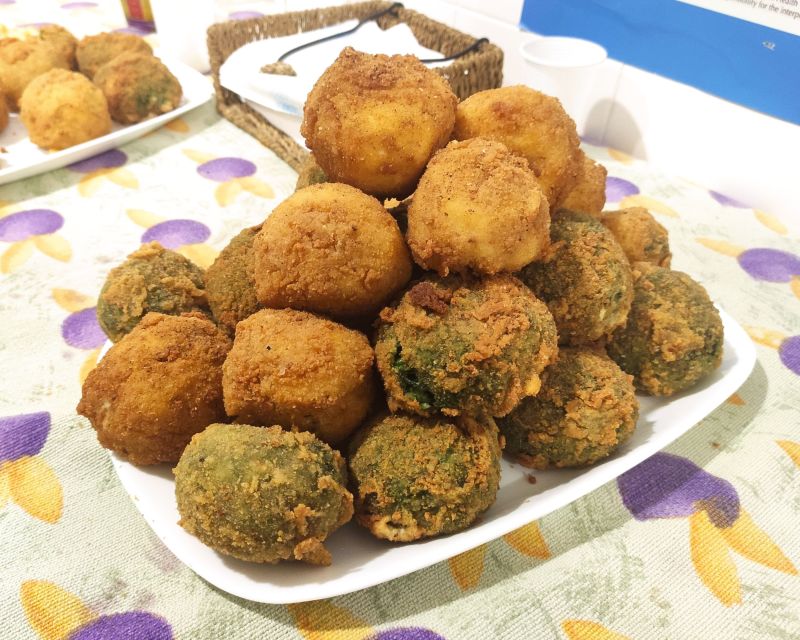
You will prepare more than one type of arancino, then taste the results at the end. One participant enjoyed having leftovers to take home, though that depends on how much is made and how many people attend. Do not count on a guaranteed take-home portion, but it is a welcome possibility.
More cannoli and granita classes in Catania:
- Taormina and Castelmola private and guided tour with Arancino
★ 4.5 · 35 reviews - Etna walking tour, visit of a lava tunnel, Arancino tasting
★ 5.0 · 25 reviews - Catania: Private Tour with Arancino Tasting
★ 4.5 · 4 reviews - Palermo: Pizza and Gelato Cooking Class with Dinner and Wine
★ 4.9 · 951 reviews
Almond paste adds a second Sicilian lesson
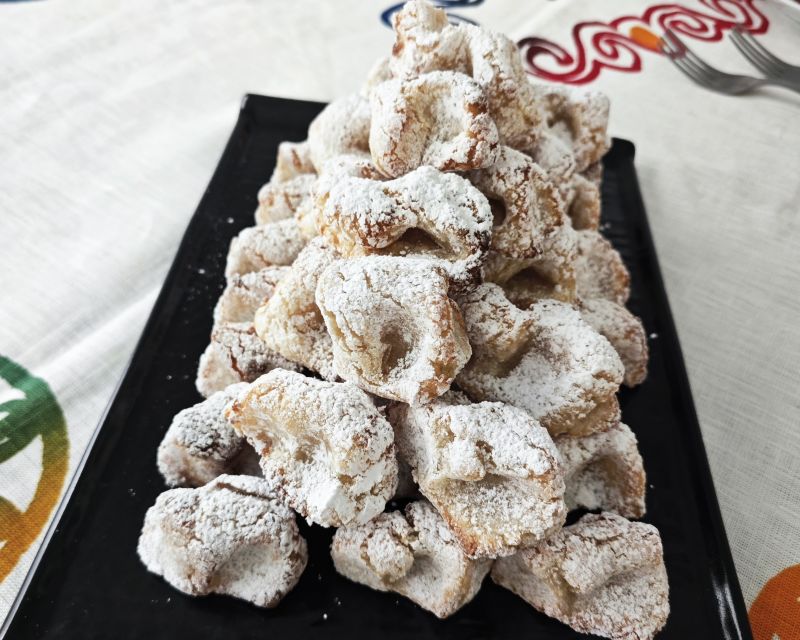
The class does not stop with arancini. You also learn how to make Sicilian almond paste, a sweet preparation with a place in the island’s food culture.
This change from savory to sweet keeps the three-hour session varied. After working with rice, fillings, and breading, you shift to the texture and flavor of almonds. It also gives you a second recipe to practice at home, especially if you like making small sweets for coffee or a meal with friends.
The almond paste is included in the final tasting alongside the arancini. You can compare the different preparations and see how a few local ingredients can produce very different results. The class therefore feels more like a compact lesson in Sicilian cooking than a single-recipe workshop.
The recipe booklet is intended to help you repeat both preparations at home. Bring a pen or use your phone for notes, particularly if the printed recipes do not include every quantity or stage. That small bit of preparation can make the difference between remembering the class and actually cooking the food later.
The tasting: wine, coffee, and the food you made
At the end, you taste the different arancini and the almond paste prepared during the lesson. Sicilian-style wine, water, and coffee are offered with the food.
This final meal is part of the value. You are not rushing away after the practical work. You can compare the fillings, ask last questions, and enjoy what you helped prepare. The relaxed setting also gives you a chance to talk with the chef and the other people in the class.
One useful detail is that you may be able to share your food with another couple or group preparing a different dish. That adds variety to the tasting and makes the meal feel social without requiring a separate dining activity.
The wine is a modest but fitting touch. It helps turn the lesson into a meal, though you should not book this expecting a winery visit or a large wine tasting. The focus remains on cooking, with wine served alongside the finished food.
Value for a three-hour Catania activity
The value here comes from the combination of instruction, food, tasting, and a recipe booklet. You are not paying only for a plate of arancini. You receive a practical lesson, several preparations to taste, drinks, and the chance to repeat the dishes at home.
The price is not provided in the activity details, so compare the current rate with other Catania cooking classes before booking. A higher price may make sense for you if you value a small group, a professional chef, and a class that includes both a savory dish and almond paste.
The experience is also a useful choice on a very hot day. One participant found the indoor cooking activity particularly enjoyable when the Sicilian weather made long outdoor sightseeing less appealing. A three-hour class gives you a planned break from the sun while still connecting you with local food.
Keep your expectations practical. This is not a full market visit, a long cultural tour, or a restaurant meal prepared entirely for you. You will be working, asking questions, and handling the food yourself. That is the point, but it may not suit you if you want a passive tasting.
Language, teaching style, and what to bring
The class is taught in English or Italian. The English instruction has been described as clear, and the chef is expected to guide you through each stage. If a technical point is important to you, ask for the measurement or timing and write it down.
I would bring a small notebook or use your phone for notes. The recipe booklet is a useful keepsake, but at least one participant found the copies to be only two recipes reproduced on a copier, with incomplete instructions. That does not cancel the value of the hands-on lesson, but it does mean you should not rely on the booklet alone.
Wear clothing you can cook in and avoid bringing anything you would worry about near food preparation. Specific clothing rules are not provided, so follow any instructions given by the cooking laboratory.
You should also arrive ready to eat. The class includes a tasting and drinks, but the exact amount of food you take away can vary. Some participants had plenty of leftovers, while the main purpose remains learning and tasting during the session.
Who should book this arancini class?
I would recommend it most strongly to people who enjoy hands-on food activities and want a practical memory from Catania. It suits anyone curious about Sicilian street food, couples looking for a shared activity, and small groups that prefer a personal lesson.
It is also a good fit for vegetarians because vegetarian fillings are possible. Ask about the available choices when you book if this matters to you.
Food lovers who already know arancini may still enjoy the class because you work through the construction process rather than simply sampling one. Beginners should feel comfortable too, since the chef explains the rice, fillings, shaping, and breading in order.
I would hesitate if your main goal is a polished recipe package for home use. The booklet may need help from your own notes. I would also choose another activity if you prefer a home dining experience, a market tour, pasta, pizza, or a class built around a broader menu.
Booking details worth knowing
The class lasts three hours and meets at a cooking laboratory in Catania. The group is limited to six people, and instruction is available in English and Italian.
You can cancel up to 24 hours before the activity for a full refund. The reserve-now-and-pay-later option lets you hold a place without paying immediately, which is useful if your Catania plans are still moving around.
Check the available start times before committing. The supplied details do not give one fixed daily departure time. You should also confirm the meeting information carefully, since the location is given by the laboratory and coordinates rather than by a central Catania landmark.
Should you book this Catania cooking class?
Book it if you want to learn the mechanics of arancini in a genuinely small setting, taste several versions, and add almond paste to the lesson. The strongest parts are the chef-led instruction, the personal group size, the chance to make vegetarian fillings, and the relaxed tasting with wine and coffee.
Go in prepared to take notes. The incomplete recipe booklet is the one clear weakness, especially if you want to recreate the rice exactly at home. With that caution in mind, this is a worthwhile three-hour choice for food-minded visitors who prefer making a Sicilian specialty to simply ordering one.
FAQ
How long does the arancini cooking class last?
The class lasts three hours.
Where does the class meet?
It meets at a cooking laboratory in Catania, Sicily. The provided coordinates are 37.51484298706055, 15.102240562438965.
What languages are available?
The instructor can teach in English or Italian.
How many people can join the class?
The activity is limited to six participants.
What will I learn to cook?
You will learn to prepare Sicilian arancini, including the rice, fillings, shaping, and crunchy breading. You will also learn to make Sicilian almond paste.
Are vegetarian fillings available?
Yes. Vegetarian fillings are possible during the arancini lesson.
Is food and drink included?
Yes. The class ends with a tasting of the arancini and almond paste, along with Sicilian-style wine, water, and coffee.
Do I receive recipes to take home?
Yes. You receive a booklet with recipes. You should also take your own notes because one participant found the printed instructions incomplete, particularly for the rice.
Just added around Catania
- Mt Etna: Winter Trekking Tour with Optional Catania Transfer★ 4.7 · 13 reviews
- Wine tour with wine tasting★ 4.7 · 18 reviews
- Sicilian Soul: Winery Tour, Wine & Food Tasting in Catania★ 5.0 · 4 reviews
- Wine tasting in Catania Historic center★ 4.4 · 15 reviews
- Trekking at 3000 meters on Etna★ 3.8 · 7 reviews
- Catania: Underground and Street Food Walking Tour★ 4.7 · 56 reviews
- Private Tour from Catania to Etna Naxos and Taormina★ 4.5 · 7 reviews
- Catania AIRPORT transfer From / To Taormina★ 5.0 · 3 reviews
Sicilian Cooking Classes, compared.
Pizza and Gelato Cooking Class with Dinner and Wine
Read our review →
Seaview Cooking Class & Taormina local flavors with Chef Mimmo
Read our review →
COOKING CLASS in Taormina at Chef Massimo HOUSE!!
Read our review →
Cannolo Cooking Class with Completion Certificate
Read our review →
Browse the lists this tour appears in