
Reviewed · ETNA SUMMIT CRATER TREKS
Mount Etna: Tour to the Summit Craters by Cable Car
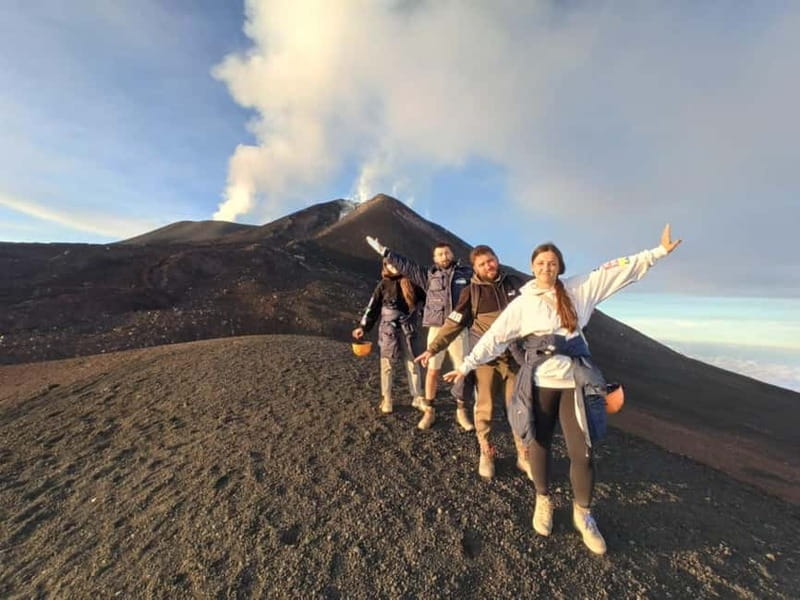
Walking across Mount Etna feels less like a normal mountain hike and more like a trip across another planet. Black ash, fresh lava, old eruption craters, and wide views over Sicily fill the route, with a volcanological guide giving the terrain some meaning.
I like the mix of transport and walking: the cable car and 4×4 save you from a long lower climb, while the hike still gets you close to Etna’s summit craters. I also like the route’s variety, from the 2002 eruption craters and a lava channel to the enormous Valle del Bove. The main catch is altitude. This is a serious high-mountain outing, and the advertised price does not include the cable car and 4×4 fee.
Key points to know before booking
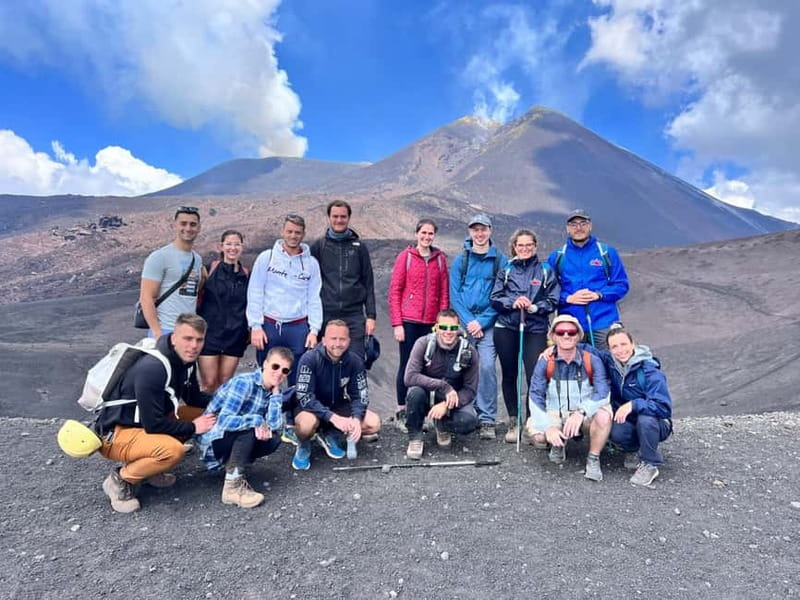
- The hike reaches about 3,400 meters: Good fitness matters, and high altitude can affect your breathing and pace.
- The cable car and 4×4 cost extra: The south-side ascent adds €65 per person, while a changed itinerary may require a €52 cable-car ticket.
- The route changes with volcano conditions: Eruptive activity or bad weather can prevent access to the summit craters.
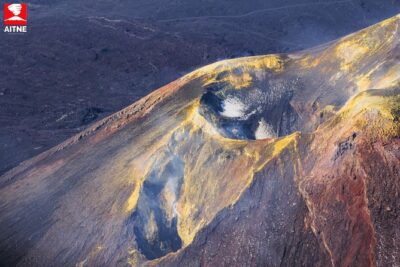
- The scenery keeps changing: Expect recent lava flows, lateral craters, a lava tunnel, ash fields, and the Valle del Bove.
- Guides speak three languages: Tours are offered in English, Italian, and French, though the guide assigned to you can vary.
- A French-language backup may be possible: When a French tour could not run, the group was transferred to another local guide, Maximo, who adapted the pace and route.
Reaching Etna from Rifugio Sapienza
The tour begins at La Terrazza dell’Etna, near the cable-car station at Rifugio Sapienza on Etna’s south side. The meeting point has free parking, and the office is located at Bar Terrazza dell’Etna, directly in front of the cable car.
This is a useful starting point if you are driving yourself. Hotel pickup is not included, and any transfer service costs extra, so you need to arrange your own way to Rifugio Sapienza unless you book a separate transfer.
The full outing lasts about five and a half hours. That sounds manageable, but the altitude makes the time more demanding than a typical half-day sightseeing trip. You are not simply walking on a marked path at sea level. The route begins high on the volcano, and every uphill section can feel harder than expected.
The tour uses a live guide in English, Italian, or French. Luca Cosma is associated with the activity, though the guide leading your group may be someone else. A French-language outing, for example, was handled by Maximo after the original arrangement changed. That guide adapted the pace to the group, which matters on a route where fitness levels can differ sharply.
More treks to the summit craters:
- Etna Volcano: South Side Guided Summit Hike
★ 5.0 · 311 reviews - Mount Etna: North Upper Craters Guided Tour by 4×4 with Trek
★ 4.6 · 243 reviews - Etna Summit Craters Excursion
★ 5.0 · 33 reviews
Cable car to 2,500 meters
The first ride takes about 15 minutes. The cable car carries you from Rifugio Sapienza to roughly 2,500 meters, lifting you above the lower slopes and cutting out a long approach on foot.
This ride is not just a time-saver. It gives you a quick change in scenery, from the developed base area to Etna’s bare upper slopes. The views can be broad and striking, but mountain weather can change the picture quickly. Keep your jacket accessible instead of burying it in your bag.
The cable car is also the first extra cost to check carefully. The listed tour price is $62.63 per person, but the cable car and 4×4 combination costs €65 per person when the group goes up from the south side. That means the real cost can be much higher than the headline price.
In case the route changes, the cable-car charge alone is listed as €52 per person. Ask for the current arrangement before booking so you know exactly what is included.
The 4×4 climb to 2,920 meters
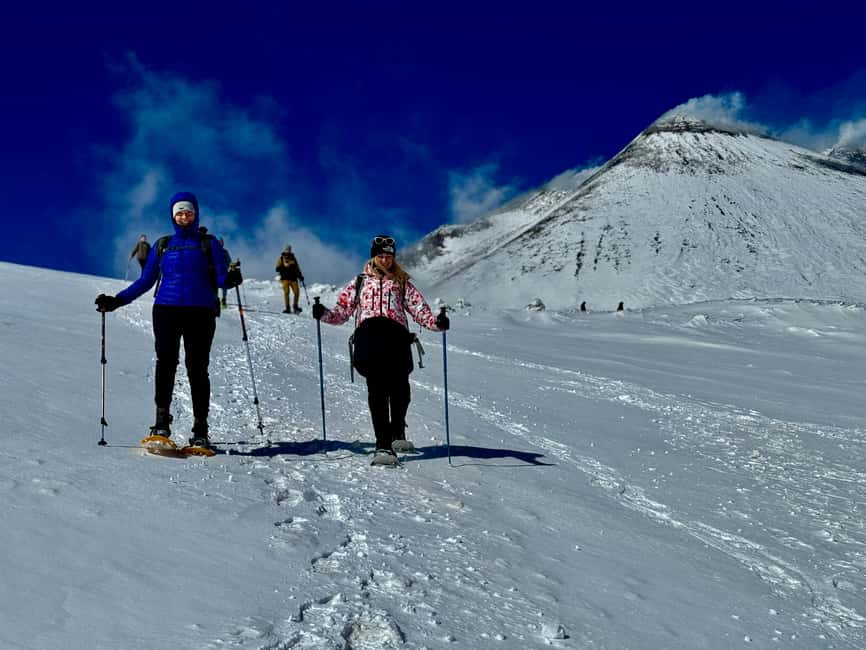
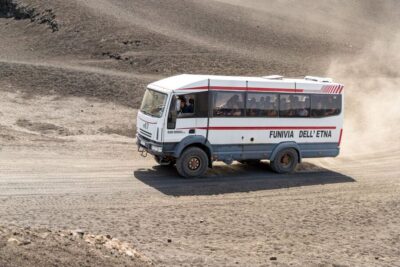
At the upper cable-car station, you continue by special 4×4 vehicle for about 20 minutes. The vehicle reaches approximately 2,920 meters, where the walking section begins.
This is a practical part of the outing. Without it, reaching the upper route would require much more time and effort. It also places you close enough to the high craters for a summit-focused visit within a half-day schedule.
The trade-off is that your body has less time to adjust to the altitude. You move from the base station to 2,500 meters, then higher again, before starting the main walk. If you have respiratory or heart problems, this outing is not suitable. It is also not suitable during pregnancy.
You should take the fitness warning seriously. The route can be altered, and parts of the walk may involve loose ash, uneven volcanic ground, and uphill sections. The activity description calls for good physical condition, not casual sightseeing fitness.
Walking toward the central crater
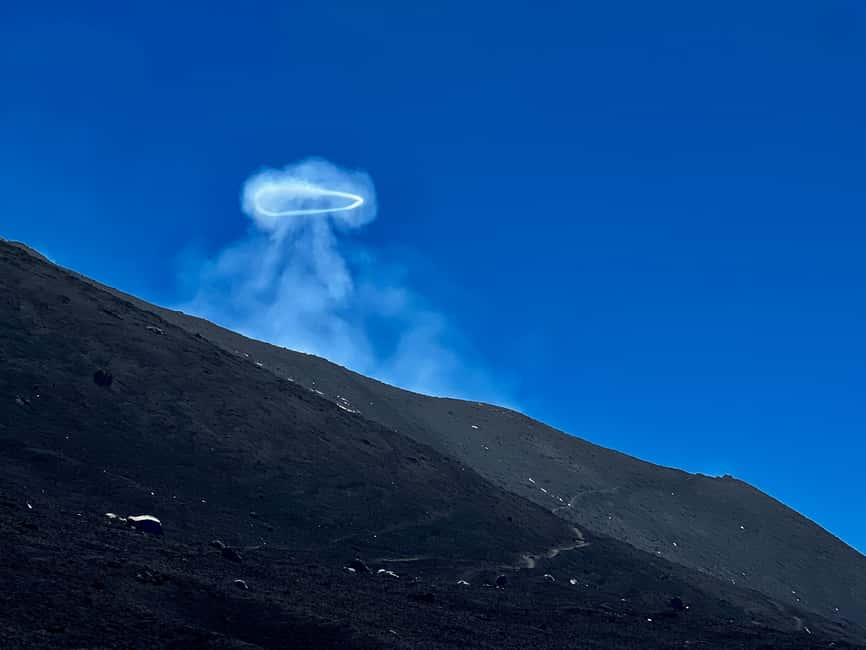
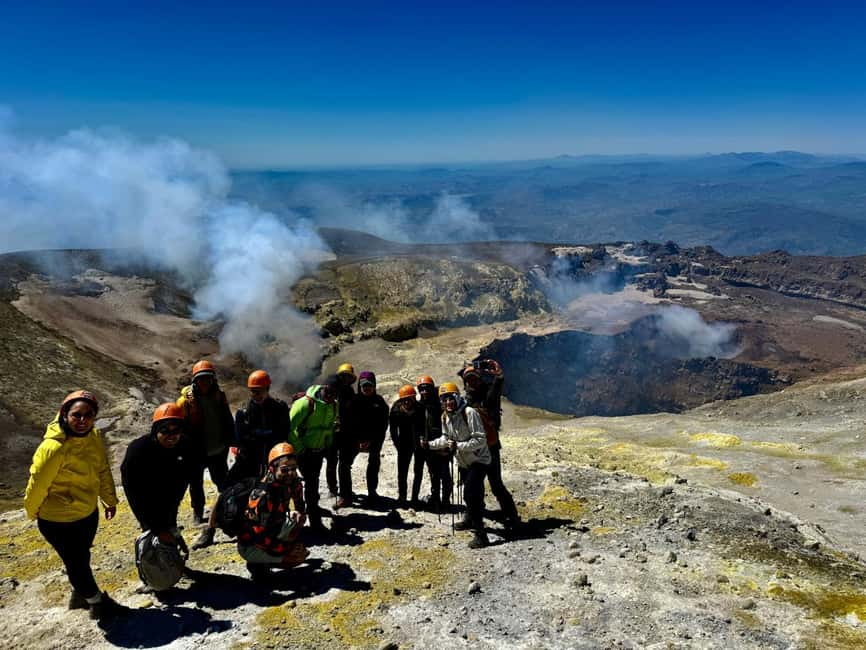
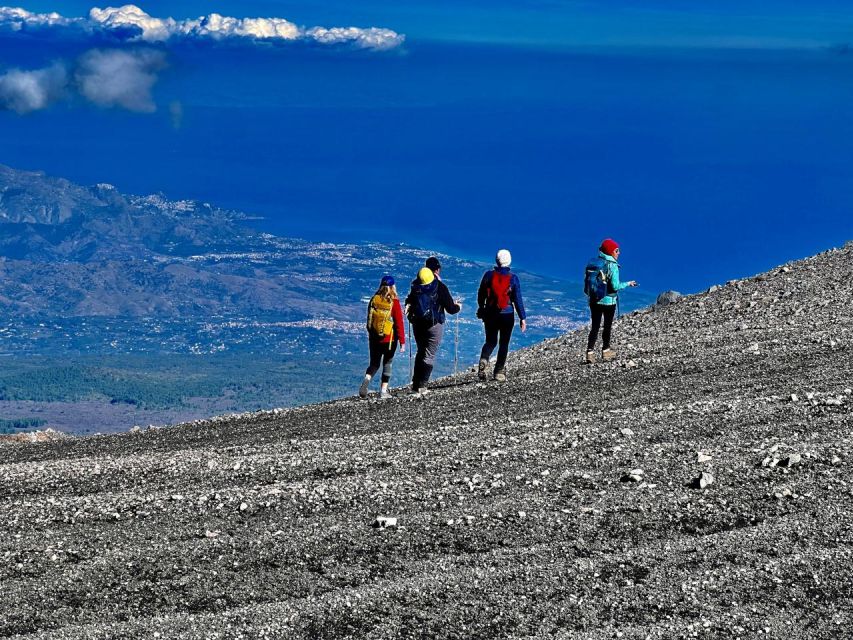
The main guided portion takes about an hour according to the itinerary, though the total walking time can vary when the route changes. From around 2,920 meters, you walk toward the edge of Etna’s Central Crater at roughly 3,400 meters.
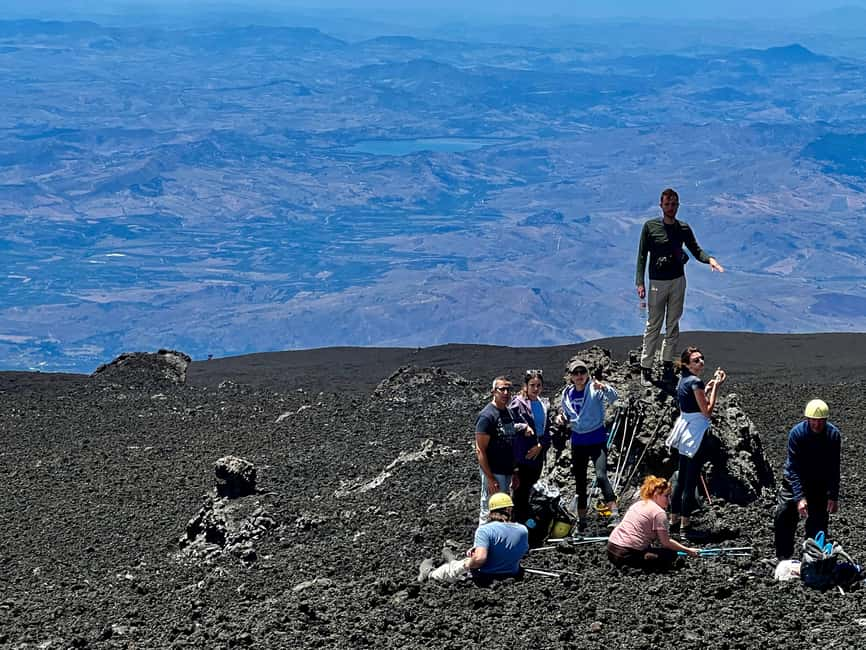
The reward is the sheer scale of the upper volcano. The ground is dark, dry, and broken by ash and lava. The setting feels spare rather than scenic in the usual green-mountain sense, which is exactly what makes it memorable.
At the crater area, you can expect wide views in every direction when the weather cooperates. The route description says you may see the Aeolian Islands, as well as northern and eastern Sicily. Clouds or volcanic conditions can erase those views, so do not book this solely for a perfect panorama.
A guide is especially useful here. A trained alpine or volcanological guide can point out the difference between older crater forms, recent lava flows, and active volcanic zones. Etna is not just a dramatic backdrop. It is a working volcanic system, and access rules can change for good reason.
The summit area is also the part most likely to be affected by volcanic risk. If conditions make the central crater unsafe or inaccessible, the guide may redirect the tour. That is not a failure of the outing. It is a normal part of visiting an active volcano.
More Taormina cable car and viewpoint tickets:
- Mount Etna: Return Funivia dell’Etna Cable Car Ticket
★ 4.0 · 240 reviews - Mount Etna South Slope: Ticketing for the Etna Cable Car
★ 3.5 · 39 reviews - Tour to the Summit Craters of Etna 2920 meters with cable car and Jeep
★ 5.0 · 23 reviews - Etna & Taormina: Tasting, Cable car & off road to 2920m
★ 4.5 · 16 reviews
Recent lava flows and lateral craters
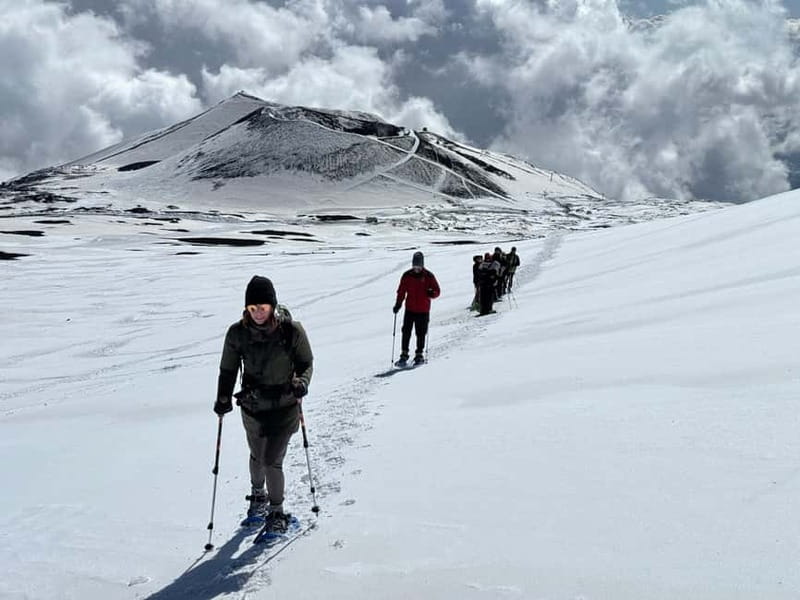
After visiting the upper craters, the route descends and continues across the craters formed during the 2002 eruption. These lateral craters give you a close look at how eruptions reshape Etna away from the main summit.
The word recent matters here. Etna’s lava and ash fields are not merely old geological leftovers. Parts of the route show areas changed by eruptions in living memory, with channels, ridges, and black surfaces that make the volcano’s activity easy to grasp.
You also explore a lava-flow channel. This is one of the more unusual parts of the route because you are not only looking at lava from a distance. You are moving through a feature formed by the movement of molten rock.
The walk continues at high altitude, so the descent does not mean the outing suddenly becomes easy. Loose ash can make footing less secure, and a brisk pace can be tiring. One group had to stop after only a few hundred meters when an online winter booking error placed some participants on a faster outing designed for experienced walkers. That is a useful warning: confirm the seasonal route and expected pace before you go.
Inside a lava tunnel
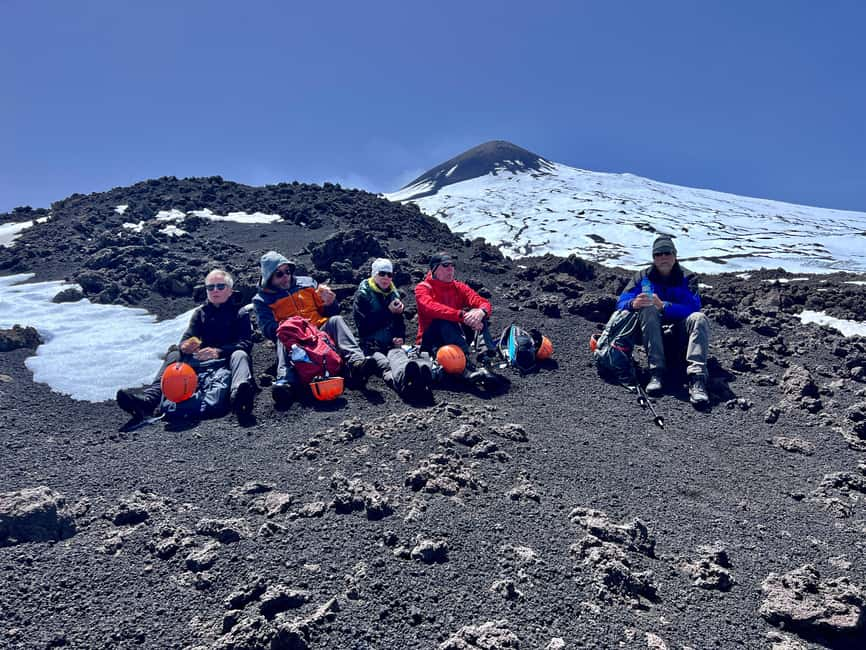
The itinerary includes a walk inside a lava tunnel. This adds a welcome change from the open ash fields and crater rims.
A lava tunnel forms when the surface of a lava flow cools while hotter material continues moving underneath. Here, the tunnel is part of the volcanic story you are seeing all day: eruption, movement, cooling, and reshaped ground.
Bring the requested trekking gear and a first aid kit, and listen closely to the guide’s instructions. The supplied information does not give the tunnel’s exact length or detailed access conditions, so you should not assume it is a long underground cave visit. It is one feature within a larger route.
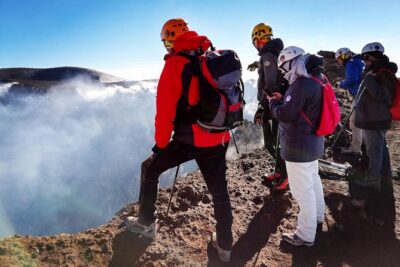
The operator includes a helmet and trekking boots. A windbreaker jacket is also provided, but you should still bring your own jacket because conditions at altitude can be cold and windy. Food and drinks are not provided.
The Valle del Bove viewpoint
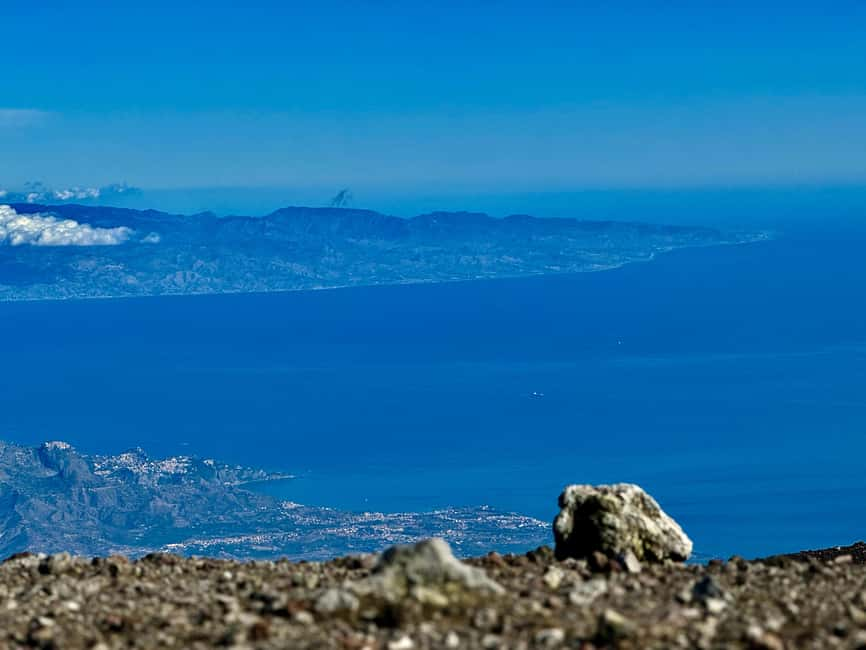
The Valle del Bove is one of the route’s biggest visual rewards. This vast volcanic amphitheater shows Etna on a much larger scale than the individual craters and lava channels.
From the route, you can look across the steep volcanic basin and see how eruptions and collapses have shaped the mountain over time. It gives you a better sense of Etna as a whole, rather than as a collection of isolated black cones.
I like this section because it slows the eye down. The upper craters are close and intense, while the Valle del Bove opens the view outward. If the air is clear, the contrast between the dark volcanic ground and the distant Sicilian coast can be powerful.
The route does not promise clear weather, and that matters here. Clouds may hide the far views or soften the scale of the valley. Even so, the volcanic amphitheater remains a strong reason to choose this itinerary over a basic cable-car ride.
Returning by 4×4 and cable car
After the walking circuit, you return by 4×4 and then by cable car to Rifugio Sapienza. Each leg takes about 20 and 15 minutes respectively, according to the stated schedule.
The return is simple, but the timing can shift if volcanic conditions, weather, or route safety require changes. The activity ends back at the original meeting point, which makes it convenient if you left a car at the free parking area.
You do not need to arrange a separate return transfer. Hotel pickup is not included, however, so anyone staying elsewhere in Sicily should plan the drive back after the tour.
What the price really includes
The listed price of $62.63 per person covers the guided activity, but the most important transport cost is separate. If the tour uses the south-side cable car and 4×4, add €65 per person. That can make the final price close to twice the advertised amount, depending on exchange rates and booking terms.
Included items are:
- Certified alpine or volcanological guide
- Windbreaker jacket
- Helmet
- Insurance
- Trekking boots
Food and drinks are not included. You should bring both, along with a jacket, suitable trekking gear, and a first aid kit.
For value, I would judge this as a specialist guided outing rather than a cheap sightseeing ticket. You are paying for access to a high section of Etna, transport that removes much of the lower climb, safety equipment, and a guide who can explain and manage a changing volcanic environment.
It is good value if you want the summit area and are prepared for a demanding day. It is less appealing if you only want a short scenic ride or if you are comparing it with a basic cable-car visit.
Who should choose this Etna tour?
This tour suits you if you want to walk on volcanic ground rather than simply view Etna from below. It is also a strong choice if you want several types of scenery in one outing: summit craters, eruption cones, a lava channel, a tunnel, and the Valle del Bove.
You should have good physical condition and be comfortable with a high-altitude hike. The route is not suitable for people with respiratory issues, heart problems, or for pregnant women.
Families and mixed groups need to be especially careful. The pace may not suit everyone, and one winter booking error placed less experienced walkers with a faster group. Confirm the correct seasonal option and explain your fitness level before setting out.
The tour is also a good match if you want a guide who can work in English, Italian, or French. Guide assignments may vary, so French speakers should confirm the language available on their date.
Weather, volcanic risk, and route changes
Etna is an active volcano, so the plan is never absolute. Weather and volcanic risk can change the route, limit access to the summit craters, or replace the planned ascent with another volcanic outing.
That flexibility is necessary. A safe alternative can still include crater views, old lava flows, and several hours of walking. One French-language group was redirected to a partner operation after summit access was restricted, and Maximo adjusted the outing to the group’s needs.
This is a good reason to judge the tour by its overall volcanic experience, not only by whether you reach the exact central crater. If reaching the summit edge is your only goal, the activity carries more risk of disappointment.
You can cancel for a full refund up to 24 hours before departure, and the reserve-now, pay-later option keeps your plans open. Those terms help, but they do not remove the need to check conditions close to the date.
Should you book it?
Book this if you want a serious, guided walk high on Etna and you are comfortable paying the extra transport fee. The route offers far more than a viewpoint: you walk past eruption craters, enter a lava channel and tunnel, look into the Valle del Bove, and may reach the edge of the Central Crater at 3,400 meters.
Skip it if you have heart or breathing problems, dislike strenuous walking, or need a guaranteed summit visit. Also check the winter route and total cost before paying. For fit walkers who want the volcanic side of Sicily rather than a quick scenic stop, this is a memorable and well-rounded Etna outing.
FAQ
Where does the Mount Etna tour start?
The tour starts at La Terrazza dell’Etna, at Bar Terrazza dell’Etna in front of the cable car station at Rifugio Sapienza. Free parking is available at the meeting area.
How long does the tour last?
The activity lasts about five and a half hours. The listed transport times include a 15-minute cable-car ride, a 20-minute 4×4 journey, and the return by the same types of transport.
How high does the hike go?
The 4×4 reaches about 2,920 meters, and the walking route continues toward the edge of the Central Crater at approximately 3,400 meters.
Is the cable car included in the tour price?
No. When the tour goes up from the south side, the cable car and 4×4 cost €65 per person. If the itinerary changes, the cable-car ticket alone is listed as €52 per person.
What languages are available?
Guided tours are available in English, Italian, and French. The specific guide can vary by date.
What equipment is included?
The activity includes a certified alpine or volcanological guide, a windbreaker jacket, a helmet, insurance, and trekking boots.
What should I bring?
Bring food and drinks, a jacket, trekking gear, and a first aid kit. Food and drinks are not provided during the tour.
Is the tour suitable for everyone?
No. Good physical condition is important because the route reaches high altitude. The activity is not suitable for people with respiratory issues, heart problems, or for pregnant women.
Can the itinerary change?
Yes. Volcanic risk and weather conditions can require changes. Summit-crater access may be restricted, and the route can be adjusted for safety.
Just added around Catania
- Mt Etna: Winter Trekking Tour with Optional Catania Transfer★ 4.7 · 13 reviews
- Wine tour with wine tasting★ 4.7 · 18 reviews
- Sicilian Soul: Winery Tour, Wine & Food Tasting in Catania★ 5.0 · 4 reviews
- Wine tasting in Catania Historic center★ 4.4 · 15 reviews
- Trekking at 3000 meters on Etna★ 3.8 · 7 reviews
- Catania: Underground and Street Food Walking Tour★ 4.7 · 56 reviews
- Private Tour from Catania to Etna Naxos and Taormina★ 4.5 · 7 reviews
- Catania AIRPORT transfer From / To Taormina★ 5.0 · 3 reviews
Etna Summit Crater Treks, compared.
Guided Volcano Summit Hiking Tour with Cable Car
Read our review →
Trekking to the summit craters (only guide service) experienced hikers
Read our review →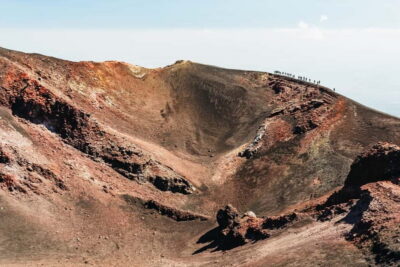
Browse the lists this tour appears in