
Reviewed · GUIDED
Benedictine Monastery of Catania – English Guided Tour
The most surprising part of Catania’s Benedictine Monastery is how much lies behind its quiet entrance: Roman remains, enormous cloisters, student study areas, old kitchens, and a cellar built directly on lava. This is not just a pretty church-side stop. It is a whole working complex that carries 2,000 years of Catania’s story.
I like the way the tour connects grand late baroque architecture with everyday monastic life. I also like that a guide can lead you into areas you would likely miss on your own, including the Roman House and the former cellar now used by the University of Catania. The one consideration is that the 75-minute route may not include every possible area, including the viewing platform on some departure times.
Key points to know
- Roman remains beneath the university: See an ancient Roman house below a modern student mezzanine.
- A monastery on a huge scale: Explore two cloisters, monumental stairs, kitchens, gardens, corridors, and former dining spaces.
- Lava-built cellar: Visit a cool lower level where the volcanic ground becomes part of the building.
- Guides make the difference: Carmen, Giovanni, and Nicola are praised for clear English, humor, and lively storytelling.
- A low-cost Catania visit: At $11 per person, the tour offers a strong history lesson in only 75 minutes.
- Useful access details: The tour is wheelchair accessible, includes baggage storage, and offers written French or Spanish translations when needed.
Why Catania’s monastery is more than a church visit
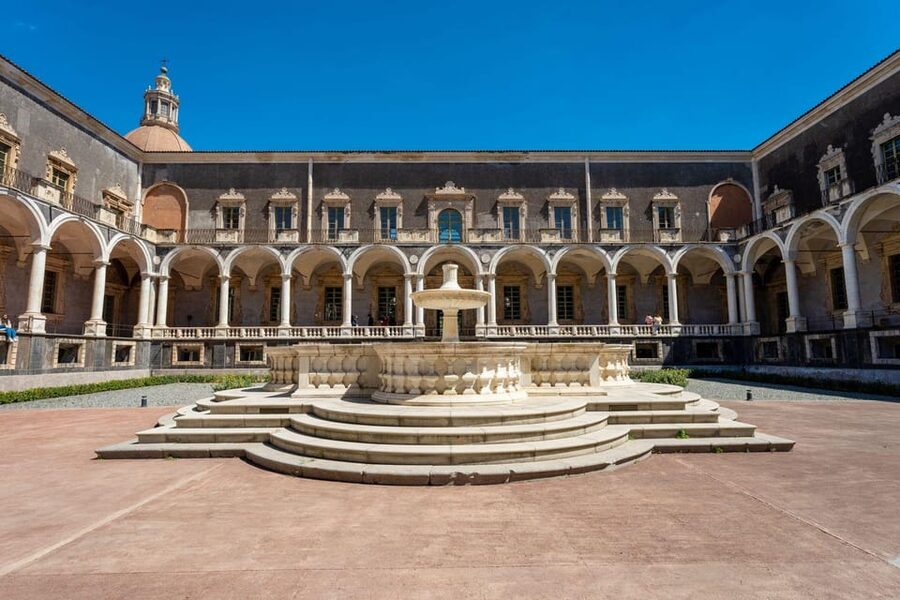
The Benedictine Monastery of San Nicolò l’Arena is one of Europe’s largest monastic complexes. That scale becomes clear as soon as you move beyond the main gate on Piazza Dante and enter the courtyard. The buildings feel less like a single attraction and more like a small town built around religious life.
The monastery also tells a very Catania story. Roman remains sit below later construction. Baroque rooms reveal the wealth of the Benedictine order. Volcanic stone and lava shaped the lower levels. Today, university students use parts of the former monastery, so the building is not frozen in the past.
That mix is the main reason I recommend taking the guided tour rather than simply looking around alone. Without explanation, you will see grand rooms and striking stonework. With a guide, you can understand how the monastery changed through the centuries, how monks used each area, and how the complex became part of the university.
The restoration took more than 30 years. The work by architect Giancarlo De Carlo made it possible to preserve old structures while adding modern university spaces. You will see this contrast clearly: ancient walls beside contemporary study areas, and a modern mezzanine hovering above Roman remains.
A few more Catania days worth weighing up
- Catania: Mount Etna Morning or Sunset Day Trip with Tasting
★ 4.8 · 4,028 reviews - Catania: Sunset Jeep Tour of Mount Etna and Lava Flow Caves
★ 4.8 · 2,113 reviews - Sicily: Etna and Alcantara Gorges Full-Day Tour with Lunch
★ 4.8 · 1,766 reviews
Starting at Piazza Dante
The meeting point is easy to find once you know the detail that matters. Pass through the main gate on Piazza Dante, then look to the right in the courtyard for the information point. The tour returns to the monastery after the 75-minute visit, so you do not need to arrange transport between stops.
The monastery sits a little outside Catania’s most concentrated central sightseeing area, but it is not far from the main sights. Allow time to arrive at the courtyard without rushing. The information point also provides baggage storage, a useful touch if you are carrying luggage or trying to fit the visit between other plans.
The tour includes entry, so you can skip the ticket line. It is wheelchair accessible, although the exact route through historic rooms can still depend on the practical conditions of the building and the group. If access is a major concern, confirm the route at the meeting point before setting off.
The cloisters reveal the monastery’s scale
The two cloisters are among the first places that help you understand the monastery’s size. Their open spaces give you a break from the maze of corridors and provide a clear sense of how the complex was organized.
These were not only decorative courtyards. They helped connect important parts of monastic life, from religious spaces to gardens and working rooms. Your guide explains how the building functioned, which makes the architecture easier to read.
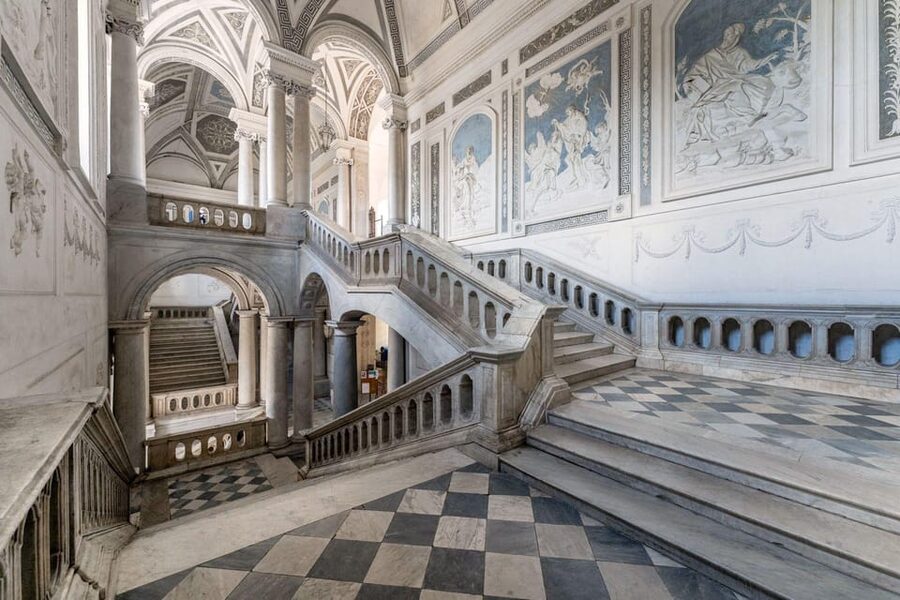
The late baroque style is grand without being limited to a single showpiece room. You move through a series of spaces where staircases, arches, stone details, and carefully planned views build a sense of power. The monastery reflects the wealth available to the Benedictine order, and the tour does not hide that fact.
I especially like this part for visitors who want more than a list of dates. A good guide can point out the gap between the ideals of monastic life and the scale of the institution itself. That human contrast gives the building some bite.
Roman houses beneath a modern library
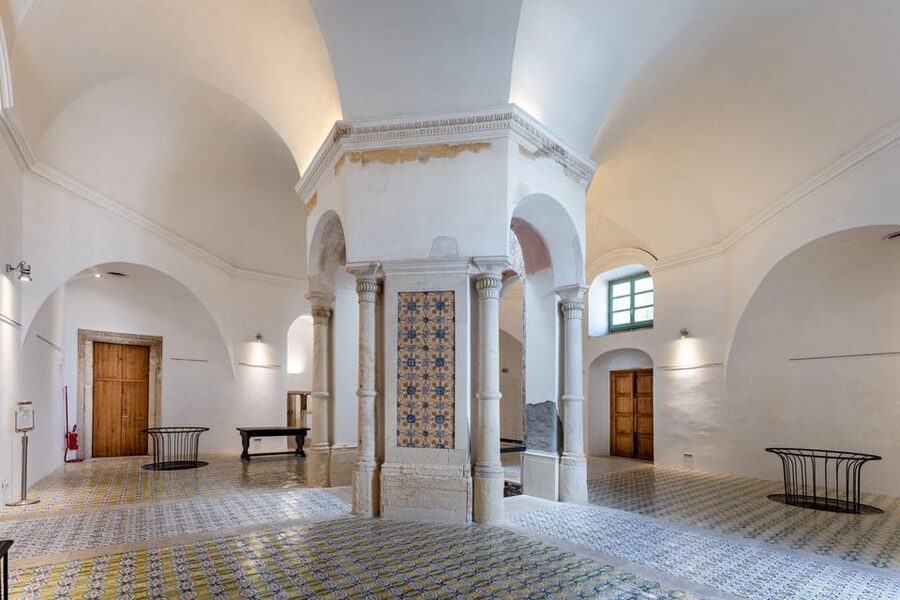
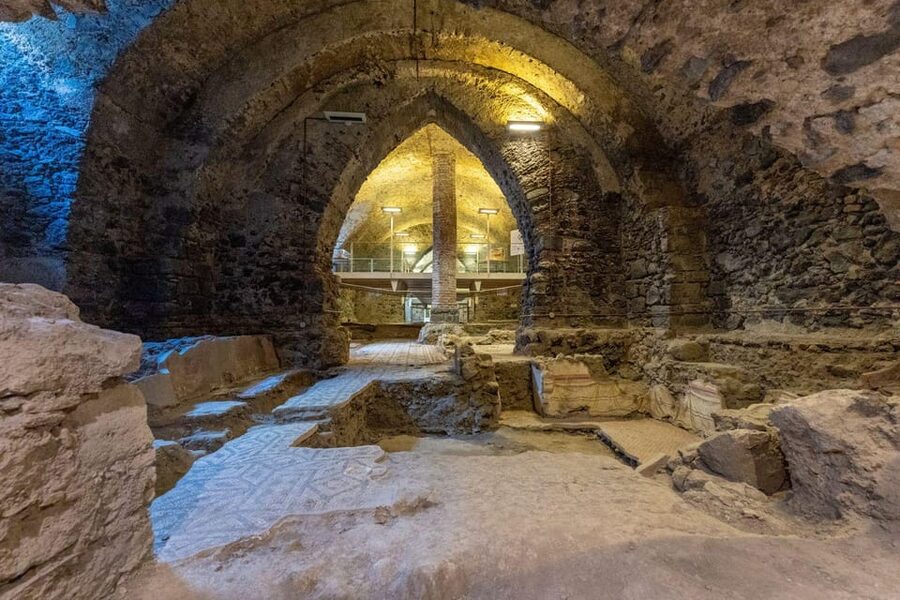
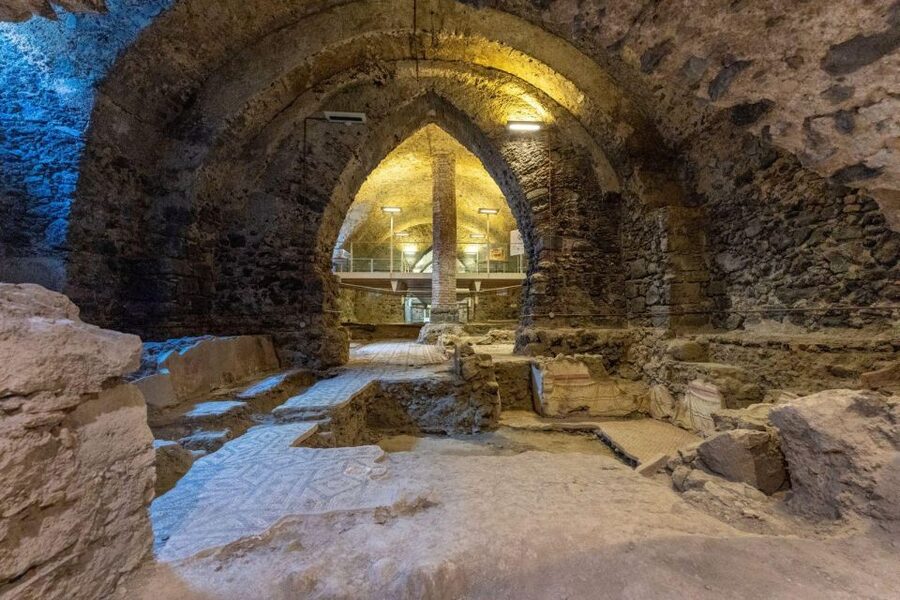
One of the most unusual stops is the Roman House. It is visible directly beneath a modern mezzanine used by students as part of the university library. The setting makes the site memorable because ancient archaeology is not isolated in a display case. It sits below a place where people study today.
This is also where the monastery’s long timeline becomes easy to grasp. The tour moves from Roman-era remains through the monastic period and into the modern university. You are not simply looking at ruins. You are seeing how one site was reused and reshaped over many centuries.
The modern refurbishment by Giancarlo De Carlo is important here. His work allowed historic structures to remain visible while giving the complex a new purpose. Some visitors may prefer a fully restored old building with no modern additions, but this monastery offers something more honest: old and new sharing the same space.
The Roman area is particularly worthwhile if you enjoy archaeology but have limited time in Catania. It adds another layer to a city often associated mainly with baroque streets and Mount Etna.
Booked from the same base, and a completely different kind of day:
- Catania: Etna Sunset Tour with Pickup and Drop-off
★ 4.8 · 1,348 reviews - Mt. Etna and Taormina village full day tour from Catania
★ 5.0 · 1,155 reviews - From Catania: Mount Etna Sunset Tour with Tasting and Cave
★ 4.7 · 1,119 reviews - Catania: Etna Morning Excursion with Tasting and Pickup
★ 4.8 · 820 reviews
The novices’ garden and working rooms
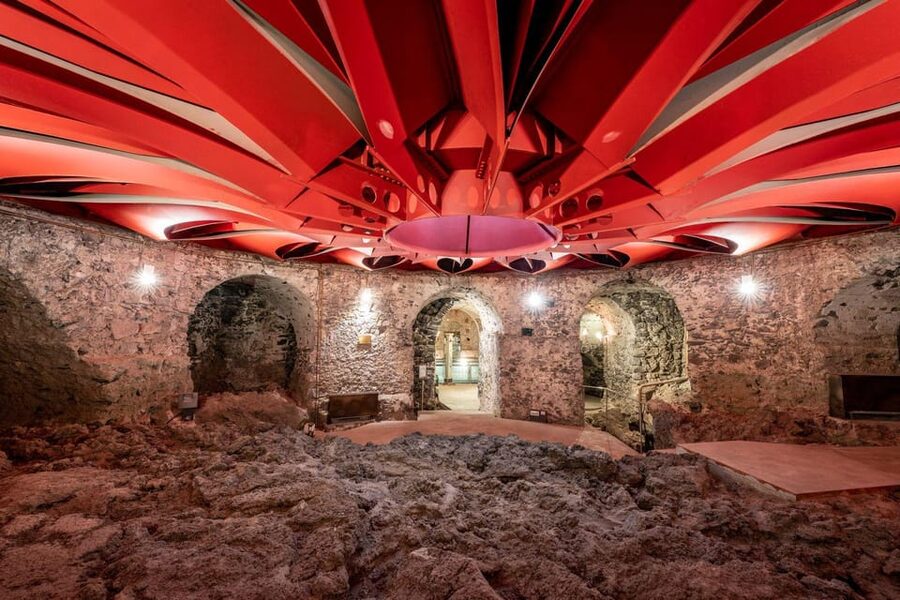
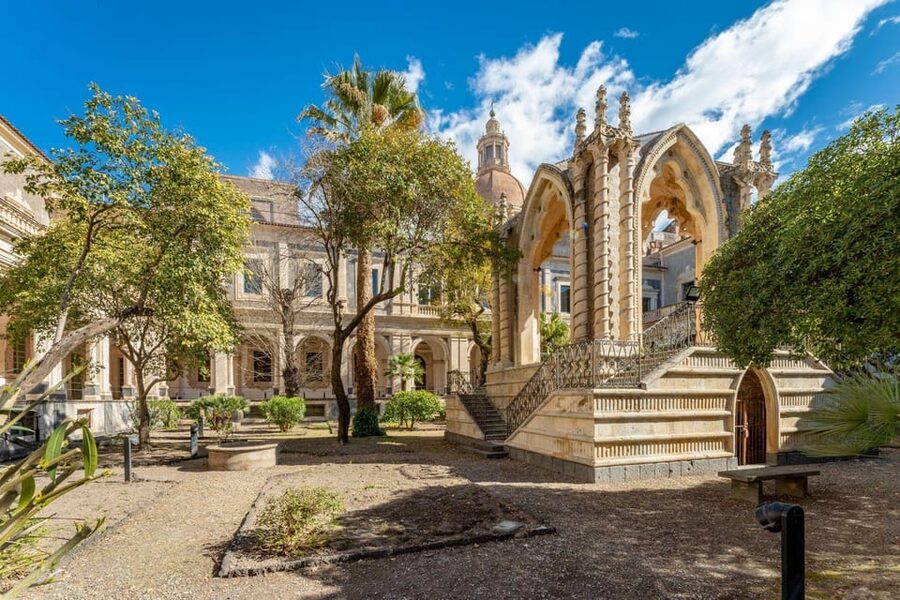
The Garden of the Novices offers a different mood from the formal cloisters. It helps you picture the monastery as a place where young monks trained, lived, worked, and followed a strict daily routine.
The tour also visits dining rooms and other areas tied to ordinary monastic life. These rooms matter because they bring the story down from architecture to people. You begin to think about meals, study, work, prayer, and the daily movement of residents through the corridors.
The route is described as labyrinthine, and that is part of its appeal. You will not follow a simple line from one grand room to another. Instead, the guide leads you through passages and turns that show how large and complicated the complex really is.
That layout can be slightly confusing if you are trying to remember every detail. I suggest focusing on the broad story rather than attempting to memorize each room. The monastery’s value comes from how the pieces fit together: cloisters, gardens, kitchens, cellars, libraries, and archaeological remains all form one long record of changing use.
The 18th-century kitchens and lava cellar
The famous 18th-century kitchens are one of the more vivid stops. Kitchens tell you a great deal about the size and resources of an institution. Here, the rooms help show how many people the monastery supported and how much organization was needed to keep daily life running.
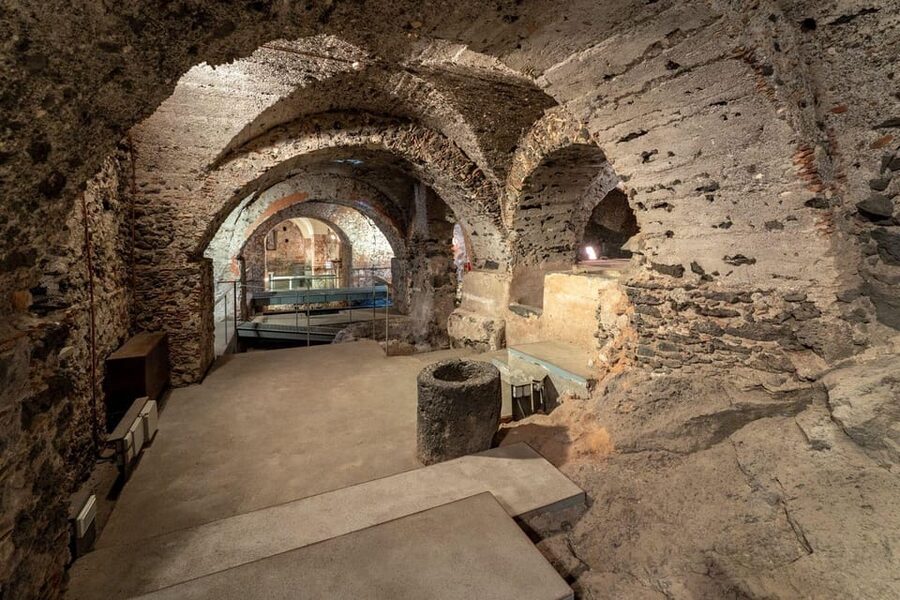
The cellars offer an even stronger connection to Catania’s volcanic setting. One cellar was built on lava and is now used as the Library of the Department of Humanities at the University of Catania. You can see how the city’s volcanic ground became part of the building rather than simply something outside it.
The lower levels may also feel cooler than the upper rooms, which makes this section appealing during a hot Sicilian day. Do not expect the entire tour to be underground, but the descent adds welcome variety after the brighter courtyards and formal rooms.
This is one of the clearest examples of why the tour works best with a guide. The physical fact of a cellar on lava is interesting by itself. The explanation of how the monastery, the city, and the volcanic ground relate to one another gives it meaning.
Vaccarini, stairs, and late baroque showmanship
The tour includes work associated with the architect Vaccarini, along with the monumental staircase. These features show the monastery at its most theatrical.
The staircase is not just a way to reach another floor. It announces importance. Grand stairs, large proportions, and carefully arranged architectural details helped express the power and status of the institution. The late baroque design turns movement through the building into part of the spectacle.
You will also hear about the restoration process, which lasted more than three decades. That long effort matters because the monastery had to serve a new purpose while retaining its historic character. Modern university use could easily have erased the older structure. Instead, the restoration kept major elements visible and usable.
The best guides add context about Catania as well as the monastery. Carmen is praised for clear delivery and a good sense of humor. Giovanni is noted for making the centuries easy to follow, and Nicola for lively stories about the rooms. The exact guide depends on the departure, but the tour’s strongest feature is consistently the person leading it.
What the English tour is like
The tour is conducted in English and lasts 75 minutes. That is long enough to cover the main areas without turning into an all-day commitment. It fits neatly into a Catania sightseeing plan, especially if you want a cultural stop before lunch or later in the day.
The strongest guide style here is conversational rather than stiff. Carmen, Giovanni, and Nicola are all singled out for clear English, humor, patience, and the ability to answer questions. You can expect a mix of architectural detail, local history, anecdotes, and explanation of the restoration.
A guide also helps with the monastery’s scale. It is easy to lose track of where you are in a large historic building. A well-paced explanation gives each room a purpose and keeps the route moving.
If English is not your first language, written translations in French or Spanish can be provided. The spoken tour itself is in English, so this option is most useful for checking names, dates, or more complex points.
One practical caution: not every departure necessarily includes the same upper areas. A visitor specifically noted that the viewing platform was not available on one tour and may be included only on a later departure. If the view matters to you, ask which route your chosen time includes before booking.
Is $11 a good value?
At $11 per person, this is one of the easier Catania decisions for anyone interested in architecture, archaeology, or local history. The price includes admission, a live English guide, access to areas not normally open to casual visitors, and baggage storage at the meeting point.
The value comes less from the length of the tour than from the range of material packed into it. In 75 minutes, you can see Roman remains, two cloisters, university spaces, the novices’ garden, kitchens, cellars, and baroque architectural features. Visiting even several of these areas separately would be difficult without guidance.
The tour is also a good safeguard against missing the monastery’s less obvious spaces. The main courtyard and grand architecture may catch your eye, but the Roman House and lava-built cellar give the visit its character.
It may be less useful for someone who wants a slow, independent architectural study. The fixed route and limited time mean you will not linger everywhere. For most people, though, the balance is good: enough time to understand the place without giving up half a day.
Who should book this Catania tour?
I would choose this tour if you want to understand how Catania developed, not simply photograph a baroque building. It suits first-time visitors, architecture fans, archaeology fans, and anyone curious about how historic buildings can continue serving a modern city.
It is also a smart choice for a hot afternoon. The cellars and stone interiors offer cooler spaces, while the courtyards and gardens keep the visit from feeling enclosed.
Families can benefit from the stories and room changes, especially if children lose interest in formal churches. The Roman remains, hidden corridors, kitchens, and university setting give the guide several ways to keep the visit moving.
You may want to skip it if your schedule allows only a very brief stop in Catania and your main priority is outdoor sightseeing. The monastery requires attention to appreciate. It is not a quick photo stop, even though the tour itself is short.
Book this tour if you value access and explanation. The building is impressive alone, but its Roman layers, monastic routines, restoration, and modern university life make sense only when someone connects them for you.
Final verdict
Yes, I recommend the Benedictine Monastery tour for most visitors spending time in Catania. At $11, it offers an unusually broad look at the city, from Roman remains to late baroque rooms and a working university.
The main reason to book is the guide. Carmen, Giovanni, and Nicola are praised for clear English, humor, patience, and strong local context. Just keep your expectations practical: the viewing platform may not be part of every departure, and 75 minutes gives you an overview rather than unlimited time in every room.
Choose it for an affordable, well-organized look at Catania’s layered past. Skip it only if you have no interest in historic interiors or prefer to spend your entire visit outdoors.
FAQ
How long is the Benedictine Monastery tour?
The guided visit lasts 75 minutes and returns to the Benedictine Monastery of San Nicolò l’Arena.
What does the $11 price include?
The price includes access to the monastery, a live English-speaking guide, and entry to areas that are not normally accessible. Baggage storage is also available at the meeting point.
Where does the tour meet?
Enter through the main gate on Piazza Dante. The information point is in the courtyard on the right.
Is the tour available in languages other than English?
The spoken tour is in English. Written translations in French or Spanish can be provided if English is not your main language.
Is the monastery tour wheelchair accessible?
Yes, the activity is listed as wheelchair accessible.
Can I visit the viewing platform on the tour?
The viewing platform is not included on every departure. It may be available on a later tour, so ask about the route and time before booking if this feature is important to you.
Just added around Catania
- Mt Etna: Winter Trekking Tour with Optional Catania Transfer★ 4.7 · 13 reviews
- Wine tour with wine tasting★ 4.7 · 18 reviews
- Sicilian Soul: Winery Tour, Wine & Food Tasting in Catania★ 5.0 · 4 reviews
- Wine tasting in Catania Historic center★ 4.4 · 15 reviews
- Trekking at 3000 meters on Etna★ 3.8 · 7 reviews
- Catania: Underground and Street Food Walking Tour★ 4.7 · 56 reviews
- Private Tour from Catania to Etna Naxos and Taormina★ 4.5 · 7 reviews
- Catania AIRPORT transfer From / To Taormina★ 5.0 · 3 reviews
Guided, compared.
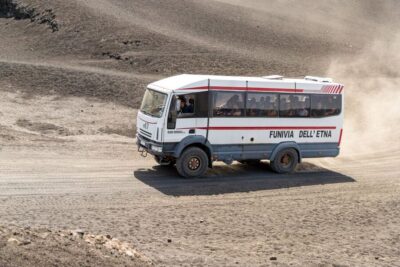
Guided Volcano Summit Hiking Tour with Cable Car
Read our review →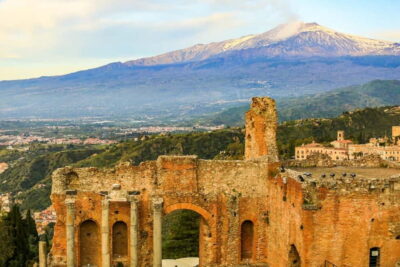
Ancient Theater Skip-the-Line Ticket & Audio Guide
Read our review →
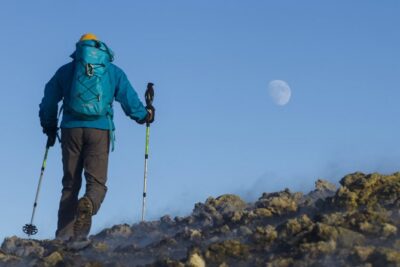
Mount Etna Adventurous Tour with a Volcano Guide
Read our review →
Street Food Walking Tour with Local Guide & Tasting
Read our review →Browse the lists this tour appears in