Reviewed · GUIDED
Catania, a baroque jewel – Tour For All Ages – Certified Guide
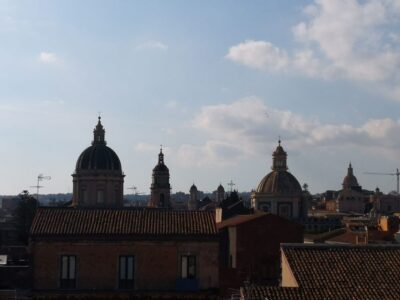
Catania’s best introduction may be a walk that connects its grand baroque squares with the darker stories beneath its streets. This private tour takes you from Piazza del Duomo past churches, Roman remains, aristocratic palaces, and an underground river, while Sonia Arena explains how volcanoes and earthquakes shaped the city.
I like the private format, since your group can set the pace and ask questions without keeping up with strangers. I also like the mix of famous architecture and local tales, including the Gammazita Well and the 17th-century eruption. The main drawback is time: two hours gives you a useful first look, but not a thorough visit inside every building.
Key points to know
- Piazza del Duomo begins the story: See Catania’s cathedral, Town Hall, and Archbishopric in the city’s grand central square.
- Baroque architecture gets the spotlight: Chiesa della Badia di Sant’Agata and Via dei Crociferi show the city’s distinctive 18th-century style.
- Sonia Arena leads a private walk: Your group can adjust the pace and ask for more detail about the places that interest you.
- The tour includes unusual stories: Expect local lore connected with the Gammazita Well, volcanic destruction, and sights below street level.
- The finish works well for food: The walk ends near Palazzo Biscari, a convenient area for sampling street food afterward.
- Plan for a short, focused visit: The two-hour route suits first-time visitors, families, and anyone needing a clear orientation of central Catania.
Why this two-hour walk works in Catania
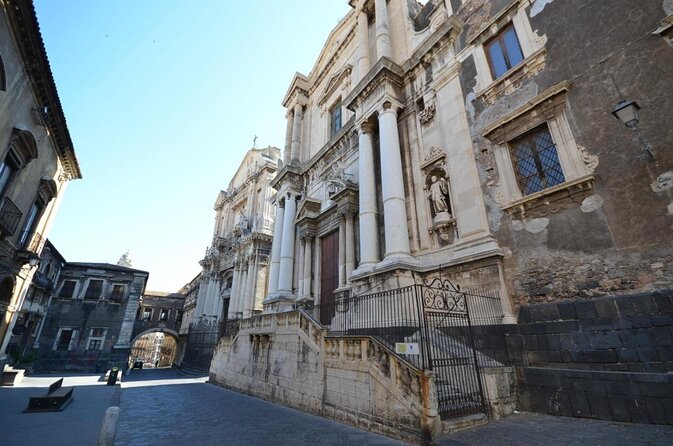
Catania can feel like a lot at first. Its streets are busy, its architecture is bold, and its past is not displayed in one tidy museum. Black volcanic stone, pale limestone, ornate churches, Roman remains, and broad public squares all appear within a compact central area.
That makes a guide useful. Instead of stopping at each building only long enough for a photograph, you get a thread connecting the city’s ancient period, its religious life, its noble families, and the eruption that changed its shape.
The tour costs $52.04 per person. For a private walk, that can be fair value if you want context rather than a simple list of landmarks. The price makes more sense for a small group, since the experience is reserved for your party and group discounts are available.
You should think of this as an orientation walk, not a full museum tour. Admission to the listed stops is generally free, but Palazzo Biscari is viewed from the outside, and the tour does not include bottled water or snacks. Bring your own water, especially if you are visiting during a warm part of the day.
A few more Sicily days worth weighing up
- Etna Morning Trip
★ 4.5 · 1,241 reviews - Syracuse: Boat Trip of Ortigia Island and Sea Caves
★ 4.7 · 937 reviews - Tour of the island of Ortigia and exploration of sea caves with baths.
★ 5.0 · 668 reviews
Piazza del Duomo and the city’s baroque center
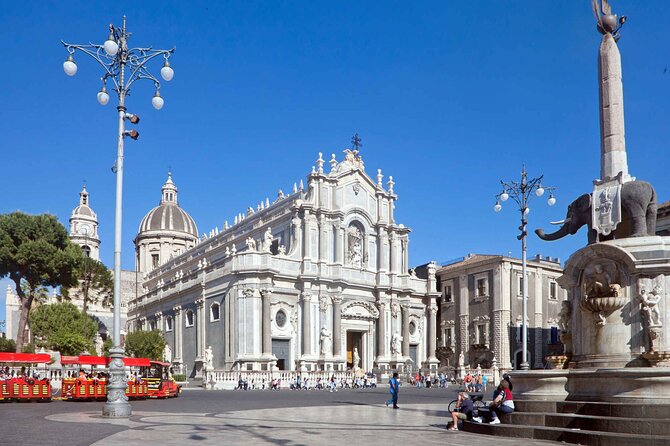
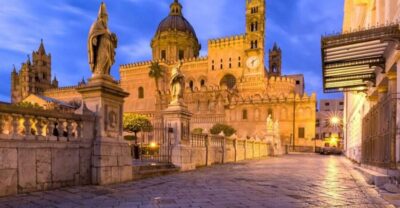
The tour starts in Piazza del Duomo, the natural place to begin understanding Catania. The square holds the Cathedral, Town Hall, and Archbishopric, giving you a quick lesson in the city’s religious and civic power.
This is more than a pretty meeting point. It is the symbolic heart of the baroque city, and the open space lets you take in the relationship between the main buildings before moving into narrower streets.
Allow about 20 minutes here. That is enough time for Sonia to explain the square and point out the main architectural features, but it is not enough for a detailed interior visit to every building. If you want extra time inside the cathedral, plan to return after the tour.
The square is also a good place to get your bearings. Since the walk ends near Palazzo Biscari, you will finish in a different part of central Catania rather than simply circling back to the start.
Chiesa della Badia di Sant’Agata and the curves of baroque design
After the main square, the route continues to Chiesa della Badia di Sant’Agata. The church is known for its striking facade, which uses concave and convex lines to create movement across the stonework.
Look upward as you approach. The octagonal dome is one of the building’s defining features and helps explain why Catania’s baroque architecture feels so theatrical. The church does not rely only on size. Its appeal comes from the way the facade bends, frames the entrance, and draws your eye toward the dome.
The planned stop is about 10 minutes. That is a quick visit, but it works well in a walking tour focused on the city’s main sights. You get a close look at an important monument without spending the entire morning on a single church.
The listed admission is free. Still, church access can depend on local opening arrangements, so the most useful approach is to treat this as an architectural stop rather than assume you will receive a long interior visit.
Via dei Crociferi, where churches and legends meet
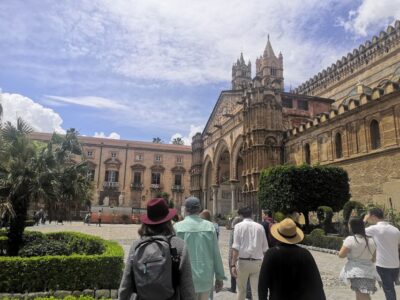
Via dei Crociferi is one of the most picturesque streets on the route. It is lined with baroque churches and carries some of Catania’s strongest local associations.
Here, the guide’s storytelling matters as much as the buildings. A street like this can blur into a string of handsome facades if you do not know what you are seeing. Sonia Arena’s role is to connect the churches with local legends and explain why the street has such a strong place in Catania’s identity.
The scheduled time is about 20 minutes. That gives you room to look carefully, take photographs, and hear a few stories without turning the stop into a long architectural lecture.
The tour’s stories may include the Gammazita Well, one of the local legends highlighted for this experience. That tale gives the city a more personal side. You are not only hearing about dates and buildings, but also about the stories Catania has carried through generations.
This is one of the best sections for families and mixed-age groups. Children may not want a long explanation of architectural vocabulary, but a legend connected with a particular place is easier to remember. Adults get the building details, while younger participants get a story with a clear sense of place.
Booked from the same base, and a completely different kind of day:
- Catania: Mount Etna Morning or Sunset Day Trip with Tasting
★ 4.8 · 4,028 reviews - Mount Etna: Guided Volcano Summit Hiking Tour with Cable Car
★ 4.7 · 3,784 reviews - Palermo: NO Mafia Walking Tour
★ 4.8 · 2,431 reviews - Palermo: Hop-on Hop-off Bus Tour 24-hour Ticket
★ 3.9 · 2,410 reviews
The eruption, the Roman past, and Catania below street level
Catania’s story is shaped by two forces: ancient civilization and Mount Etna’s volcanic activity. The tour introduces both, including the city’s Roman remains and the 17th-century eruption that altered Catania.
The Roman material gives you a sense of how old the city is. The eruption explains why the streets and buildings you see today cannot be understood only through the ancient past. Catania has been rebuilt, reshaped, and reinterpreted over time.
The experience also includes sights above and below ground, including an underground river. That is a useful contrast with the churches and open squares. You see how the city’s visible architecture sits on top of older layers that are easier to miss when walking alone.
Because the supplied route details do not assign a separate stop or exact timing to the underground section, I would ask Sonia at the start how this part fits into the two-hour walk. That simple question will help you know whether it is a brief look, a story-based explanation, or a specific access point along the route.
The same advice applies to the Roman ruins. The experience promises attention to ancient remains, but the five named stops focus mainly on central squares, churches, a palace exterior, and the waterfront arches. If Roman archaeology is your main reason for booking, confirm which remains you will see and how much time is planned for them.
Palazzo Biscari, a grand exterior with a practical finish
Palazzo Biscari is described as Catania’s most impressive private baroque building. The tour views the palace from the exterior, so you should not book this walk expecting a full palace visit.
Even from the street, the building adds a different note to the route. The earlier stops focus heavily on public religious and civic architecture. Palazzo Biscari represents private wealth, noble taste, and the kind of grand residence that helps explain how powerful families shaped the city.
The stop takes about 15 minutes. That is enough for an explanation of the facade and its place in Catania, but not an extended exploration of the interior.
The ending is especially practical. The tour finishes at Via Museo Biscari, 10, near an area where you can continue with street food in your free time. That makes the route convenient if you are ready for lunch or a snack after walking. Since food is not included, plan to buy something afterward rather than expect a tasting during the tour.
Archi della Marina and the Sicilian lemon stop
The Archi della Marina provides a change of mood near the end of the walk. Instead of another church facade or aristocratic palace, you stop for a typical Sicilian lemon squeeze.
The experience details do not specify whether this is included in the price, so ask your guide how the stop works and plan to pay for it if needed. The listed tour inclusions cover gratuities, not drinks or snacks.
This short break is a nice idea in principle. It gives you a local taste and a pause after the more information-heavy sections of the walk. It also keeps the experience from feeling like a nonstop march through monuments.
The stop lasts about 15 minutes. If you have dietary needs or simply want more than a drink, remember that snacks are not included. The end of the tour near street food makes it easy to continue eating afterward.
What Sonia Arena adds to the experience
Sonia Arena is the named guide for this experience, and the tour is designed around explanation rather than a recorded audio route. That matters in Catania, where the meaning of a building may not be obvious from its facade.
A strong guide can adjust the balance between architecture, history, and folklore. You may care most about baroque design, while someone else in your group wants the eruption story or the underground river. The private arrangement gives you a better chance to ask for more detail in the areas that hold your attention.
The guide’s teaching style is also important for families. The walk is listed as suitable for all ages, and the mix of legends, churches, Roman remains, and volcanic history gives Sonia several ways to explain the city.
The private format does not mean the pace is automatically easy. You will be walking through city streets for about two hours, with stops that involve standing and looking upward or at facades. If someone in your group needs frequent rests, say so at the beginning. The itinerary can be customized, and the pace can be adjusted for your group.
Who gets the best value from the $52.04 price
I see the strongest value for first-time visitors who want a clear framework before exploring Catania independently. The tour covers several major themes in two hours, and you finish close to food and other central sights.
It also works well for a private family group. The guide can keep the pace together, explain stories in a way that suits different ages, and avoid the pressure of joining a large group.
Couples and small groups should compare the price with the number of people in their party. At $52.04 per person, the cost is easier to justify when you are sharing a private guide with several members of your own group. For a solo visitor, the price may feel higher than a standard group walk, even though the private setting gives you more control.
You should choose another type of tour if you want long interior visits, a full archaeological tour, or a food-focused experience. This walk touches many subjects, but its purpose is to connect the city’s highlights rather than provide detailed access to every monument.
Timing, meeting point, and what to bring
The meeting point is Piazza del Duomo in central Catania. Look for the exact location listed with your booking, since the square contains several major buildings and can feel crowded.
The tour lasts about two hours. It is booked, on average, 41 days ahead, which suggests that you should not wait until the last moment if your schedule is fixed. Confirmation is provided at booking, and you receive a mobile ticket.
Wear shoes suited to walking on city streets and bring water. Bottled water is not included, and neither are snacks. The tour ends at Palazzo Biscari, not back at the starting point, so keep your plans flexible afterward.
Public transportation is nearby, and service animals are allowed. Most people can take part, but the route is still an urban walking experience. If anyone in your party has particular mobility needs, ask about the exact route before the start rather than assuming every surface or building entrance will suit them.
Free cancellation is available if you cancel at least 24 hours before the start time. Changes or cancellations made later are not accepted for a refund, and the cut-off uses Catania’s local time.
Should you book this Catania walking tour?
Book it if you want a private introduction to Catania that combines baroque buildings, Roman traces, volcanic history, local legends, and a glimpse below street level. Sonia Arena’s format gives you room to ask questions, and the end near Palazzo Biscari makes it easy to continue with street food.
The tour is a particularly good fit for a first day in town. You will leave with a map in your head and a better idea of which churches, squares, and stories deserve a second look.
Skip it if you want extensive time inside monuments or a dedicated food tour. Two hours passes quickly, and the palace is viewed only from outside. For everyone else, the private pace and unusual mix of architecture, folklore, and underground history make this a sensible way to get oriented.
FAQ
How long does the Catania tour last?
The tour lasts approximately two hours.
Where does the tour start?
The tour starts at Piazza del Duomo, 95100 Catania, Italy.
Where does the tour end?
The tour ends at Palazzo Biscari, Via Museo Biscari, 10, 95131 Catania, Italy.
Is this a private tour?
Yes. Only your group participates, and the itinerary and pace can be adjusted for your group.
What sights are included?
The route includes Piazza del Duomo, Chiesa della Badia di Sant’Agata, Via dei Crociferi, Palazzo Biscari from the exterior, and the Archi della Marina.
Are food and drinks included?
No. Bottled water and snacks are not included. The route includes a stop for a typical Sicilian lemon squeeze, and the tour ends near an area where you can buy street food.
Can I cancel for a full refund?
Yes, if you cancel at least 24 hours before the experience start time. Cancellations or changes made less than 24 hours before the start are not accepted for a refund.
Just added around Sicily
- Zafferana Etnea:Honey extraction workshop and honey tasting★ 4.7 · 3 reviews
- From Trapani: Favignana and Levanzo Yacht Tour with Stops★ 5.0 · 4 reviews
- Mt Etna: Winter Trekking Tour with Optional Catania Transfer★ 4.7 · 13 reviews
- Wine tour with wine tasting★ 4.7 · 18 reviews
- Sicilian Soul: Winery Tour, Wine & Food Tasting in Catania★ 5.0 · 4 reviews
- Wine tasting in Catania Historic center★ 4.4 · 15 reviews
- Valley Of The Temples By E-Bike With Picnic Included★ 4.7 · 7 reviews
- Valley of the Temples and Villa Romana Multi-Language Tour★ 4.8 · 5 reviews
Guided, compared.
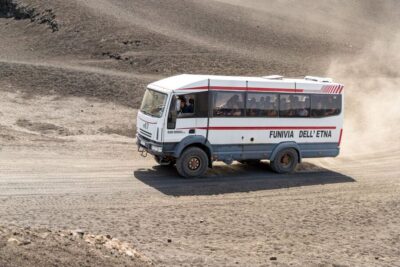
Guided Volcano Summit Hiking Tour with Cable Car
Read our review →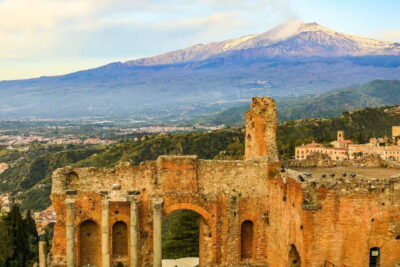
Ancient Theater Skip-the-Line Ticket & Audio Guide
Read our review →
Mount Etna Adventurous Tour with a Volcano Guide
Read our review →