
Reviewed · TICKETS
Catania: Underground Catania Tickets and Guided Tour
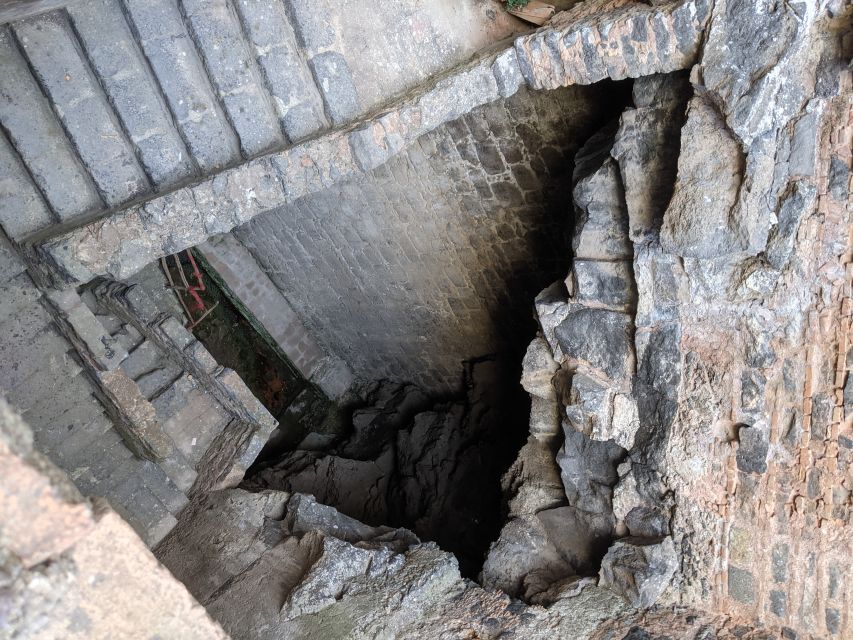
Catania keeps a second city under its streets. On this 2.5-hour tour, you go as far as 15 meters below ground to find lava caves, Roman remains, underground churches, and the waters of the Amenano spring. It is a fine way to see places that are easy to miss while walking through the city above.
I like two things here. First, the tour connects natural forces with human history: Etna’s eruptions, earthquakes, lava flows, Roman construction, and religious change all appear in the same story. Second, guides such as Oreste bring plenty of local detail, and they often make a real effort to explain the material in both Italian and English.
The main drawback is practical rather than historical. You walk between several sites, climb irregular steps, and sometimes listen in echoing rooms. Large groups or bilingual explanations can slow the pace, so this is not the right outing if you want a quick, quiet visit.
Key points to know before you go
- Four underground sites: Your ticket covers four separate places, not one single cave.
- A lava cave shaped by Etna: See how eruptions helped form the layers beneath Catania.
- Roman remains below the modern city: The tour begins near the Black Amphitheater, a Roman building once able to hold about 15,000 people.
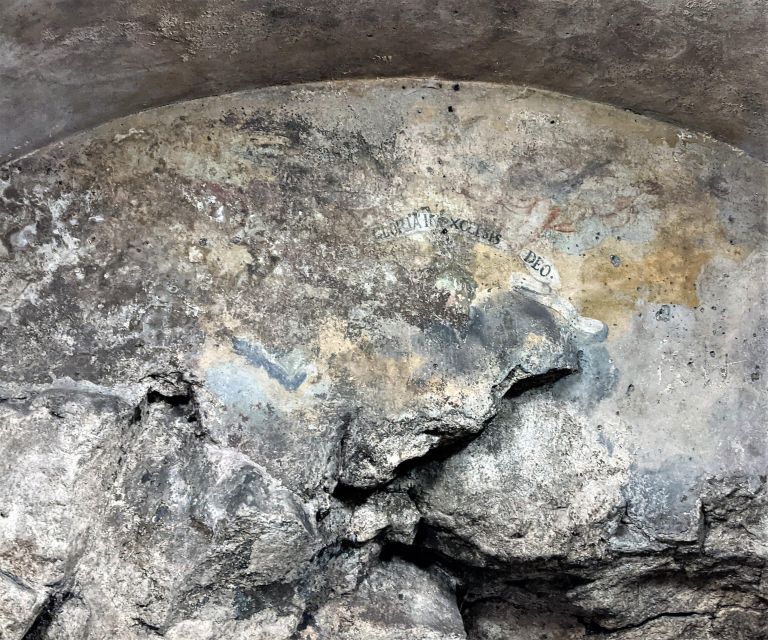
- Churches with unsettling stories: Explore underground spaces linked with Saint Agatha and Saint Euplius.
- A walking tour through central Catania: You move between stops along Via Etnea, passing Baroque churches and aristocratic palaces.
- Good value at $29: Four admissions plus a live guide make this a strong choice for history-minded visitors, provided you can manage the stairs.
Why Catania is best understood from below
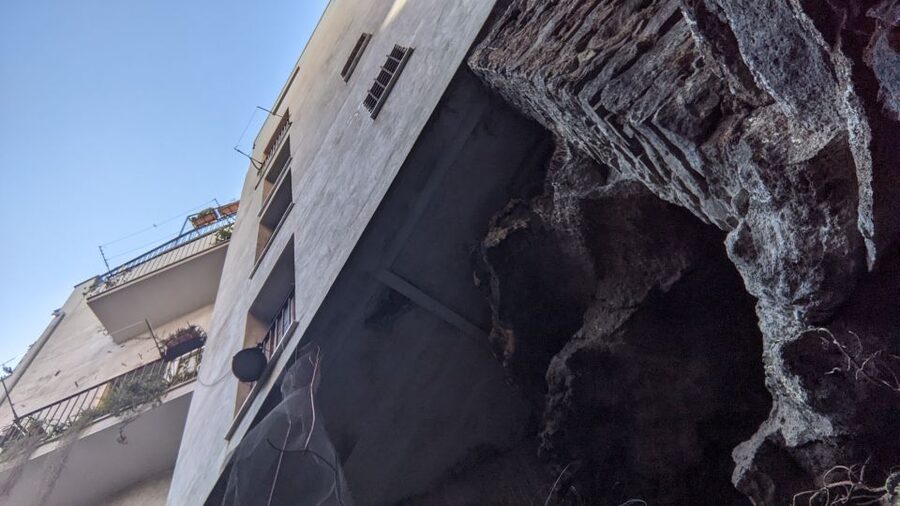
Catania can look like a grand Baroque city built in pale stone. Look down, though, and you find a much older and less tidy story. Lava, water, Roman masonry, ruined churches, and buried streets sit below the present-day city.
Etna is the key to understanding this. The volcano has repeatedly changed the ground beneath Catania. Lava flows covered earlier structures, while earthquakes and eruptions damaged churches and streets. Instead of treating these events as distant background, the tour shows you their physical effects.
I like that connection. You are not simply walking through a damp basement and being told that it is old. You are shown how the city’s shape came from volcanic activity and how people kept rebuilding on top of what had been damaged.
The experience also adds a human layer. Religious sites were altered, buried, bombed, rebuilt, or used in different ways over time. The result is a tour about archaeology, art, religion, geology, and daily life, all in one compact walk.
A few more Catania days worth weighing up
- Catania: Mount Etna Morning or Sunset Day Trip with Tasting
★ 4.8 · 4,028 reviews - Catania: Sunset Jeep Tour of Mount Etna and Lava Flow Caves
★ 4.8 · 2,113 reviews - Sicily: Etna and Alcantara Gorges Full-Day Tour with Lunch
★ 4.8 · 1,766 reviews
Starting at the Black Amphitheater
The meeting point is in front of the ruins of Catania’s Black Amphitheater, a Roman monument that once held around 15,000 people. This gives the tour a strong opening: you begin with a major public building, then move toward the less obvious remains under ordinary streets and churches.
The amphitheater is normally a paid attraction, so including it in the four-site ticket adds value. More important, it gives you a sense of scale. Roman Catania was not a small provincial outpost. It had the kind of civic architecture built for crowds, spectacles, and public life.
Your guide then leads the group from one part of central Catania to another. The route uses Via Etnea, the city’s main street, so the walking between sites is part of the experience rather than dead time.
Look up as you go. The route passes late Baroque churches and aristocratic palaces, and the guide may point out details that would otherwise blend into the streetscape. This short surface walk helps you see the contrast between Catania’s polished upper layer and its rough, buried lower one.
The prehistoric lava cave and Etna’s fingerprints
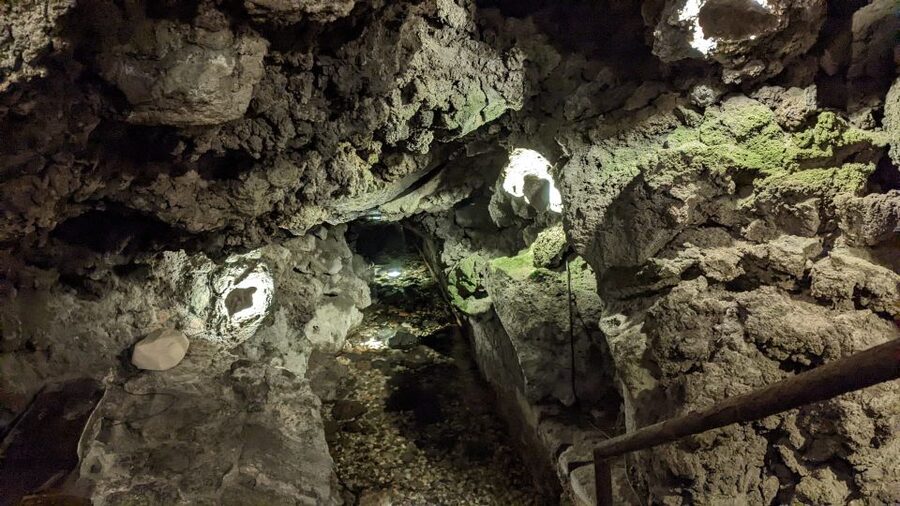
One of the most memorable stops is a prehistoric lava cave. This is where the power of Etna becomes more than a view on the horizon.
Inside, you see a space shaped by volcanic activity rather than by architects or builders. The cave helps explain how molten rock moved, cooled, and left cavities below the city. You may also hear how later eruptions affected Catania and changed the course of local life.
The cave is especially useful for visitors who have seen Etna from a distance but have not visited its volcanic features. It brings the volcano down to street level, or rather below street level. You do not need to be a geology specialist to follow the story.
The temperature underground can also make this a pleasant break on a hot day. One visitor described the underground rooms as cool and appreciated the stop for a drink along the way. Still, wear shoes with a decent grip. Some steps can be wet or uneven.
Following the Amenano beneath the streets
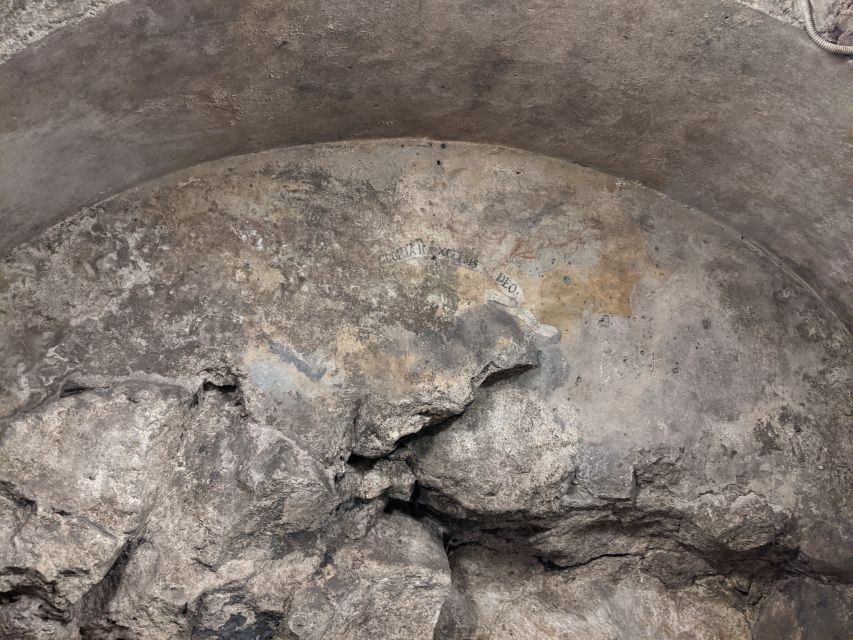
Another major theme is water. The tour follows the underground river known as the Amenano into a cave. This reveals a side of Catania that is easy to miss from the sunny piazzas above.
The Amenano is not presented simply as a natural curiosity. It helps explain why water appears in the city’s stories and why the ground below Catania has such a complicated structure. You are looking at a meeting point between underground springs, volcanic rock, and centuries of construction.
This stop can feel atmospheric, but do not expect a long subterranean expedition. The tour moves through several locations, so each stop is relatively focused. That variety is part of the appeal. You see a cave, then Roman remains, then religious spaces, instead of spending the full two and a half hours in one passage.
Acoustics may be difficult in some underground rooms. If the guide is speaking to a large group, stay close and listen carefully. A bilingual tour can also take longer because each explanation is repeated in another language.
Booked from the same base, and a completely different kind of day:
- Catania: Etna Sunset Tour with Pickup and Drop-off
★ 4.8 · 1,348 reviews - Mt. Etna and Taormina village full day tour from Catania
★ 5.0 · 1,155 reviews - From Catania: Mount Etna Sunset Tour with Tasting and Cave
★ 4.7 · 1,119 reviews - Catania: Etna Morning Excursion with Tasting and Pickup
★ 4.8 · 820 reviews
Roman baths and the buried city
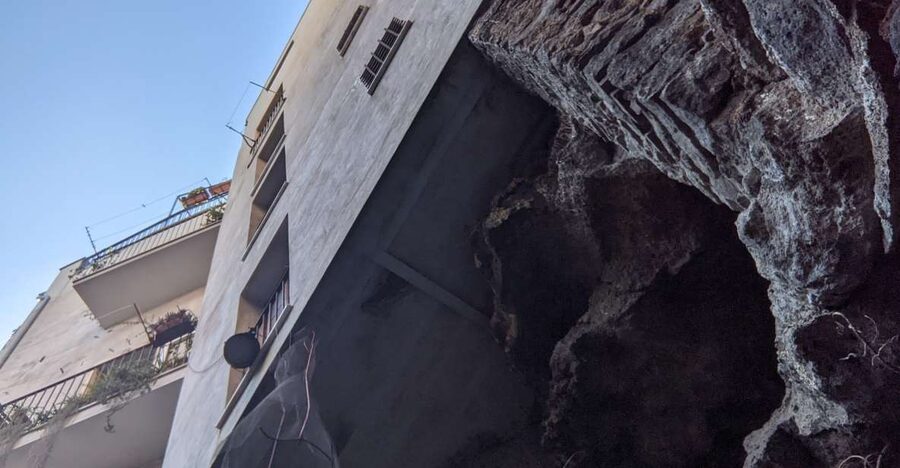
The Roman section gives you a clearer sense of how ancient Catania functioned. Roman remains and baths sit below the present city, showing how modern streets have been built over older public and private spaces.
This is where the guide’s interpretation matters most. Stones and arches can be hard to read on their own. A strong guide can explain the purpose of the space, how it related to the ancient city, and how later building activity buried or altered it.
The Roman Baths are included among the four underground settings, along with the lava cave and two church-related sites. That mix gives the tour a pleasing rhythm. Nature explains the cave, engineering explains the Roman remains, and religious history explains the church spaces.
You will not get a full Roman archaeology course in one visit. Instead, you receive a compact introduction to the layers under Catania, with enough context to make the rest of your sightseeing more meaningful.
Saint Agatha, relics, and underground religious spaces
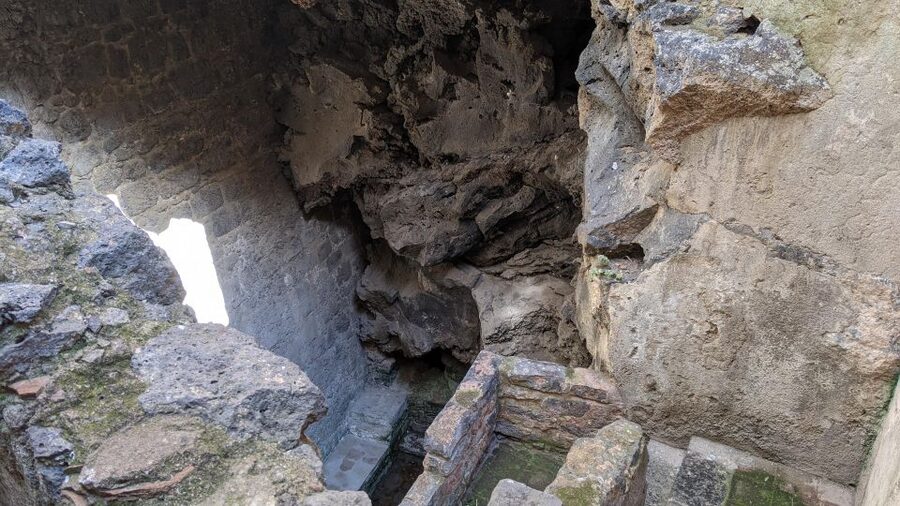
One of the more unusual locations is a cave beneath a church linked with the early keeping of Saint Agatha’s relics. This stop adds a personal and religious dimension to the tour.
Saint Agatha is central to Catania’s identity, so learning about her connection to the city helps explain the importance of its churches and festivals. The underground setting makes the story feel more immediate. You are not simply looking at a grand church facade. You are seeing the confined, older space beneath it.
The church interiors and underground areas can also include art historical details. One guide, Oreste, was praised for drawing attention to frescoes and distinctive stories that visitors might otherwise miss. If you enjoy art but do not want a formal museum tour, this is a useful middle ground.
Some people may find the religious stories unsettling, especially when they involve relics, persecution, burial, or ruined sacred spaces. That is part of the character of the tour. It is not designed as a light architectural stroll.
The damaged Church of Saint Euplius
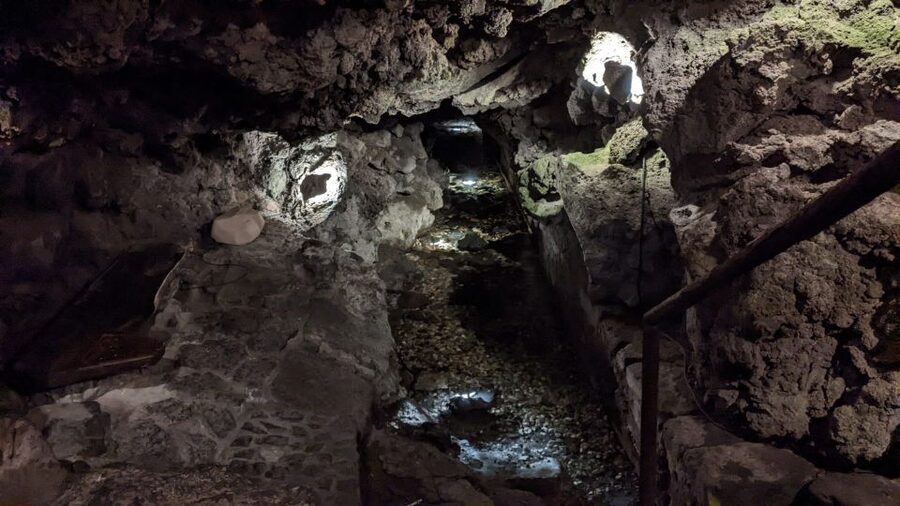
The fourth setting is connected with the bombed-out Church of Saint Euplius. This site shows how Catania’s underground spaces are not all ancient in the same way. Some have been exposed or preserved because later destruction opened a view into earlier layers.
The contrast is important. A prehistoric cave tells you about Etna. Roman baths tell you about civic life. The area beneath a church linked with Saint Agatha points to religious memory. Saint Euplius adds the marks of more recent damage and loss.
This stop can feel especially powerful because it shows that Catania’s past is not sealed away. The city has been repeatedly altered, and its ruins remain part of the living streets above.
The exact sites can change if one location is unavailable or inaccessible. In that case, the organization replaces it with another underground site. That flexibility is useful, though it means you should not treat every stop as absolutely fixed.
The guide makes the difference
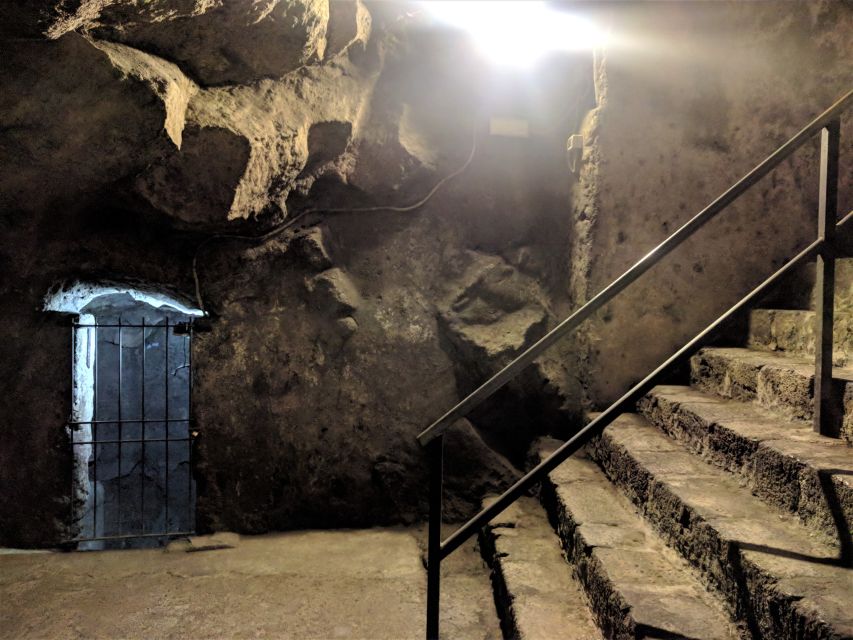
The strongest part of this experience is the live explanation. Names that appear in connection with the tour include Oreste, who is described as an archaeologist with a lively way of presenting the material.
Guides have also handled mixed-language groups by speaking in Italian and then explaining the main points in English. This has helped English speakers join tours that were primarily offered in Italian. Still, you should check the language option carefully when booking. Translation may be generous and well done, but it can make the tour longer and less fluid.
The group size matters. A group of nearly 30 people can make it hard to hear, especially in echoing caves. In a large group, not everyone may enter a site at once, so you might wait outside before your turn.
A smaller group gives you a better chance to ask questions and stay close to the guide. It also makes narrow passages easier to manage. If the available departure is bilingual or heavily booked, allow some patience.
Walking, stairs, and what to wear
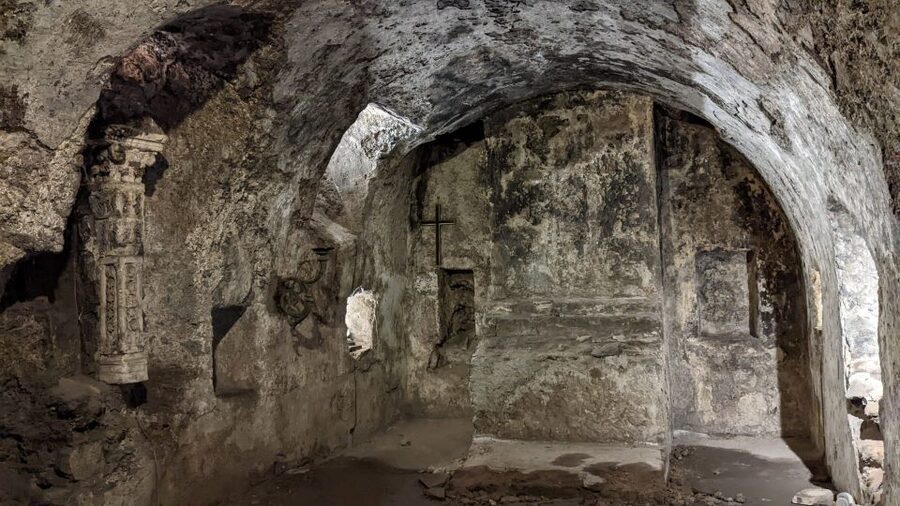
This is a walking tour, not a seated underground show. You move through central Catania between the four locations, and the surface walk adds to the total effort.
You will climb a few steps at each site. Some are irregular, and some may be damp. Good walking shoes are the single most useful thing to bring. Avoid smooth soles, sandals with little support, and anything you would dislike getting dusty or wet.
Large bags and luggage are not allowed. Weapons, sharp objects, alcohol, drugs, and fireworks are also prohibited. Electric wheelchairs are not accepted, and the tour is not suitable for wheelchair users or people with mobility impairments.
You should also avoid this experience if you are claustrophobic or prone to motion sickness. The stated weight limit is 280 pounds, or 127 kilograms. The tour takes place in rain or shine, though severe conditions can lead to cancellation if a site cannot be used.
Is $29 a fair price?
At $29 per person, the price is reasonable for Catania. You receive admission to four underground locations and a live guide, including access to places that you may not be able to enter during an ordinary walk through town.
The value is strongest if you care about archaeology, volcanoes, churches, or local history. A self-guided walk can show you Catania’s Baroque streets, but it will not easily explain how lava, water, Roman buildings, and church ruins fit together.
The price is less attractive if you dislike group tours or prefer to spend a long time at one site. This experience moves from place to place, and some time is used for walking, gathering the group, and translating.
At 2.5 hours, the duration feels substantial without taking up a full day. I would schedule it early in your stay. Afterward, Via Etnea and the surrounding churches will make more sense, and you will have a better eye for what might be below your feet.
Who should book this Catania tour?
I would recommend it to first-time visitors who want more than the standard cathedral and piazza circuit. It is also a good choice for anyone interested in archaeology, volcanic geology, religious history, or the effects of natural disasters on cities.
Families with older children may enjoy the caves and underground passages, but the steps and explanations require attention. Anyone who needs step-free access should choose another activity.
Book it if you like a guide who tells stories and connects separate periods. Skip it if you want a relaxed, independent wander with no enclosed spaces or uneven footing.
Final verdict
This tour gives you a different Catania without taking you far from the center. The Roman Amphitheater, lava cave, Amenano river, Roman baths, and church ruins form a strong introduction to the city below.
I would book it for the combination of access and context. The sites alone are interesting, but the guide helps explain why they are there and how Etna shaped the city above. Just confirm the language, bring sturdy shoes, and expect a real walk with stairs.
FAQ
How long does the Underground Catania tour last?
The tour lasts about 2.5 hours.
How many underground places are included?
Entry to four different underground places is included.
How far underground does the tour go?
The tour reaches approximately 15 meters below ground.
What places can you see?
The experience includes a prehistoric lava cave, Roman remains, an underground river and cave connected with the Amenano, and underground church-related spaces. The exact replacement site can change if a location is unavailable.
Does the tour include the Black Amphitheater?
The tour begins near the ruins of the Black Amphitheater, a Roman building that once held about 15,000 people. The included access information identifies entry tickets to four underground places.
Is the tour available in English?
English and Italian are listed as tour languages. Some departures may be primarily Italian, with the guide explaining the material in English as well, so check the language option before booking.
Do I need to walk between the sites?
Yes. The guide leads you from one part of central Catania to another, including along Via Etnea.
Are there many stairs?
You will climb some steps, and several may be irregular. Good walking shoes are recommended.
Is the tour suitable for wheelchair users?
No. The tour is not suitable for wheelchair users, people with mobility impairments, or electric wheelchairs.
Can I cancel the booking?
You can cancel up to 24 hours in advance for a full refund. A reserve-now-and-pay-later option is also available.
Just added around Catania
- Mt Etna: Winter Trekking Tour with Optional Catania Transfer★ 4.7 · 13 reviews
- Wine tour with wine tasting★ 4.7 · 18 reviews
- Sicilian Soul: Winery Tour, Wine & Food Tasting in Catania★ 5.0 · 4 reviews
- Wine tasting in Catania Historic center★ 4.4 · 15 reviews
- Trekking at 3000 meters on Etna★ 3.8 · 7 reviews
- Catania: Underground and Street Food Walking Tour★ 4.7 · 56 reviews
- Private Tour from Catania to Etna Naxos and Taormina★ 4.5 · 7 reviews
- Catania AIRPORT transfer From / To Taormina★ 5.0 · 3 reviews
Tickets, compared.
Ancient Theater Skip-the-Line Ticket & Audio Guide
Read our review →
Valley of the Temples Ticket & App Audioguide
Read our review →
Valle dei Templi Fast-Track Ticket & Smart Guide
Read our review →
Norman Palace and Palatine Chapel Tour with Tickets
Read our review →
Valley of the Temples Entry Ticket & Audio Guide
Read our review →

Transfer package from Trapani airport to Favignana (transfer + hydrofoil ticket)
Read our review →
Browse the lists this tour appears in