
Reviewed · SICILIAN COOKING CLASSES
From market to Table Cooking lesson with a local in Sicily
Sicily makes the most sense from a kitchen table, and this four-hour experience takes you there by way of the Ortigia market. You meet at the Temple of Apollo in Syracuse, shop for seasonal produce and seafood with a local host, then head to a family country home to cook and eat together. Letizia and her family host the experience, while Giuseppe has also led sessions.
I like two things right away. First, you do not simply watch a chef perform: you help choose ingredients, prepare the meal, and sit down to eat it. Second, the garden adds a fine local touch, with fresh herbs and vegetables picked before cooking. The main consideration is timing. Four hours goes quickly, and the market visit, transport, cooking, and lunch leave little room for a leisurely class.
Key points to know before booking
- The market comes first: You learn how seasonal Sicilian ingredients are selected before they reach the kitchen.
- You cook in a family home: The country house and garden give the lesson a personal setting rather than a restaurant feel.
- The menu can include fresh pasta, caponata, seafood, bruschetta, and gelato: Exact dishes may vary with the market.
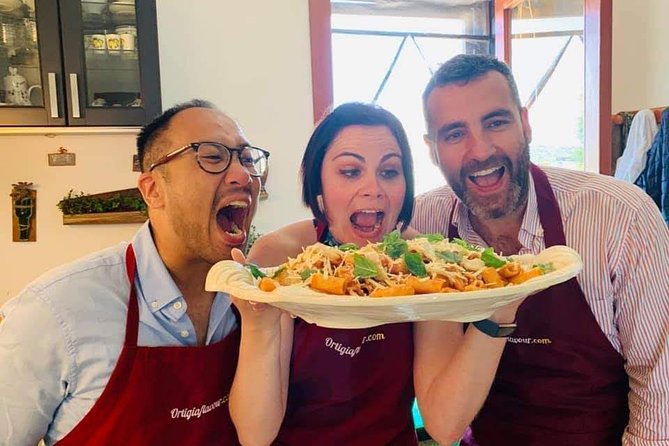
- The meal is part of the lesson: You eat what you prepare, along with local cheeses, olives, pistachios, and wine.
- The group is capped at seven people: That is small enough for hands-on participation.
- The meeting point is the Temple of Apollo at 10:30 am: The activity returns to the same meeting point.
Start at the Temple of Apollo in Syracuse
Your morning begins at 10:30 am in front of the Temple of Apollo, also called the Apollonion, in Syracuse. This is a practical meeting place in Ortigia, the historic island at the heart of the city.
The location matters because you are not being collected from a vague city address. You know to look for the ancient temple, and the host meets you directly in front of it. Pickup is offered, but the stated meeting point remains the Temple of Apollo, so confirm the arrangement when you book if you need transport assistance.
From there, the experience moves into the Ortigia market. The change of pace is part of the appeal. Instead of beginning with a prepared work station, you start with the ingredients and the people who sell them.
More Cooking Classes in Sicily:
- Palermo: Pizza and Gelato Cooking Class with Dinner and Wine
★ 4.9 · 951 reviews - Seaview Cooking Class & Taormina local flavors with Chef Mimmo
★ 5.0 · 665 reviews - COOKING CLASS in Taormina at Chef Massimo HOUSE!!
★ 5.0 · 543 reviews
Shop the Ortigia market with a local eye
The market visit is more than a quick stop to gather groceries. Your host explains the local produce, fish, and other foods that shape Sicilian meals. You learn what looks good in season and how several outside cultures have influenced the island’s cooking.
That last point gives the market visit extra value. Sicilian food is not one narrow tradition. Its ingredients and methods reflect centuries of contact across the Mediterranean. You may see that influence in the use of seafood, vegetables, pasta, nuts, herbs, and sweet ingredients.
The shopping also helps you understand why the cooking lesson works. A dish is not treated as a fixed recipe that must be repeated exactly. The market determines what goes into the basket, and the basket helps determine what reaches the table.
The host may point out local delicacies, fresh fish, and produce before buying the ingredients for lunch. This is useful if you plan to shop on your own later in Sicily. You begin to recognize the difference between simply buying food and choosing food with a particular meal in mind.
The market can also be the most active part of the morning. If you prefer a quiet, slow-paced class, the shopping stage may feel busy. If you like food markets and want context for what you eat, it is one of the strongest parts of the experience.
From market basket to country kitchen
After shopping, you go to the family country home for the cooking portion. The exact transport arrangement is not fully spelled out, but the experience is designed to continue away from the Temple of Apollo and ends back at that meeting point.
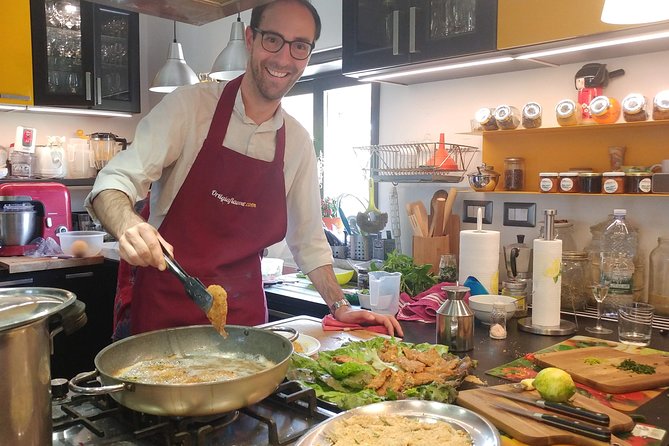
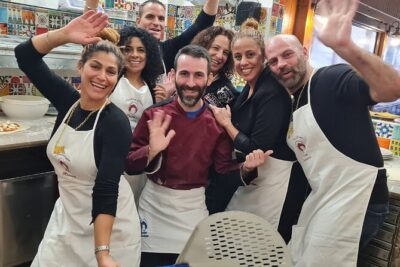
The home setting changes the tone. You are not working in a commercial cooking school with rows of identical stations. You cook with a local family, use ingredients chosen that morning, and may pick herbs and peppers from the garden.
That garden visit is a small detail, but it gives the class a strong sense of place. Fresh herbs are no longer just a garnish listed on a recipe card. You see where they grow and use them in the meal you are preparing.
Letizia and her family explain their approach to Sicilian food and share family methods. Giuseppe has also hosted sessions, and the teaching style may vary slightly depending on who leads your group. The common thread is direct participation and a welcoming family setting.
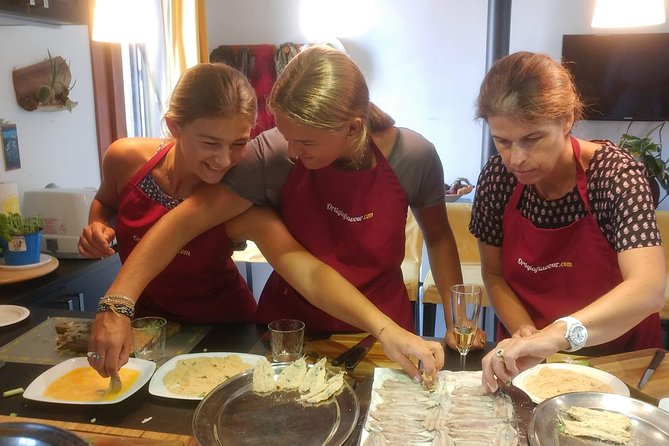
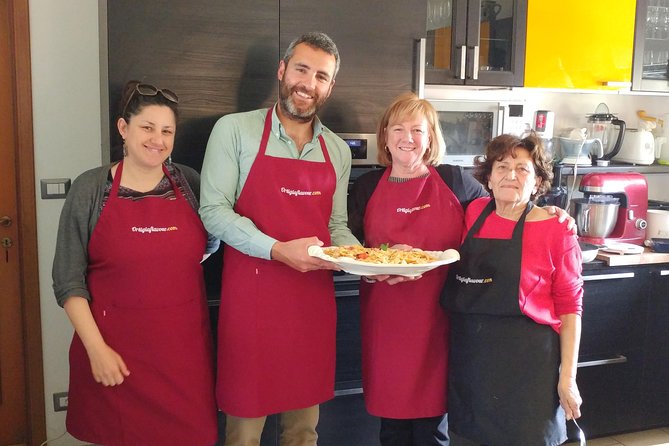
With a maximum of seven people, you should have a better chance to take part than in a large class. You may be slicing, mixing, shaping pasta, preparing seafood, or working on a vegetable dish. The group size is especially helpful if you want more than a demonstration.
What you may cook during the four hours
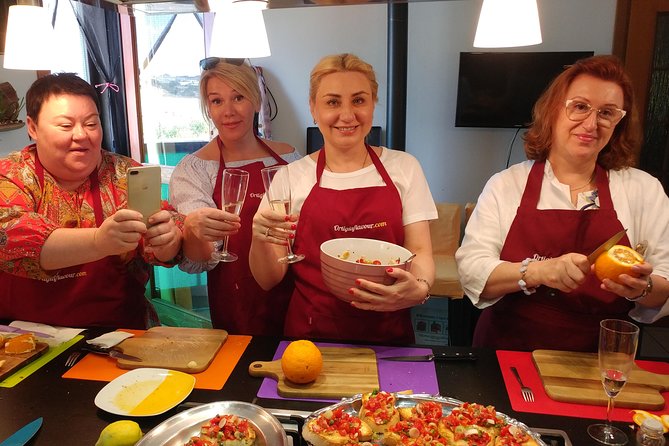
The menu is shaped by the market, so no fixed list of dishes is promised. Still, the experience has included several classic Sicilian preparations.
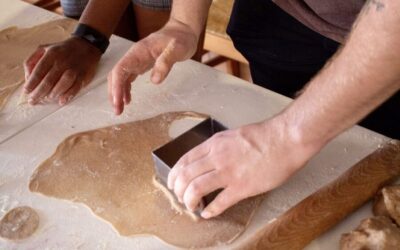
Fresh pasta is one of the main hands-on elements. Making pasta gives you a task that is easy to understand but still rewarding, since you see the dough change as you work it. You also get a useful lesson in how a simple staple becomes the center of a shared meal.
Caponata may also appear. This sweet-and-savory vegetable dish is closely linked with Sicilian cooking and shows how much flavor can come from produce, seasoning, and careful preparation. It is a good example of why shopping for seasonal vegetables matters.
Bruschetta offers a simpler job and a quick way to taste the quality of the ingredients. Seafood dishes can be more involved, with calamari, mussels, or other market finds appearing on the table. One session included stuffed mussels, while another included calamari.
Dessert may be homemade strawberry gelato. It is a pleasant finish, especially after a meal built around pasta, vegetables, bread, and seafood.
Do not book this expecting a fixed restaurant menu. You may cook fresh pasta, bruschetta, caponata, and seafood, but the dishes can change. That uncertainty is part of the market-to-table idea, though it may disappoint you if you want to learn one specific recipe.
Booked from the same base, and a completely different kind of day:
- Catania: Mount Etna Morning or Sunset Day Trip with Tasting
★ 4.8 · 4,028 reviews - Mount Etna: Guided Volcano Summit Hiking Tour with Cable Car
★ 4.7 · 3,784 reviews - Palermo: NO Mafia Walking Tour
★ 4.8 · 2,431 reviews - Palermo: Hop-on Hop-off Bus Tour 24-hour Ticket
★ 3.9 · 2,410 reviews
The best part may be sitting down to eat
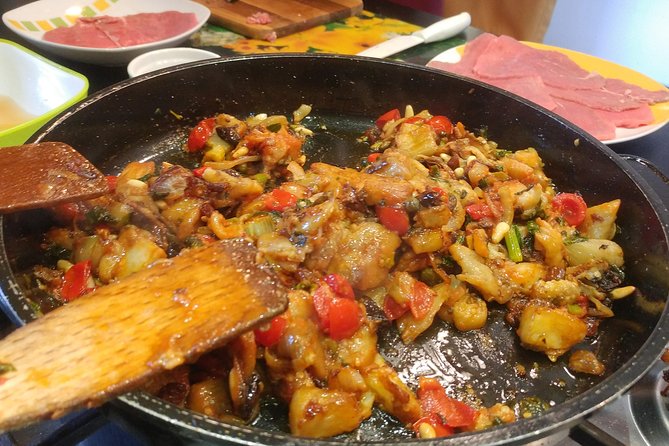
The cooking ends with a shared meal at the home. You are not handed a small sample and sent away. You eat the food prepared during the lesson, which makes the work feel useful and complete.
The meal can include local cheeses, including cheese made by the host’s father, as well as pistachios and olives. Prosecco may be served early in the experience, followed by white wine with lunch. Homemade strawberry gelato may close the meal.
These extras help explain the price. At $163.88 per person, this is not a cheap cooking demonstration. You are paying for roughly four hours, a market visit, instruction, ingredients, transport connected with the home portion, and a full meal with drinks and additional local foods.
The value improves if you treat it as both a cooking class and a food-focused cultural visit. A short class with a meal can cost less, but it may not include a market tour, a family home, garden ingredients, and time at the table. If you would rather spend the morning at a museum or archaeological site, the price may feel harder to justify.
The meal also gives the group time to relax. Cooking classes can become a little mechanical when everyone finishes a dish and leaves at once. Here, eating together is part of the plan, and the table is where the food, family setting, and market lesson come together.
Wine and Prosecco are mentioned as part of the experience. If you do not drink alcohol, check what alternatives are available before booking, since no nonalcoholic options are specified.
Why the market-to-table format works
Many food classes begin with ingredients already measured and arranged. That makes the cooking smoother, but it hides the decisions that come before the recipe.
This experience lets you see those decisions. You learn which seasonal ingredients look appealing, what the local vendors are offering, and how a host builds a meal around what is available that day. That is practical knowledge you can use when you shop in Sicily on your own.
The format also connects food with place. You are not learning generic Italian cooking in a classroom. You are learning Sicilian dishes in Syracuse, after seeing the local market and before eating in a family home.
I especially like the way the experience links food with Sicily’s past without turning the morning into a formal lecture. The host can explain how different cultures have shaped the island’s cuisine while you are looking at actual ingredients and preparing actual food.
Still, the pace deserves attention. The morning has several stages: meeting, market shopping, travel to the country home, garden time, preparation, cooking, and lunch. If you want long discussions about every dish, four hours may feel short.
Who will enjoy this experience most
This is a strong choice for you if food is one of the main reasons you came to Sicily. It suits people who want to handle ingredients, ask questions, and share a meal rather than sit back for a chef demonstration.
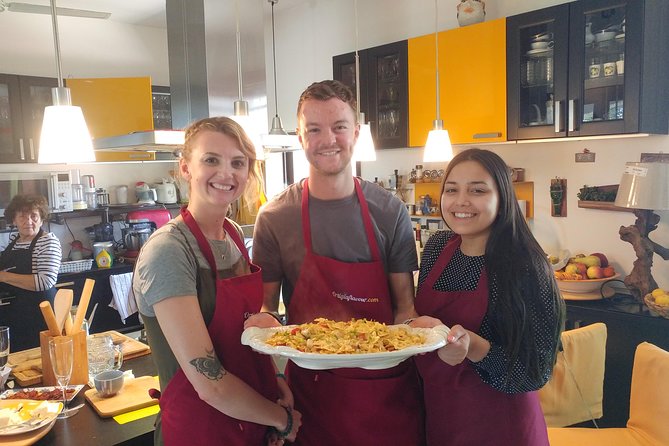
It also works well for couples, families, and small groups. The seven-person limit keeps the activity personal, and different people can take on different jobs in the kitchen.
You do not need to be an experienced cook. The appeal is learning family methods and taking part in the meal, not proving your skill. The class may be especially enjoyable if you like making fresh pasta or want a closer look at seafood preparation.
You may want to choose another activity if you dislike group cooking, have a very restricted diet that has not been discussed in advance, or want complete control over the menu. The available information does not specify dietary adaptations, so ask before paying if that issue matters to you.
The experience is offered in English, which makes the instructions and market explanations easier to follow for English-speaking visitors. Service animals are allowed.
Timing, group size, and booking value
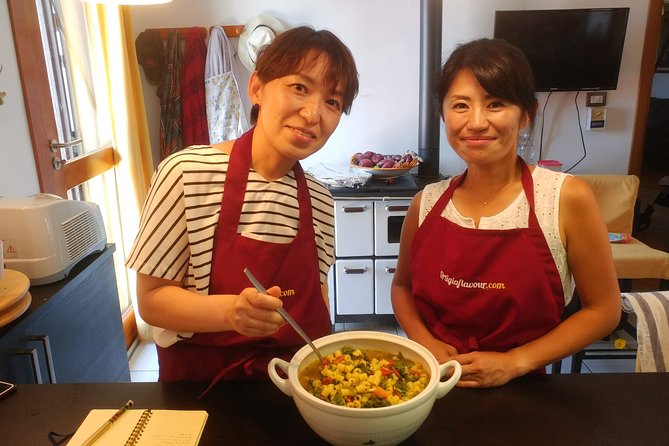
The activity lasts about four hours and begins at 10:30 am. Since lunch is included, you should think of it as a full morning activity that runs into lunchtime rather than a short pre-lunch class.
It is booked an average of 61 days ahead. That does not guarantee that every date sells out, but it is a good reason to plan ahead, especially if you have only a few days in Syracuse.
The maximum group size is seven. This is one of the practical details that affects the experience most. A small group means more access to the host and more chances to work with the ingredients, while a larger group could leave you watching from the side.
The activity starts and ends at the Temple of Apollo. That makes it easier to fit into a day based in Ortigia. Leave room around the four-hour estimate rather than scheduling another timed visit immediately afterward.
Free cancellation is available if you cancel at least 24 hours before the start time. Changes or cancellations inside that window are not refunded, and the activity requires a minimum number of participants. If that minimum is not reached, you are offered another date or experience, or a full refund.
Is this market-to-table class worth booking?
I would book this if you want a personal food experience in Syracuse and value the whole process, from choosing ingredients to eating the finished meal. The market visit, garden, family kitchen, and shared lunch make it more substantial than a standard cooking lesson.
The price is fair for a four-hour activity that includes food, drinks, instruction, and a local home setting, but it is not the choice for a budget morning. The menu is not fixed, and the schedule is full, so you need to be comfortable with some flexibility.
Choose it for fresh pasta, seasonal produce, seafood, and contact with a Sicilian family. Skip it if you want a tightly scripted class, a guaranteed dish list, or a quick activity between other appointments.
FAQ
Where does the experience begin?
It begins at 10:30 am in front of the Temple of Apollo, also called the Apollonion, at 96100 Syracuse, Italy.
Where does the experience end?
The activity ends back at the meeting point at the Temple of Apollo.
How long does the cooking experience last?
It lasts approximately four hours.
Is pickup available?
Pickup is offered, but the specified meeting point is in front of the Temple of Apollo. Confirm the pickup details when booking.
What language is the experience offered in?
The experience is offered in English.
How many people can join the activity?
The maximum group size is seven travelers.
What food will I prepare?
The dishes depend on the seasonal ingredients selected at the market. Preparations have included fresh pasta, bruschetta, caponata, calamari, stuffed mussels, and homemade strawberry gelato.
Can I cancel for a full refund?
Yes. You can cancel at least 24 hours before the experience start time for a full refund. Cancellations or changes made less than 24 hours before the start time are not refunded.
More Market Tours in Sicily
- Palermo: Street Food and Local Market Tasting Tour
★ 4.9 · 540 reviews - The Original Catania Street Food and Market Tour by Streaty
★ 5.0 · 345 reviews - Taormina: Sicilian Cooking Class & Market Tour
★ 4.9 · 212 reviews - Wanna be Sicilian: Palermo Cooking Class and Market Tour
★ 5.0 · 197 reviews
Just added around Sicily
- Zafferana Etnea:Honey extraction workshop and honey tasting★ 4.7 · 3 reviews
- From Trapani: Favignana and Levanzo Yacht Tour with Stops★ 5.0 · 4 reviews
- Mt Etna: Winter Trekking Tour with Optional Catania Transfer★ 4.7 · 13 reviews
- Wine tour with wine tasting★ 4.7 · 18 reviews
- Sicilian Soul: Winery Tour, Wine & Food Tasting in Catania★ 5.0 · 4 reviews
- Wine tasting in Catania Historic center★ 4.4 · 15 reviews
- Valley Of The Temples By E-Bike With Picnic Included★ 4.7 · 7 reviews
- Valley of the Temples and Villa Romana Multi-Language Tour★ 4.8 · 5 reviews
Sicilian Cooking Classes, compared.
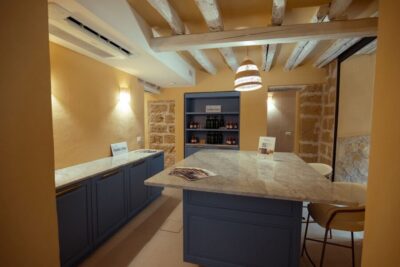
Pizza and Gelato Cooking Class with Dinner and Wine
Read our review →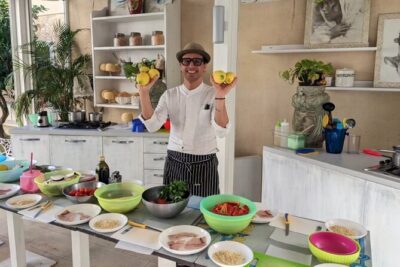
Seaview Cooking Class & Taormina local flavors with Chef Mimmo
Read our review →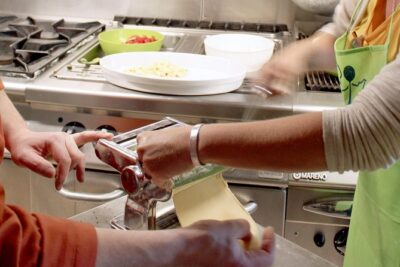
COOKING CLASS in Taormina at Chef Massimo HOUSE!!
Read our review →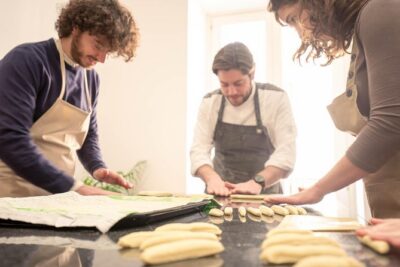
Cannolo Cooking Class with Completion Certificate
Read our review →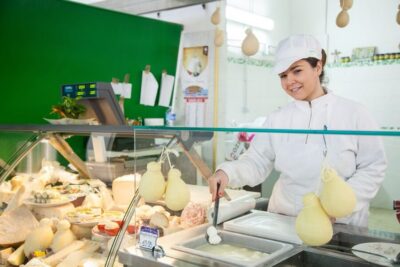
Browse the lists this tour appears in