Reviewed · GUIDED
Guided Geological Excursion to Ustica
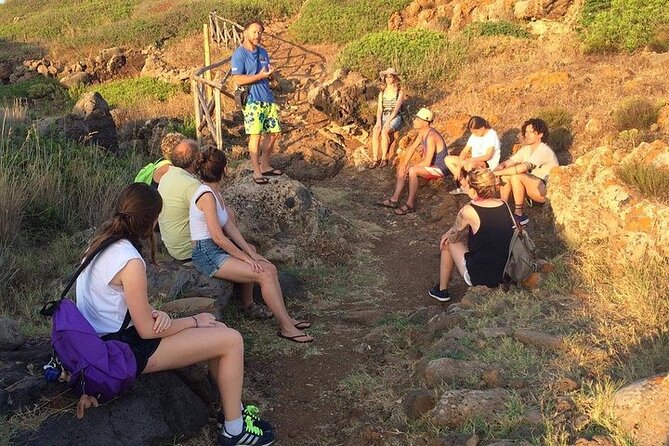
Ustica’s volcanic story comes alive around the Punta Cavazzi lighthouse, where magnetic rocks can send compasses haywire and an underground cave reaches toward the sea. I like that this is not a geology lecture in a classroom. You learn with the black lava cliff, open sea, and sunset right in front of you. I also like guide Vittorio’s lively style, which turns hard science into simple stories, quizzes, and a good-natured walk.
The main consideration is that this is a short, outdoor excursion, not a full island tour. It lasts about two hours, begins at 6 pm, and requires suitable weather. If you want swimming, boating, or long archaeological stops, choose another activity, or pair this with one of Escursioni Ciprea’s other outings.
Key points to know before booking
- Magnetic rocks: See unusual rocks said to make compasses behave erratically.
- Punta Cavazzi setting: The lighthouse, black lava cliffs, and sea provide the backdrop.
- Several geological features: Expect a cave leading toward the sea, basaltic columns, luminous-looking rocks, and a fault studied by geologists.
- Vittorio’s teaching style: He explains complicated ideas in clear, entertaining language.
- Sunset finish: The 6 pm start is timed to end with sunset over the water.
- Low price: At $17.79 per person, this is an inexpensive way to add a different side of Ustica to your trip.
Why Ustica’s geology deserves two hours
Ustica is easy to think of as a sea destination. Its water and marine reserve draw much of the attention, but the island’s land tells an equally striking story. This excursion focuses on the forces that formed Ustica through volcanic eruptions, lava flows, fractures, and changes in the coastline.
I like this approach because it gives you a better sense of place than a quick scenic stop. The black cliffs are not just dramatic scenery. They are evidence of old volcanic activity, and the features around Punta Cavazzi show how rock, heat, pressure, and time shaped the island.
The excursion also works well for people who do not consider themselves science-minded. Vittorio is described as a naturalist who can make difficult subjects clear, often using humor, storytelling, and occasional quizzes. That matters here. Geological terms can become a blur when you are looking at a wall of dark rock. A guide who connects each idea to something you can see makes the visit far more useful.
Families can also consider it. The experience has been described as engaging for children as young as eight, with the guide’s style helping hold attention. Still, children need to be comfortable outdoors and willing to listen during explanations.
A few more Sicily days worth weighing up
- Etna Morning Trip
★ 4.5 · 1,241 reviews - Syracuse: Boat Trip of Ortigia Island and Sea Caves
★ 4.7 · 937 reviews - Tour of the island of Ortigia and exploration of sea caves with baths.
★ 5.0 · 668 reviews
Starting at Comune di Ustica at 6 pm
The activity begins at Comune di Ustica, Via Petriera, snc, in Ustica. The listed start time is 6 pm, and the excursion returns to the same meeting point. Pickup is offered, but you should confirm the exact arrangement when booking because the published starting point remains the Comune di Ustica address.
The evening schedule is one of the smart features of this outing. Ustica can be hot and bright during the day, while the later start gives the walk a softer atmosphere. You also get the changing light over the sea as the geological features become part of a sunset scene.
The timing does mean you should plan your meal and other activities around it. A two-hour outing starting at 6 pm can carry you into the evening, so do not book it too close to a ferry departure, dinner reservation, or another fixed appointment.
The service is offered with a mobile ticket, and confirmation is received at booking. The maximum group size is listed as 150 people. That is a fairly large possible capacity for a geological walk, so the feel of the outing may depend on the number booked on your date. If a smaller group matters to you, ask the operator before committing.
Punta Cavazzi and the lighthouse viewpoint
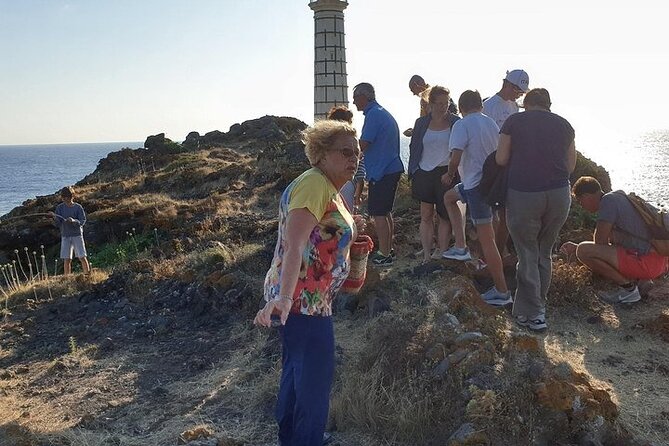
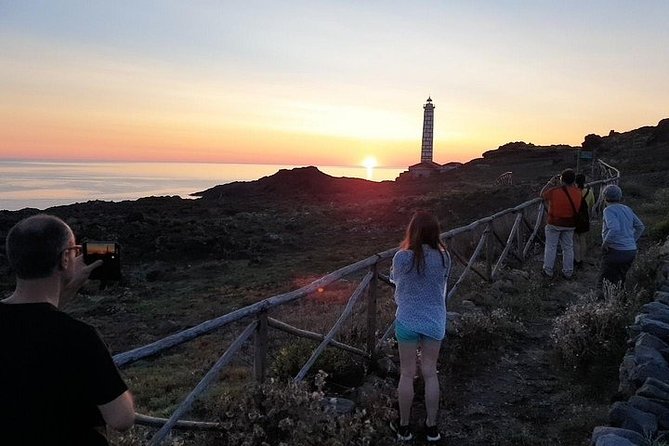
The main setting is the area of the spreader, dominated by the Punta Cavazzi lighthouse. You get a coastal view with the sea behind you and dark cliffs formed by ancient lava eruptions around you.
This is the sort of place where a guide adds real value. Without context, volcanic rock can look like one dark surface after another. Vittorio’s role is to point out how different formations developed and why they matter. The outing becomes a guided reading of the coast rather than a simple walk with a view.
The lighthouse also helps anchor the experience. You are not moving through a long list of unrelated stops. Instead, the route centers on one scenic area and uses its rocks, openings, and faults to explain the island’s birth.
You should expect an outdoor setting rather than a polished visitor center. Wear shoes suited to walking on uneven ground, and bring water. The information provided does not specify trail conditions or accessibility details, so anyone with mobility concerns should ask about the exact route before booking.
Magnetic rocks and compasses that go wrong
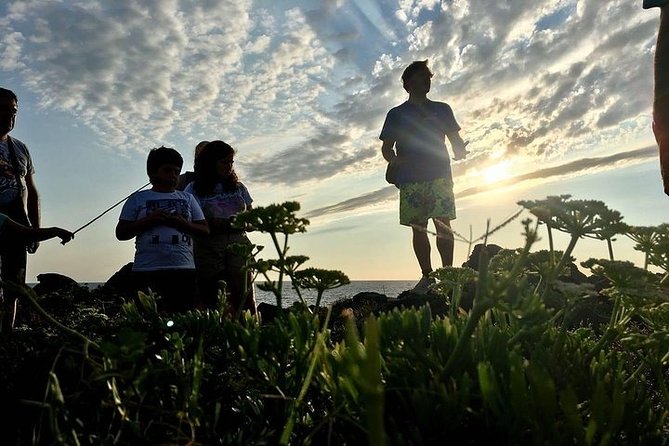
One of the most unusual features is a group of magnetic rocks, described as rocks that can make compasses go crazy. This is the kind of small, hands-on detail that helps geology stick in your mind.
Instead of hearing only that volcanic rocks contain minerals with magnetic properties, you get a visible demonstration of how the rocks affect a compass. That turns an abstract idea into something you can test and notice for yourself.
This stop is especially good for families and curious adults. It has a simple hook: the compass does not behave as expected. From there, Vittorio can explain how the rocks fit into Ustica’s volcanic story.
Do not expect a long technical demonstration with scientific equipment. The appeal is the direct encounter with the rock and the guide’s explanation. If you enjoy experiences where a small physical effect opens up a larger subject, this may be your favorite part.
Booked from the same base, and a completely different kind of day:
- Catania: Mount Etna Morning or Sunset Day Trip with Tasting
★ 4.8 · 4,028 reviews - Mount Etna: Guided Volcano Summit Hiking Tour with Cable Car
★ 4.7 · 3,784 reviews - Palermo: NO Mafia Walking Tour
★ 4.8 · 2,431 reviews - Palermo: Hop-on Hop-off Bus Tour 24-hour Ticket
★ 3.9 · 2,410 reviews
The cave that reaches toward the sea
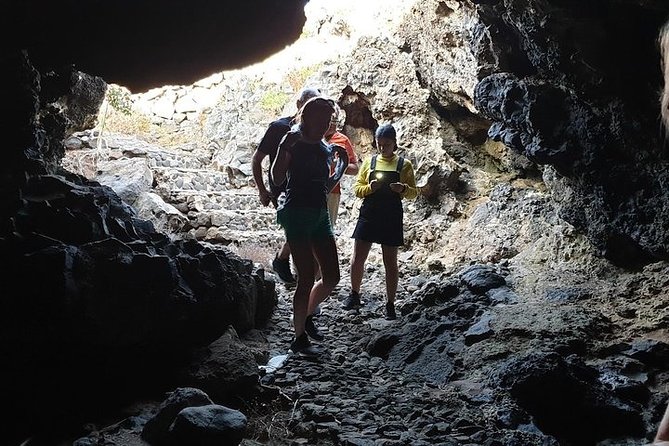
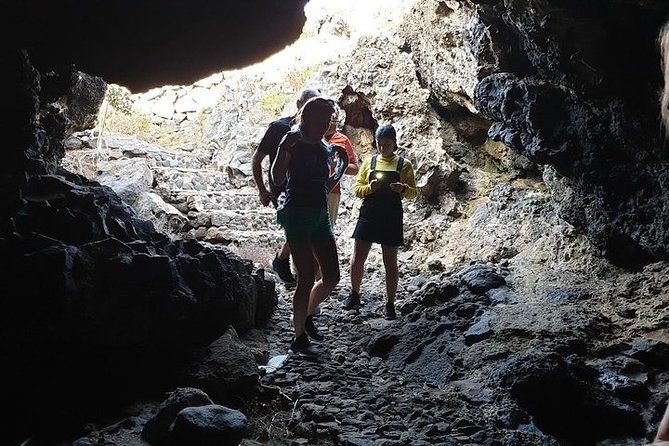
The route also includes a terrestrial cave that leads to the sea. That gives the outing a change of pace. You move from exposed volcanic cliffs and open views into a feature shaped by the relationship between solid land and water.
The cave is valuable not only as a photo stop. It helps you picture how cracks and cavities can connect the island’s interior with the coastline. The description does not provide the cave’s length, lighting, or exact access conditions, so you should not assume it is a deep or fully explored passage.
Follow the guide’s instructions here. A sea-facing cave can have uneven surfaces, and conditions may vary with weather. Since the activity requires good weather, poor conditions can lead to cancellation, a new date, or a full refund.
Basalt columns on a beach that re-emerged
Another highlight is a set of basaltic columns inserted in a beach that has re-emerged. This is a striking example of how volcanic formations and changing shorelines can appear together.
Basalt columns often attract attention because of their regular shapes, but the important point here is their setting. The columns are not presented as an isolated rock curiosity. They are part of a wider story about lava, cooling, and the land changing in relation to the sea.
The re-emerged beach also gives the guide a way to discuss the island’s changing form. You are looking at a place where geology is not finished business from the distant past. The coast records movement and change over time.
Because the outing is only about two hours, expect an explanation and viewing stop rather than a long beach visit. This is not a swimming excursion. The beach is part of the geological lesson.
Rocks with a science-fiction look
The tour includes rocks described as having a science-fiction quality and the characteristic of illuminating. That is an intriguing feature, but it is also one where you should keep expectations measured.
The supplied details do not explain whether the glow is visible only under certain light, appears after exposure, or results from a particular mineral effect. Vittorio’s explanation is likely the key part of the stop, since the unusual appearance makes more sense when you understand what creates it.
This is a good reminder that Ustica’s geology is not limited to black lava and red volcanic soil. The island also offers odd visual effects that can seem out of place until a guide explains them.
The evening light may make this stop especially atmospheric, but the exact appearance can depend on conditions. Think of it as a curious feature to discover, not a guaranteed theatrical light show.
The fault studied by geologists
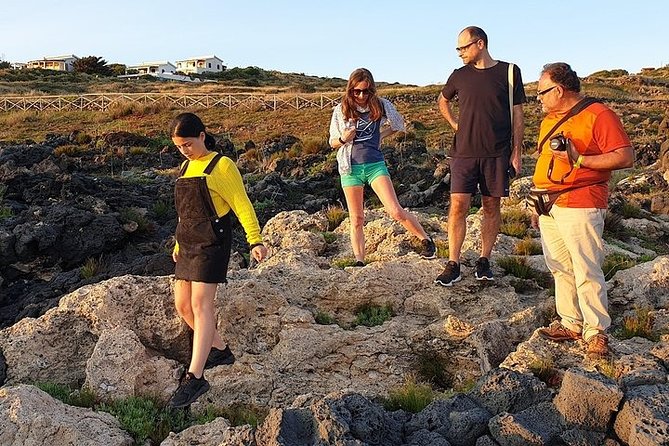
The final major feature is a fault that has drawn study from geologists around the world. A fault is a break or fracture in the earth’s crust, and seeing one in the field gives you a clearer sense of how active geological forces shape an island.
This is where Vittorio’s style seems most useful. A fault can be difficult to identify without guidance, especially when it blends into a dark cliff. The guide can direct your eye to the relevant line, shift, or change in the rock and explain why it matters.
You do not need a science background to appreciate this stop. The point is not to memorize specialist terms. It is to see that Ustica’s form comes from movement and pressure as well as from eruptions.
The experience keeps returning to that idea: Ustica is not merely a pretty island in the sea. It is a record of volcanic activity that you can read in its cliffs, caves, columns, and fractures.
Vittorio’s role makes the difference
The guide, Vittorio, is the central personality of the excursion. His strongest asset is not simply that he knows the subject. He presents it with humor, warmth, and a sense of performance.
That style comes through in the way he reportedly handles difficult concepts. He uses plain explanations, stories, and quizzes, and he has a knack for making complicated ideas feel manageable. I would choose this tour for Vittorio’s interpretation as much as for the rock formations.
He also leads cultural, archaeological, and astronomical experiences through Escursioni Ciprea. That may be useful if you want to build a wider picture of Ustica during your stay. The geological walk can serve as an introduction to his approach, while the other activities cover different sides of the island.
One practical point: this is a guide-led experience, so the pace and enjoyment will depend partly on how much you like listening and taking part. If you prefer to explore alone with a map, this may feel too talkative. If you like having someone connect the dots, it is a strong fit.
Is $17.79 good value?
At $17.79 per person, the price is modest for a guided two-hour experience in a distinctive coastal setting. You are paying for interpretation, not transport-heavy sightseeing or an expensive equipment package.
The value is strongest if you would otherwise walk past the formations without understanding them. The magnetic rocks, cave, columns, glowing-looking rocks, and fault give the excursion several separate points of interest, while the sunset adds a memorable finish at no extra cost.
The low price also makes it easy to combine with another Ustica activity. You could spend the day on the water, snorkeling, or exploring elsewhere, then use the evening geological walk to see a different side of the island.
The limitation is simple: the outing is short. If you want a full-day tour, extensive hiking, or a broad circuit of Ustica, this will not meet that goal. Its value comes from focus and guidance rather than length.
Who should book this experience?
I would recommend it to you if you want more from Ustica than time at the beach. It suits curious families, couples, solo visitors, and anyone who enjoys learning through real examples rather than displays behind glass.
It is also a good choice if you like sunset outings but want something more substantial than a viewpoint stop. The evening light is part of the appeal, yet you spend the walk examining the island’s origins.
You may want to skip it if you dislike outdoor walking, are looking for a swimming activity, or have little interest in volcanic geology. The price is attractive, but it does not change the basic nature of the experience: this is a guided lesson outdoors.
Service animals are allowed, the meeting point is near public transportation, and most people can participate. The activity depends on good weather. If poor weather forces cancellation, you are offered another date or a full refund. You can cancel for a full refund up to 24 hours before the start time, but late cancellations and changes are not accepted.
Should you book the Ustica geological excursion?
Book it if you want a compact, inexpensive way to understand why Ustica looks the way it does. The magnetic rocks, sea-bound cave, basalt columns, strange luminous-looking stones, and fault give the walk real variety, while Punta Cavazzi and the sunset supply the setting.
The best reason to go is Vittorio’s presentation. He brings humor and human warmth to subjects that can otherwise feel technical. If you have two free hours at 6 pm and weather is fair, this is an easy addition to an Ustica stay. Just arrive ready for an outdoor walk and a story about an island still written in lava.
FAQ
Where does the geological excursion begin?
It begins at Comune di Ustica, Via Petriera, snc, 90051 Ustica PA, Italy.
What time does the tour start?
The listed start time is 6 pm.
How long does the experience last?
The excursion lasts approximately two hours.
Where does the activity end?
The activity ends back at the meeting point.
What geological features will I see?
You will learn about magnetic rocks, a terrestrial cave leading toward the sea, basaltic columns in a re-emerged beach, unusual rocks with an illuminating characteristic, and a fault studied by geologists.
Is pickup available?
Pickup is offered. The listed meeting point is Comune di Ustica, so confirm the pickup details when booking.
Is the tour suitable for children?
Most people can participate, and the guide’s approach has been described as engaging for children aged eight and eleven. The activity is outdoors and depends on good weather.
What happens if the weather is poor?
If the experience is canceled because of poor weather, you are offered a different date or a full refund. You can also cancel up to 24 hours before the start time for a full refund.
Just added around Sicily
- Zafferana Etnea:Honey extraction workshop and honey tasting★ 4.7 · 3 reviews
- From Trapani: Favignana and Levanzo Yacht Tour with Stops★ 5.0 · 4 reviews
- Mt Etna: Winter Trekking Tour with Optional Catania Transfer★ 4.7 · 13 reviews
- Wine tour with wine tasting★ 4.7 · 18 reviews
- Sicilian Soul: Winery Tour, Wine & Food Tasting in Catania★ 5.0 · 4 reviews
- Wine tasting in Catania Historic center★ 4.4 · 15 reviews
- Valley Of The Temples By E-Bike With Picnic Included★ 4.7 · 7 reviews
- Valley of the Temples and Villa Romana Multi-Language Tour★ 4.8 · 5 reviews
Guided, compared.

Guided Volcano Summit Hiking Tour with Cable Car
Read our review →
Ancient Theater Skip-the-Line Ticket & Audio Guide
Read our review →
Mount Etna Adventurous Tour with a Volcano Guide
Read our review →