
Reviewed · WALKING TOURS
Markets and Monuments: Walking Tour in the Center of Palermo
Palermo reveals itself quickly on foot, especially at Capo Street Market, where fish, fruit, vegetables, and everyday Sicilian life fill the old lanes. From there, this three-hour walk links major sights with the city’s Arab-Norman and Baroque layers, ending near Santa Caterina church.
I like the mix of food, architecture, and history, and I like that local guides such as Fabrizio, Paolo, and Manuela bring a clear sense of pride in Palermo. The main caution is the pace: three hours covers a lot, and on a hot day you may want more water breaks than the walk naturally provides.
Key points to know before booking
- Capo Market comes first, giving you an early look at Palermo’s traditional food culture and a chance to buy snacks.
- The route includes Palermo’s headline monuments, from Teatro Massimo and the cathedral to Quattro Canti and the Fountain of Shame.
- Arab-Norman Palermo gets proper attention, including the cathedral, La Martorana, and San Cataldo.
- The tour is led in English, with guides including Fabrizio, Paolo, and Manuela named in the tour information.
- The $39.91 price is fair for a small-group orientation, but food, drinks, and building entrance fees are extra.
- Wear comfortable shoes and bring water, especially in warm weather. The route lasts about three hours and stays on foot.
Why this walk works as a first look at Palermo
Palermo can feel scattered at first. Its major churches, markets, palaces, and squares sit among ordinary streets, small shops, traffic, and layers of worn stone. A guided walk helps you connect the dots instead of treating each monument as a separate photo stop.
This route has a useful shape. It starts with the Capo market, then moves toward Teatro Massimo and the cathedral before reaching the central Baroque squares and three important churches. You get food culture at the beginning, major architecture in the middle, and some of Palermo’s most decorated interiors and unusual exteriors along the way.
I especially like the balance between famous sights and daily life. You are not only looking at grand buildings. You are also seeing where locals shop for produce, fish, and traditional foods.
The tour takes about three hours. That is long enough to establish your bearings without taking up a full day. You should not expect a slow, detailed study of every church. Think of it as a strong introduction, with enough history to help you decide which places deserve a return visit.
The advertised price is $39.91 per person. Since the guide, professional commentary, and port pickup are included, I consider that reasonable for a compact introduction to central Palermo. Food, drinks, and entrance fees for museums, buildings, and churches are not included, so keep extra money available if you want to enter places beyond the included stops or buy market food.
More Walking Tours in Palermo
- Palermo: NO Mafia Walking Tour
★ 4.8 · 2,431 reviews - Palermo Original Street Food Walking Tour by Streaty
★ 5.0 · 2,105 reviews - Palermo: Street Food and History Walking Tour
★ 4.9 · 1,294 reviews
Capo Market: Palermo before the monuments
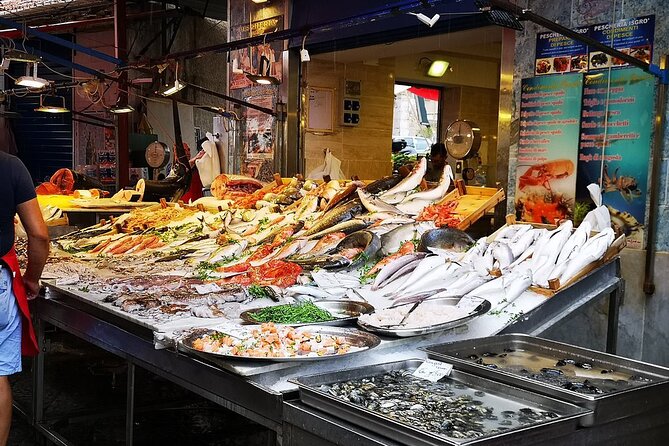
The first stop is Capo Street Market, described as Palermo’s most traditional and popular old food market. The visit lasts about 20 minutes, which is enough to get a taste of the place rather than wander every lane.
Expect typical Sicilian fruit, vegetables, and fish. The market adds an important human scale to the tour. Palermo’s history is not only found in churches and stone facades. It also appears in what is sold, cooked, and eaten each day.
This is the best point in the walk to buy a classic snack or something small for later. Food and drinks are not included, so any purchase is yours to make. I would avoid filling up too early if you want to keep room for the rest of the day’s eating.
A 20-minute market stop can feel brief if you love food markets. That is the trade-off. The route is designed to give you a broad look at central Palermo, not a long food tasting session.
Teatro Massimo and the city’s grand public face
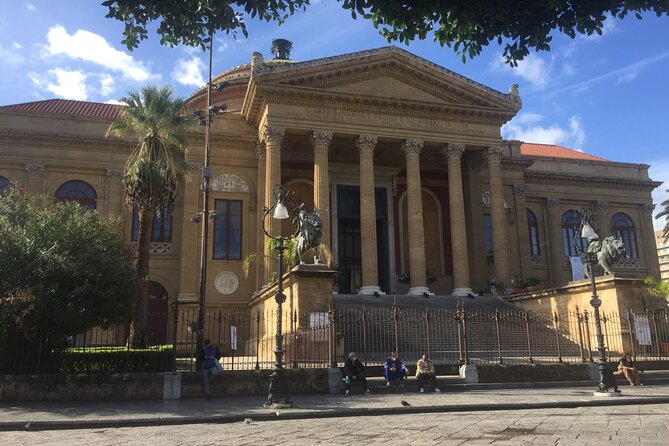
Teatro Massimo receives about 15 minutes. It is Italy’s largest opera house and the third largest in Europe, built in 1875. The site also carries a collection of legends, which gives the guide a natural chance to move beyond dates and construction details.
The outside is the focus here. Entrance is not included, so you should not assume that this short stop includes a theater visit. The value comes from seeing the building in its urban setting and learning why it matters to Palermo.
I find this kind of brief stop useful early in a city walk. Teatro Massimo is a major landmark, but it also helps you understand the scale of Palermo’s public architecture. The contrast with the market is part of the pleasure: one stop feels practical and local, the next feels ceremonial and grand.
If you want a full theater tour, plan separate time and check the admission arrangements for your date. This three-hour walk does not leave room for every interior.
Palermo Cathedral and the Arab-Norman story
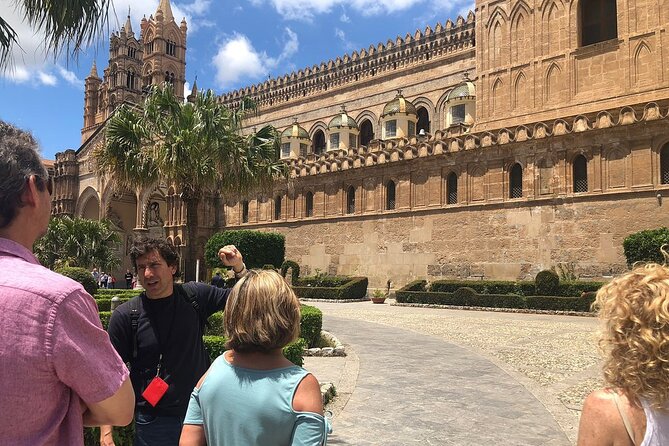
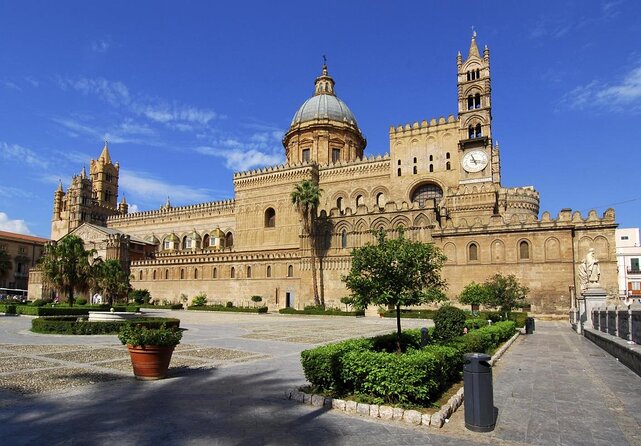
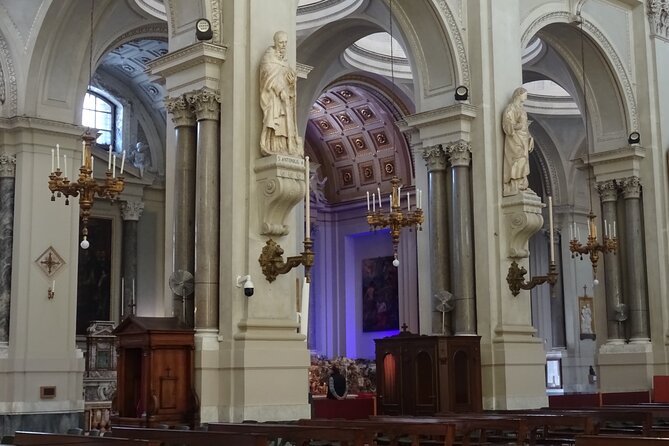
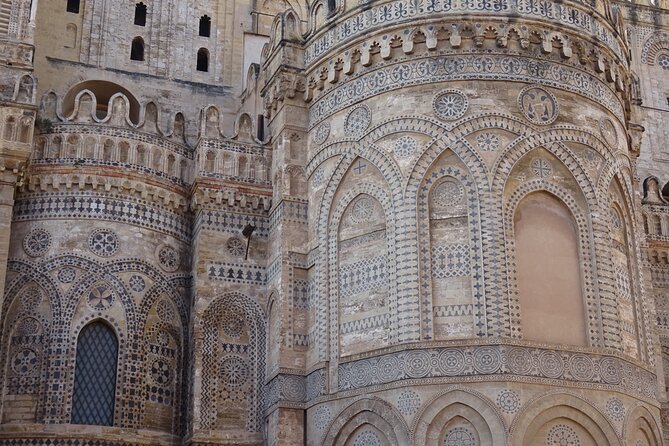
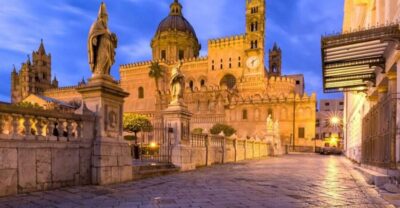
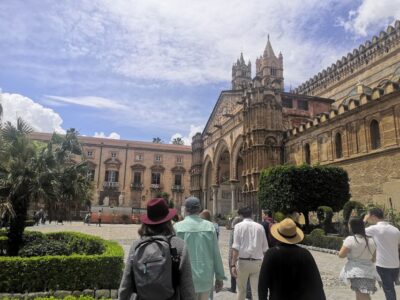
The cathedral is one of the main reasons to book this route. You spend about 20 minutes here and see the interior as well as the exterior. The building is part of UNESCO-listed Arab-Norman Palermo, so this is the point where the tour’s larger historical theme becomes especially clear.
Palermo’s architecture reflects several cultures and periods rather than one clean style. The cathedral was shaped and altered over time, and its appearance carries that layered character. A guide can help you notice how the building fits into the wider Arab-Norman story instead of seeing it as simply another grand church.
The cathedral entrance is listed as free for this experience. Even so, dress appropriately for a religious site. Smart casual clothing is requested, and respectful dress is a sensible choice for all the churches on the route.
Twenty minutes is enough for an introduction, but not for every chapel, detail, or viewpoint. I would pay close attention to the guide here, then return later if the cathedral becomes one of your main interests.
Booked from the same base, and a completely different kind of day:
- Palermo: Hop-on Hop-off Bus Tour 24-hour Ticket
★ 3.9 · 2,410 reviews - Segesta, Erice and Salt Pans Full-Day Excursion from Palermo
★ 4.2 · 1,791 reviews - Palermo: Teatro Massimo Opera House Guided Tour
★ 4.5 · 1,573 reviews - From Palermo: Monreale and Cefalù Half-Day Trip
★ 4.2 · 1,354 reviews
Quattro Canti and the geometry of central Palermo
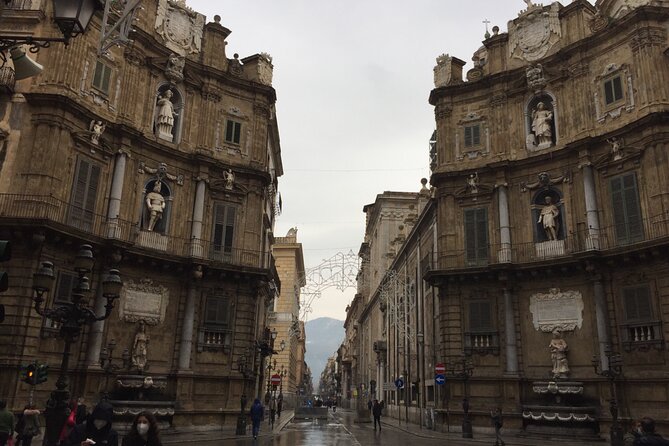
Quattro Canti, officially Piazza Vigliena, is a short ten-minute stop. The square sits where Via Maqueda and Corso Vittorio Emanuele cross, making it one of the clearest points for understanding central Palermo’s layout.
The Baroque design dates to the 17th century. Four curved building fronts frame the intersection, creating a theatrical urban space. The square is not large, but its design works best when you understand that the roads and facades were planned together.
This is a good place to pause and look up. Palermo often rewards attention to details above street level, especially when traffic and crowds pull your eyes downward. Ten minutes may sound short, but a focused explanation makes the stop worthwhile.
Quattro Canti also helps with orientation. After the tour, you can use the crossing as a mental map point when walking between the cathedral, markets, churches, and other central sights.
The Fountain of Shame in Piazza Pretoria
The Fountain of Shame takes about 15 minutes. Built in Palermo in 1574, it sits at the center of Piazza Pretoria and remains one of the historic center’s most recognizable landmarks.
The fountain is monumental, crowded with sculptural figures, and impossible to understand properly from a quick glance at street level. The guide’s explanation gives the stop more weight than a simple photo break.
This is another place where Palermo’s public spaces feel layered. A fountain that began as a grand civic project now belongs to the daily flow of the historic center. I like how the tour keeps moving between large historical ideas and details you can see right in front of you.
There is no listed admission charge for the square. You can enjoy the fountain from outside without adding another ticket to your day.
La Martorana: many styles in one church
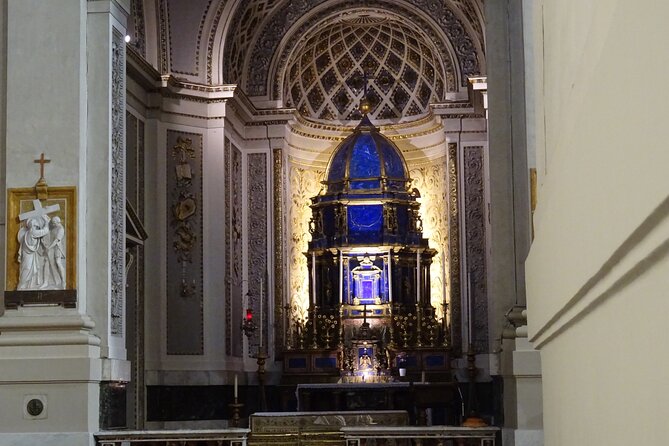
Santa Maria dell’Ammiraglio, better known as La Martorana, receives about ten minutes. The church is noted for the mix of styles added over centuries, reflecting changes in art, architecture, and culture.
That mixture is exactly why a guide helps. Without context, the church can seem like a collection of unrelated features. With an explanation, you can read it as a record of Palermo’s changing tastes and rulers.
La Martorana is also tied to one of the city’s most distinctive foods. The nuns of the Martorana were famous for molded marzipan shaped like fruit. The convent is gone, but frutta di Martorana remains closely associated with Palermo.
The entrance is not included, so check the admission arrangements before assuming you will see every interior detail. The ten-minute stop is brief, but it points you toward one of Palermo’s signature food traditions and one of its most layered churches.
San Cataldo and the three red domes
The Church of St. Cataldo is another short stop, lasting about ten minutes. Built in the 12th century, it is famous for its three red domes.
Those domes make San Cataldo easy to recognize, but the real value of the stop is seeing how different it feels from nearby churches. Palermo’s center places several distinct architectural ideas within a short walk, and this church adds another piece to the Arab-Norman picture.
Entrance is not included. If you want to go inside, expect to pay any required fee separately. The short visit works well as part of a route that emphasizes comparison: cathedral, La Martorana, and San Cataldo each show a different side of Palermo’s religious architecture.
A guide makes the difference
A walk like this depends heavily on the person leading it. Fabrizio is named repeatedly in the tour information, and Paolo and Manuela are also identified as guides. The strongest guiding style here appears to combine historical explanation with practical city advice.
Fabrizio is described as a passionate Palermitano, which matters because local pride can turn a list of monuments into a sense of place. Paolo is noted for speaking good English and for knowing the city well. You should expect the quality of the experience to depend on which guide leads your departure.
There is one serious warning to keep in mind. A single poor experience involved a delayed meeting, weak English, and little historical explanation. That appears to be an exception among the supplied feedback, but it shows why you should arrive at the exact meeting point, keep your phone available, and allow enough time to identify the guide.
The meeting point is Piazza Vincenzo Bellini. The tour information also says the walk finishes in front of Santa Caterina church, about 20 minutes on foot from the starting point. That means you should not plan a tight appointment back at the original square immediately after the tour.
Group size, timing, and comfort
The booking information gives a minimum of two people. It lists a maximum of 12 people per booking, while the activity information gives a maximum of 18 participants overall. I would expect a small to moderate group, but the exact size can vary.
A group of this scale is useful in Palermo. You need enough space to hear the guide near busy streets and markets, yet a tiny private tour is not promised. Stay close when crossing roads or moving through crowded areas.
The walk is offered in English. Children must be accompanied by an adult, and a child rate applies only when sharing with two paying adults. Most people can take part, but the experience is entirely based on walking through the historic center.
One practical issue is heat. A three-hour walk through Palermo can feel demanding in warm weather, and one part of the feedback specifically wished for more water breaks during a hot week. I would bring water before you start, wear comfortable shoes, and choose light, respectful clothing.
Rain does not necessarily ruin the route. The churches and covered market areas offer some shelter, but you should still be ready for wet streets and changing conditions.
Who will get the most from this Palermo walk?
I would recommend this tour to a first-time visitor who wants a useful orientation before exploring Palermo alone. It suits you if you want food, architecture, and history in one morning or afternoon, without committing to a full-day excursion.
It is also a good match for cruise passengers because port pickup is included and the central route covers several major sights. Still, confirm the timing carefully. The walk lasts about three hours, and the finish is not right at the start point.
You will get the most from it if you are curious about context rather than only photographs. The guide’s explanations connect the market, monuments, churches, and food traditions in a way that can save you from wandering past important details.
I would not choose it if your main goal is an extended food tour, a slow architectural study, or long interior visits. The market stop is only 20 minutes, and several churches receive about ten minutes each. This is a broad introduction, not a specialist tour.
Should you book Markets and Monuments?
I would book it if you want to get your bearings fast and see Palermo’s essential central sights with a local guide. The $39.91 cost is sensible for three hours of guiding, especially with port pickup included, but remember that food, drinks, and entrance fees are extra.
Choose a morning with comfortable weather if possible, bring water, and arrive early at Piazza Vincenzo Bellini. If Fabrizio, Paolo, or Manuela leads your walk, you can expect a guide with strong local connection and useful city knowledge, but the experience can vary by guide.
The best reason to go is the route itself. Capo Market, Teatro Massimo, Palermo Cathedral, Quattro Canti, the Fountain of Shame, La Martorana, and San Cataldo give you a compact introduction to the city’s food, faith, art, and public life. Afterward, you will know where to return for a longer look.
FAQ
How long does the walking tour last?
The tour lasts approximately three hours.
Where does the tour begin?
It begins at Piazza Vincenzo Bellini in Palermo.
Where does the tour finish?
The tour information says it finishes in front of Santa Caterina church, about 20 minutes walking from the starting point.
Is the tour offered in English?
Yes. The experience is offered in English.
Are food, drinks, and entrance fees included?
No. Food and drinks are not included, and entrance fees for museums, buildings, and churches are extra. The cathedral is listed with free admission for this experience, while Teatro Massimo, La Martorana, and San Cataldo are listed without included admission.
What happens if I need to cancel?
You can cancel for a full refund if you do so at least 24 hours before the experience start time. Cancellations or changes made less than 24 hours before the start time are not refunded or accepted.
Just added around Palermo
- Valley of the Temples and Villa Romana Multi-Language Tour★ 4.8 · 5 reviews
- Valley of the Temples★ 5.0 · 43 reviews
- Sicilian Winery Tour with Wine Tasting from Palermo★ 5.0 · 12 reviews
- Palermo: Medieval castles of Caccamo & Cefalù. Small Group Tour★ 5.0 · 24 reviews
- Traditional Sicilian Recipes in Palermo★ 5.0 · 4 reviews
- Private Transfer from/to Castellammare del Golfo★ 5.0 · 24 reviews
- UNESCO Day Trip – Monreale & Cefalù★ 5.0 · 6 reviews
- Palermo on a plate: Traditional Food & Wine tour (by Streaty)★ 5.0 · 119 reviews
Walking Tours, compared.
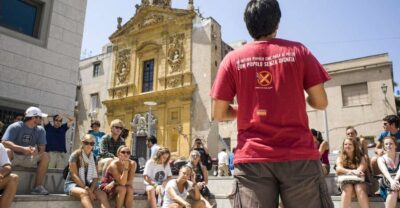
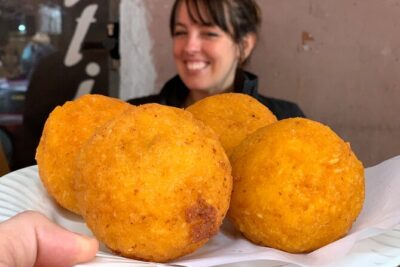
Palermo Original Street Food Walking Tour by Streaty
Read our review →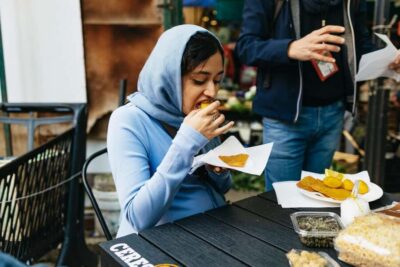
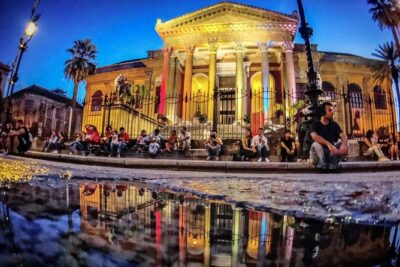
Palermo No Mafia walking tour: discover the Anti-mafia culture in Sicily
Read our review →
Street Food Walking Tour with Local Guide & Tasting
Read our review →Browse the lists this tour appears in