
Reviewed · PALERMO TOURS
Napoli tour: alla scoperta del centro storico
Naples gets under your skin through its stories, and this three-hour walk through the historic center serves them up generously. You’ll trace Spaccanapoli, hear about a church linked to Dracula’s tomb, visit old basilicas, and finish with coffee and sfogliatella. I like the mix of famous sights and local characters, especially Caravaggio’s Naples and Pino Daniele’s childhood home.
I also like that the route connects ancient Greek walls, Baroque churches, the San Gennaro chapel, and the city’s working streets instead of treating Naples as a string of isolated monuments. Guides Fabrizio and Maurizio have both received especially warm praise for their preparation, energy, and people skills. The main drawback is important: the tour is only in Italian, and a group of six found it hard to follow without individual audio equipment.
Key points to know
- Naples beyond the postcard: Hear stories about Dracula, Caravaggio, Pino Daniele, and the Nile God.
- A strong central route: Walk from Piazza Borsa through Spaccanapoli, San Gregorio Armeno, and Via Duomo.
- Churches and art: See Santa Chiara, Gesù Nuovo, San Domenico Maggiore, San Lorenzo, and the Duomo.
- Ancient layers underfoot: Visit San Lorenzo and see how Greek and Roman remains were reused in later buildings.
- A distinctly Neapolitan finish: End with coffee and sfogliatella in a historic pastry shop.
- Italian only: Choose this tour if you can follow a guided explanation in Italian.
Starting at Piazza Borsa, where modern Naples meets the old city
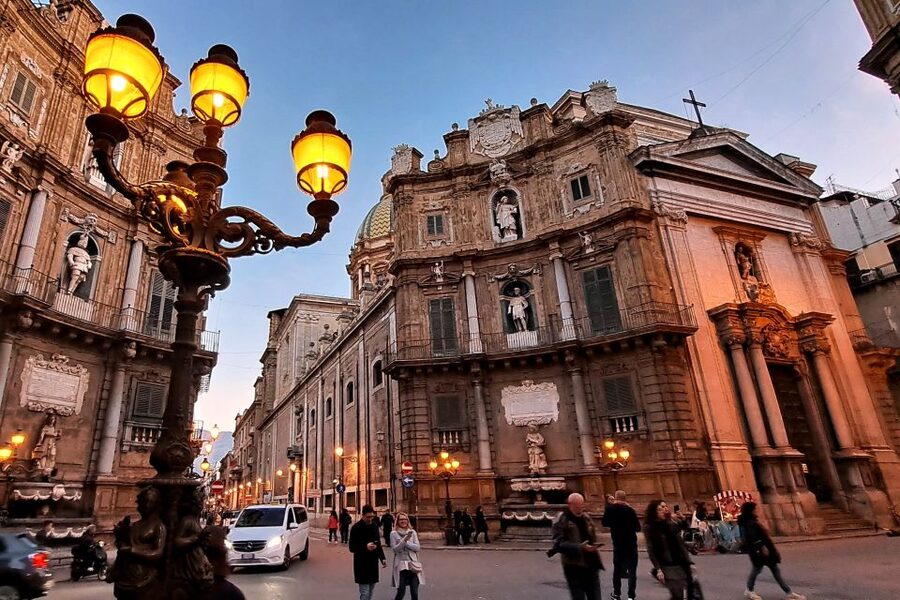
The meeting point is in front of the main gate of Palazzo della Borsa in Piazza Borsa, also called Piazza Bovio. Look for the guide wearing a red tag marked tour guide.
This is a useful starting place because it puts you right on the edge of Naples’ historic center. The square represents nineteenth-century Naples, while the streets ahead lead into a much older city shaped by Greek, Roman, medieval, Spanish, and Bourbon rule.
The route is on foot for three hours. Wear shoes that can handle uneven paving and keep your attention on the guide as the streets become crowded. The tour does not provide a separate transport segment, so you should expect to walk between the stops.
One practical detail needs checking before you pay: the experience information identifies the location as Sicily, but every named stop and the meeting point are in Naples. Since Piazza Borsa, Spaccanapoli, and the Duomo are all in Naples, confirm the city and meeting details at booking.
A few more Palermo days worth weighing up
- Palermo: NO Mafia Walking Tour
★ 4.8 · 2,431 reviews - Palermo: Hop-on Hop-off Bus Tour 24-hour Ticket
★ 3.9 · 2,410 reviews - Palermo Original Street Food Walking Tour by Streaty
★ 5.0 · 2,105 reviews
Dracula, Caravaggio, and Pino Daniele in the opening stories
The first part of the walk sets the tone with Naples’ favorite combination: fact, legend, art, and neighborhood memory.
You’ll hear about the church said to contain the tomb of Count Dracula. The wording matters. This is presented as a mystery and local story, not as a confirmed historical claim. That makes it a good Naples introduction, since the city often keeps several versions of the past alive at once.
The guide then takes you to places linked with Caravaggio. One alley is connected with a notorious duel outside a famous inn, where the painter was nearly fatally wounded. You are not simply looking at a plaque or a grand museum interior. You are being shown the kind of street setting that helps explain the danger and disorder surrounding the artist’s life in Naples.
Nearby, you’ll see the childhood home of Pino Daniele, the Neapolitan singer and songwriter. This gives the route a modern voice. Naples is not presented only through saints, kings, and ancient stones. Its music and neighborhood figures matter just as much.
I like this opening because it gives you useful stories to carry through the rest of the walk. The possible weakness is that several tales are introduced in a short time. If your Italian is limited, the details may pass quickly.
Spaccanapoli and the Baroque face of Naples
Spaccanapoli is the ancient east-west line that appears to split the old center in two. It is one of the best places to understand Naples as a lived-in city rather than a museum district.
The route includes the Santa Chiara Complex, known for its royal tombs and Bourbon connections. It also reaches the Church of Gesù Nuovo, whose unusual stone facade and ornate Baroque interior make it one of the city’s most striking churches.
These visits help you see two different sides of Naples. Santa Chiara brings royal and religious power into view, while Gesù Nuovo shows how a building can conceal its earlier purpose behind a later church design.
At this point, the tour is strongest for visitors who like context. You won’t just be told the name of a church. You’ll hear how the city reused older buildings and how religious spaces became part of daily Neapolitan life.
Museum admission fees are not included. The Duomo visit is included in the tour description, but you should confirm exactly which interiors are entered and whether any optional sites require payment on the day. This matters most at the Sansevero Chapel, home of the famous Veiled Christ. The chapel is listed along the route, but admission fees are specifically excluded from the experience.
Piazza Bellini and the Greek foundations below Naples
Piazza Bellini offers a change of mood. Ancient Greek wall remains sit beside a square associated with Naples’ younger, alternative side.
This is one of the more valuable stops for understanding the city’s age. Naples was built over earlier Naples, and the Greek foundations are not tucked away in a distant archaeological park. They appear within the active center, close to cafés, music, and student life.
The nearby conservatory connects the area with musical figures such as Ruggero Leoncavallo and Riccardo Muti. That reference adds another layer to the Pino Daniele story. Naples’ cultural life is not limited to visual art and churches. Music has long been central to the city’s identity.
You’ll want to stay close here. A reviewer specifically noted that following the guide was not always easy in a group of six and suggested individual earphones. The tour information does not promise audio equipment, so ask before departure if this is important to you.
Booked from the same base, and a completely different kind of day:
- Segesta, Erice and Salt Pans Full-Day Excursion from Palermo
★ 4.2 · 1,791 reviews - Palermo: Teatro Massimo Opera House Guided Tour
★ 4.5 · 1,573 reviews - From Palermo: Monreale and Cefalù Half-Day Trip
★ 4.2 · 1,354 reviews - Palermo: Street Food and History Walking Tour
★ 4.9 · 1,294 reviews
San Domenico Maggiore and the Sansevero Chapel
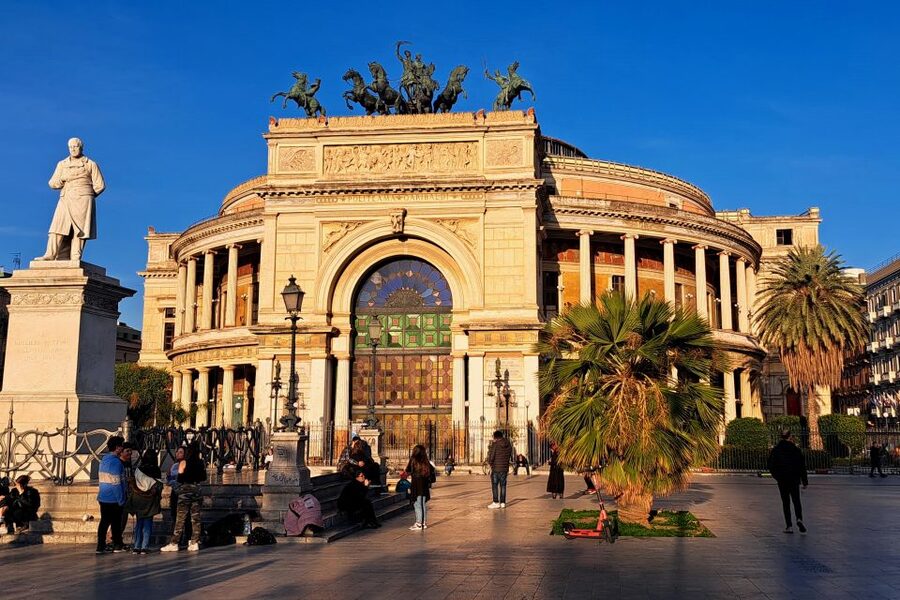
San Domenico Maggiore is one of the tour’s major church stops. Its church and convent are connected with St. Thomas Aquinas, giving the site strong importance in the history of religious teaching and scholarship.
The visit also brings you close to the Sansevero Chapel, one of Naples’ best-known art sites. The Veiled Christ is the reason many people seek it out. The sculpture’s carefully carved veil has made it famous far beyond Naples.
Here, the guide’s role is useful even if you later choose to pay for entry on your own. A short explanation can help you understand why the chapel attracts such attention and how it fits into the city’s mix of faith, art, mystery, and technical skill.
Do not assume every site on the route includes interior admission. The supplied details clearly exclude museum fees. If the Veiled Christ is a priority, check whether your tour pauses outside the chapel or includes time for a separate visit.
San Gregorio Armeno, where Christmas lasts all year
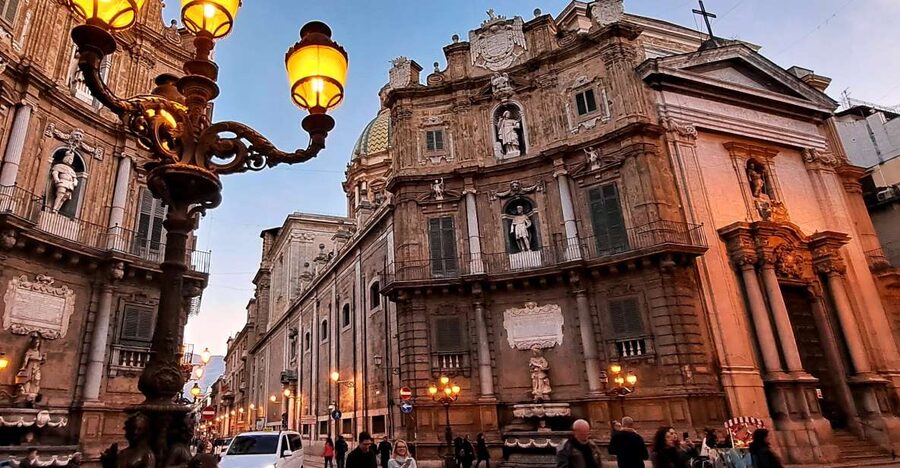
San Gregorio Armeno is known as the alley of nativity scenes. Its workshops and displays are tied to Naples’ long tradition of presepi, or nativity figures and scenes.
This part of the walk feels more personal than a formal monument visit. You’ll see how religious art connects with craft, family businesses, humor, and local custom. The street is also one of the places where Naples’ creative energy is easiest to spot.
The route includes a stop at the exclusive Banksy mural. That gives the tour a useful modern counterpoint. You move from handmade nativity figures and old church traditions to contemporary street art, all within the same historic center.
I like this pairing because it avoids making Naples look frozen in the past. The city’s old customs continue beside new forms of expression. Keep in mind that the tour description does not identify the mural’s exact location or promise a museum-style presentation, so the guide’s explanation will be central to what you take from the stop.
San Lorenzo and the buried city beneath your feet
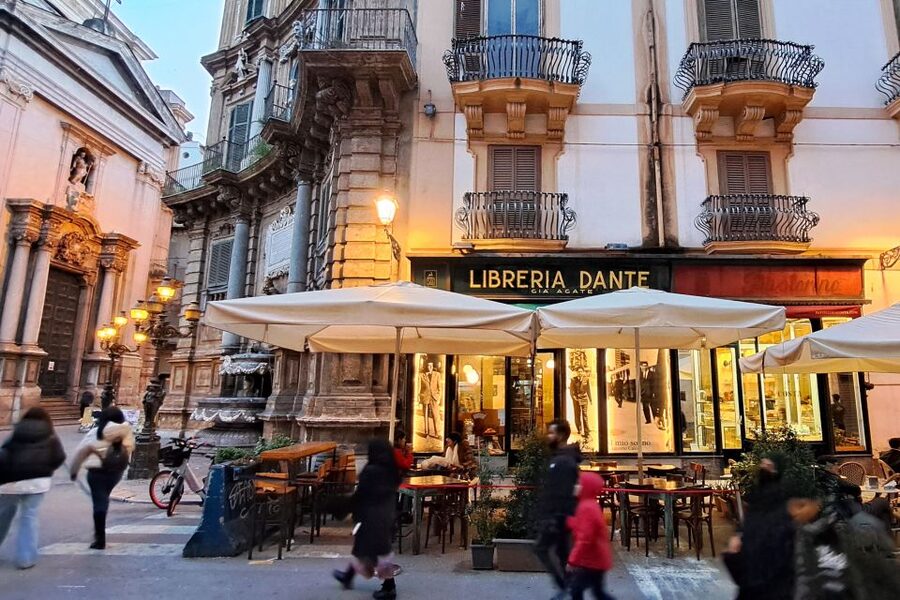
At San Lorenzo Maggiore, you’ll encounter the buried city beneath the present streets. Naples is famous for its layers, and this is one of the clearest places to see how one settlement was built over another.
The experience description refers to a visit to San Lorenzo and its underground archaeological remains. Since admission fees are not included, check whether the underground section is part of the guided visit or an optional paid entry.
Even without entering every archaeological area, the surrounding church helps explain the city’s basic pattern: ancient structures were not always cleared away. They were reused, built over, and folded into later Naples.
That is also the idea behind the Basilica of San Paolo Maggiore. The church was built over the ruins of the Temple of the Dioscuri, and large Corinthian columns remain visible on the facade. You can literally see the old temple supporting the visual identity of the later church.
This is one of the route’s strongest historical lessons. Naples does not erase its earlier cities. It places new faith and new buildings on top of them.
The Nile God and the Body of Naples
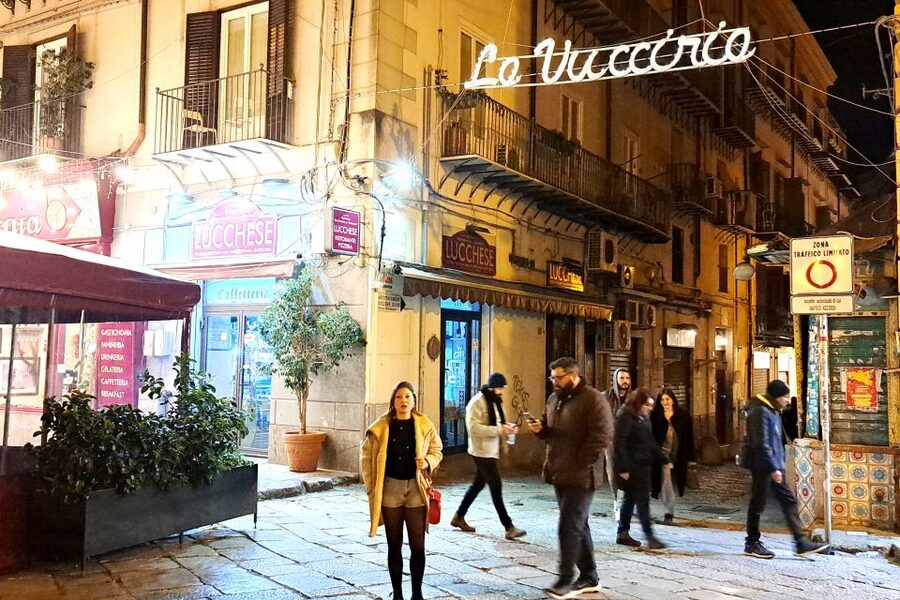
The statue of the Nile God is known as the Body of Naples. It is an evocative public monument with an unusual story and a strong connection to the city’s ancient communities.
The stop is brief compared with a museum visit, but it gives you another example of how Naples turns an old object into a living neighborhood symbol. Ask the guide about the missing and restored parts of the statue, since the details are part of what makes the monument memorable.
This is also a good point to notice how close the sights are. The historic center rewards a walking tour because major churches, archaeological remains, artisan streets, and public art appear within a compact area. A map alone can show the distance, but a guide helps explain why each place matters.
Via Duomo and the chapel of San Gennaro
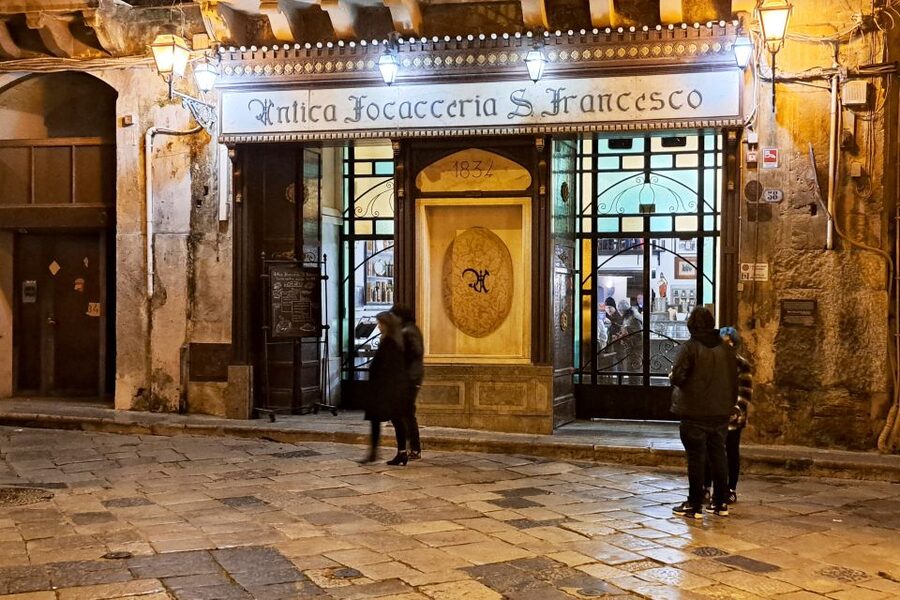
The route finishes at Via Duomo and Naples Cathedral. The Duomo is included, making it one of the clearest value points in the three-hour program.
Inside, you’ll quietly visit the Royal Chapel of the Treasure of San Gennaro. Gold and bronze surround the chapel, but the key point is not simply decoration. San Gennaro is Naples’ patron saint, and the chapel expresses the city’s intense bond with him.
This stop gives the tour a serious finish after the lighter stories of musicians, artists, and street characters. You’ll see how faith in Naples is both public and personal, tied to the city’s sense of protection and identity.
The visit is best approached with respect for the religious setting. The tour description specifically calls for a quiet entrance, so this is not a place for a rushed photo stop or loud commentary.
Coffee, sfogliatella, and useful advice for the rest of Naples
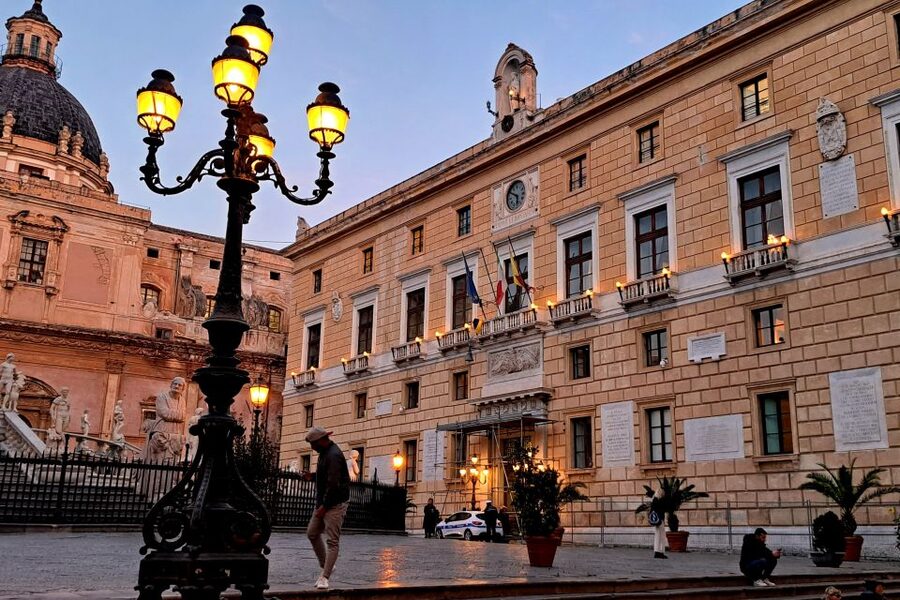
The final stop is a historic pastry shop, where you’ll taste authentic Neapolitan coffee and sfogliatella. Food and drinks are listed as not included, so confirm whether this tasting is purchased separately or simply means the guide ends near a recommended place. The wording describes the coffee and pastry as part of the finish, but the general exclusions say food and drinks are extra.
Either way, this is a smart way to end a walking tour. Coffee and sfogliatella give you a small taste of local routine, while the guide’s recommendations can help you plan the rest of your stay.
You’ll also receive suggestions for more attractions and local places to eat. That advice may be one of the most useful benefits of taking the tour early in your visit. You can use the rest of your time to return to a church, book a museum visit, or seek out the food spots the guide recommends.
Is 35 dollars a fair price for three hours?
At $35 per person, the tour is reasonably priced if you want a guided introduction to central Naples. You receive three hours with a professional guide, a route through the UNESCO-listed historic center, entry to the Duomo, local stories, and practical suggestions for further sightseeing.
The value depends heavily on your Italian. The tour is conducted only in Italian, so you should be comfortable listening for a sustained period. If you understand Italian well, the language adds to the local character. If you do not, you may see the sights but miss the explanations that make the route worthwhile.
The price does not cover museum admission or food and drinks. Budget extra if you plan to enter the Sansevero Chapel or underground archaeological areas, and confirm which stops are included inside rather than viewed from outside.
The tour has earned a 4.9 rating from 43 bookings, with especially strong praise for the guides’ preparation, friendliness, energy, and ability to keep the route interesting. Fabrizio is described as prepared and engaging, while Maurizio is praised for his information, passion, seriousness, and empathy. Guide assignment can change, so treat those names as examples rather than a guarantee.
Who should book this Naples walking tour?
I would choose this tour if you want a story-led introduction to Naples and can follow Italian comfortably. It suits first-time visitors who want the main historic center, but who also want unusual details about Caravaggio, Dracula, Pino Daniele, Banksy, and the Nile God.
It also works well for visitors who prefer a compact walking route instead of several separate ticketed attractions. You’ll see a lot in three hours, then receive ideas for exploring on your own.
I would hesitate if you need English or another language, dislike walking on old city streets, or want long, unhurried visits inside every church and museum. The itinerary covers many places, so some stops will be about orientation and explanation rather than extended independent viewing.
The tour allows free cancellation up to 24 hours before departure, and you can reserve now and pay later. In case of a storm or poor weather forecast, it may be postponed.
Should you book it?
Book it if you want Naples explained through its legends, art, music, churches, and ancient layers, and Italian is comfortable for you. The combination of Spaccanapoli, the Duomo, San Gregorio Armeno, San Lorenzo, and a local pastry stop gives you a useful first look at the city.
Before booking, confirm the Naples location, ask about audio equipment for the group, and check which optional interiors require separate admission. If you do that and the Italian-only format suits you, this is a good-value way to get your bearings and leave with a list of places to explore next.
FAQ
Where does the tour meet?
Meet in front of the main gate of Palazzo della Borsa in Piazza Borsa, also called Piazza Bovio.
How long does the tour last?
The tour lasts three hours.
What language is the tour conducted in?
The live tour guide speaks Italian only.
What places are included in the route?
The route includes Spaccanapoli, the Duomo, Santa Chiara, Gesù Nuovo, Piazza Bellini, San Domenico Maggiore, San Gregorio Armeno, San Lorenzo, the Nile God statue, and San Paolo Maggiore.
Is the Duomo visit included?
Yes. Visiting the Duomo is listed as included.
Is the Sansevero Chapel admission included?
Museum admission fees are not included. Confirm whether the tour views the chapel from outside or provides time for a separate paid visit.
Are food and drinks included?
No. Food and drinks are listed as not included. The tour ends with coffee and sfogliatella at a historic pastry shop, so confirm whether you pay separately.
Does the tour include a professional guide?
Yes. A professional tour guide is included. Guides may include Fabrizio or Maurizio, but the assigned guide can vary.
What happens if the weather is bad?
In the event of a storm or adverse weather forecast, the tour could be postponed.
Can I cancel for a full refund?
Yes. You can cancel up to 24 hours in advance for a full refund.
Just added around Palermo
- Valley of the Temples and Villa Romana Multi-Language Tour★ 4.8 · 5 reviews
- Valley of the Temples★ 5.0 · 43 reviews
- Sicilian Winery Tour with Wine Tasting from Palermo★ 5.0 · 12 reviews
- Traditional Sicilian Recipes in Palermo★ 5.0 · 4 reviews
- Palermo: Medieval castles of Caccamo & Cefalù. Small Group Tour★ 5.0 · 24 reviews
- Private Transfer from/to Castellammare del Golfo★ 5.0 · 24 reviews
- UNESCO Day Trip – Monreale & Cefalù★ 5.0 · 6 reviews
- Palermo on a plate: Traditional Food & Wine tour (by Streaty)★ 5.0 · 119 reviews
Palermo Tours, compared.

Palermo Original Street Food Walking Tour by Streaty
Read our review →
Segesta, Erice and Salt Pans Full-Day Excursion from Palermo
Read our review →

Agrigento and the Valley of the Temples Day Tour
Read our review →
Palermo No Mafia walking tour: discover the Anti-mafia culture in Sicily
Read our review →Browse the lists this tour appears in