
Reviewed · WALKING TOURS
Palermo: Art and Architecture Walking Tour
Palermo’s best sights are packed into a walkable slice of the city, and this private tour links them with the stories that make the stonework matter. You’ll move from Phoenician origins and Roman rule to the Arab-Norman period, then on to modern Palermo, with stops at the Cappella Palatina, cathedral, grand squares, and opera houses.
I like the small private format, which lets your guide adjust the pace for children, older relatives, or anyone who wants extra time at a favorite site. I also like the chance to combine major monuments with ordinary streets and local culture, as Francesca did for one couple by adding markets and small shop stops. The main catch is cost: $317.20 covers up to five people, so it offers fair value for a full group but is expensive for one or two people, especially since entrance tickets are extra.
Key points to know
- Arab-Norman Palermo in one walk: See the Cappella Palatina and cathedral, two of the city’s essential monuments.
- A private group of up to five: Your guide can shape the pace and explanations around your party.
- Teatro Massimo and Teatro Politeama: Compare two grand theaters and learn how Palermo’s public life changed over time.
- Three hours of walking: Comfortable shoes, sun protection, and sensible planning matter.
- Tickets are extra: Entrance fees are paid directly to the guide, and free-entry days still carry a €3 reservation fee per person.
- Flexible language choice: Guides are available in English, Italian, French, Spanish, German, and Russian.
Why this Palermo walk works so well
Palermo can feel scattered at first. Its monuments belong to different centuries and cultures, while the streets between them can seem more interesting than the formal sights. This tour gives you a clear route through the city, beginning at either Teatro Politeama Garibaldi or Villa Bonanno, depending on the option you choose.
The route connects the Politeama district with the old center. That matters because you are not only checking off churches and fountains. You are watching Palermo change from grand nineteenth-century boulevards to medieval lanes and ornate public squares.
The tour is sold as a three-hour experience, although the broader description presents it as a half-day outing. The listed stops include walking time and several guided visits, so check the confirmed start time and duration when booking. Either way, plan for a serious walk rather than a quick photo circuit.
The private format is the real advantage. A guide can slow down for an elderly parent, keep children involved, or spend more time on architecture if that is your interest. One guide, Roberta, was able to adjust the plan during poor weather and help an older couple with seating and elevator access. That sort of flexibility is hard to get in a large group.
More Walking Tours in Palermo
- Palermo: NO Mafia Walking Tour
★ 4.8 · 2,431 reviews - Palermo Original Street Food Walking Tour by Streaty
★ 5.0 · 2,105 reviews - Palermo: Street Food and History Walking Tour
★ 4.9 · 1,294 reviews
Starting between Teatro Politeama and Villa Bonanno
Your meeting point depends on the option you book. Teatro Politeama Garibaldi places you near the Politeama district and makes a natural start for Palermo’s grand public architecture. Villa Bonanno offers a different starting point near the Palazzo Reale area and the city’s older monuments.
Confirm the exact meeting point before setting out. The tour ends back at Teatro Politeama Garibaldi, so the route is not simply a one-way transfer from one part of Palermo to another.
If you start near Politeama, you’ll likely begin with the city’s nineteenth-century face. The theater’s broad exterior and formal setting provide a useful contrast to the medieval center later in the walk. If your start is Villa Bonanno, you are closer to the religious and royal heart of old Palermo.
There is no hotel pickup or drop-off. That is worth noting if you are staying outside the center, since you’ll need to arrange your own way to the meeting point.
From Phoenicians to modern Palermo
A good guide gives Palermo’s long past a usable shape. The city began under the Phoenicians, later passed through Roman rule and the Byzantine Empire, and then entered the Arab-Norman period that gives many central buildings their unusual mix of forms.
You do not need to memorize every dynasty. What matters is learning to spot the layered character of Palermo. A building may combine Norman structure, Islamic decoration, Byzantine mosaics, Gothic additions, Renaissance details, and Baroque flourishes. The city is easier to understand once you stop expecting one clean architectural style at a time.
Guides such as Maria, Diana, Roberta, and Francesca have been especially praised for making the past accessible and for adapting explanations to the people in front of them. Francesca, in particular, included market streets, local customs, and small shop stops for a couple who wanted more than the major monuments.
That is a useful sign for families and mixed-age groups. Children can hear legends and stories rather than a long lecture, while adults still get the political and religious background that explains what they are seeing.
The Cappella Palatina and the royal center
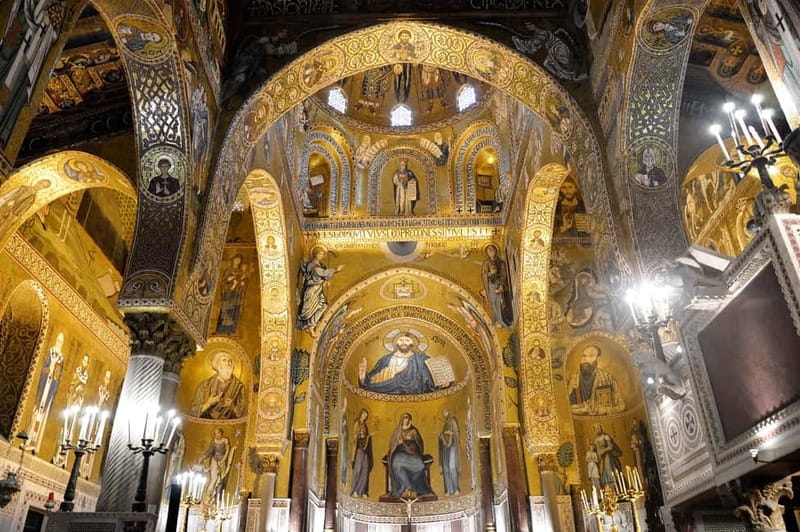
The Cappella Palatina, or Palatine Chapel, is the architectural high point of the tour. Built in the twelfth century inside the Palazzo Reale, it reflects the Arab-Norman era and the religious world of medieval Sicily.
Expect a richly decorated interior and a strong sense of royal ceremony. The chapel is not simply a place to admire mosaics or polished surfaces. It shows how rulers used art, architecture, and worship to express power.
Your guide can help separate the chapel’s different influences rather than treating the whole interior as one decorative blur. This is where a live guide earns the fee. You can look up facts about the chapel, but a guide can point out what to notice and explain why the mixture of traditions is so important.
Entrance is not included. You pay monument fees directly to the guide before departure. People entitled to free admission still pay a €3 reservation fee per person, and on the first Sunday of each month admission is free but a €3 fee remains due for booking and headsets.
The monument rules are practical but strict. Shorts, large bags, and backpacks are not permitted inside, so carry only what you need. Wear clothing suitable for religious sites and expect to leave bulky items behind or avoid bringing them altogether.
Booked from the same base, and a completely different kind of day:
- Palermo: Hop-on Hop-off Bus Tour 24-hour Ticket
★ 3.9 · 2,410 reviews - Segesta, Erice and Salt Pans Full-Day Excursion from Palermo
★ 4.2 · 1,791 reviews - Palermo: Teatro Massimo Opera House Guided Tour
★ 4.5 · 1,573 reviews - From Palermo: Monreale and Cefalù Half-Day Trip
★ 4.2 · 1,354 reviews
Palermo Cathedral’s many architectural layers
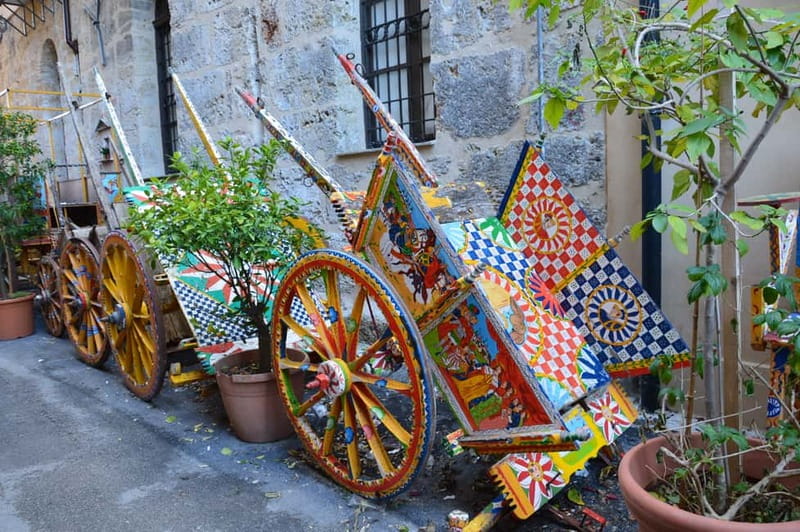
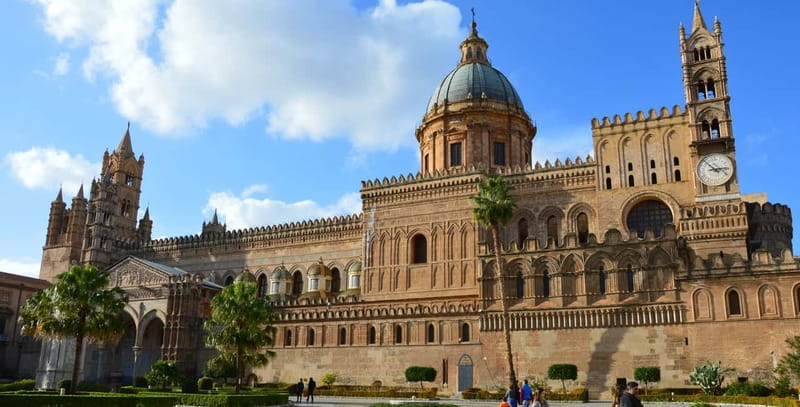
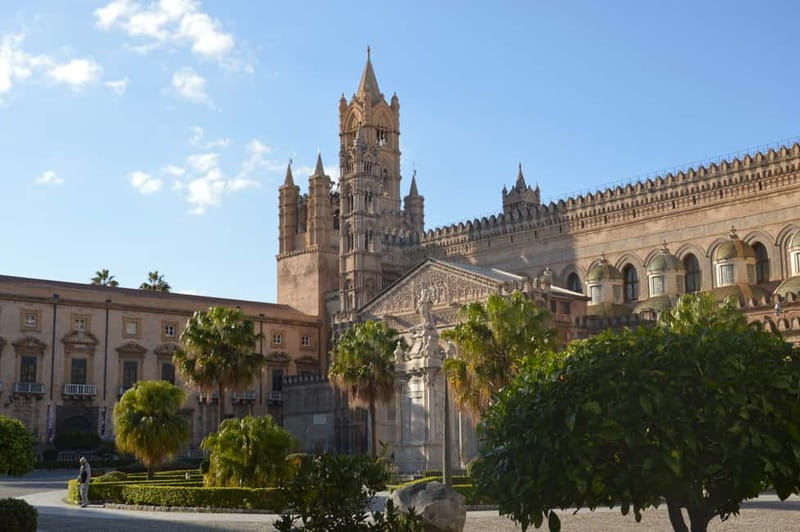
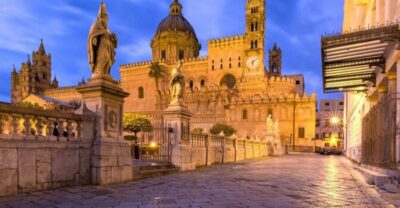
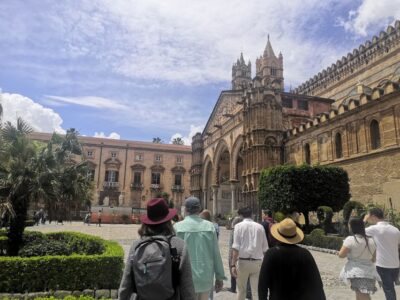
The cathedral is one of the longer stops, with about an hour assigned to the visit and explanation. Give it the time it deserves. Its façade and exterior show a blend of Gothic, early Renaissance, and Baroque details, making it less a single-style church than a record of Palermo’s changing tastes.
This is an ideal place to practice reading a city’s past through its buildings. Pointed arches and older structural elements tell one story, while later additions alter the look and meaning of the whole complex. A guide can explain what changed and why the building feels so different from the Cappella Palatina.
The cathedral stop is also a good test of your group’s energy. After several streets and monuments, younger children may need a shorter explanation, while architecture fans could happily linger. The private setup lets your guide adjust, though the total tour still has a fixed time.
Wheelchair access is available, and the experience can accommodate all ages. Roberta’s help with elevators and seating is worth remembering if someone in your party has limited mobility. Still, ask your guide about the exact route and interior access at the start, since historic buildings can have different access arrangements.
Fontana Pretoria and the city’s public face
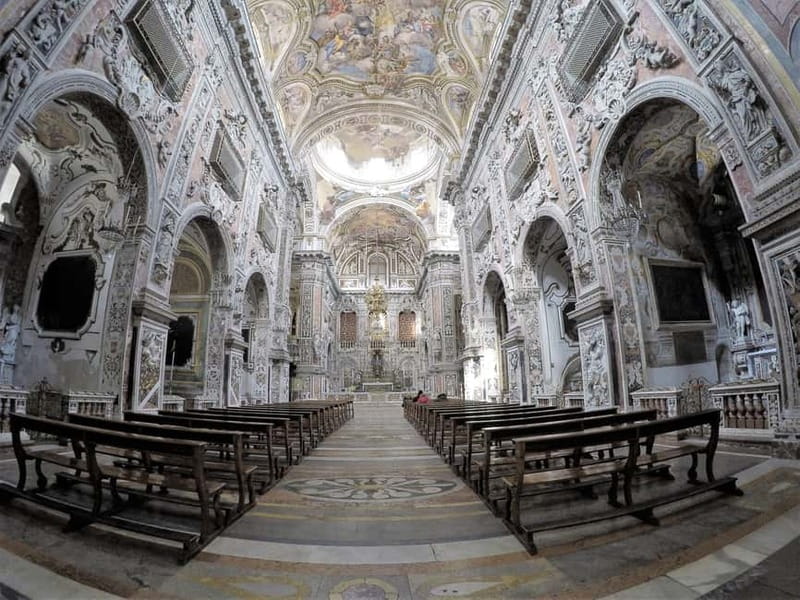
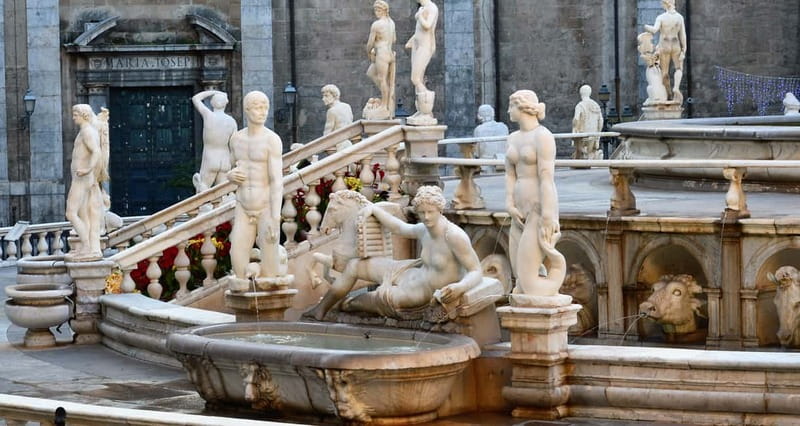
Fontana Pretoria is a quick but worthwhile stop, with about fifteen minutes for a visit, photographs, and explanation. The fountain gives you a change of scale after the cathedral: instead of entering another major religious building, you pause in a public urban setting filled with sculpture and open views.
Use this stop to look at how Palermo presents power in its civic spaces. The fountain is more than a decorative photo background. It helps show how public squares were designed to impress, organize movement, and display the city’s ambitions.
Fifteen minutes is enough for the main story and pictures, but not for a slow examination of every figure. If you want detailed art history, tell your guide early. The private format makes that request more realistic than it would be on a large coach tour.
Quattro Canti and Palermo’s crossroads
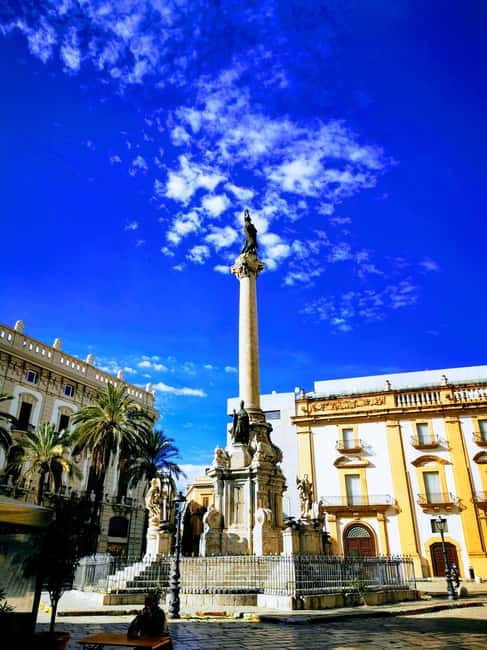
Quattro Canti is one of the most memorable street scenes on the route. Its four curved corners create a formal crossroads in the middle of the historic center, with layered façades that frame the streets.
This is where the tour’s walking element becomes especially useful. You see how Palermo’s major routes, public spaces, churches, and civic buildings relate to each other rather than viewing every monument as an isolated stop.
The planned visit lasts about thirty minutes. That gives you time to hear the symbolism, take photographs, and watch the city move around the square. It is also a good point to ask your guide about daily life, local customs, or the legend of St. Rosalie, Palermo’s patron saint.
The St. Rosalie story adds a human touch to the tour. Legends often explain how a city sees itself, and this one helps connect religious devotion with Palermo’s identity. Ask your guide to tell the full version rather than treating it as a passing fact.
Teatro Massimo and Teatro Politeama
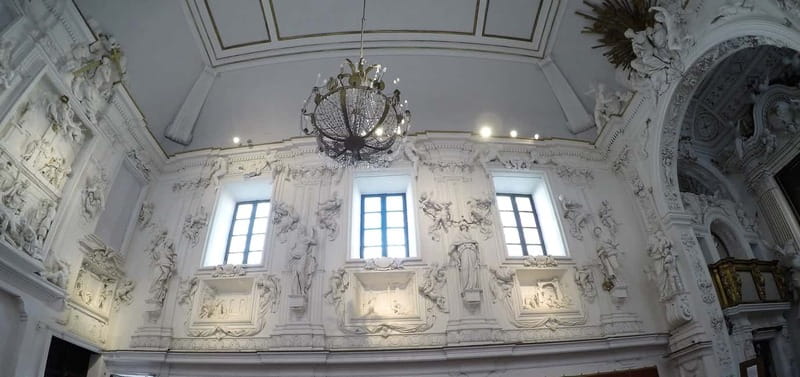
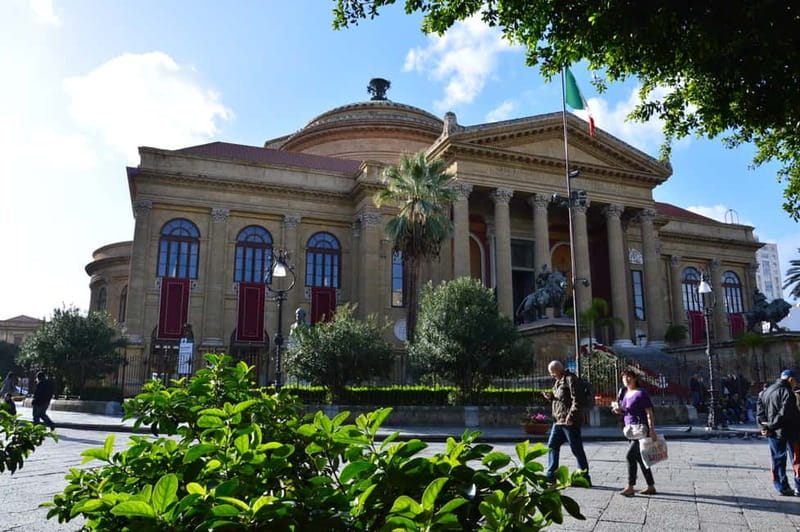
Teatro Massimo is the grand theater stop, with roughly twenty-nine minutes set aside. It is one of Europe’s largest opera houses, so even a short visit gives you a sense of the scale of Palermo’s cultural ambitions.
The theater also helps balance the tour. After medieval chapels and cathedrals, you see a building tied to public performance, music, and the city’s modern civic life. It is a reminder that Palermo is not only an ancient center preserved for sightseeing.
The route begins or ends around Teatro Politeama Garibaldi, depending on the meeting arrangement, and finishes back at Teatro Politeama. Seeing both theaters lets you compare two important public buildings rather than focusing only on religious monuments.
The theater stops are mainly guided visits and photo opportunities. Entrance costs are not included, so confirm which interiors are part of your chosen booking and what you will pay before the tour begins. Do not assume every building listed on the route includes an interior ticket.
What the private price gets you
The price is $317.20 for a group of up to five. At the full group limit, that works out to about $63.44 per person before entrance fees. For five people who want a private guide, that is a reasonable way to share the cost, especially if your party includes different ages or interests.
For two people, the per-person price is much higher. You are paying for a dedicated guide, language choice, flexibility, and help with the main monuments rather than simply paying for transportation. If you prefer to explore slowly on your own, the price may feel hard to justify.
The strongest value comes from the guide’s ability to shape the walk. Maria and Diana have been praised for personal explanations, while Roberta handled bad weather, lines, and mobility needs with care. Francesca added markets, local streets, cultural details, and small shops for a couple who wanted a broader view of Palermo.
Keep the extra costs in mind. Food and drinks are not included, and monument entrance fees are paid separately. The tour does offer skip-the-line access through a separate entrance, but that does not mean the admissions themselves are free.
You can reserve now and pay later, which helps if you are still arranging a Sicily trip. Cancellation terms should be checked carefully because the supplied details give both a 24-hour full-refund policy and a 48-hour cutoff for cancellation charges. Confirm the exact terms shown for your booking before paying.
Walking comfort, clothing, and family pace
Wear comfortable shoes. The route covers historic streets, open squares, and monument interiors, and the value of the tour depends on staying engaged rather than worrying about sore feet.
Palermo can be sunny, so bring sunglasses, a sun hat, and sunscreen. These are small items, but they matter on a walking tour that moves between shaded interiors and open public spaces.
Large luggage and backpacks are not allowed inside the monuments. Bring a small amount of water and only the essentials, while remembering that food and drinks are not provided as part of the tour.
The tour can include children, and the guide will involve both parents and younger participants. A private group is useful here because explanations can shift when children lose interest or older family members need a pause.
The tour is wheelchair accessible. If accessibility is important for your party, mention it when booking and speak with the guide at the start about elevators, seating, and the exact monument route.
Who should book this Palermo tour?
I would choose this walk for a first visit to Palermo, particularly if you have only one day in the city and want the major sights placed in a sensible order. It also suits families, couples traveling with older relatives, and small groups that want a guide without joining a large crowd.
It is a good fit for people who care about context. The monuments are impressive on their own, but the Arab-Norman connections, St. Rosalie legend, local streets, and changing architectural styles make the route much more rewarding.
I would think twice if your budget is tight or if you dislike paid monument visits. Since tickets are extra and the private price is fixed for the group, solo visitors and pairs may find better value elsewhere.
Should you book it?
Book this tour if you can fill most of the five-person capacity and want Palermo explained at a flexible pace. The combination of the Cappella Palatina, cathedral, Fontana Pretoria, Quattro Canti, Teatro Massimo, and Teatro Politeama gives you a strong first look at the city.
Before booking, confirm the meeting point, final duration, language, monument fees, and cancellation deadline. Bring light luggage, dress properly for religious sites, and tell the guide if your group needs elevators, seating, child-friendly explanations, or extra time at the markets.
If those details fit your plans, this is a practical way to make sense of Palermo’s complicated, beautiful center without rushing from one famous façade to the next.
FAQ
How long does the Palermo Art and Architecture Walking Tour last?
The activity is listed as three hours, while the wider description presents it as a half-day tour. Check the available start times and confirmed duration for your selected option.
What is the price of the tour?
The price is $317.20 per group of up to five people. Monument entrance tickets, food, and drinks are not included.
Where does the tour begin?
There are two possible starting locations: Teatro Politeama Garibaldi or Villa Bonanno. The meeting point depends on the option booked.
Where does the tour finish?
The activity finishes back at Teatro Politeama Garibaldi.
Which sights are included in the route?
The route includes Palermo’s historic center, Fontana Pretoria, Palermo Cathedral, Quattro Canti, Teatro Massimo, and Teatro Politeama. It also includes the Cappella Palatina as a key monument visit.
Are entrance tickets included?
No. Entrance fees are paid directly to the guide before departure. People entitled to free admission still pay a €3 reservation fee per person.
Can I join on the first Sunday of the month?
Yes. Monument entrance is free on the first Sunday of each month, but a €3 per person fee is still required for booking and headsets.
Is the tour wheelchair accessible?
Yes, the tour is wheelchair accessible. Guides can help with access needs such as elevators and seating.
What languages are available?
Live guides are available in Russian, English, French, Italian, Spanish, and German.
Just added around Palermo
- Valley of the Temples and Villa Romana Multi-Language Tour★ 4.8 · 5 reviews
- Valley of the Temples★ 5.0 · 43 reviews
- Sicilian Winery Tour with Wine Tasting from Palermo★ 5.0 · 12 reviews
- Palermo: Medieval castles of Caccamo & Cefalù. Small Group Tour★ 5.0 · 24 reviews
- Traditional Sicilian Recipes in Palermo★ 5.0 · 4 reviews
- Private Transfer from/to Castellammare del Golfo★ 5.0 · 24 reviews
- UNESCO Day Trip – Monreale & Cefalù★ 5.0 · 6 reviews
- Palermo on a plate: Traditional Food & Wine tour (by Streaty)★ 5.0 · 119 reviews
Walking Tours, compared.
Palermo Original Street Food Walking Tour by Streaty
Read our review →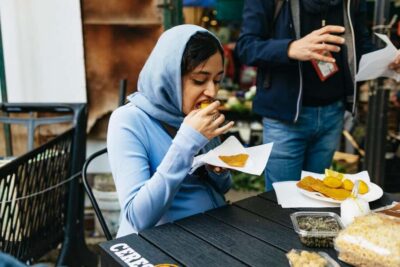
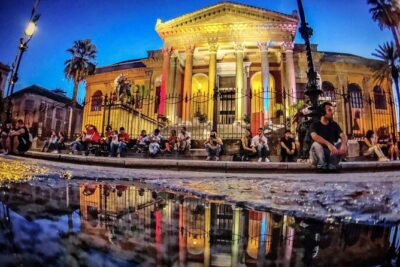
Palermo No Mafia walking tour: discover the Anti-mafia culture in Sicily
Read our review →
Street Food Walking Tour with Local Guide & Tasting
Read our review →Browse the lists this tour appears in