
Reviewed · MOUNT ETNA TOURS
Special trekking on the most authentic and wild side of Etna
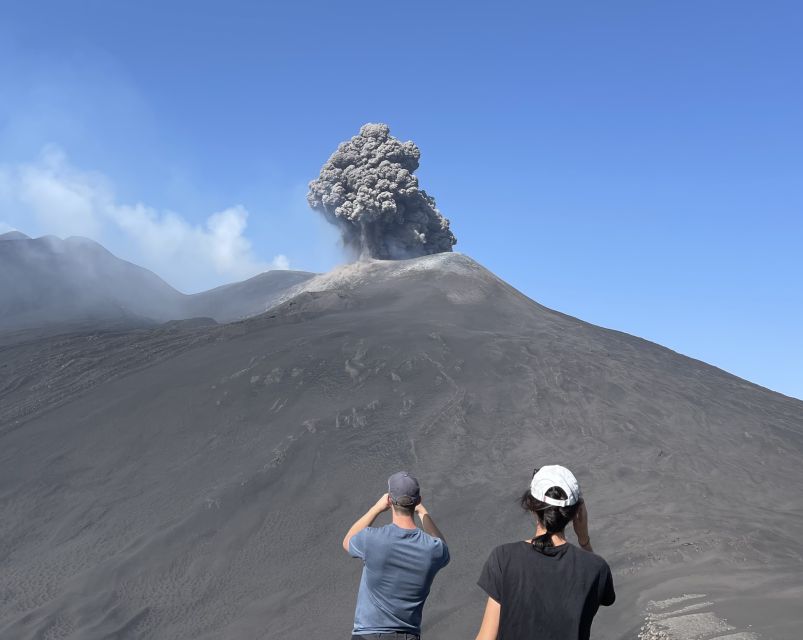
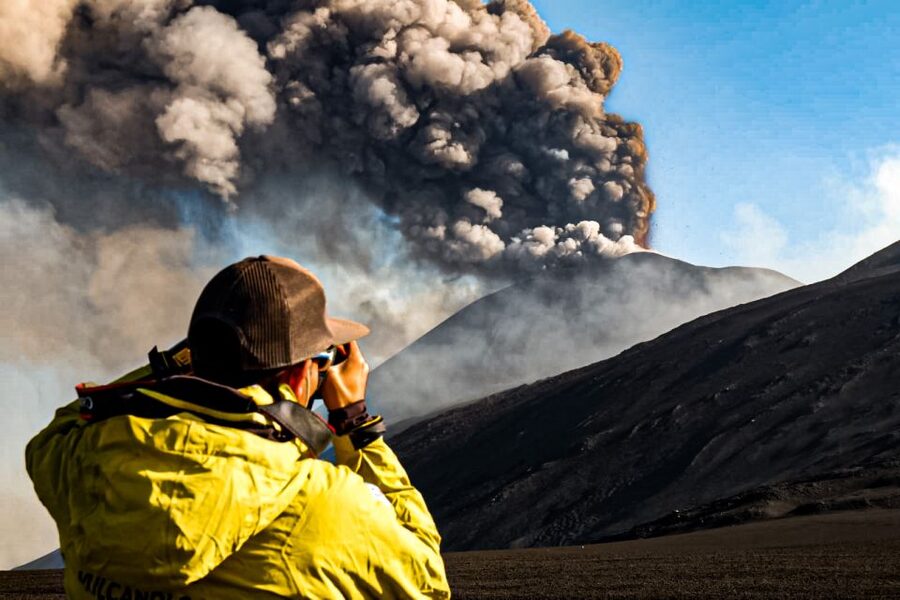
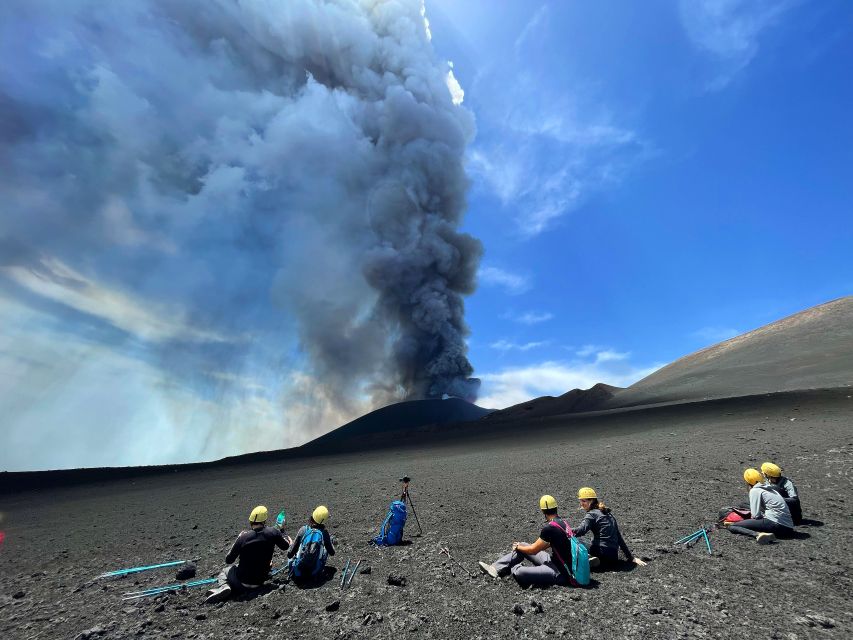
Etna’s north side feels far removed from the usual summit excursion. You ride a rugged 4×4 to high ground, then walk past fresh lava flows, old eruption cones, ground fractures, and the rims of broad explosive craters. The most unusual stop is an intact volcanic chimney, where you can enter with a helmet and see the passage once used by rising magma.
I like the wild route and small-group approach, which keep the outing focused on geology rather than a quick summit photo. I also like the practical backup plan: if summit craters are closed because of volcanic risk, this route can still take you to the highest point safely allowed by current rules. The drawback is the extra €50 per person for the 4×4, paid locally, on top of the listed $62.63 guide price.
Key points to know before you go
- The 4×4 climb reaches about 2,800 meters, where high altitude, wind, and weather can change quickly.
- The main hike is about 6 kilometers downhill from the north-side craters to Piano Provenzana.
- You enter an intact volcanic chimney wearing a protective helmet, one of the outing’s most unusual moments.
- The route passes eruptions from 1809 through 2002, giving you a useful cross-section of Etna’s recent activity.
- A volcanological guide explains the terrain as you go, with guiding available in English, French, and Italian.
- The tour suits moderately trained hikers, not people with limited fitness, serious medical conditions, or a fear of heights.
Why Etna’s north side is worth your time
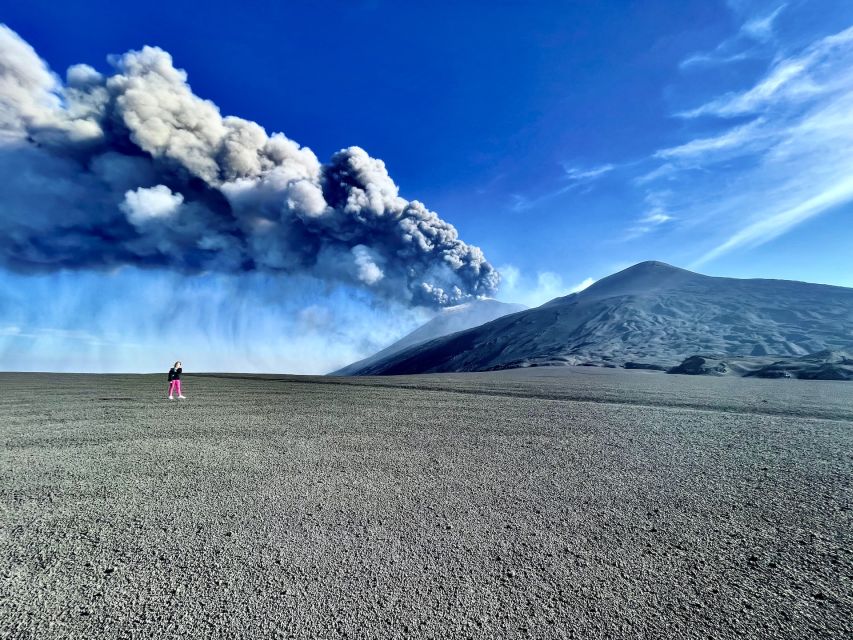
Most visitors approach Etna with the summit craters in mind. That is understandable, but access to those craters depends on volcanic activity, safety rules, and weather. This excursion gives you something more reliable: a long walk through the volcanic workings of the north slope.
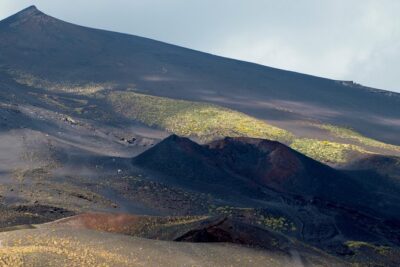
You are not simply looking at a black cone from a distance. You walk among eruption craters, lava channels, ash slopes, and fractures in the ground. The route shows how Etna has repeatedly changed its shape through side eruptions. That makes the trip useful even when the summit area is closed.
The north side is also less frequented than the main southern approach. You should expect a more rugged setting and fewer signs of a standard sightseeing stop. The tradeoff is that the ground is uneven, loose, and exposed. This is a proper high-altitude hike, not a gentle stroll.
More Trekking Tours in Catania
- Catania: Etna Nature Tour with Hiking, Cave Visit, & Tasting
★ 4.7 · 502 reviews - Etna Volcano: South Side Guided Summit Hike
★ 5.0 · 311 reviews - Mount Etna: North Upper Craters Guided Tour by 4×4 with Trek
★ 4.6 · 243 reviews
Meeting at Mareneve and preparing for the climb
The meeting point is Chiosco Bar Mareneve, beside the chairlift used by skiers in winter. It is the second of four buildings in the parking area. Arrive a little early so you have time to find the guide, use the facilities, and sort out equipment without delaying the group.
The excursion ends back at the same meeting point. You are responsible for reaching Mareneve on your own, since transport from your accommodation is not included. Parking costs €3 for the full day and is paid after the excursion.
The operator provides trekking shoes, warm jackets, extra socks, backpacks, trekking poles, and protective helmets. That is helpful if you are packing light or have not brought proper mountain gear. Still, bring long pants, a windbreaker, sunglasses, sunscreen, drinks, snacks, and a rain jacket or K-way. The supplied jackets may keep you warm, but Etna weather can be hard to predict.
Wear the provided or approved hiking footwear from the start. The safety information says you are not covered by insurance without adequate shoes. Sandals, flip-flops, open-toed shoes, and high heels are not allowed.
The 4×4 ride from 1,800 to 2,800 meters
The first part is not on foot. A special 4×4 vehicle climbs roughly 8 kilometers from about 1,800 meters to the Volcanological Observatory at around 2,800 meters. The road is described as extremely rough, so expect a bumpy ride rather than a smooth mountain shuttle.
This transfer is more than a way to save your legs. It takes you quickly into Etna’s high volcanic zone, where the guide begins explaining the mountain and the terrain from the vehicle. The €50 transport charge covers the 4×4 sections and is paid on site. Make sure you include it in your real trip budget, since the advertised price covers the guide service only.
At high altitude, take the first minutes slowly. The route is not suitable for people with respiratory problems, heart problems, altitude sickness, or a low level of fitness. The operator also advises against joining if you have back problems, recent surgery, epilepsy, or mobility limitations.
The first walk to 2,900 meters
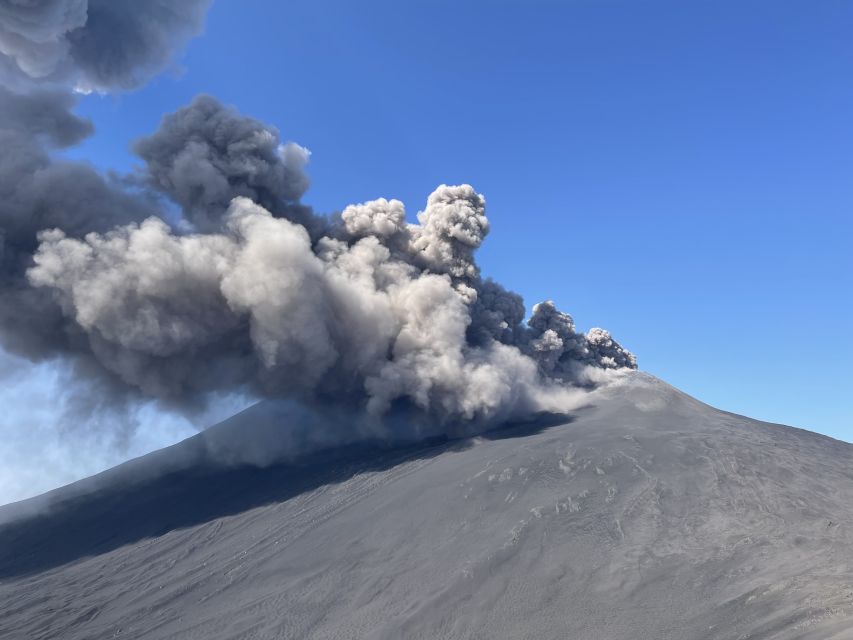
After leaving the vehicle near the observatory, you begin a shorter walk from approximately 2,800 to 2,900 meters. The route leads to a panoramic point with views toward Etna’s summit craters, recent lava flows, and Sicily below.
On a clear day, you may see Taormina and the Aeolian Islands. Visibility depends heavily on weather, so do not treat those views as guaranteed. Clouds and wind can arrive quickly at this height, and the summit may disappear while the lower slopes remain clear.
This first walk helps you understand the scale of Etna. You can look toward the summit area while standing among older volcanic material, then compare those slopes with the more recent flows. It is a short section, but the altitude makes it feel more demanding than the distance suggests.
The guide also uses this point to explain the safety limits for the day. Authorized volcanological guides follow the instructions of Civil Protection and current volcanic-risk rules. If the summit craters are closed, the guide will take the group only to the highest point allowed under the regulations.
Booked from the same base, and a completely different kind of day:
- Catania: Mount Etna Morning or Sunset Day Trip with Tasting
★ 4.8 · 4,028 reviews - Catania: Sunset Jeep Tour of Mount Etna and Lava Flow Caves
★ 4.8 · 2,113 reviews - Sicily: Etna and Alcantara Gorges Full-Day Tour with Lunch
★ 4.8 · 1,766 reviews - Catania: Etna Sunset Tour with Pickup and Drop-off
★ 4.8 · 1,348 reviews
The north-side craters and the 1947 eruption
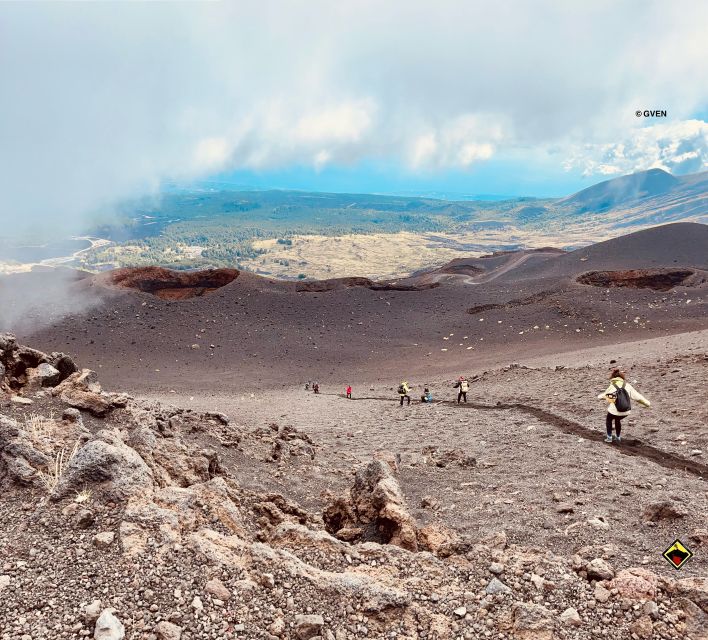
After the first walk, the 4×4 takes you to the side of one of the large craters on Etna’s north slope. From here, the longer route begins on foot and continues all the way toward Piano Provenzana.
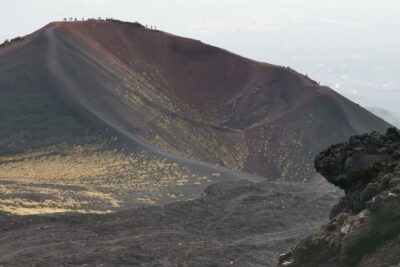
The trek visits the fracture known as the north-side Rift. Ground fractures matter because they show where volcanic forces have opened the mountain and allowed lava to reach the surface. You will also see the craters formed during the eruption of February 24, 1947.
The route then moves across ash slopes and around the edges of large explosive craters. Walking on loose volcanic ash is tiring and can be slippery on descents. Trekking poles are included, and you should use them, especially where the path drops over soft material.
Stay close to the guide near crater edges. The attraction is the open view into the volcanic forms, but the exposed rim is also where height and dizziness can become a problem. The operator specifically warns that the route may affect people prone to vertigo.
Entering the volcanic chimney
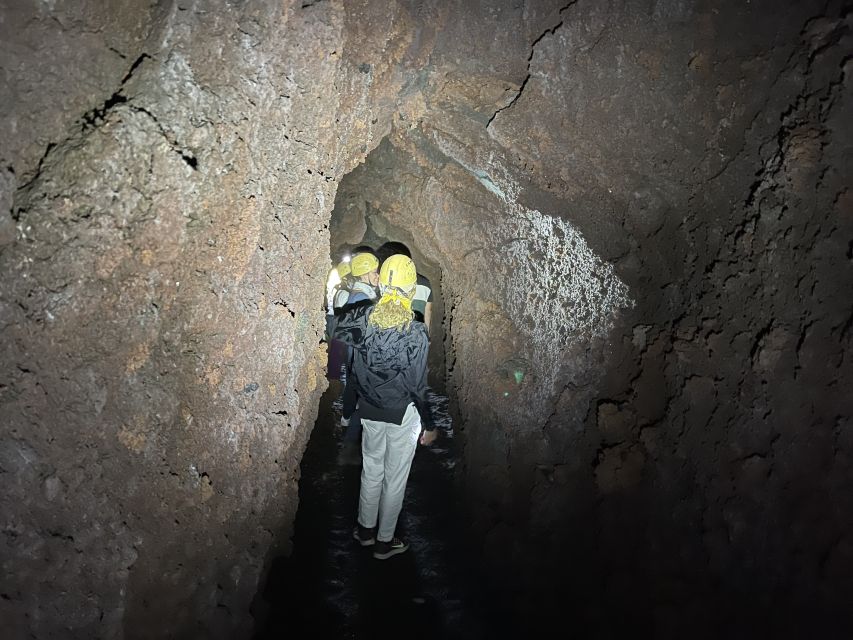
The most distinctive part of the outing is the visit inside a perfectly intact volcanic cone. Wearing the supplied protective helmet, you enter the chimney or vent where molten magma once rose and boiled.
This is where the excursion moves beyond scenery. A guide can point out the shape and function of the passage, then explain how an eruption uses underground channels to feed lava flows. The visit is short compared with the full walk, but it gives you a physical sense of the route magma took through the cone.
Claustrophobia is a serious consideration here. The activity is not suitable for people who are uncomfortable in enclosed spaces. The surface around the cone is also volcanic and uneven, so this is not a place for rushing or wandering away from the group.
A guide named Ciccio has led this route and is noted for explaining both the eruption process and the area’s volcanic history in detail. Guides can change, but the experience depends heavily on how clearly your guide connects each crater and fracture to the forces that made it.
A walk through Etna’s eruption record
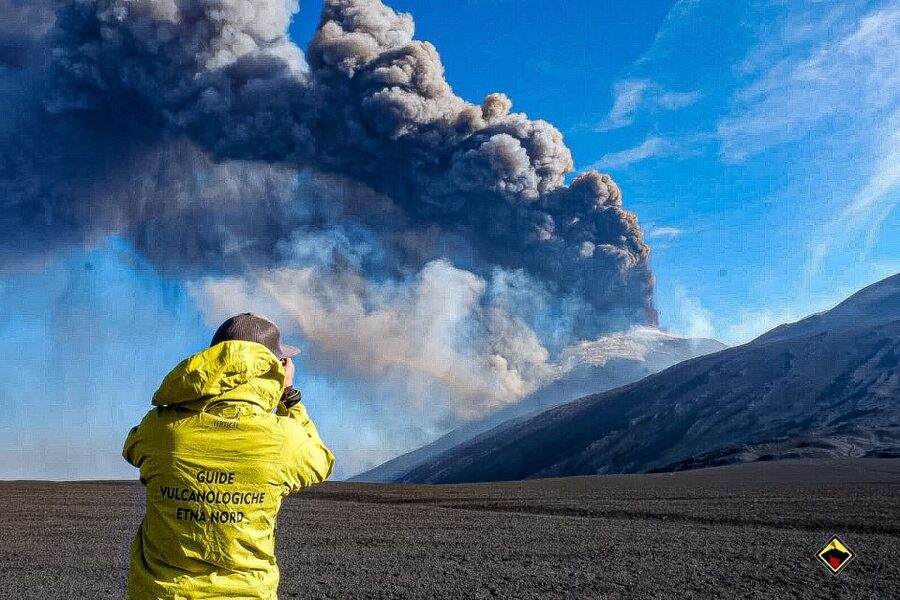
The remaining route covers roughly 6 kilometers to Piano Provenzana. Along the way, you pass craters created by several lateral eruptions, including activity from 1809, 1874, 1879, 1911, 1923, 1914 to 1924, 1974 to 1975, and 2002.
Those dates are not just a list. They show that Etna’s activity has repeatedly appeared on the sides of the mountain, not only at the summit. Each eruption left its own cones, flows, and broken ground. You can see how newer activity sits beside older volcanic forms.
The terrain changes as you descend. Expect ash, rough lava, crater rims, and open slopes rather than a marked city-style path. The walk is designed for moderately trained hikers. You do not need to be an expert mountaineer, but you should be comfortable walking for several hours on loose, uneven ground at altitude.
The description calls the total experience four hours, including the vehicle sections and the walking portions. The descent itself can feel long because the route contains several stops for explanations and volcanic features. Bring water and food, since lunch, bottled water, and snacks are not included.
How the views and geology work together
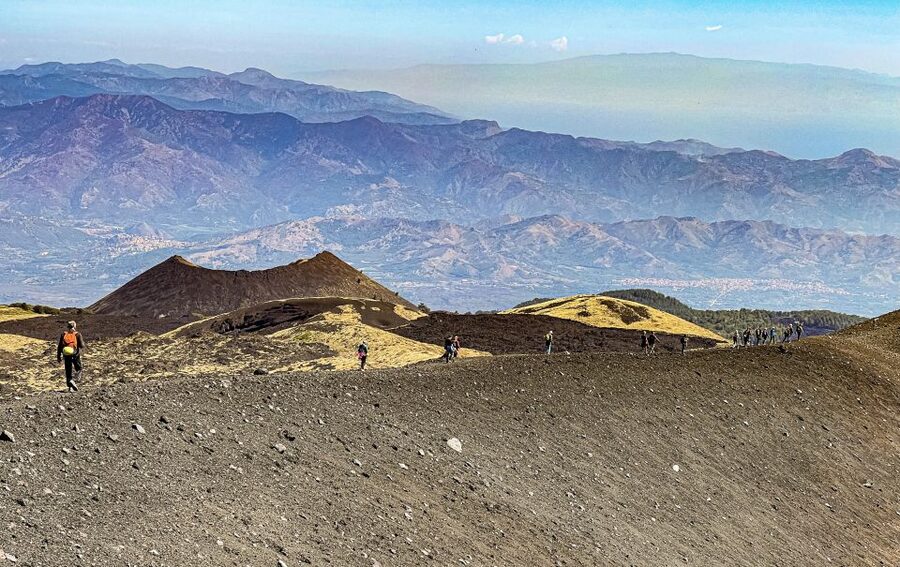
Etna gives you two kinds of reward here. The first is the broad view: Sicily below, Taormina in the distance, and possibly the Aeolian Islands when the air is clear. The second is close-up detail, such as fractures, lava-flow channels, ash deposits, and volcanic vents.
I prefer the combination to a trip focused only on a viewpoint. The large panorama shows where you are, while the smaller features explain what happened under your feet. The guide’s commentary is especially useful because black rock can look much the same to an untrained eye.
Weather controls how much of the panorama you receive. If clouds block the distant view, the geology remains the main attraction. Bring the right expectations: the volcanic features are dependable, but the views of Taormina and the islands are not.
What the $62.63 price really covers
The listed price of $62.63 per person is reasonable for a four-hour guided volcanic outing, especially because it includes an authorized volcanological guide, equipment, and accident insurance. Trekking poles, helmets, shoes, warm jackets, socks, and a backpack can also save you the trouble of renting or packing those items separately.
But the real price is higher. You must add €50 per person for the 4×4 transport, €3 for parking, and the cost of your own food and drinks. Transport from your accommodation is also excluded. For two people, the vehicle fee alone adds €100, so check the final cost before booking.
The value is strongest if you want a serious introduction to Etna’s geology and need equipment supplied. It is weaker if you only want a short summit photo or a simple scenic ride. This tour earns its price through the long route, the guide’s explanations, and access to features you would not sensibly visit alone.
The activity requires at least eight participants in total. If that minimum is not reached, the excursion may be cancelled. Bad weather can also lead to cancellation or postponement. Free cancellation is available up to 24 hours before departure, and you can reserve now and pay later.
Who should book this Etna trek
You should consider this outing if you:
- Enjoy walking on rough volcanic ground for several hours
- Want to understand eruptions, craters, fractures, and lava flows
- Prefer Etna’s quieter north side to a busier standard route
- Are comfortable with high altitude, exposed crater rims, and uneven descents
- Want a useful option when summit craters are closed
- Appreciate a guide who explains the science rather than simply pointing out views
You should choose another activity if you want a relaxed outing, have limited fitness, or dislike steep ash slopes. The route is also unsuitable for people with mobility impairments, serious heart or respiratory conditions, recent surgery, epilepsy, altitude sickness, or a strong fear of heights.
The operator lists the outing as unsuitable for people over 95 years old and people without hiking experience. That guidance is worth taking seriously. Tell the guide about your health before setting off, and do not hide a condition that could affect you at altitude.
What to pack for a safer, better day
Pack more food and water than you expect to need, since neither lunch nor bottled water is supplied. Long pants protect your legs from sun, wind, and loose ash. Sunglasses and sunscreen matter even when the air feels cold.
Bring a proper windbreaker and a rain jacket. Etna’s high slopes can feel cold, and weather conditions can change during the excursion. Comfortable clothing is essential, but this is not the place for casual shoes.
Use the trekking poles on descents, keep your helmet on inside the volcanic chimney, and follow the guide’s instructions around crater rims. Do not bring alcoholic drinks into the vehicle.
Should you book this Etna experience?
Book it if you want Etna as a living volcano, not just a high viewpoint. The combination of 4×4 access, crater rims, the 1947 eruption site, the north-side Rift, and the intact volcanic chimney gives you a strong four-hour introduction to the mountain’s working parts.
Skip it if you are looking for an easy outing or if the €50 vehicle fee makes the total cost uncomfortable. Also remember that distant views depend on weather and that summit access depends on volcanic safety rules. For fit hikers who want a quieter, more technical side of Etna, this is one of the better alternatives when the summit craters are closed.
FAQ
How long does the Etna north-side trek last?
The activity lasts about four hours. Check availability for the exact starting time.
Where does the excursion start?
Meet at Chiosco Bar Mareneve, beside the winter chairlift. It is the second of four buildings in the parking area.
Where does the excursion end?
The activity ends back at the meeting point at Chiosco Bar Mareneve.
Is transport from my accommodation included?
No. You must arrange your own transport to and from the meeting point.
How much does the 4×4 transport cost?
The 4×4 service costs €50 per person, paid on site. It covers the vehicle route from about 1,800 to 2,800 meters and the later transfer from about 2,800 to 2,500 meters.
What equipment is provided?
The activity includes trekking poles, protective helmets, trekking shoes, warm jackets, extra socks, and a backpack. Accident insurance and an authorized volcanological guide are also included.
What languages are available?
Guiding is available in English, French, and Italian.
Is the tour suitable for beginners?
The trek is intended for moderately trained hikers and is not suitable for people without experience or with a low level of fitness. The route includes high altitude, crater edges, volcanic ash, and uneven ground.
Can the tour be cancelled because of weather or volcanic conditions?
Yes. The route follows current safety rules and may be changed if volcanic risk or weather conditions require it. The activity may also be cancelled if at least eight participants do not sign up. Free cancellation is available up to 24 hours in advance.
Just added around Catania
- Mt Etna: Winter Trekking Tour with Optional Catania Transfer★ 4.7 · 13 reviews
- Wine tour with wine tasting★ 4.7 · 18 reviews
- Sicilian Soul: Winery Tour, Wine & Food Tasting in Catania★ 5.0 · 4 reviews
- Wine tasting in Catania Historic center★ 4.4 · 15 reviews
- Trekking at 3000 meters on Etna★ 3.8 · 7 reviews
- Catania: Underground and Street Food Walking Tour★ 4.7 · 56 reviews
- Private Tour from Catania to Etna Naxos and Taormina★ 4.5 · 7 reviews
- Catania AIRPORT transfer From / To Taormina★ 5.0 · 3 reviews
Mount Etna Tours, compared.
Mount Etna Morning or Sunset Day Trip with Tasting
Read our review →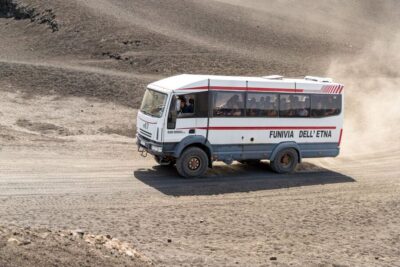
Guided Volcano Summit Hiking Tour with Cable Car
Read our review →
Sunset Jeep Tour of Mount Etna and Lava Flow Caves
Read our review →
Etna and Alcantara Gorges Full-Day Tour with Lunch
Read our review →
Mount Etna Trekking Trip off the Tourist Path
Read our review →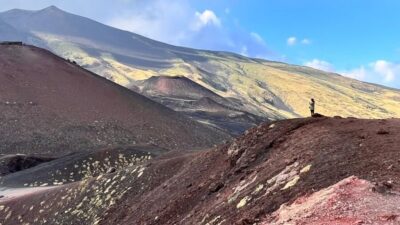
Browse the lists this tour appears in