
Reviewed · SYRACUSE ARCHAEOLOGICAL PARK TOURS
Syracuse: Neapolis Archaeological Park Small Group Tour
Syracuse’s Neapolis Archaeological Park packs Greek theaters, Roman ruins, stone quarries, and a famously strange cave into one hillside site. The Ear of Dionysius is the crowd-pleaser: a tall, curved grotto with striking echoes and a name tied to an old story about the tyrant Dionysius.
I like two things here. First, a guide gives the broken stones a human shape, explaining how Greek and Roman Syracuse worked rather than leaving you to guess at scattered ruins. Second, the tour moves at a useful pace, with time for photos and views across the bay. The main consideration is that the tour is offered in Italian, so confirm the language suits you before booking.
Key points to know
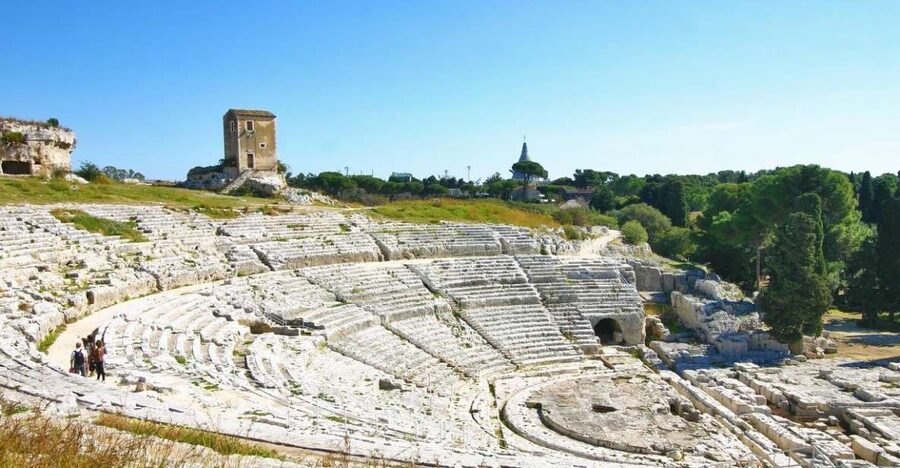
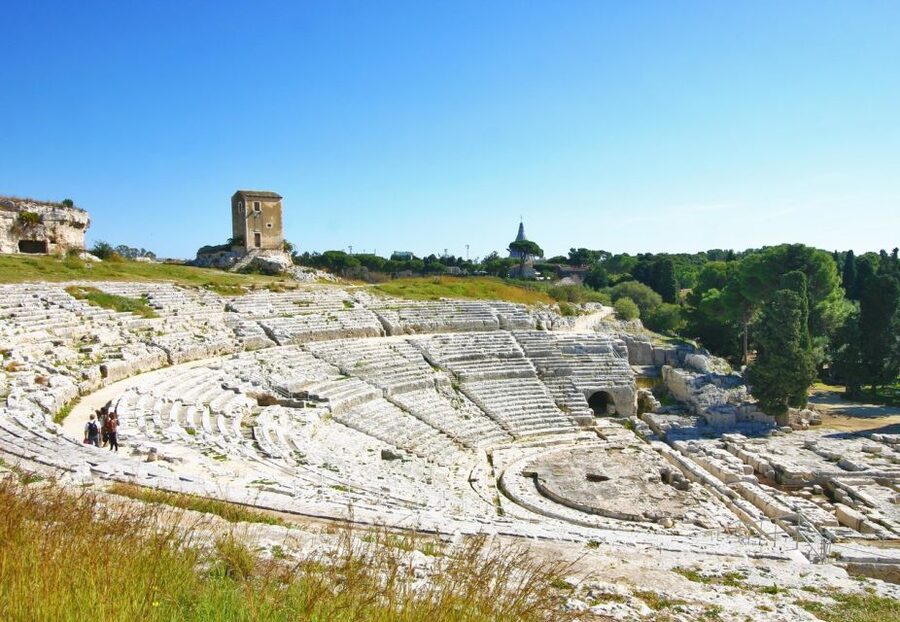
- The Greek Theater is the star: Cut into the rock of Temenite Hill, it combines impressive scale with broad views toward the bay.
- The Ear of Dionysius is a memorable stop: Its unusual form and echoing acoustics make it more than another ancient ruin.
- You see Greek and Roman sites together: The route includes the theater, quarry, Altar of Hieron II, and Roman amphitheater.
- The guide adds real value: Guides including Eva, Federica, Galina, and Anne-Marie have been praised for clear explanations and lively storytelling.
- The tour lasts about 90 minutes: That is long enough for the major monuments without turning into an all-day archaeology lesson.
- The price is modest for a guided visit: At about $26 per person, it is a sensible choice if you want context without paying for a full private excursion.
Why Neapolis makes sense with a guide
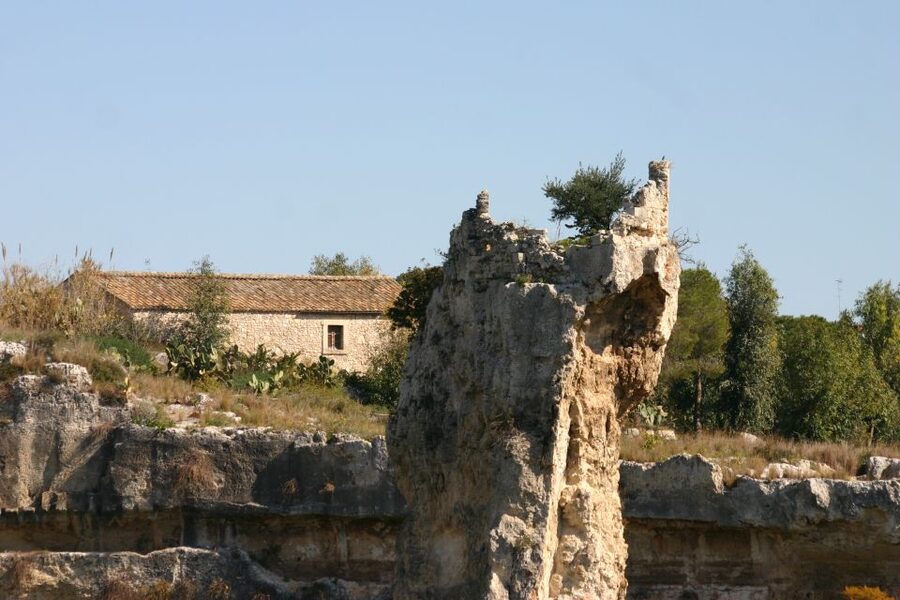
You can walk through the park on your own, but the site is easier to appreciate when someone explains what you are seeing. Ancient Syracuse is not one tidy monument with a single story. It is a spread of quarries, theaters, altars, and later Roman structures, each reflecting a different period.
I especially value a guide here because the remains are not always self-explanatory. A stone cut into a hillside may look like a natural feature until you learn how it was quarried. A broad open space may seem empty until you understand its former use. The tour connects those pieces.
The strongest part of the guiding is the balance. Eva is repeatedly praised for giving clear explanations without burying people in facts. Federica is noted for making Greek and Roman culture easy to follow, while Galina brought energy and enthusiasm to the subject. The best guides also answer questions as they go, which matters more here than memorizing a long list of dates.
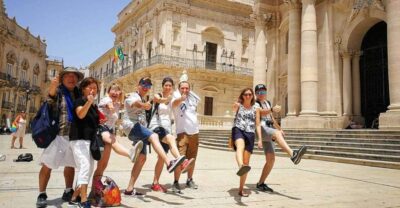
The group format can be a practical advantage. Groups have often been around ten people, small enough to hear the guide clearly and ask questions. Larger shared groups may use radio receivers. In rare cases, a very small group can receive explanations in two languages, so the pace may vary slightly.
More visits to the Neapolis park:
- Syracuse: Ortigia and Neapolis Guided Walking Tour
★ 4.7 · 205 reviews - Syracuse: Neapolis and Greek Theater guided tour
★ 4.5 · 160 reviews - Private tour Syracuse -Archaeological Park and Ortigia with lunch
★ 5.0 · 28 reviews
Starting at the Latomie del Paradiso
The visit begins near Largo Anfiteatro, at or close to the park entrance depending on the option you choose. Meeting details can vary, so read the booking instructions carefully and arrive with your passport or identification card.
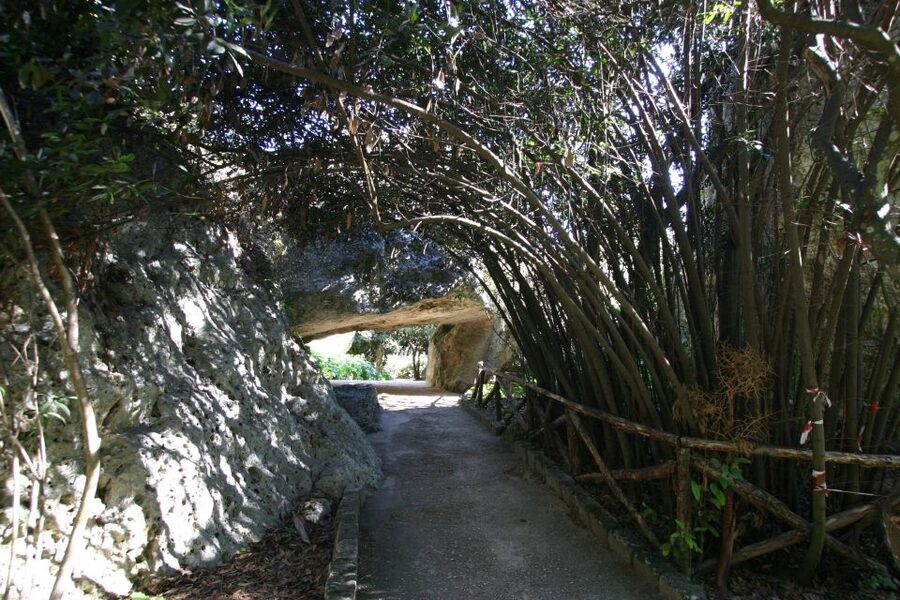
The first major area is the Latomie del Paradiso, an ancient stone quarry. These excavated walls are a good reminder that Syracuse was built partly from the rock beneath it. The quarry is not just a bare construction site. Local plants grow among the stone, softening the hard walls and giving the area a calmer feel than the name might suggest.
Your guide explains the archaeological role of the quarries and helps you understand their scale. The scheduled explanation here is about 15 minutes, enough to get the basic story without lingering too long at the first stop.
The park can be hot, particularly in summer. One practical tip comes directly from the route: an evening departure can be more comfortable in warm weather. The open areas offer little relief from the sun, so bring water and wear shoes suited to a walking tour.
The Grotta dei Cordari and the quarry walls
The Grotta dei Cordari follows with another 15-minute guided visit. The name refers to the traditional use of the space by rope makers, and the grotto gives you another look at how these quarries were adapted over time.
This stop is useful because it broadens the visit beyond the famous theater and cave. You see how the park is a working historical setting, not merely a collection of isolated monuments. The stone walls, enclosed spaces, and vegetation create a different mood from the wide theater terrace.
The route is accessible to wheelchair users, though the park contains a mix of open paths, carved spaces, and historic surfaces. If you need a particular route or have mobility concerns, confirm the practical details for your selected tour option before arrival.
Inside the Ear of Dionysius
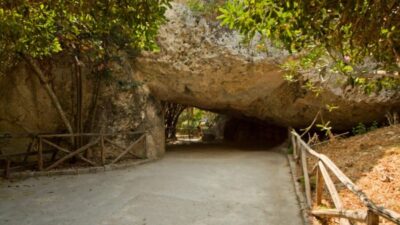
The Ear of Dionysius is the most theatrical stop on the walk. This tall grotto was carved into the quarry and is famous for its curved, ear-like form and strong acoustics. Inside, your guide points out how sound behaves in the space, making the visit more immediate than a standard explanation about masonry.
The name is connected with Dionysius, the ancient ruler of Syracuse, and the cave has long carried a dramatic reputation. You do not need to be an archaeology specialist to enjoy it. The shape, cool interior, and echoing sound make the point quickly.
The visit here lasts about 15 minutes. That is enough time to enter, listen, look up at the walls, and hear the story without creating a bottleneck. This is also one of the better places to stay close to the guide, since the acoustics can make voices behave in unexpected ways.
The Ear is memorable, but it is not the whole reason to book the tour. On its own, the grotto is a short encounter. Its value increases when your guide places it within the larger quarry system and explains how the surrounding stone was cut and used.
A few more Syracuse days worth weighing up
- Syracuse: Boat Tour with Captain Mirko, Snorkeling & Caves
★ 4.7 · 746 reviews - Siracusa: Ortigia Boat Tour with Marine Grotto
★ 4.7 · 617 reviews - Siracusa: Ortigia & Sea Caves Speedboat Tour with Swim Stop
★ 4.9 · 499 reviews - Syracuse: Pillirina, Ortigia, and Sea Caves Tour by Boat
★ 4.6 · 348 reviews
The Greek Theater and views over Syracuse
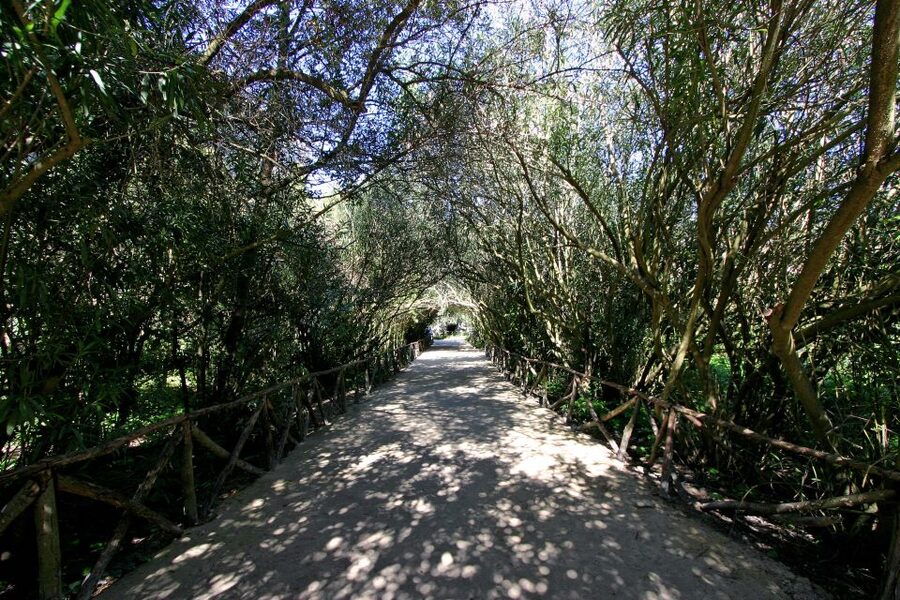
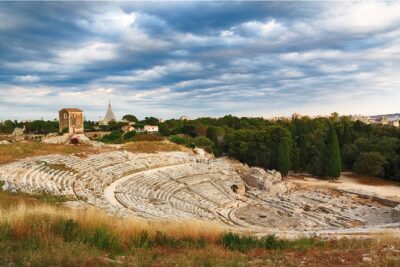
The Greek Theater receives the longest stop, about 30 minutes, and rightly so. It was cut directly into the rock of Temenite Hill, creating a sweeping semicircle of stone seating. From here, you get both an architectural lesson and a wide view toward the town’s bay.
This is the moment when the park’s setting becomes clear. The theater is not tucked away from the modern city. It sits above it, linking the ancient settlement with the Syracuse you see today. Your guide can help you read the seating, stage area, and hillside rather than treating the site as a photo backdrop.
The views are one of the tour’s quieter pleasures. Bring a camera, but do not rush through the stop. The route allows time for photos, and several guides have been praised for pacing the visit so people can look around instead of simply moving from point to point.
The theater is also where the guide’s storytelling matters most. A bare ruin can feel abstract. With a clear explanation, you begin to picture how performance, politics, and public life once met in this space. The tour does not require you to already know Greek history, which makes it suitable for first-time archaeology visitors and families with older children.
A short photo stop through the park
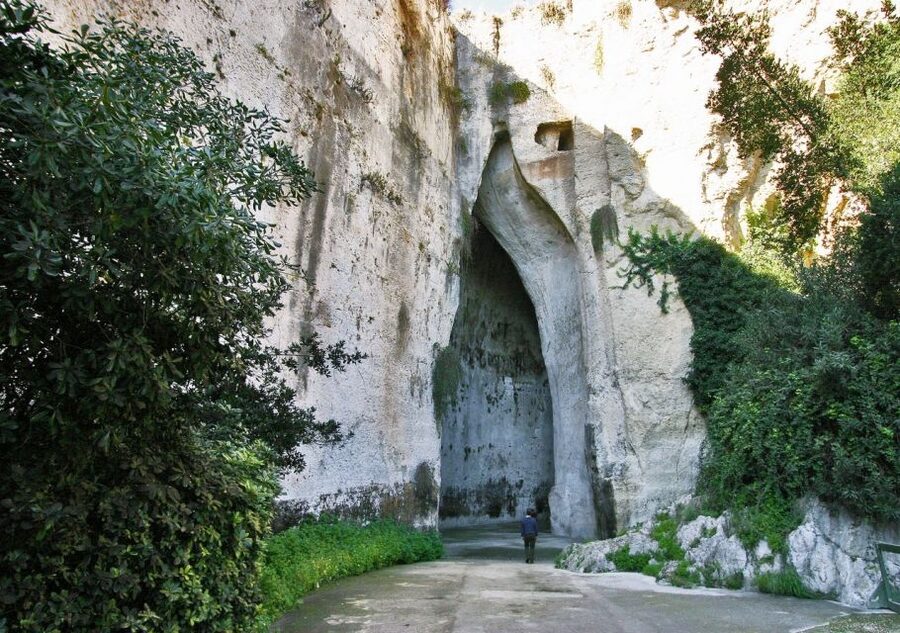
After the theater, the route includes a brief photo stop within Neapolis Archaeological Park. It is only about five minutes, but that pause helps you take in the site as a whole.
Modern sculptures appear around parts of the park, and one guide was praised for explaining their meaning alongside the ancient remains. That is a nice touch if you want to see Syracuse as a living cultural place rather than a sealed archaeological display.
The mix of ruins, plants, paths, and present-day art gives the park variety. It also means you should not expect every minute to feature a famous monument. Some of the pleasure comes from moving between the major stops and seeing how the site fits together.
The Altar of Hieron II
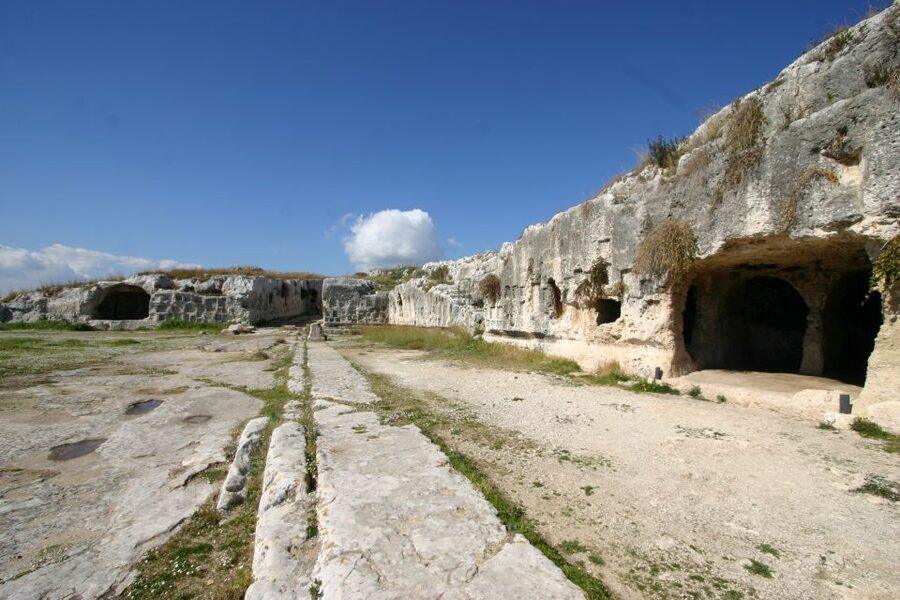
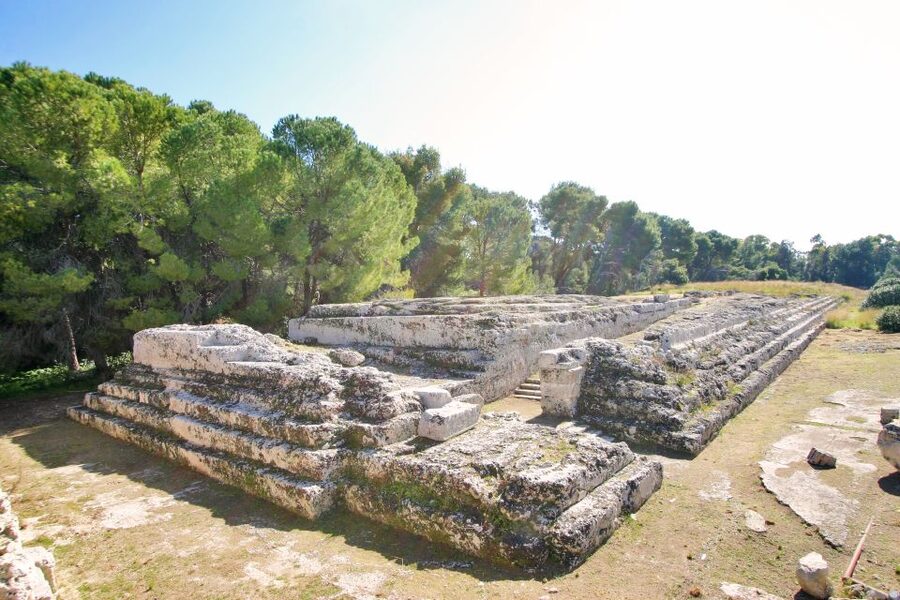
The Altar of Hieron II is covered in about ten minutes. The surviving remains are mainly large stone foundations, so this is a stop where explanation does most of the work.
Your guide helps you understand the size and purpose of the structure, as well as its place in Syracuse’s ancient religious and political life. You may not find the altar as immediately dramatic as the theater or Ear, but it adds an important layer to the visit.
This is a good example of why I would not recommend treating Neapolis as a quick walk with a camera. Without context, the altar can look like a series of giant blocks. With context, its scale becomes easier to grasp and the site feels less like a random field of ruins.
The Roman Amphitheater at the end
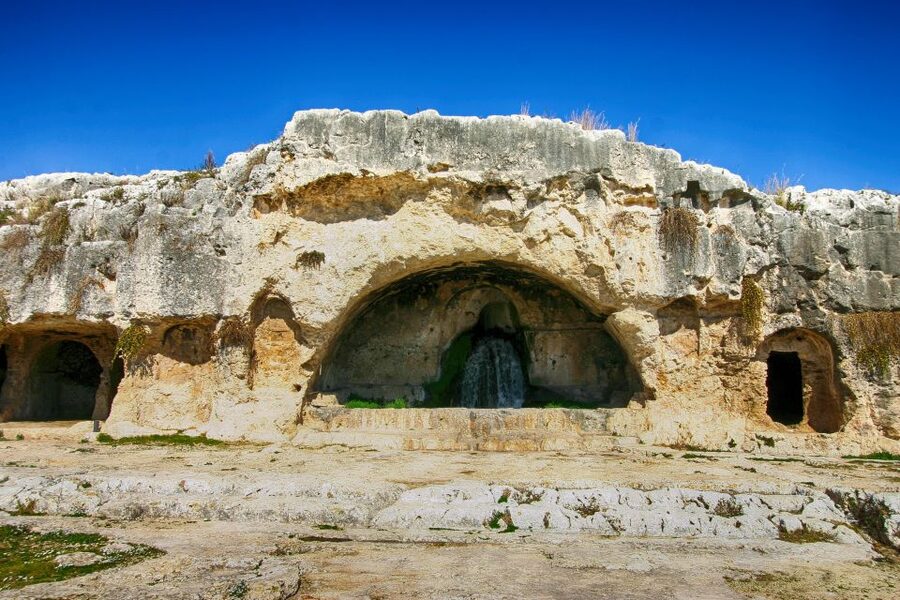
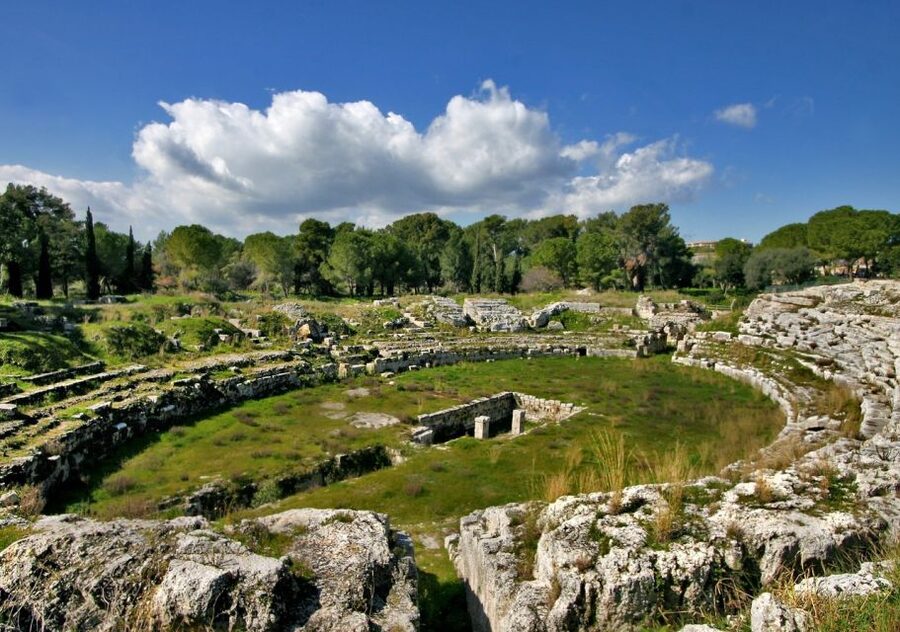
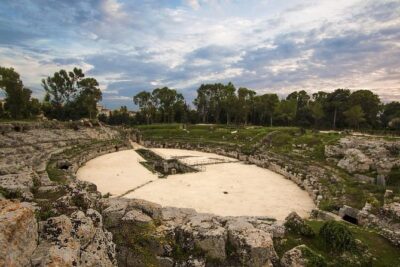
The final major stop is the Roman amphitheater, with about 15 minutes of guided explanation. It shifts the story from Greek Syracuse to the later Roman period, giving you a clear sense of how the city changed hands and adapted over time.
The amphitheater is a useful contrast with the Greek Theater. The two buildings served different purposes and belong to different cultural settings, even though both used large public spaces to gather crowds. Seeing them on the same walk makes the transition between Greek and Roman Syracuse easier to understand.
Access to this section can occasionally be affected by site opening arrangements. On one visit, a guide had to advocate for the group when staff closed the area earlier than expected. That is not a reason to avoid the tour, but it is a reminder that ancient sites sometimes operate on schedules that do not feel entirely predictable.
The walk finishes back near Largo Anfiteatro. You are not left at a distant part of the city, which is helpful if you plan to continue sightseeing in Syracuse afterward.
What $26 buys you
At around $26 per person, this is good value if you want more than a self-guided stroll. The entry ticket is included when you select the ticketed option, and the price covers the walking tour and licensed guide. Check the exact option before paying, since entry tickets are tied to the selection you make.
The value comes less from the length than from the interpretation. Ninety minutes is not a full archaeological seminar, but it is enough to cover the park’s main monuments in a logical order. You avoid spending time wondering which path leads to the theater or what a particular ruin once did.
A private option is available if you want the guide to adapt the pace and level of detail. A private visit worked well for one family with an eight-year-old because the guide could adjust the material and move at the child’s pace. The shared option costs less and can still feel personal when the group remains small.
For a budget-conscious visit, this is a stronger buy than paying for a longer tour filled with stops you do not care about. You see the park’s major highlights, hear the essential stories, and still have time afterward to explore Syracuse on your own.
Who will enjoy this tour most
I would choose this tour if you like ancient sites but do not want to prepare by reading a textbook first. It also suits you if you are visiting Syracuse for a short time and want the main archaeological sights organized into one efficient walk.
Families can do well here, especially with a guide who adjusts the storytelling. Teenagers may respond to the Ear of Dionysius, the theater, and the stories of Greek and Roman public life more readily than to a long museum visit.
History fans will appreciate the range of periods. You move from Greek quarrying and theater design to Roman public architecture, with the Altar of Hieron II adding another piece to the picture.
The tour may be less suitable if you want a slow, highly specialized archaeological study. The fixed 90-minute format keeps things moving. One person found the pace a little slow and felt the tour could have been shorter, so your ideal experience depends on how much explanation you want.
It is also important to confirm the language. The activity information specifies Italian, although some past visits involved bilingual explanations. Do not assume English is guaranteed.
Practical details before you go
Wear comfortable shoes and bring water. You will be walking through quarries, theaters, and open archaeological grounds, and the heat can be intense in summer.
Plan for the full 90 minutes even if the route itself looks compact. The guide stops at each major site, allows time for photos, and answers questions. If you are visiting in the warmer months, an evening start may make the walk more pleasant.
The tour is wheelchair accessible, but the ancient setting still contains uneven or historic surfaces. If access is especially important for you, ask the provider about the route associated with your booking option.
Free cancellation is available up to 24 hours before the start time, and you can reserve now and pay later. Those terms are useful if your Syracuse plans may shift, but check the conditions shown for your selected date.
Should you book the Neapolis tour?
I would book it if you want the park’s major monuments explained clearly without spending half a day on site. The combination of the Greek Theater, Ear of Dionysius, quarries, altar, and Roman amphitheater gives you a solid introduction to Syracuse’s ancient past.
The biggest reason to go with a guide is simple: the park makes far more sense when someone explains what you are looking at. Eva, Federica, Galina, and Anne-Marie are among the guides associated with especially strong visits, and the small-group format usually keeps the experience easy to follow.
Skip it only if you prefer exploring ruins completely alone, need a language other than Italian, or want a much longer specialist tour. For most first-time visitors, the modest price and focused route make this a smart way to meet Neapolis Archaeological Park.
FAQ
How long does the Neapolis Archaeological Park tour last?
The tour lasts about 1.5 hours, or 90 minutes.
What monuments are included?
The route includes the Latomie del Paradiso, Grotta dei Cordari, Ear of Dionysius, Greek Theater, Altar of Hieron II, and Syracuse Roman Amphitheater.
Is the entrance ticket included?
Entry tickets are included when you select the option that includes them. Check the exact booking option before paying.
Is this a shared or private tour?
You can choose between a shared group tour and a private tour.
What language is the tour offered in?
The stated tour language is Italian. In rare cases involving a very small shared group, the explanation may be given in two languages.
Where does the tour meet?
The meeting point can vary by booking option. The listed starting and ending location is Largo Anfiteatro, 2.
Is the tour wheelchair accessible?
Yes, the activity is described as wheelchair accessible.
Can I cancel the booking?
Yes. You can cancel up to 24 hours in advance for a full refund. A reserve-now, pay-later option is also available.
Just added around Syracuse
- Etna and Taormina tour from Syracuse with private driver★ 4.5 · 9 reviews
- Vendicari – Sicily’s best coast nature reserve ( Birdwatching & Archeology )★ 5.0 · 8 reviews
- Tour of Montalbano★ 4.5 · 7 reviews
- Etna tour from Syracuse with private driver★ 5.0 · 4 reviews
- Noto, Portopalo and Marzamemi tour from Syracuse with private driver★ 4.5 · 10 reviews
- Syracuse Private Shore Excursion: Archaeological Park and Ortigia★ 5.0 · 5 reviews
- Siracusa Walking Tour with Audio and Written Guide by a Local★ 5.0 · 59 reviews
- Syracuse Scavenger Hunt & Highlights Self Guided Audio Tour★ 4.5 · 4 reviews
Syracuse Archaeological Park Tours, compared.
Ancient Syracuse: private guided tour of the Neapolis archaeological park
Read our review →
Group guided tour of the archaeological park of Neapolis
Read our review →
Private tour Syracuse -Archaeological Park and Ortigia with lunch
Read our review →Browse the lists this tour appears in