
Reviewed · WALKING TOURS
Syracuse: Highlights of Ortigia Guided Walking Tour
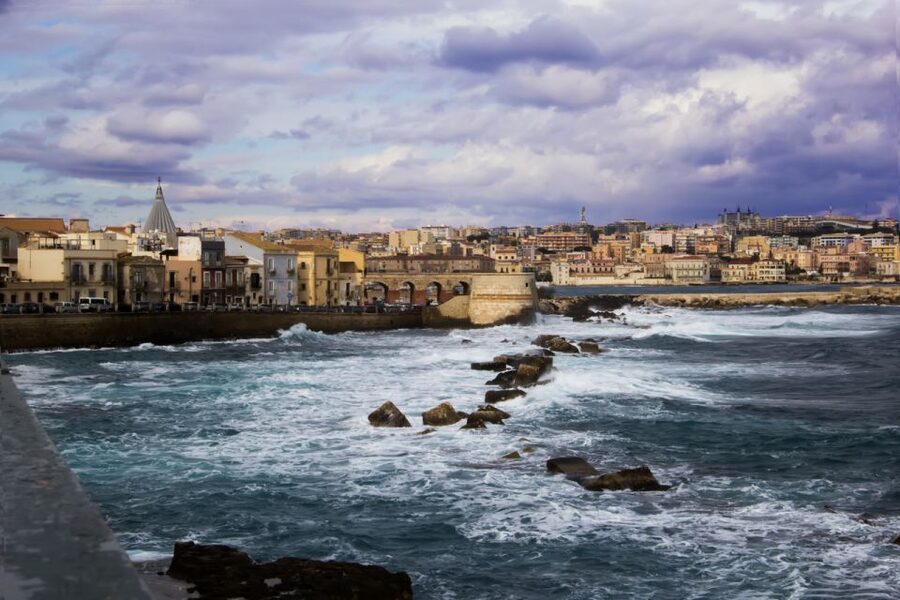
Ortigia packs Greek ruins, Baroque stonework, ancient myths, and sea views into a small island you can cross on foot. This two-hour walk begins at the Temple of Apollo and ends at the freshwater Arethusa Spring, giving you a useful first look at Syracuse’s historic core.
I like the route for two reasons: it links the main sights in a sensible order, and the guides often add local color beyond dates and names. Michael, Giuseppe, Letizia, Vincenzo, and Eva have all been singled out for friendly, clear storytelling. The main catch is that the tour may be bilingual, so explanations can take longer, and the Cathedral ticket costs extra.
Key points at a glance
- Greek beginnings: Start beside the Temple of Apollo, described as the oldest Greek temple in the Western world.
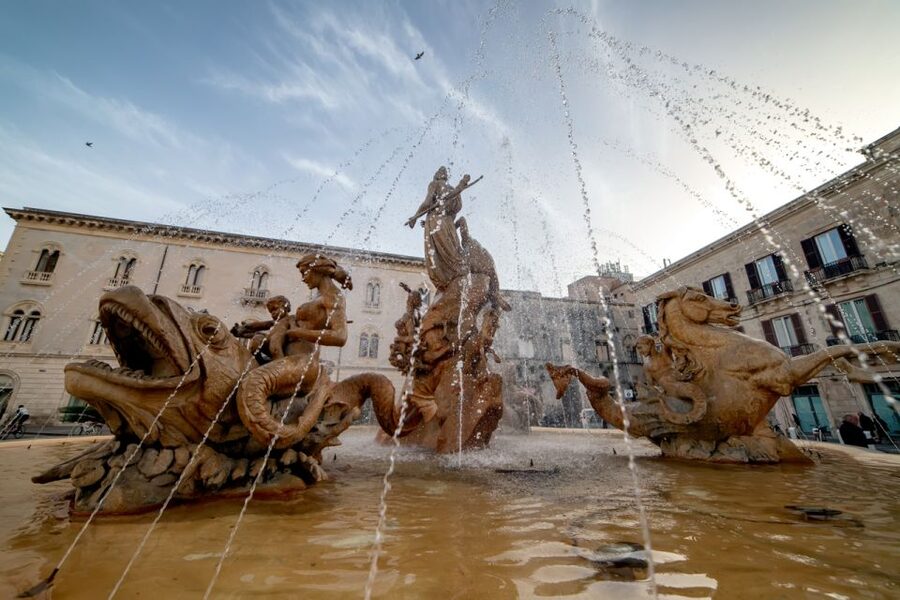
- Ortigia’s central square: Spend time in Piazza Archimede, with its ornate Fountain of Diana and its connection to the Arethusa myth.
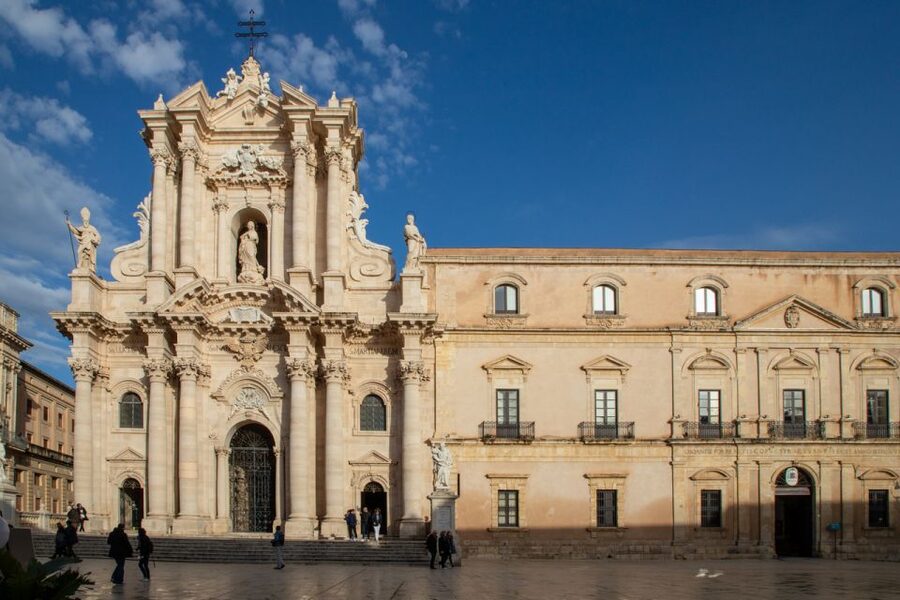
- Baroque Piazza Duomo: See Syracuse’s grandest square and the Cathedral’s striking marble exterior and interior.
- Myth beside the sea: Finish at Arethusa Spring, a freshwater source close to the coast.
- Strong guide element: Past guides including Michael, Giuseppe, Letizia, and Vincenzo have been praised for history, architecture, and local lore.
- A few practical limits: Cathedral admission is not included, headsets may cost €1, and simultaneous English and Italian guiding can slow the pace.
Why this short Ortigia walk works well
Syracuse can feel like several cities layered on top of one another. Greek settlers from Corinth established the city, later generations altered its buildings, and the island of Ortigia now mixes ancient fragments with grand churches and narrow streets. A guide helps you connect those pieces instead of seeing them as unrelated photo stops.
This tour is especially useful early in your stay. You get the basic shape of Ortigia, learn which places deserve a second look, and finish close to the waterfront. At $29 per person, the price is reasonable if your main goal is orientation and historical context rather than a long, highly specialized visit.
You should also keep your expectations in check. Two hours is enough for the headline sights, but not enough for a full archaeological tour of Syracuse or a detailed visit inside every monument. The Cathedral admission is extra, and opening hours or holidays can change the route.
More Walking Tours in Syracuse
- Syracuse: Street Food Walking Tour in Ortigia with Tastings
★ 4.9 · 293 reviews - Syracuse: Ortigia and Neapolis Guided Walking Tour
★ 4.7 · 205 reviews - Syracuse: Ortigia Private Walking Tour
★ 4.8 · 181 reviews
Meeting the guide at the Temple of Apollo
The meeting point is under the pomegranate tree in front of the Temple of Apollo, at the roundabout where Corso Matteotti begins. Look for a guide wearing a badge, and arrive 10 minutes early. That small cushion matters because the group sets off on foot, and finding the correct corner can take a few minutes in a busy central area.
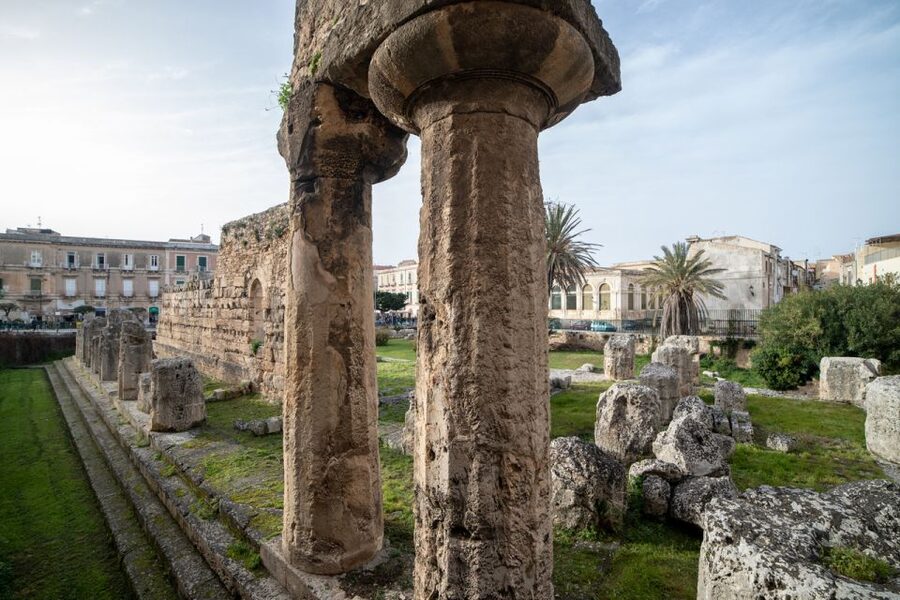
The temple is a strong starting point. Its weathered columns and stone remains make the age of Syracuse clear before the tour moves into later periods. The site is presented as the oldest Greek temple in the Western world, giving you an immediate sense of how far back the city’s story reaches.
The guide’s explanation is the important part here. Ruins like these can look spare if you do not know what you are seeing. A good introduction helps you picture the temple as part of an active Greek city rather than as isolated stones beside a modern road.
You will spend about 30 minutes at this first stop. The tour is on foot, so wear shoes that are comfortable on stone streets and be ready to remain outside for portions of the explanation.
Piazza Archimede and the Fountain of Diana
From the temple, the group continues toward Piazza Archimede. This is a natural transition from ancient Syracuse to the island’s later urban life, with the walking route itself giving you a feel for Ortigia’s compact center.
The square is known for the Fountain of Diana, an elaborate centerpiece tied to the myth of Arethusa. The fountain shows the Greek goddess Artemis, also known as Diana, at the moment she transforms the nymph Arethusa into a spring.
That story gives the monument more meaning than its decorative marble and figures alone. The tour uses the myth as a thread that will return at the final stop, so pay attention here. The spring at the end is not just another fountain. It is the place connected to the story you first meet in the square.
The scheduled explanation here lasts about 20 minutes. That is enough for the guide to explain the fountain and its myth, but you may not get a long pause for independent photographs if the group is moving on promptly.
Piazza Duomo, Syracuse’s grandest stage
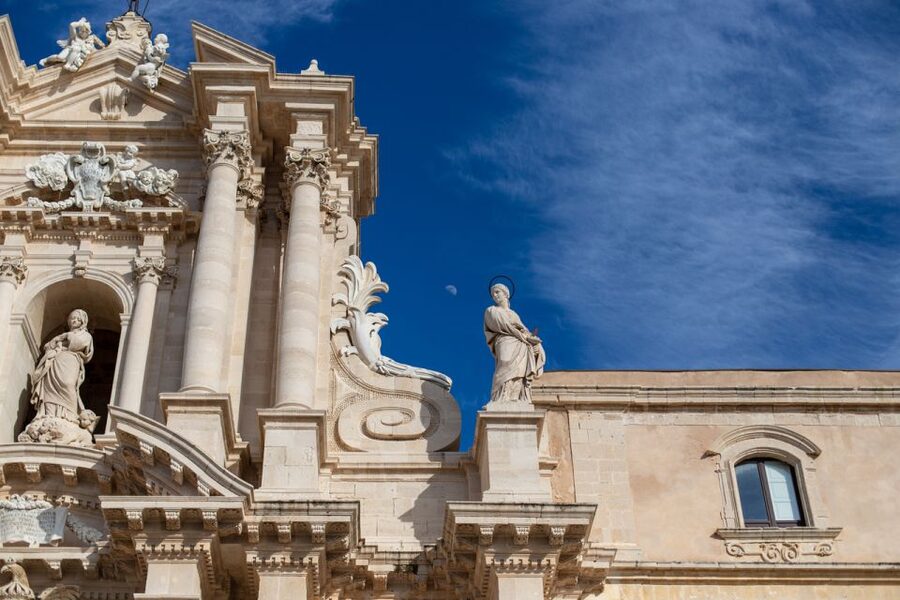
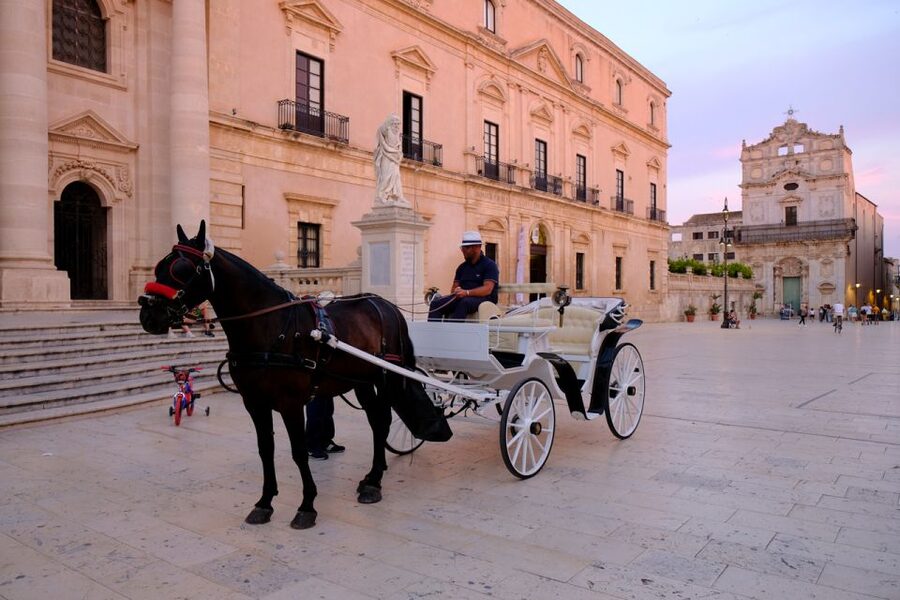
Piazza Duomo is the visual high point of the walk. The square is widely regarded as one of Italy’s most beautiful, and the pale stonework gives it an unusually unified look. This is where the tour slows down for architecture, history, and the Cathedral.
The square also carries the story of Syracuse’s Greek founders, who settled here after arriving from Corinth. That detail helps you understand why Piazza Duomo is more than a pretty Baroque setting. It occupies an important place in the city’s earliest development, even though the buildings you see today come from later periods.
The Cathedral is the main architectural prize. Its marble work and imposing form deserve time, and the building’s long history is easier to grasp with a guide pointing out the changes in its structure. The tour includes a visit to the majestic church, but the admission ticket is not included in the $29 price.
You should confirm the exact entry arrangement with the guide on the day. The practical information says tickets must be paid on site, and monument access can change with holidays and opening hours. Dress modestly for the church. A certain dress code is required for places of worship, so shoulders and knees should be covered.
The planned Cathedral and Piazza Duomo section lasts about 45 minutes. That is a useful amount of time for an introduction, though it is not a substitute for a full independent church visit. If you care strongly about the interior, plan to ask how much time you will have inside and consider returning later if the schedule allows.
Booked from the same base, and a completely different kind of day:
- Syracuse: Boat Tour with Captain Mirko, Snorkeling & Caves
★ 4.7 · 746 reviews - Siracusa: Ortigia Boat Tour with Marine Grotto
★ 4.7 · 617 reviews - Siracusa: Ortigia & Sea Caves Speedboat Tour with Swim Stop
★ 4.9 · 499 reviews - Syracuse: Neapolis Archaeological Park Small Group Tour
★ 4.7 · 350 reviews
Arethusa Spring and the myth of Alpheus
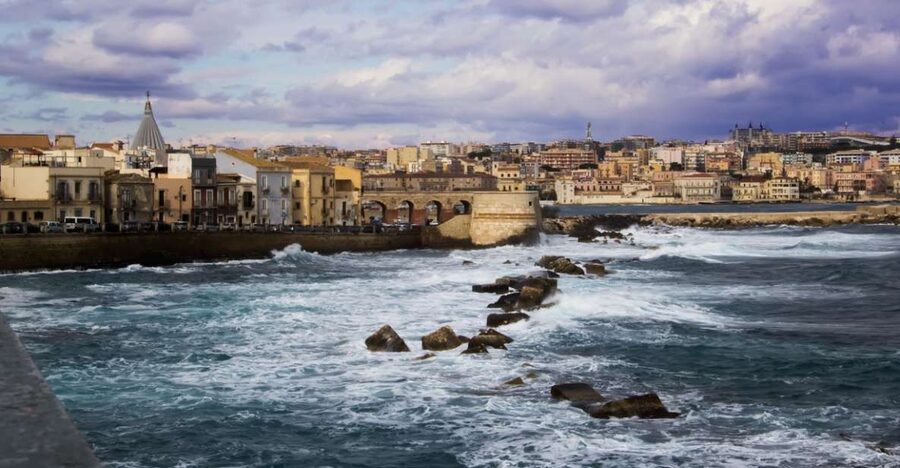
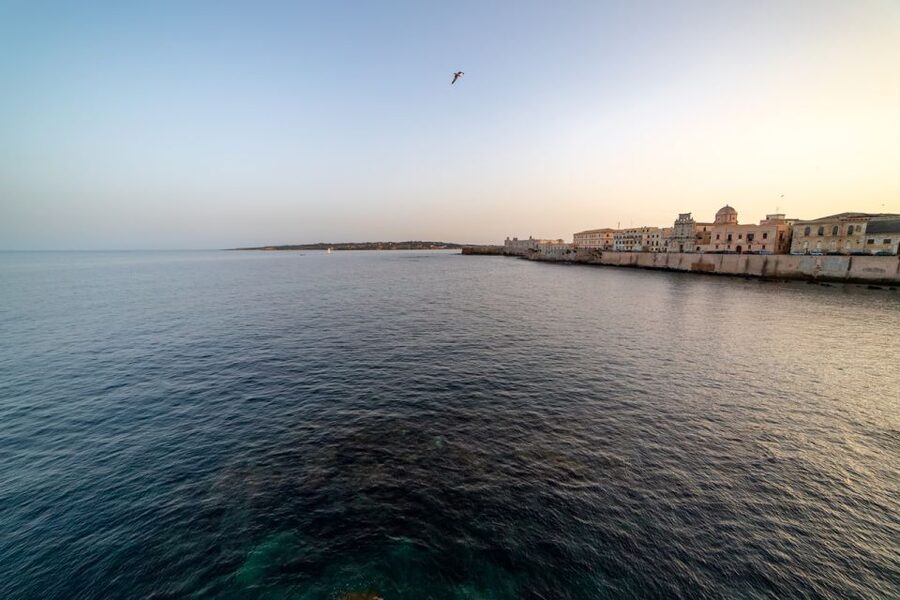
The tour ends at Arethusa Spring, only a few meters from the sea. Its freshwater source is one of Ortigia’s most unusual natural features, and its position near salt water makes the stop memorable even before the mythology enters the picture.
The spring is linked to the love story of Arethusa and Alpheus. In the myth, Arethusa becomes a fountain, and the story connects her to Alpheus across the water. The Fountain of Diana earlier in the walk shows the moment of transformation, while this final stop brings the tale to its setting.
I like this ending because it joins nature, legend, and place. You are not simply looking at an old monument. You are standing beside a living freshwater source with the sea nearby, in a spot that has carried meaning for centuries.
The planned explanation lasts around 40 minutes, although the full schedule adds up to more than the advertised two-hour duration when each stop is counted separately. Treat the times as approximate guide segments rather than a strict promise for every minute. The overall experience is marketed as two hours, and pace can change with group size, questions, access, and opening conditions.
What the guides add to the walk
The guide is the biggest variable in this experience, and also its main strength. You may be led in English or Italian. Past guide assignments have included Giuseppe, Michael, Letizia, Vincenzo, Eva, and Margaret.
The strongest guide style here is conversational and local. Michael, who has lived in Syracuse for 22 years, has been praised for making the tour good value. Vincenzo has been noted for explaining how Ortigia developed rather than simply listing dates. Letizia has been praised for covering major sights while also pointing out less obvious corners.
You may also hear local stories alongside the formal history. One guide added an anecdote about heirs of Dolce & Gabbana owning an apartment near the Duomo. That kind of detail can make the city feel lived-in, though the amount of local gossip and informal storytelling depends on the individual guide.
The tour has a rating of 4.2 from 136 ratings, which fits the overall picture: strong guides and a worthwhile route, with some practical issues around timing and language. Several people have praised the guides for being friendly, patient, and able to answer questions carefully.
English, Italian, headsets, and summer heat
The tour is offered in English and Italian. It may be conducted in both languages at the same time, even if you reserve an English tour. This arrangement can work well for mixed groups, but every explanation may need to be repeated, making the walk feel slower.
One participant found the bilingual format frustrating because it reduced the amount of time available for sightseeing. If you want a brisk, English-only experience, ask about the language arrangement before booking if that option is available.
Headset quality has also been a minor concern. You may use your own headset, or buy a disposable one on site for €1. In a crowded square, the equipment can make the difference between catching every detail and missing half the explanation.
Heat is another real consideration. Syracuse can be extremely hot in summer. A guide named Michael was praised for keeping the group in the shade during a 96-degree heatwave, and another guide was credited with doing her best in difficult heat. Still, bring water, wear a hat, and consider an evening departure when available. One evening walk was especially attractive because the softer light made the city look better.
What $29 gets you
At $29, you are paying mainly for a guide who can make sense of Ortigia’s sights. The walking itself costs nothing, and the Cathedral admission is separate, so the value depends on how much you want interpretation.
I think the price works well for first-time visitors, cruise passengers with limited time, and anyone who prefers a clear route through the historic center. You see the major landmarks without arranging several separate visits, and you get the myths and local background that are easy to miss when walking alone.
The value is weaker if you already know Syracuse well or want lengthy time inside the Cathedral. One participant found the actual walk shorter than expected, around an hour and a half, with only 15 minutes available in the Cathedral. That experience may not represent every departure, but it is a useful reminder to treat the advertised duration as approximate.
Food and drinks are not included. That is no hardship in Ortigia, where you can stop afterward, but you should not expect a tasting element or a café break during the walk.
Who should book this Ortigia tour?
I would choose this tour if you want a compact introduction to Syracuse’s island center, especially at the start of a visit. It suits adults, older children who can manage a two-hour walk, and anyone who prefers history explained on site rather than read from a guidebook.
It is also a good choice if Greek mythology interests you. The Arethusa story links the Fountain of Diana and the spring, giving the route a clear theme.
You may want another option if you dislike bilingual tours, need guaranteed access to every monument, or prefer to explore at your own pace. The walk has several stops, and the guide may need to divide time between two languages or adjust the route for opening hours.
Reserve at least 24 hours before your planned start if you want the option of a full refund. You can also reserve now and pay later, which helps if your Syracuse plans are still shifting.
My verdict on the Syracuse Ortigia walk
Book this tour if you want good historical orientation for a modest price and you are willing to accept some variation in pace, language, and monument access. The route covers the essential sights: Apollo’s temple, Piazza Archimede, the Fountain of Diana, Piazza Duomo, the Cathedral, and Arethusa Spring.
The best guides add real value by explaining the layers of Syracuse and sharing local stories. The main weaknesses are the extra Cathedral ticket, possible bilingual repetition, and the chance that the walk feels shorter than expected.
For a first visit, I would take it early in your stay, then return to Piazza Duomo or Arethusa Spring on your own. That gives you both the guide’s context and the freedom to linger.
FAQ
How long is the Ortigia walking tour?
The advertised duration is two hours. Individual stop times are approximate and may change because of group pace, questions, holidays, or monument opening hours.
What sights are included?
The route includes the Temple of Apollo, Piazza Archimede, the Fountain of Diana, Piazza Duomo, Syracuse Cathedral, and Arethusa Spring.
Is Cathedral admission included?
No. Entry to Syracuse Cathedral is not included in the tour price. Tickets must be paid for on site.
Where does the tour meet?
Meet under the pomegranate tree in front of the Temple of Apollo, at the roundabout where Corso Matteotti starts. Look for the guide wearing a badge.
What languages are available?
The tour is available in English and Italian. English and Italian may sometimes be conducted together during the same departure.
Do I need to arrive early?
Yes. Arrive 10 minutes before the scheduled start so the group can leave on time.
Is there a dress code?
Yes. You need to respect a dress code to enter places of worship, including the Cathedral. Dress modestly and cover your shoulders and knees.
Can I cancel or pay later?
You can cancel up to 24 hours in advance for a full refund. The reserve-now, pay-later option lets you hold a place without paying immediately.
Just added around Syracuse
- Etna and Taormina tour from Syracuse with private driver★ 4.5 · 9 reviews
- Vendicari – Sicily’s best coast nature reserve ( Birdwatching & Archeology )★ 5.0 · 8 reviews
- Tour of Montalbano★ 4.5 · 7 reviews
- Etna tour from Syracuse with private driver★ 5.0 · 4 reviews
- Noto, Portopalo and Marzamemi tour from Syracuse with private driver★ 4.5 · 10 reviews
- Siracusa Walking Tour with Audio and Written Guide by a Local★ 5.0 · 59 reviews
- Syracuse Private Shore Excursion: Archaeological Park and Ortigia★ 5.0 · 5 reviews
- Syracuse Scavenger Hunt & Highlights Self Guided Audio Tour★ 4.5 · 4 reviews
Walking Tours, compared.

Palermo Original Street Food Walking Tour by Streaty
Read our review →
Palermo No Mafia walking tour: discover the Anti-mafia culture in Sicily
Read our review →
Street Food Walking Tour with Local Guide & Tasting
Read our review →Browse the lists this tour appears in