
Reviewed · SYRACUSE ARCHAEOLOGICAL PARK TOURS
Syracuse: Ortigia and Neapolis Guided Walking Tour
Syracuse makes its ancient past unusually easy to read. In one private tour, you move from the Greek Theater and Roman Amphitheater at Neapolis to Ortigia’s Cathedral, built around the columns of the Temple of Athena. The city’s Greek, Roman, Arab, and Spanish chapters appear in the stone beneath your feet.
I like the private group format, which gives you room to ask questions and lets the guide adjust the pace. I also like the strong guides, including Giuseppe, Anna, Marcelo, Laura, and Rosanna, who bring archaeology, legends, and local history to life. The main drawback is cost: $317.20 for up to five people is fair for a private guide, but monument tickets and any taxi between areas are extra.
Key points to know before you book
- Two major Syracuse areas in one tour: You visit Neapolis Archaeological Park and the historic island of Ortigia.
- The Cathedral contains a Greek temple: The Cathedral of Syracuse incorporates the ancient Temple of Athena, making its walls a lesson in changing faiths and architecture.
- Two ancient theaters are part of the route: You see the Greek Theater and Roman Amphitheater, along with the Paradise Latomia and Ear of Dionysius.
- A private guide makes questions easy: The small-group setting suits families, couples, and anyone who wants more than a quick list of dates.
- The guide can work across six languages: Tours are offered in English, French, Italian, Russian, Spanish, and German.
- Plan for sun and uneven walking: Wear comfortable shoes, carry water, and bring a hat.
Why this Syracuse tour works so well
Syracuse is not a place I would rush through with a single photo stop. The city was once a major Greek power in the Mediterranean, and its remains are spread across two very different settings.
Neapolis is an open archaeological area with large monuments and dramatic stone quarries. Ortigia is a compact island of lanes, churches, squares, and sea views. Visiting both gives you a much clearer picture of Syracuse than seeing either one alone.
The tour lasts three hours and is designed for a private group of up to five people. That matters here. At the Greek Theater, you may want to ask about performances, construction, or the way the theater uses the hillside. In Ortigia, you may want to stop and compare Greek columns with later church architecture. A private guide can respond to those interests instead of following a fixed script for a large crowd.
The strongest part of this outing is the guide service. Giuseppe is especially good at interactive storytelling, legends, and keeping teenagers involved. Anna is praised for careful explanations of local history, architecture, and art. Marcelo has a particular interest in archaeology and has sometimes extended the tour well beyond the scheduled three hours. Your guide will vary, but the repeated pattern is clear: this is a tour built around explanation, not just transport between monuments.
More Walking Tours in Syracuse
- Syracuse: Street Food Walking Tour in Ortigia with Tastings
★ 4.9 · 293 reviews - Syracuse: Ortigia Private Walking Tour
★ 4.8 · 181 reviews - Syracuse: Ortigia Classic Walking Tour
★ 4.7 · 167 reviews
Starting at Neapolis Archaeological Park
The published meeting point is the ticket office at Biglietteria Parco Archeologico Neapolis on Via Luigi Bernabò Brea. Your guide meets you there with a sign bearing the local partner’s name. The tour may also show a second starting option near the Temple of Apollo, so check the exact meeting instructions when you reserve.
Starting at Neapolis makes practical sense because the park needs context. Its monuments are large, scattered, and easy to misread if you are looking only at stones. A guide can show you what belongs to the Greek period, what came later, and how the site was shaped by quarrying and reuse.
The archaeological park is also the most physically demanding part of the route. You will be outside, walking between major sites, and likely spending time in open sun. Comfortable shoes, a hat, and water are not minor suggestions here. The tour is wheelchair accessible, though the practical ease of movement can depend on the conditions at each monument.
The Greek Theater and Ionian Sea views
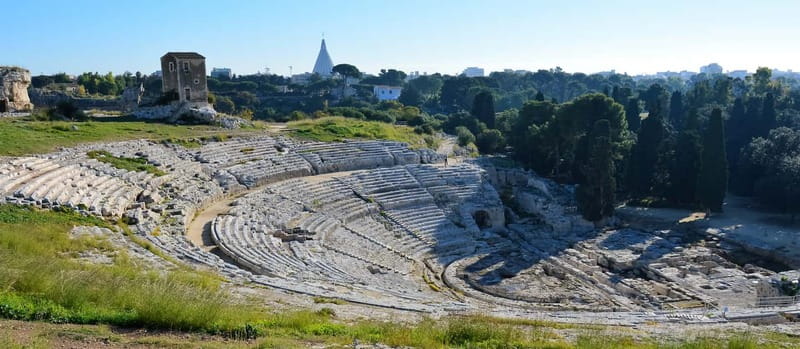
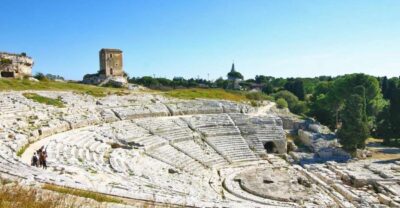
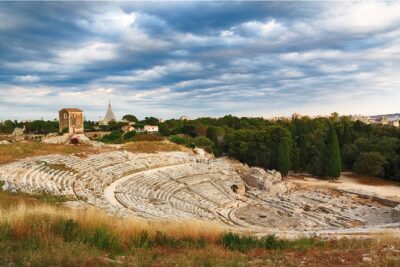
The Greek Theater is one of the main reasons to visit Neapolis. Its broad stone seating is cut into the hillside, and from the upper areas you get views toward the Ionian Sea. The setting explains why this was more than a pile of ancient masonry: the slope, open air, and wide view help you understand how the theater occupied the natural shape of the city.
Your guide can add the human side of the monument, explaining Greek performance traditions and the religious setting tied to ancient theater. This is where a private tour earns its keep. You can ask how the theater functioned, what has changed, and how much of what you see belongs to the original period.
The height and open setting also mean sun exposure. If you are visiting in warm weather, the theater can feel tiring before the three hours are over. Families should bring water for children, and older walkers may appreciate telling the guide early that they prefer a slower pace.
The Roman Amphitheater
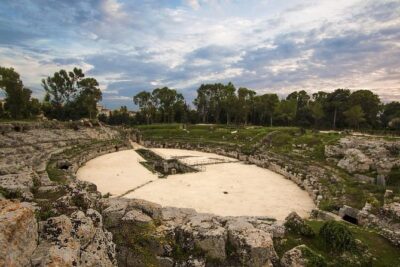
The Roman Amphitheater gives the park a useful contrast. The Greek Theater helps you picture performance and civic life in the Greek city. The Roman monument points to a later phase, when Syracuse was part of the Roman world and public spectacles had a different character.
The remains are substantial enough to make the shape of the arena clear, but you should not expect a fully restored building. The guide’s explanation helps you read the surviving structure and place it within the city’s long sequence of Greek and Roman control.
Seeing both theaters in one visit is valuable because it prevents Syracuse from becoming a single-period stop. You are not just looking at one famous monument. You are watching the city change hands and adapt its public spaces.
More visits to the Neapolis park:
- Syracuse: Neapolis Archaeological Park Small Group Tour
★ 4.7 · 350 reviews - Syracuse: Neapolis and Greek Theater guided tour
★ 4.5 · 160 reviews - Private tour Syracuse -Archaeological Park and Ortigia with lunch
★ 5.0 · 28 reviews - Syracuse: Greek Theater and Neapolis Guided Private Tour
★ 4.6 · 8 reviews
Paradise Latomia and the Ear of Dionysius
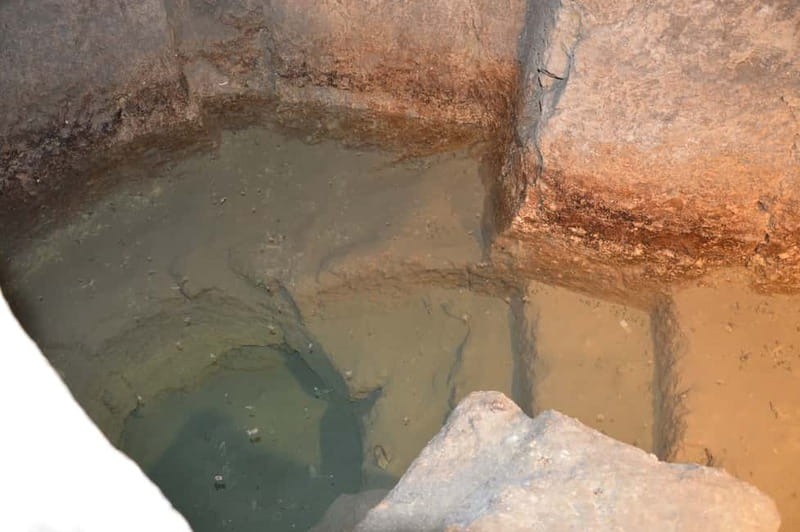
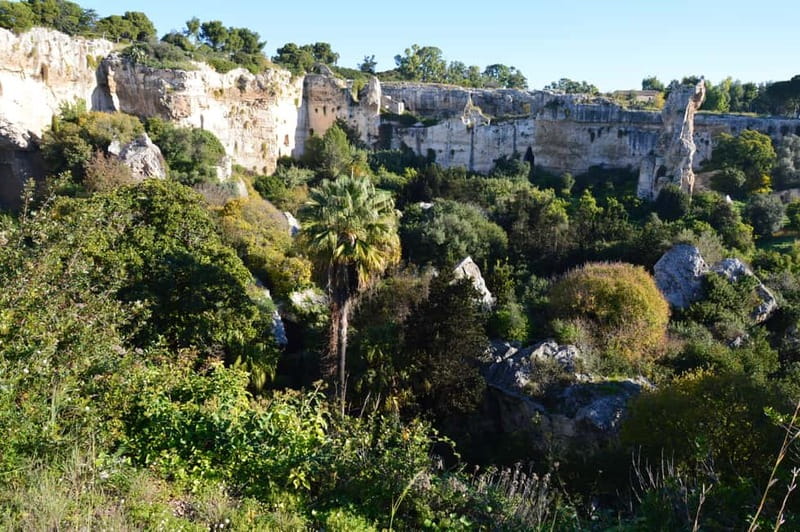
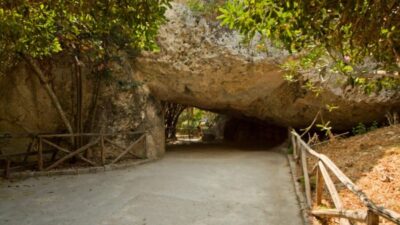
The Paradise Latomia is a large stone quarry area, and the Ear of Dionysius is its most famous feature. The quarry’s scale gives you a sense of how much labor went into shaping Syracuse and how excavation itself became part of the city’s story.
The Ear of Dionysius is a striking cavern, known for its unusual form and acoustics. It is also tied to the stories surrounding the tyrant Dionysius, which gives your guide an opening to separate legend from history. Giuseppe, in particular, is known for using colorful stories to keep this section engaging for younger visitors.
This is a good stop for anyone who likes the connection between geology, architecture, and old tales. It is less satisfying if you want every part of the park to look complete or polished. Much of the appeal comes from imagining the original use of the spaces, with help from the guide.
Crossing into Ortigia
After Neapolis, the route continues to Ortigia, the old island center of Syracuse. The supplied details show two possible finishing points, Ortigia and Neapolis, while the meeting instructions say the activity begins at the Neapolis ticket office and ends back at the meeting point. Confirm the exact end arrangement before the day of the tour.
One past group used a short taxi ride between the archaeological park and Ortigia. Do not assume that transfer is included: pickup, drop-off, food, drinks, and transport are not listed as inclusions. If your guide suggests a taxi, plan to pay for it separately.
Ortigia changes the mood. Neapolis is spacious and archaeological. Ortigia is close-packed, urban, and shaped by centuries of daily life. The guide leads you through a maze of old streets where Greek foundations, later churches, decorative facades, and sea-facing corners appear in quick succession.
The island is small enough to cover on foot, but the streets can be uneven. Keep your walking shoes on, even if you are tempted to dress only for a church visit.
The Temple of Athena and Syracuse Cathedral
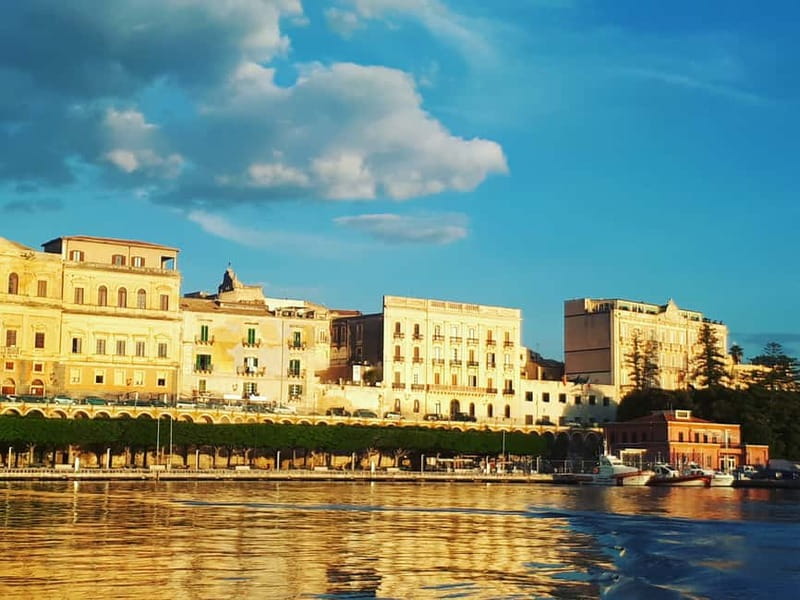
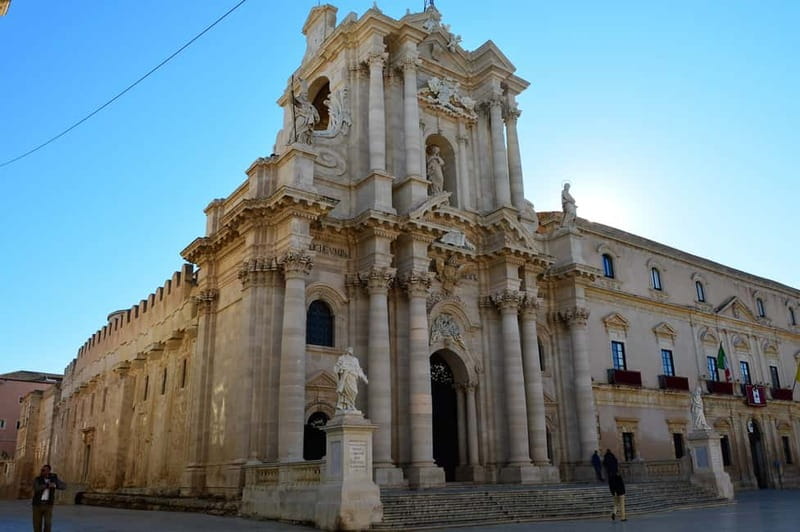
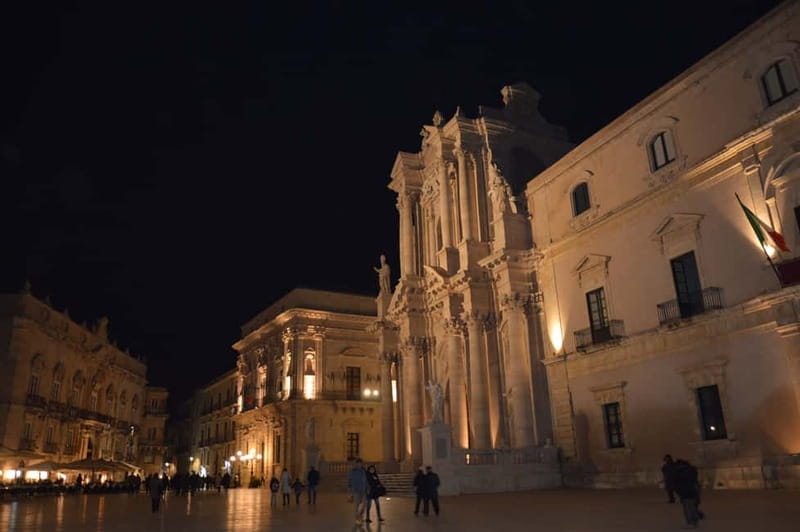
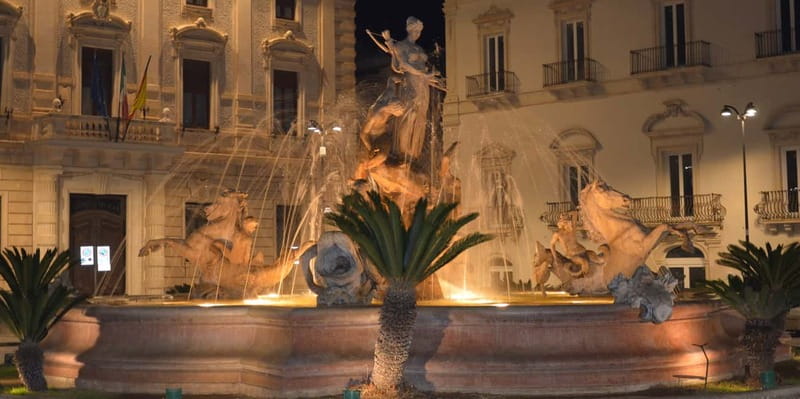
The Cathedral of Syracuse is the tour’s most memorable architectural lesson. The church incorporates the ancient Temple of Athena, so Greek columns form part of a Christian building. You are not simply looking at a temple beside a cathedral. You are seeing one structure reused and reshaped as the city’s religious life changed.
Your guide explains the different architectural styles visible in the building and points out how pagan and Christian elements coexist. This is one of the places where a good explanation makes a major difference. Without context, you might notice columns and a grand facade. With context, you can follow the city’s changing beliefs through the building itself.
The Cathedral also helps connect Ortigia to the archaeological park. At Neapolis, you see the scale of Greek public monuments. In Ortigia, you see how ancient material was absorbed into a living city. That link is one of the best reasons to combine the two areas in one outing.
Expect around 30 minutes at the Temple of Athena section, including the visit, guided explanation, and time for photos. The pace elsewhere can shift depending on questions and the group’s walking speed.
What the guides add to the visit
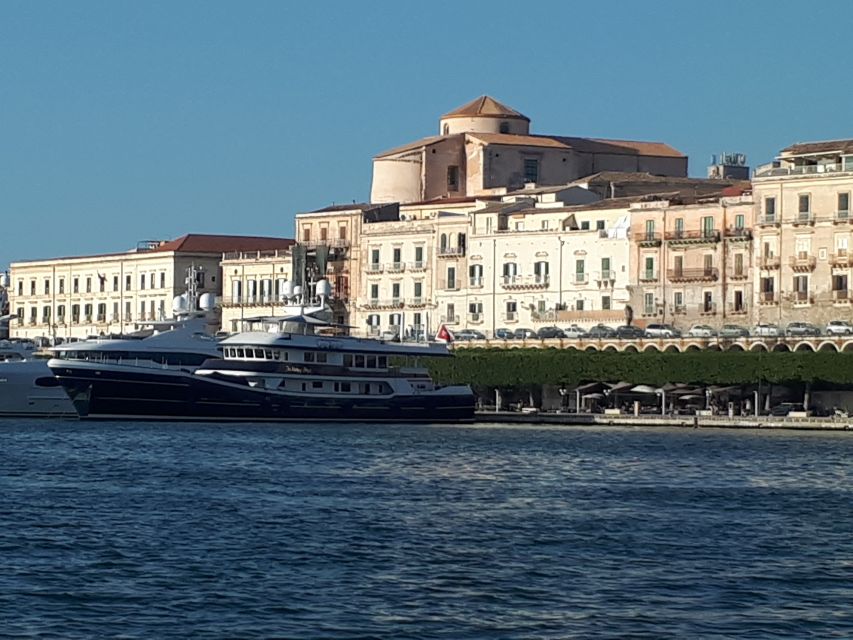
The guide is the deciding factor for this tour. You are paying for interpretation, not just access to places you could locate yourself.
Giuseppe is a strong choice for families and curious groups. His storytelling includes legends, historical context, and plenty of interaction. One family found that their teenagers stayed interested because he made the past feel like a story rather than a lecture.
Anna is noted for a smooth pace and clear explanations of history, architecture, and art. She has also been attentive with children and patient when groups arrive late. Her advance messages confirming the meeting time and place are useful in a city where several historic areas can sound similar.
Marcelo brings particular enthusiasm for archaeology and has extended tours beyond the planned length. That can be wonderful if you want detail, but it may not suit you if you need the tour to end exactly on time.
Rosanna is a good fit if you want attention to Syracuse’s Greek identity and its complex political past. Laura is described as friendly and open to questions. Since the provider assigns the guide, you may not be able to choose a specific person, so treat these names as examples of the guiding style rather than a guarantee.
The headsets are another practical touch. In a private group, you may not always need them, but they help when you are standing in an open area or moving through a noisy street. You can keep your eyes on the monument instead of leaning close to hear every sentence.
Price, tickets, and the real value
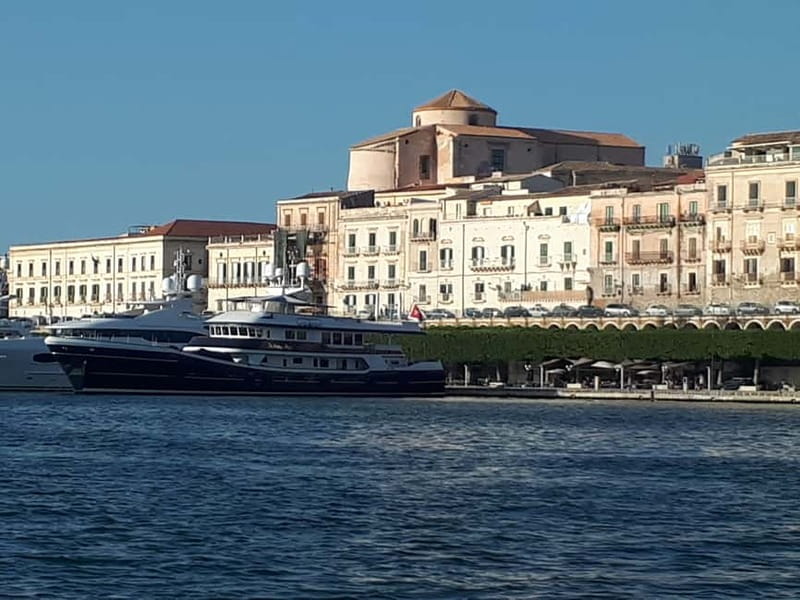
The price is $317.20 per private group of up to five people. For one or two people, that is a significant expense. For five, the per-person cost becomes much easier to justify, especially if you value a guide who can answer questions and set the pace.
Entrance fees are not included. One recent booking notes an archaeological park admission price of 13 euros per person, but check the current amount before you go because ticket prices can change. The tour does offer skip-the-ticket-line access, which can save time, but it does not make the admission free.
You also pay for your own food, drinks, and pickup or drop-off. If the route uses a taxi between Neapolis and Ortigia, that cost is separate. These extras do not make the tour poor value, but they do affect your budget.
I would rate the price as reasonable for a group of four or five people who want a serious introduction to Syracuse. For a solo visitor or couple on a tight budget, a self-guided visit may be more economical. The private setting makes the difference, so book it for the conversation and context, not just for entry to the monuments.
Who should book this tour?
This is a good match for first-time visitors who want the main ancient sites explained in one morning or afternoon. It also suits families because the guides can involve children and adjust their explanations.
History fans, architecture students, and visitors who ask lots of questions will get the most from it. You can explore Greek religion, Roman public life, Christian reuse of ancient buildings, and the many layers of Syracuse without arranging separate visits.
The tour is also useful if you have only a short stay in the city. Three hours covers the essential areas, though some guides and groups run longer. If your schedule is tight, tell the guide at the beginning that you must finish on time.
You may want a different plan if you prefer to wander alone, stop often for food, or spend a full day inside each site. This route gives you a strong overview, but it cannot provide unlimited time at every monument.
Book at least with the weather in mind. Rain does not automatically ruin the tour, and guides have continued through wet conditions, but Ortigia and the open archaeological park are more comfortable when you have suitable clothing and shoes. Cancellation is free up to 24 hours before the tour, and you can reserve now and pay later, which helps if your Sicily plans are still moving.
Should you book the Syracuse Ortigia and Neapolis tour?
Book it if you want one well-organized route through Syracuse’s two essential areas, especially for a group of four or five. The private format, multilingual guides, headsets, and strong storytelling make the price easier to defend.
Skip it if you want the lowest-cost option or prefer to spend your time inside one monument at your own pace. Also budget for park admission and possible transport between Neapolis and Ortigia.
For most first visits, I would choose the tour. Syracuse has too many layers to read quickly, and the Temple of Athena, Greek Theater, Roman Amphitheater, Paradise Latomia, and Ear of Dionysius all become more meaningful when someone explains how they fit together.
FAQ
How long does the Syracuse tour last?
The scheduled duration is three hours. Some private tours may run longer, depending on the guide, questions, walking pace, and weather.
Where does the tour start?
The stated meeting point is Biglietteria Parco Archeologico Neapolis on Via Luigi Bernabò Brea in Syracuse. Your guide meets you at the ticket office with a sign showing the local partner’s name.
Can the tour start somewhere else?
Two starting options are provided, including the Neapolis Archaeological Park ticket office and the Temple of Apollo area. Check your booking details for the exact starting point.
What monuments are included?
The route includes the Temple of Athena and Syracuse Cathedral, the Greek Theater, the Roman Amphitheater, Paradise Latomia, and the Ear of Dionysius.
Are entrance fees included?
No. Monument entrance fees are separate. One booking notes a 13 euro admission fee for the archaeological park, but check the current price before visiting.
Is transportation included?
No. Pickup and drop-off are not included. A taxi may be used between Neapolis and Ortigia, but that cost is separate.
Is the tour private?
Yes. The private group price covers up to five people.
Which languages are available?
The live tour guide can provide the tour in English, French, Italian, Russian, Spanish, or German.
Is the tour suitable for children?
Yes. Children of all ages can join, and the guide can involve both parents and children in the explanations.
What should I bring?
Wear comfortable shoes and bring a hat and a bottle of water. Much of the archaeological park is outdoors, and the route includes walking through ancient streets and open areas.
Can wheelchair users join?
The activity is listed as wheelchair accessible.
Can I cancel the booking?
You can cancel up to 24 hours in advance for a full refund. A reserve-now, pay-later option is also available.
Just added around Syracuse
- Etna and Taormina tour from Syracuse with private driver★ 4.5 · 9 reviews
- Vendicari – Sicily’s best coast nature reserve ( Birdwatching & Archeology )★ 5.0 · 8 reviews
- Tour of Montalbano★ 4.5 · 7 reviews
- Etna tour from Syracuse with private driver★ 5.0 · 4 reviews
- Noto, Portopalo and Marzamemi tour from Syracuse with private driver★ 4.5 · 10 reviews
- Siracusa Walking Tour with Audio and Written Guide by a Local★ 5.0 · 59 reviews
- Syracuse Private Shore Excursion: Archaeological Park and Ortigia★ 5.0 · 5 reviews
- Syracuse Scavenger Hunt & Highlights Self Guided Audio Tour★ 4.5 · 4 reviews
Syracuse Archaeological Park Tours, compared.
Ancient Syracuse: private guided tour of the Neapolis archaeological park
Read our review →
Group guided tour of the archaeological park of Neapolis
Read our review →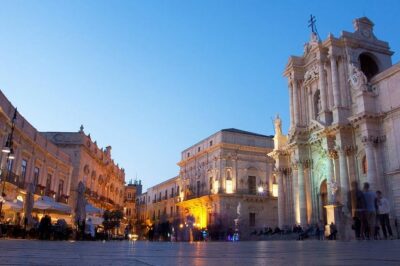
Private tour Syracuse -Archaeological Park and Ortigia with lunch
Read our review →Browse the lists this tour appears in