
Reviewed · WALKING TOURS
Syracuse: Ortigia Classic Walking Tour
Ortigia makes a strong first impression: ancient Greek ruins, honey-colored churches, narrow lanes, and the sea are all packed into a small historic island. This two-hour walk takes you from the Temple of Apollo through Piazza Duomo and on to the Aretusa Spring, giving you a useful sense of Syracuse before you explore on your own.
I like the clear route and the guides who make the history approachable. Eva, in particular, is praised for her calm pace, fluent English, and helpful suggestions. I also like the audio headsets for larger groups, since you can hear without crowding around the guide. The main drawback is that Ortigia can feel crowded, especially when several tour groups, school parties, and cars converge in the narrow streets.
The essential points at a glance
- Ancient Greek beginnings: Start beside the Temple of Apollo, one of the earliest large stone Greek temples in the western colonies.
- A compact historic route: See Piazza Archimede, Piazza Duomo, the Aretusa Spring, Via della Giudecca, and the Church of Saint John the Baptist in two hours.
- A cathedral built over a temple: The Cathedral of Syracuse incorporates the columns and structure of an ancient Greek temple.
- A useful seaside finish: The route passes near Castello Maniace and follows the waterfront before turning into the former Jewish quarter.
- Small-group feel: Groups can reach 25 people, but they usually number around 10, which makes questions and photographs easier.
- Good practical value: At $22, the tour is a reasonably priced introduction, with only the optional €2 cathedral entry added separately.
Why this walk is a smart first look at Ortigia
Ortigia is small enough to explore on foot, but its layers can be hard to sort out by yourself. Greek Syracuse, Roman and Byzantine changes, Christian traditions, Jewish history, Baroque rebuilding, and modern Sicilian life all appear within a short walk.
That is where a guide helps. Instead of seeing the Temple of Apollo as a pile of old stones, you learn why it matters as one of the first large stone Doric temples built by Greek settlers in western colonies. At the cathedral, you see how the city reused an older sacred site rather than wiping it away.
The tour costs $22 per person and lasts two hours. I consider that fair for a guided introduction, especially if you are visiting Syracuse for a short time or want the main sights placed in context. It is not designed for long interior visits or detailed archaeological study. Think of it as a strong orientation walk, followed by independent exploring.
The shared format keeps the price down. The maximum group size is 25, though the usual group is closer to 10. That difference matters. A group of 10 can gather around a fountain or church facade without the guide having to compete with too many voices. Larger groups may receive headsets, which several participants found useful for hearing clearly.
More Walking Tours in Syracuse
- Syracuse: Street Food Walking Tour in Ortigia with Tastings
★ 4.9 · 293 reviews - Syracuse: Ortigia and Neapolis Guided Walking Tour
★ 4.7 · 205 reviews - Syracuse: Ortigia Private Walking Tour
★ 4.8 · 181 reviews
Starting at the Temple of Apollo
The meeting point is at Largo XXV Luglio, by the entrance to Ortigia, though the exact meeting point can vary with the option you book. Take a moment to identify your guide before the walk begins. Several tours can gather in this busy area, and the meeting instructions may feel a little vague.
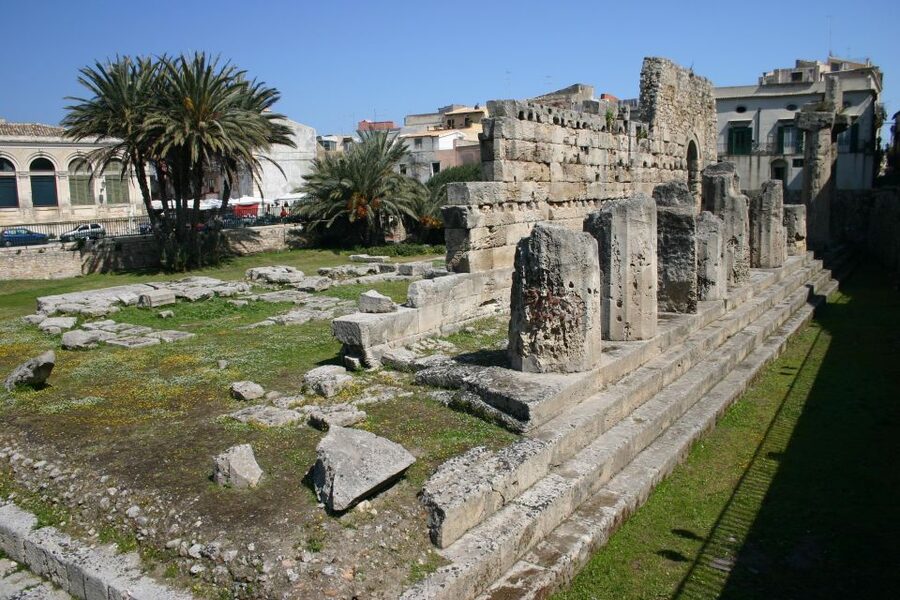
The first major stop is the Temple of Apollo. Its remaining walls and columns introduce the central idea of Syracuse: this is not simply a pretty seaside town, but one of the most important Greek colonies in the Mediterranean world.
The temple is especially useful as a starting point because it gives you a physical sense of time. You are looking at a building from the Greek period, in a modern town where cars, shops, churches, and daily life continue around it. The guide explains the Doric design and the temple’s importance without asking you to spend half the tour on technical archaeology.
From here, the walk moves into Ortigia’s streets. Wear comfortable shoes. The route is a city walk rather than a strenuous hike, but you will spend the full two hours on your feet, often on old paving and uneven surfaces.
Piazza Archimede and the Fountain of Diana
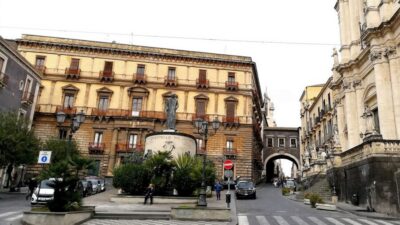
Piazza Archimede provides one of the tour’s first open views after the narrower streets. At its center, the Fountain of Diana gives the square a grand focal point and offers a good pause while the guide explains how different periods of Syracuse overlap.
This part of the walk helps you get your bearings. You are no longer looking only at isolated monuments. Squares, lanes, fountains, and buildings begin to form a map of Ortigia. The guide also connects the city’s old structures with local customs and present-day life, including religious celebrations.
The pace is one of the tour’s strengths. You are given time for photographs and short pauses rather than being hurried from one facade to the next. Still, this is a shared walk, so you should not expect extended free time at every stop.
Piazza Duomo, Syracuse’s grandest setting
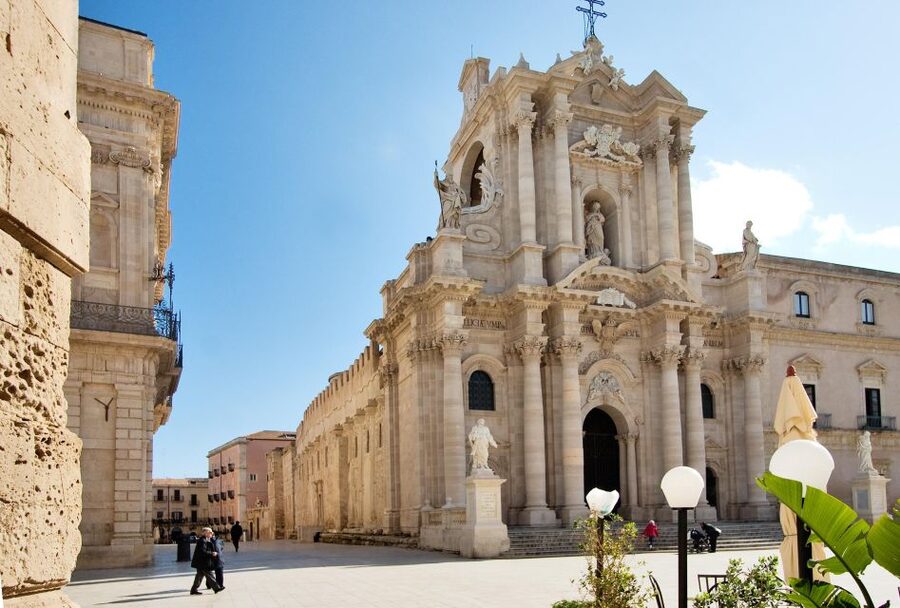
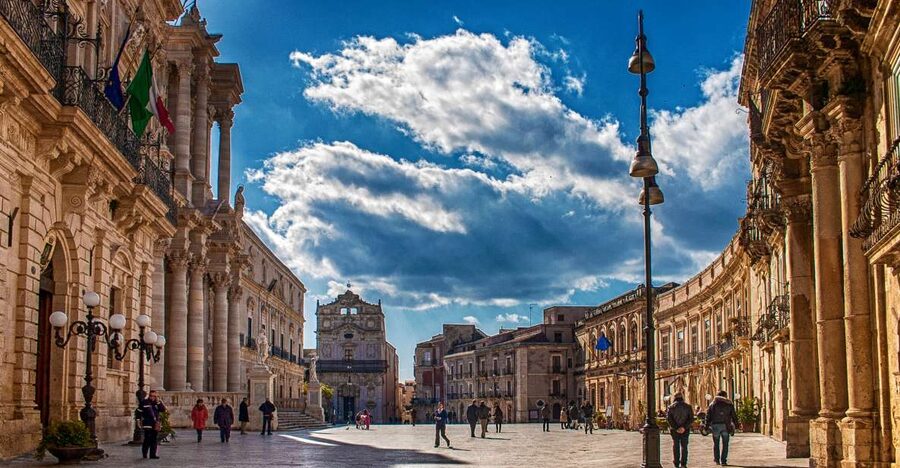
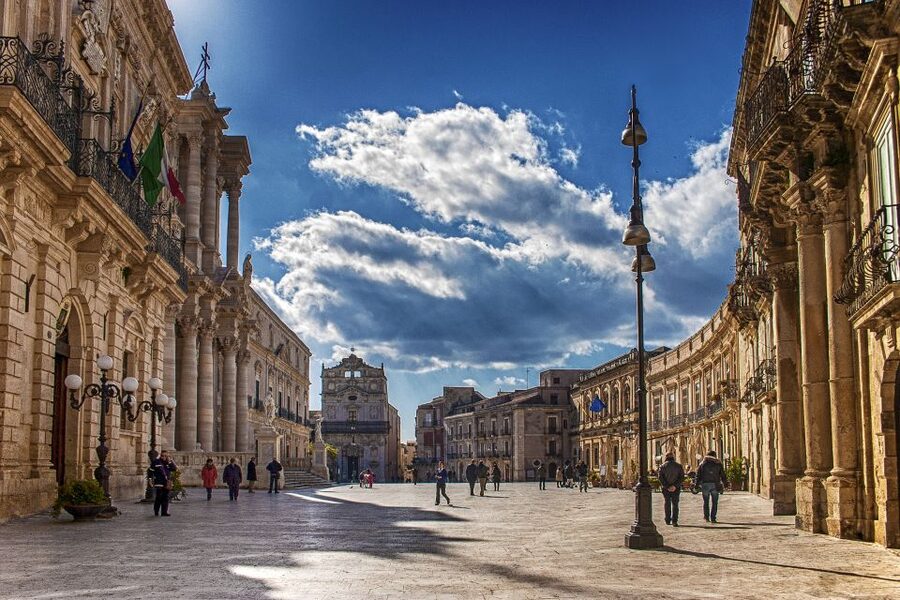
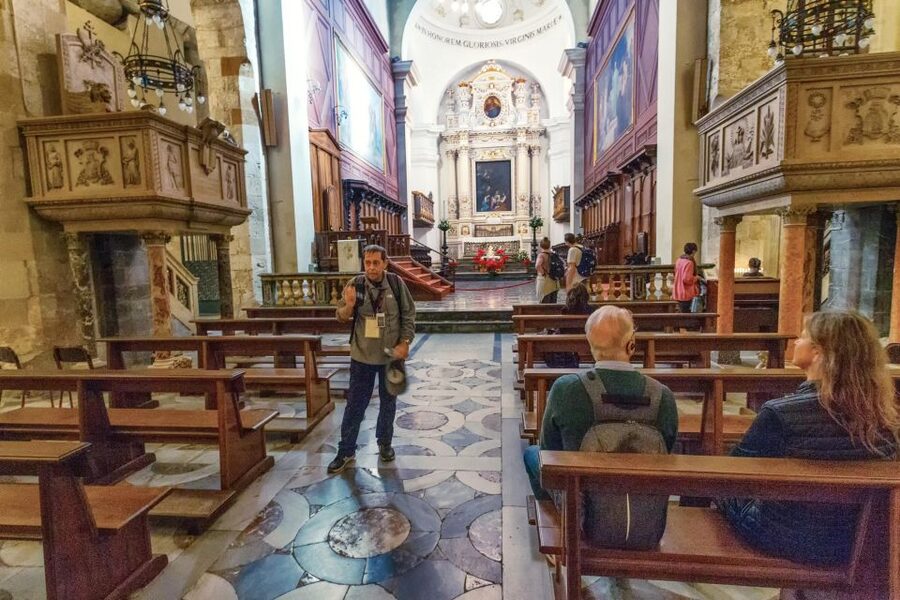
Piazza Duomo is the visual center of the tour. The square gathers the Cathedral of Syracuse, the town hall known as Palazzo Vermexio, Palazzo Beneventano del Bosco, and St. Lucy’s Church in one elegant sweep of pale stone.
The architecture here is a lesson in how Syracuse rebuilt and reshaped itself. Baroque facades give the square its polished look, while the cathedral preserves far older elements beneath and within the Christian building. The guide points out details that are easy to miss when you simply walk across the square.
The cathedral is still used as a wedding venue, so access to the interior can vary. When it is open to visitors, you can enter with the guide by paying the optional €2 admission fee. That small cost is not included in the tour price.
If the interior visit is not possible, the group may take a short coffee break instead. This is worth knowing if the cathedral is a priority for you. The exterior and the square are included in the walk, but an interior visit is not guaranteed.
The church is one of the tour’s most valuable stops because its story is unusually visible. Greek temple structure and Christian worship occupy the same building. You do not need specialist background to appreciate the idea: Syracuse repeatedly adapted older spaces rather than treating the past as something separate from modern life.
Booked from the same base, and a completely different kind of day:
- Syracuse: Boat Tour with Captain Mirko, Snorkeling & Caves
★ 4.7 · 746 reviews - Siracusa: Ortigia Boat Tour with Marine Grotto
★ 4.7 · 617 reviews - Siracusa: Ortigia & Sea Caves Speedboat Tour with Swim Stop
★ 4.9 · 499 reviews - Syracuse: Neapolis Archaeological Park Small Group Tour
★ 4.7 · 350 reviews
The Aretusa Spring and the sea
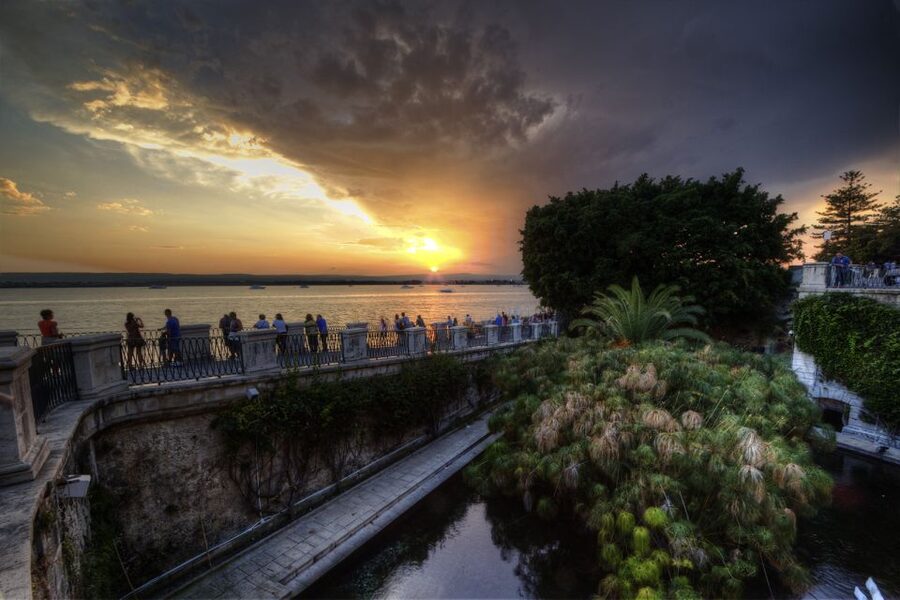
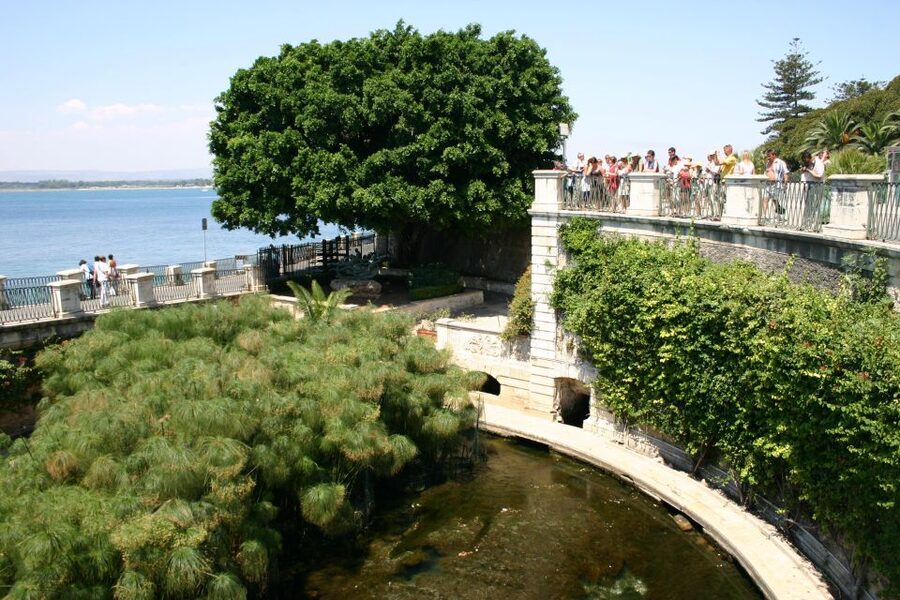
The route then reaches the Aretusa Spring, one of Syracuse’s best-known natural and mythical landmarks. The spring is famous for its papyrus plants and for the ancient story connected with the nymph Aretusa.
This is a welcome change from churches and stone facades. The water, plants, and open outlook give you a quieter visual break. The guide explains the myth and the spring’s place in local identity, while you have time to take photographs.
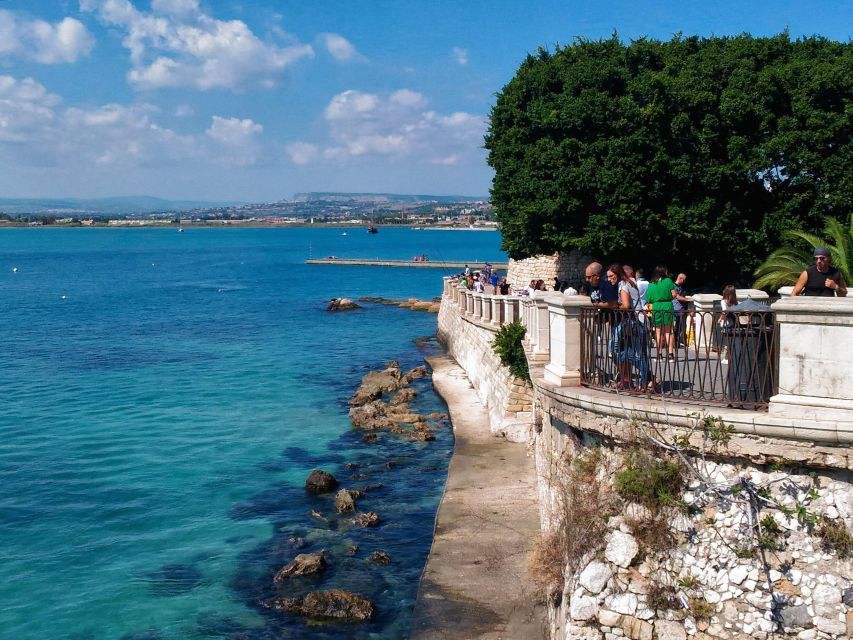
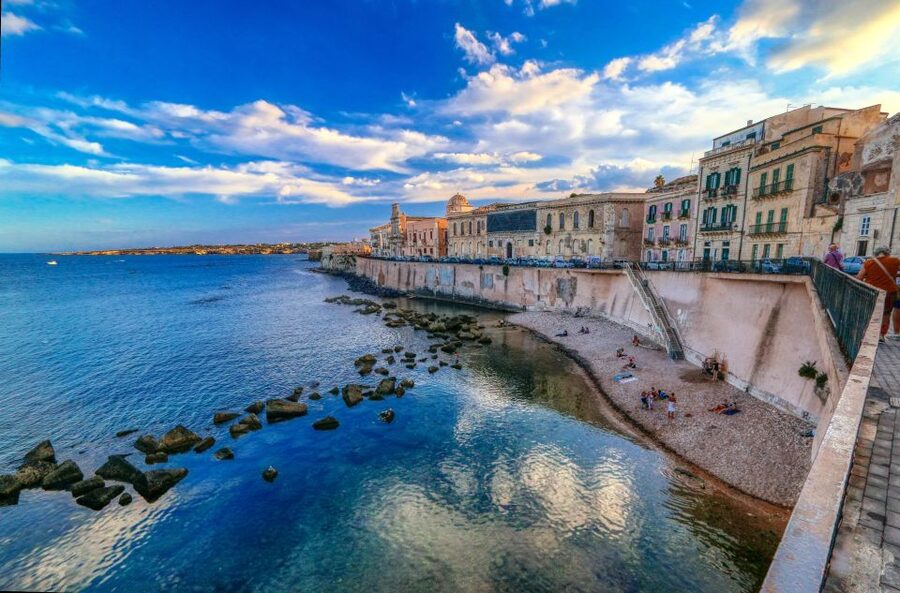
After the spring, the route continues along the seafront promenade. The views toward the water are among the most pleasant parts of the walk, particularly after the tight streets of the old center. The itinerary passes on the way toward Castello Maniace, giving you scenic views without making the castle itself a full tour stop.
That distinction matters. You see the castle area from the route, but this experience does not include a dedicated visit inside Castello Maniace. If you want to explore the fortress in detail, ask the guide for advice about visiting it later.
Via della Giudecca and Saint John the Baptist
The tour next turns into Via della Giudecca, the historic Jewish district of Ortigia. This section adds social history to the better-known Greek and Baroque sights. You learn about the former Jewish quarter and how that part of the town fits into Syracuse’s long story.
The streets here are a good reminder that Ortigia is more than a sequence of grand squares. The narrow lanes show how people moved through the old city, where homes and religious buildings were placed, and how the island still functions as a lived-in neighborhood.
The Church of Saint John the Baptist is another stop along the route. The guide explains its place in the town’s religious and architectural history. As with the other churches, the value comes from having someone point out what you are seeing and connect it to the larger story of Ortigia.
The guide also discusses Saint Lucy’s feast and its famous procession. Local religious celebrations are not treated as distant museum pieces. They remain part of Syracuse’s public life, and learning about them helps you understand why certain churches, squares, and streets matter to residents.
What the guide adds to the experience
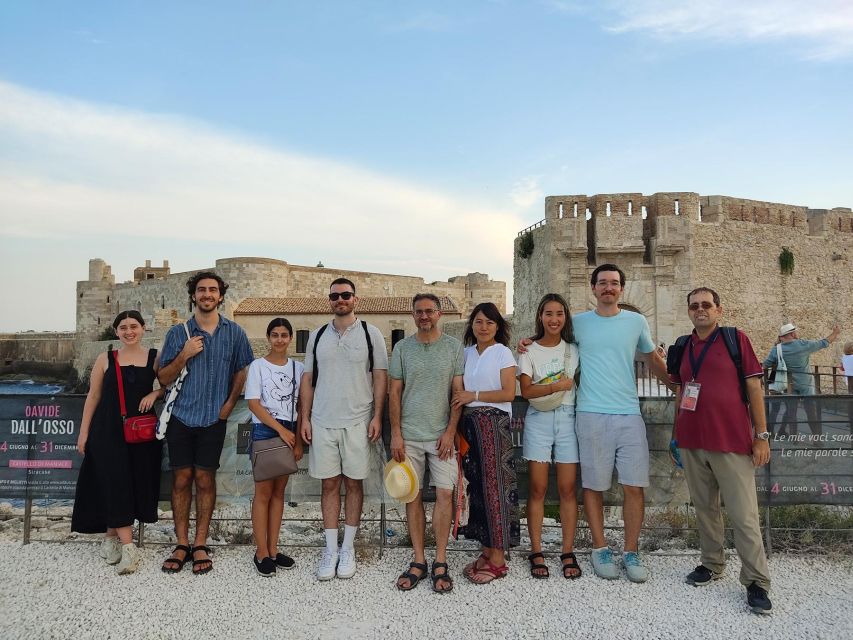
The quality of this walk depends heavily on the individual guide. Eva receives especially strong praise for her clear explanations, friendly manner, good pacing, and willingness to answer questions. She also offers suggestions for other monuments, restaurants, nearby towns, and activities.
The best guides on this route do not simply list dates. They explain why a building looks the way it does, how the city changed, and where local traditions fit into daily life. Several guides have been described as fluent in English and comfortable handling questions about architecture, history, and culture.
The tour is offered in English or Italian. In very small groups, explanations may be given in both languages, so ask at the start if you need clarification.
Headsets are provided when groups are larger. They are useful in busy squares and on streets where the guide cannot keep everyone close. You can look at a building or take a photograph while still following the explanation.
One practical limitation is the setting itself. Ortigia’s narrow streets can become congested with other walking groups, schoolchildren, and vehicles entering areas that feel pedestrian-only. The guide can keep the group together, but no tour can remove the noise and traffic from a working historic center.
Timing, comfort, and access
The walking time is two hours, with starting times shown when you check availability. Because the route includes open-air sights, it operates rain or shine. Bring comfortable shoes and dress for the weather.
The activity is wheelchair accessible, though the exact ease of movement may depend on the street conditions and crowd levels at the time of your visit. If you use a wheelchair, confirm any specific needs before booking.
The walk ends back in the historic center, with drop-off at Piazza Archimede or near the Fountain of Diana. That is convenient for continuing your day. You can visit another monument, stop for lunch, return to the cathedral, or simply wander the lanes you have just learned to recognize.
The route is not a transfer service and does not take you back to a hotel or the main Syracuse train station. Plan your onward route from Ortigia.
Who should book this Syracuse walking tour?
I would choose this tour if you are visiting Syracuse for the first time, have only part of a day in Ortigia, or want help making sense of the city’s ancient and Christian layers. It suits curious adults, couples, families with older children, and anyone who prefers a guide before exploring alone.
It is also useful for visitors who want local suggestions. Ask at the end about churches, archaeological sites, restaurants, or nearby towns while the guide’s advice is fresh.
You may want a different experience if you prefer a private guide, long museum visits, or a slow photographic walk with no fixed schedule. A group tour cannot pause everywhere, and the optional cathedral entry is brief rather than a full church study.
At $22, the value is strongest when you treat the walk as your introduction to Ortigia. You get a sensible route, a live guide, historical context, and a chance to identify the places you want to revisit. The optional €2 cathedral ticket keeps the base price low, though you should carry a little extra if seeing the interior matters to you.
Should you book it?
Yes, if you want a well-priced overview of Ortigia with strong attention to history, architecture, local traditions, and practical orientation. The Temple of Apollo, Cathedral Square, Aretusa Spring, Jewish quarter, and seaside route create a satisfying two-hour arc.
Book it early in your stay so you can use the guide’s suggestions afterward. Arrive with comfortable shoes, allow extra time to find the meeting point at Largo XXV Luglio, and expect some crowd noise in the busiest lanes.
If you are happy to explore independently and read up beforehand, you can see the same streets without paying for a guide. But for most first visits, this tour gives the compact old town a clearer shape and makes the $22 worthwhile.
FAQ
How long does the Ortigia walking tour last?
The tour lasts two hours.
What languages are available?
The tour is available in English or Italian. In rare cases with very small groups, explanations may be given in both languages.
Where does the tour begin?
The tour begins at the entrance to Ortigia near Largo XXV Luglio, by the Temple of Apollo. The exact meeting point can vary depending on the option booked.
Where does the tour end?
The activity ends in Ortigia, with drop-off at Piazza Archimede or near the Fountain of Diana.
Is the cathedral entrance included?
No. The optional cathedral entrance costs €2 and is paid separately. The interior visit depends on access at the time of the tour.
Is the tour wheelchair accessible?
Yes, the activity is listed as wheelchair accessible.
What should I bring?
Bring comfortable shoes. The tour takes place outdoors and runs rain or shine.
Can I cancel the booking?
Yes. You can cancel up to 24 hours in advance for a full refund. You can also reserve now and pay later.
Just added around Syracuse
- Etna and Taormina tour from Syracuse with private driver★ 4.5 · 9 reviews
- Vendicari – Sicily’s best coast nature reserve ( Birdwatching & Archeology )★ 5.0 · 8 reviews
- Tour of Montalbano★ 4.5 · 7 reviews
- Noto, Portopalo and Marzamemi tour from Syracuse with private driver★ 4.5 · 10 reviews
- Etna tour from Syracuse with private driver★ 5.0 · 4 reviews
- Siracusa Walking Tour with Audio and Written Guide by a Local★ 5.0 · 59 reviews
- Syracuse Private Shore Excursion: Archaeological Park and Ortigia★ 5.0 · 5 reviews
- Syracuse Scavenger Hunt & Highlights Self Guided Audio Tour★ 4.5 · 4 reviews
Walking Tours, compared.

Palermo Original Street Food Walking Tour by Streaty
Read our review →
Palermo No Mafia walking tour: discover the Anti-mafia culture in Sicily
Read our review →
Street Food Walking Tour with Local Guide & Tasting
Read our review →Browse the lists this tour appears in