
Reviewed · SYRACUSE ARCHAEOLOGICAL PARK TOURS
Syracuse: Neapolis and Greek Theater guided tour
The most memorable part of this Syracuse tour is how quickly the ancient city shifts from brutal stone quarry to theater, cave, fountain, and Roman arena. I like that the entrance ticket is included and that a guide puts names, myths, and purpose to ruins that can otherwise look like scattered blocks. I also like the steady pace, with guides such as Giuseppe, Luca, Laura, and Empeeria taking time for questions and shade when the sun is strong.
The main thing to consider is the bilingual format. The tour may be given in English and Italian at the same time, which can make explanations take longer. One visitor also had trouble hearing the guide in a larger group, so staying close matters. At $51 per person for two hours, this is best for you if context matters more than wandering alone.
Key points to know before you go
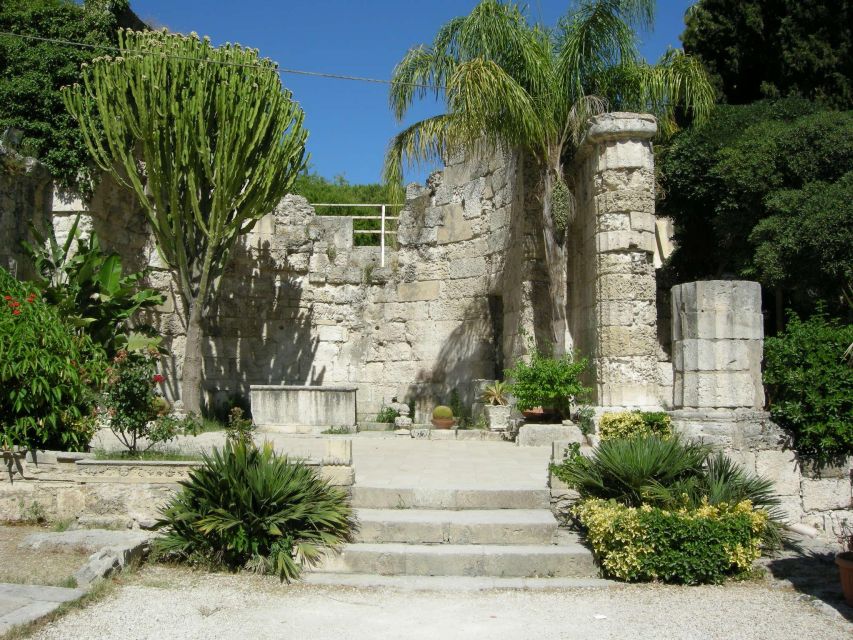
- Ancient quarries become gardens: The Latomie del Paradiso show the working side of Syracuse, with dramatic walls, greenery, and dark stories.
- The Ear of Dionysius has a memorable acoustic trick: Your guide explains the cave’s unusual shape and its connection to the tyrant Dionysus.
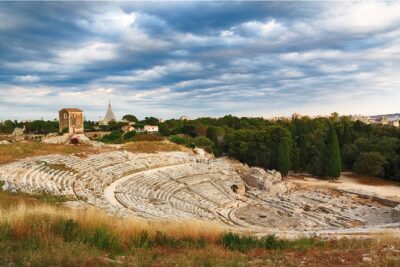
- The Greek Theater is the tour’s great visual stop: You get the theater, Nymphaeum Fountain, and a view toward the Grand Harbor.
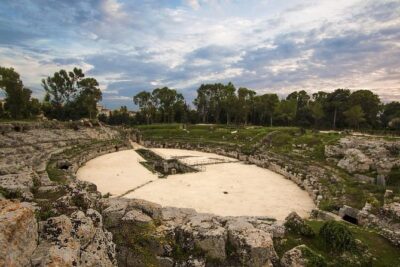
- Roman Syracuse gets its own chapter: The Roman Amphitheater helps you picture public spectacles and gladiatorial games.
- The tour takes about two hours: Each major stop receives roughly 20 minutes, with a short walk through the park.
- English and Italian are available: The tour may run in both languages together, so arrive early and stay near the guide.
Why Neapolis makes a good first look at Syracuse
Syracuse is not one tidy ruin. It is a city built in layers, and Neapolis lets you move through several of them in a short walk. Greek power, local stone quarrying, Roman rule, theater, religion, and public entertainment all appear inside the same archaeological park.
That layering is the reason I would choose a guided visit instead of simply buying entry and strolling in alone. The stone is impressive on its own, but the story explains why a quarry has gardens, why a cave has a strange name, and why a theater was cut into the hillside.
The tour lasts two hours, which is long enough to cover the main sights without turning the visit into an all-day history lesson. You will walk between stops, and the route is broken into manageable sections. Expect about 20 minutes at the park introduction, then around 20 minutes each at the Latomie, Ear of Dionysius, Greek Theater, and Roman Amphitheater.
That schedule is useful if you are fitting Neapolis around a wider Syracuse visit. It is also a limit. You will get a strong overview, not an exhaustive examination of every inscription or stone in the park.
More visits to the Neapolis park:
- Syracuse: Neapolis Archaeological Park Small Group Tour
★ 4.7 · 350 reviews - Syracuse: Ortigia and Neapolis Guided Walking Tour
★ 4.7 · 205 reviews - Private tour Syracuse -Archaeological Park and Ortigia with lunch
★ 5.0 · 28 reviews
Meeting the guide and entering the park
You may meet at the Neapolis Archaeological Park ticket office or at MOMENTO Ristorante, depending on the option you book. Check the exact meeting point carefully, since it can change with the selected option. Arrive 20 minutes before the scheduled start, giving yourself time to find the guide and avoid a rushed beginning.
The guide gives you the entrance ticket directly at the meeting point. The experience includes a separate entrance, described as a way to skip the regular line. That matters most during busy periods, when a little less waiting means more time inside the park.
English and Italian tours are available. The activity may be conducted in both languages at once, so you should expect explanations to be repeated. This format can work well if you are patient, but it may extend the time spent at each stop. Stay close enough to hear both versions.
The guides are certified local guides, and several names appear in the experience feedback: Giuseppe, Luca, Laura, Empeeria, and others. Their styles differ, but the strongest pattern is a willingness to answer questions and keep the group moving without rushing.
The Latomie del Paradiso: Syracuse carved from stone
The Latomie are ancient stone quarries, but that dry description misses their force. These enormous cuts in the rock were places of labor and confinement before becoming quieter garden spaces. You can see how much stone was removed and how the quarry walls shape the atmosphere.
Your guide adds the human story. This is where the tour’s historical detail earns its price, because the physical setting alone cannot tell you who worked here, why the quarries mattered, or how Syracuse used them.
The garden setting softens the hard stone. It also creates a sharp contrast between natural beauty and the difficult past beneath it. I like this stop because it gives you a more grounded view of ancient Syracuse. You are not only looking at temples and grand public buildings. You are also seeing the labor that helped build the city.
The guide may pause in a shaded area to explain the site, which is useful in hot weather. Luca was particularly praised for finding shade while continuing the explanation. That small practical choice can make a major difference on a sunny day.
Give yourself room to look up. The height of the quarry walls is easier to understand from below than from a photograph. You might also notice how greenery has softened the edges of a place that once had a harsh purpose.
The Ear of Dionysius and its unusual acoustics
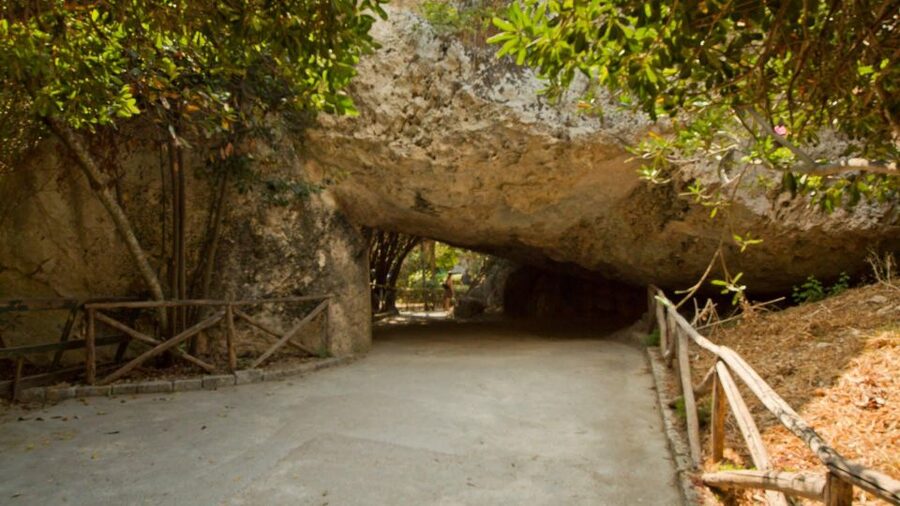
The Ear of Dionysius is a cave cut into the rock, known for its shape and remarkable acoustics. Its name invites a story, and your guide explains the legends connected with Dionysus, the ruler whose intrigues form part of the site’s darker appeal.
This is one of the places where a guide can add something you would likely miss alone. The cave’s shape is not simply a visual curiosity. Sound behaves differently inside it, and the guide can draw your attention to that feature.
One guide, Laura, even sang inside the cave during a tour. That is not something you should assume will happen every time, but it shows why a live guide can make this stop feel more personal. The cave is small enough that a simple sound demonstration can turn a short visit into a memorable one.
The stop also gives you a break from broad outdoor views. You move from open quarry walls into a more enclosed space, then return to the wider archaeological park. If you have trouble hearing in crowded settings, stay near the guide here and avoid drifting to the back.
A few more Syracuse days worth weighing up
- Syracuse: Boat Tour with Captain Mirko, Snorkeling & Caves
★ 4.7 · 746 reviews - Siracusa: Ortigia Boat Tour with Marine Grotto
★ 4.7 · 617 reviews - Siracusa: Ortigia & Sea Caves Speedboat Tour with Swim Stop
★ 4.9 · 499 reviews - Syracuse: Pillirina, Ortigia, and Sea Caves Tour by Boat
★ 4.6 · 348 reviews
The Greek Theater and views across the harbor
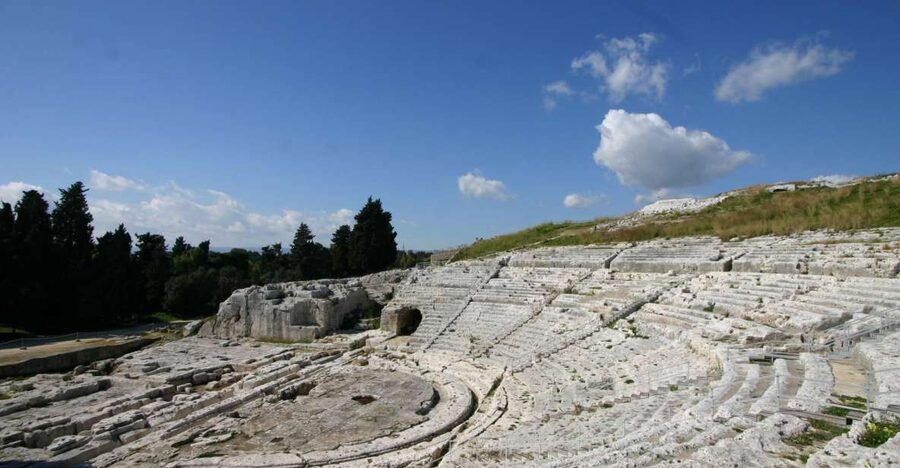
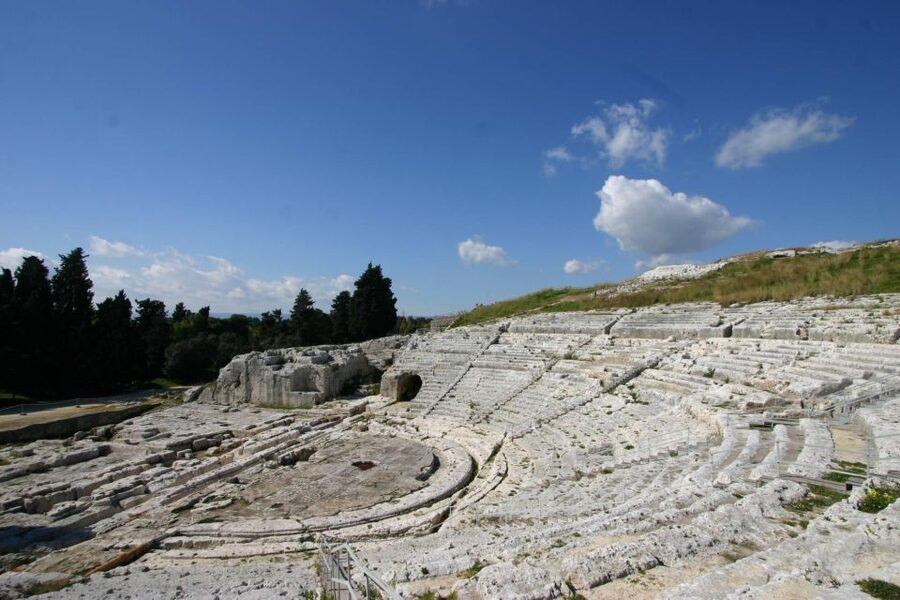
The Greek Theater is the visual centerpiece of the route. Cut into the hillside, it shows how ancient builders used the shape of the site instead of forcing a flat building onto it. From here, you also see the Nymphaeum Fountain and a broad view toward the Grand Harbor.
Your guide explains the theater as part of Greek Syracuse, not merely as an attractive ruin. That distinction matters. Without context, you might admire the rows of stone and move on. With context, you can picture the theater as a working public place tied to performance, civic life, and the city’s power.
The view is a welcome change after the enclosed Latomie and cave. Take a moment to look beyond the seats and walls. The connection between the ancient site and the modern city is part of the appeal. Syracuse is not an isolated museum piece. It is a living place wrapped around its older layers.
There is one limitation to note. Access within the Greek Theater may not allow you to reach every part of the seating area, including the very bottom. One visitor specifically wished for access to the lower section. If that matters to you, ask the guide what is open on the day of your visit.
The Nymphaeum Fountain adds another small but useful piece to the stop. It helps you see that the theater area was more than one structure. Water, movement, views, and performance all formed part of the setting.
The Altar of Hieron II and Syracuse’s public scale
The Altar of Hieron II gives the tour a chance to discuss Syracuse on a larger scale. It is presented as a major reminder of the city’s former power, and your guide explains its place in the wider story of the Greek period.
This is the sort of stop that benefits from a clear explanation. Ruined foundations rarely communicate their original size by themselves. A guide helps you understand how public projects reflected authority, wealth, and civic ambition.
The altar also connects the smaller details of the park to the city beyond it. The quarries supplied stone. The theater brought people together. The altar represented public power. Seen in sequence, these places make Syracuse feel organized and purposeful rather than random.
The Roman Amphitheater and a change of era
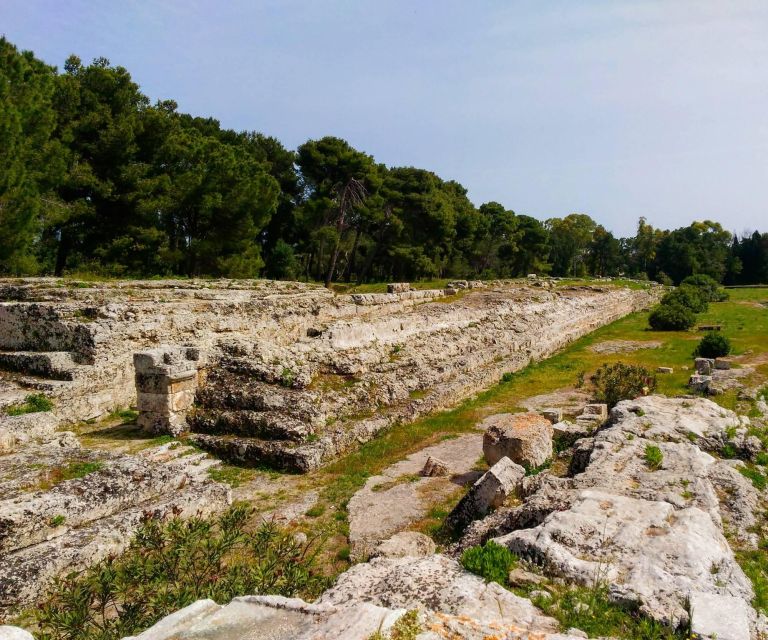
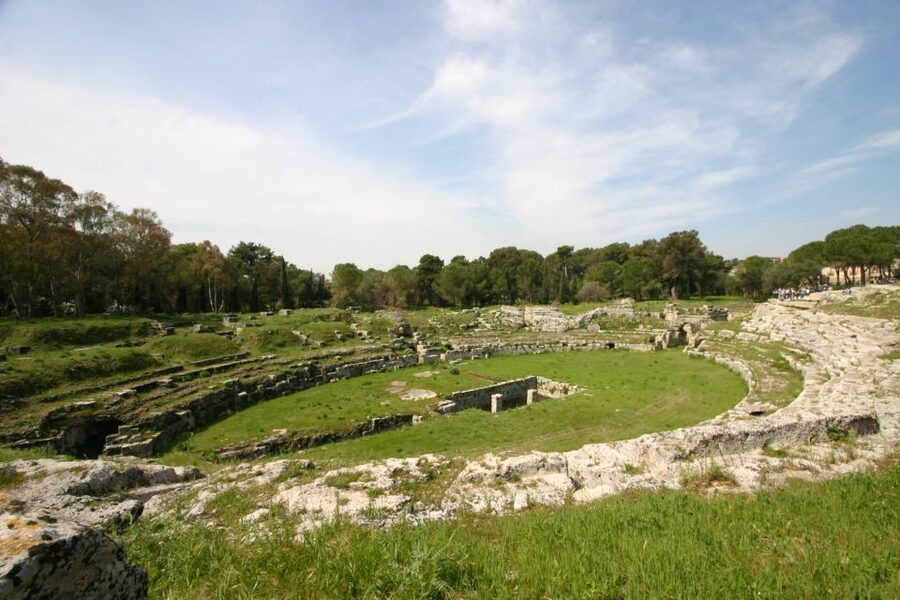
The final major stop is the Roman Amphitheater. Here the subject changes from Greek theater and civic display to Roman public entertainment, including gladiatorial games and the city’s life under Roman rule.
The amphitheater is valuable because it prevents the tour from stopping with the Greek period. Syracuse did not vanish when Roman control arrived. The city changed, adapted, and took on new public traditions.
Your guide points out the features that help explain how spectacles worked. The building’s scale and form make more sense when you connect them to crowds, performances, and organized public events.
I like ending here because the route moves forward through time. You begin with the quarry, then see Greek architecture and finally arrive at the Roman period. The result is a compact history of Syracuse, told through places rather than dates alone.
How good is the guiding?
The strongest reason to book is the quality of the live explanation. Giuseppe is described as engaging and clear, while Luca is noted for adding useful detail about the ruins and quarrying. Laura kept a comfortable pace, answered questions, and added an unusual musical moment in the cave. Empeeria brought obvious enthusiasm and made sure the group stayed together.
The guides do not appear to rush through the park. Several are praised for taking questions and allowing extra discussion. That matters at Neapolis, where a fast walk can leave you with attractive photographs but little sense of what you saw.
There are two practical cautions. First, the tour can run in English and Italian together. You may spend longer at each point while both languages are covered. Second, one person found it difficult to hear a guide who could not project enough for a large group. Stand near the guide, especially outdoors, and do not hesitate to move closer.
The experience is also guide-dependent, as any live tour is. The repeated strengths are clear explanations, a friendly manner, and patience. Still, the exact balance of stories and detail may vary by guide.
Is $51 a fair price?
At $51 per person, the price is not the cheapest way into Neapolis. The value comes from combining the admission ticket with a two-hour guided route through the park’s main sights.
If you already know Greek and Roman archaeology, you may prefer to enter independently and set your own pace. You will have more freedom to linger, revisit a favorite view, or move quickly past a familiar subject.
For most first-time visitors, I think the cost is reasonable. The park has several major sites spread across one area, and the guide connects them into one story. You are paying not only for entry but also for the explanation of what the quarries, cave, theater, altar, and amphitheater meant.
The tour is especially good value if you have limited time in Syracuse. Two hours gives you a clear orientation, and you can return later to the places that caught your interest. It is less suitable if you want a slow archaeological study or uninterrupted photography.
Free cancellation up to 24 hours before the activity and a reserve-now, pay-later option make the booking less rigid. These policies are useful if your Sicily plans are still shifting.
Who should book this Neapolis tour?
I would recommend it to first-time visitors, families who want ancient sites explained in plain language, and anyone who enjoys history but does not want to read every sign. The route gives you the main sights and keeps the story moving.
It also suits people who want a local perspective. The guides are based in Syracuse and can connect the physical remains with the city’s Greek and Roman past. Several guides are comfortable answering questions, so you do not have to remain a silent member of the group.
You may prefer an independent visit if you need complete control of your pace, want long periods of quiet, or already have strong knowledge of the site. The bilingual format can also feel slow if you speak only one language.
For the best experience, arrive early, stay close enough to hear, bring patience for the two-language format, and be ready for sun. The guide may find shade, but the park visit still takes place largely outdoors.
Should you book it?
Book this tour if you want the major Neapolis sights explained in a compact two-hour visit. The Latomie, Ear of Dionysius, Greek Theater, Altar of Hieron II, and Roman Amphitheater make a strong route, and the ticket is included.
Skip it only if you strongly prefer exploring alone or need unrestricted access to every part of the Greek Theater. For most visitors, $51 is a fair exchange for entry, local guidance, and a clear sense of how Syracuse developed across the Greek and Roman periods.
FAQ
How long does the Syracuse Neapolis tour last?
The tour lasts two hours, including the guided walk through the archaeological park and visits to the main sites.
What is included in the price?
The price includes admission to the Neapolis Archaeological Park and a guided tour of the park.
How much does the tour cost?
The listed price is $51 per person.
Which languages are available?
The tour is available in English and Italian. It may be conducted in both languages at the same time.
Where does the tour meet?
The meeting point may be either the Neapolis Archaeological Park ticket office or MOMENTO Ristorante, depending on the option booked.
How early should I arrive?
You should arrive at the meeting point 20 minutes before the activity begins.
Does the guide provide the entrance ticket?
Yes. The guide provides the entrance ticket directly at the meeting point.
Which places are visited?
The route includes the Neapolis Archaeological Park, Latomie del Paradiso, the Ear of Dionysius, the Greek Theater, and the Syracuse Roman Amphitheater. The tour also covers the Nymphaeum Fountain and the Altar of Hieron II.
Can I cancel for a full refund?
Yes. You can cancel up to 24 hours in advance for a full refund.
Just added around Syracuse
- Etna and Taormina tour from Syracuse with private driver★ 4.5 · 9 reviews
- Vendicari – Sicily’s best coast nature reserve ( Birdwatching & Archeology )★ 5.0 · 8 reviews
- Tour of Montalbano★ 4.5 · 7 reviews
- Etna tour from Syracuse with private driver★ 5.0 · 4 reviews
- Noto, Portopalo and Marzamemi tour from Syracuse with private driver★ 4.5 · 10 reviews
- Siracusa Walking Tour with Audio and Written Guide by a Local★ 5.0 · 59 reviews
- Syracuse Private Shore Excursion: Archaeological Park and Ortigia★ 5.0 · 5 reviews
- Syracuse Scavenger Hunt & Highlights Self Guided Audio Tour★ 4.5 · 4 reviews
Syracuse Archaeological Park Tours, compared.
Ancient Syracuse: private guided tour of the Neapolis archaeological park
Read our review →
Group guided tour of the archaeological park of Neapolis
Read our review →
Private tour Syracuse -Archaeological Park and Ortigia with lunch
Read our review →Browse the lists this tour appears in