
Reviewed · SYRACUSE ARCHAEOLOGICAL PARK TOURS
Syracuse: Greek Theater and Neapolis sunset tour
Syracuse’s Neapolis Archaeological Park takes on a different mood as daylight fades. The orange light catches the cut stone, the Greek Theater, and the old harbor beyond, while your guide links each place to tyrants, prisoners, engineers, and gladiators. The Ear of Dionysius is the tour’s most memorable stop, thanks to its unusual shape and famous acoustics.
I like two things here. First, the $46 price includes park admission, so you are paying for both access and a live guide. Second, the route gathers Syracuse’s main ancient sights into a tidy two-hour walk, with Francisco among the guides praised for clear historical explanations. The main consideration is timing: a sunset tour offers beautiful light, but you need to arrive 20 minutes early and keep a steady pace through a large archaeological site.
Key points at a glance
- Sunset at the Greek Theater: Warm evening light brings out the scale of the theater and the view toward Syracuse’s harbor.
- The Ear of Dionysius: See the famous cave and hear the story of its remarkable acoustics and link to the tyrant Dionysus.
- Ancient stone quarries: Walk through the Latomie del Paradiso, where sheer rock walls now frame natural gardens.
- Five guided stops: The route covers Neapolis, the Latomie, the cave, the Greek Theater, and Roman Amphitheater.
- Admission included: Your guide gives you the Neapolis Archaeological Park ticket at the meeting point.
- English or Italian: The tour may run in both languages at the same time, so confirm the language arrangement when booking.
Why sunset changes the Neapolis experience
Neapolis is not a single monument. It is a large archaeological area where Greek, Hellenistic, and Roman remains sit among quarries, paths, gardens, and open views. A guide helps you connect those pieces instead of seeing them as scattered ruins.
The late hour matters. Stone can look harsh under the midday sun, but sunset softens the walls and gives the site a more atmospheric feel. The great harbor comes into view from the higher parts of the park, and the changing sky adds drama without requiring any special equipment or long evening excursion.
This is still a history walk, not a performance. The appeal comes from the setting and the stories your guide supplies. You will hear about Syracuse’s rulers, the work carried out in the quarries, and the gladiatorial games held under Roman rule. The strongest part of the experience depends on the guide’s explanations, and the feedback points to that as a real strength. Francisco, in particular, is praised for providing detailed information about the monuments.
The tour is listed at two hours. That is enough for a focused first look, but not enough for an unhurried study of every corner. You should expect a purposeful route rather than a long pause at each ruin.
More visits to the Neapolis park:
- Syracuse: Neapolis Archaeological Park Small Group Tour
★ 4.7 · 350 reviews - Syracuse: Ortigia and Neapolis Guided Walking Tour
★ 4.7 · 205 reviews - Syracuse: Neapolis and Greek Theater guided tour
★ 4.5 · 160 reviews
Meeting your guide at Via Romagnoli
The meeting point is in front of the Neapolis entrance gate, on the Via Romagnoli and Viale Augusto side. The activity begins at Via Luigi Bernabò Brea, and you return there after the walk.
Arrive 20 minutes before the scheduled start. That advice matters because the guide provides your park ticket directly at the meeting point. If you arrive late, you may be trying to find the group while the tour is already moving into the site.
The experience includes skip-the-ticket-line entry, which keeps the start simple. You do not need to arrange a separate admission ticket for the archaeological park. Anything beyond the listed entrance and guided visit is not included, so plan to handle your own personal expenses separately.
The guide speaks Italian or English. The tour may be conducted in both languages at once, so English speakers who want the fullest explanation should check the language setup before booking.
Neapolis Archaeological Park: the setting for the whole walk
The first stop is the Neapolis Archaeological Park itself, with about 20 minutes set aside for a guided introduction. This opening gives you the basic map of the site and explains why Syracuse became such an important city in the ancient Mediterranean.
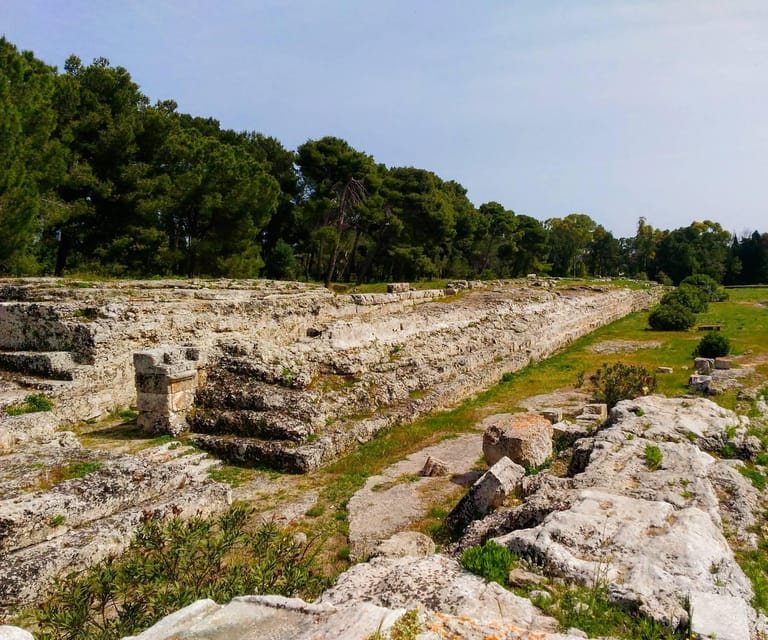
That introduction is useful because the park combines several periods and types of monuments. You are not simply visiting one preserved building. The route moves from quarry spaces to a Greek theater and then to a Roman amphitheater, showing how the area changed over time.
A 20-minute opening is brief, so do not expect a full archaeological lecture. It works best as orientation. Once you understand the layout, the later stops make more sense, especially the contrast between places cut directly into rock and buildings designed for mass entertainment.
The park ticket is included, a worthwhile detail at this price. You are paying $46 per person for two hours, admission, and a live guide. If you planned to visit Neapolis on your own anyway, the added cost buys structure and interpretation rather than just entry.
Latomie del Paradiso and the old quarries
The Latomie del Paradiso are ancient stone quarries that have become natural garden spaces. These excavations are more than a scenic pause. They show how much stone was removed from the ground and how hard labor shaped the city around you.
The quarries also carry a darker side. The tour introduces the secrets and stories linked to the site, including the harsh conditions associated with prisoners and forced work. The exact balance between archaeology and legend will depend on the guide, but this is one of the places where a spoken explanation adds real value.
At sunset, the quarry walls should take on warm colors, while the garden areas soften the severity of the cut stone. That contrast is part of the appeal. You get a place that feels open and calm now, while learning about the difficult human labor that created it.
Wear comfortable walking shoes. The tour is described as wheelchair accessible, but the supplied information does not provide details about every surface, slope, or route condition. If you use a wheelchair, confirm the practical route with the provider before arrival.
More Sunset Tours in Syracuse:
- Syracuse: Ortigia Sunset Cruise with Aperitif
★ 4.8 · 291 reviews - Siracusa: Ortigia & Sea Caves Boat Tour with Sunset Apertif
★ 4.9 · 94 reviews - Syracuse: Sunset cruise including aperitif and swim stop
★ 4.9 · 9 reviews - Syracuse: Sunset Aperitif Tour
★ 4.4 · 4 reviews
The Ear of Dionysius and its famous acoustics
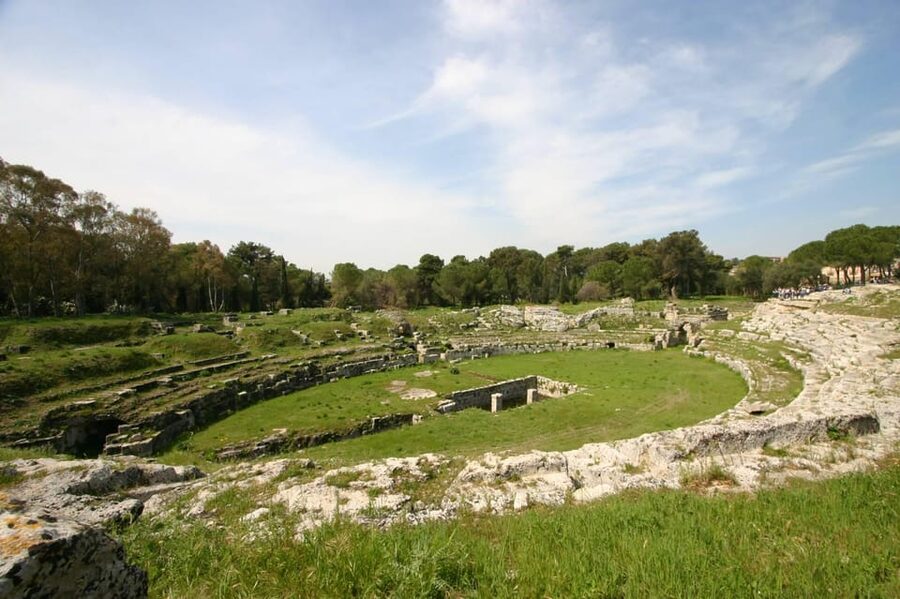
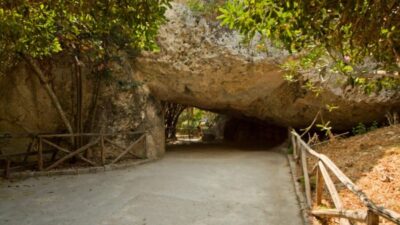
The Ear of Dionysius is probably the stop most likely to stay with you after the tour. This tall, curved cave is known for its unusual acoustics, and its name is tied to the tyrant Dionysus.
Your guide explains the stories surrounding the cave, including the claim that Dionysus used its acoustics to listen to prisoners. Some of the appeal lies in the uncertain boundary between recorded history and later legend. A good guide can make that distinction clear while still telling the story in a way that fits the setting.
The cave is also a fine example of how Neapolis works as a visit. Its importance is not only visual. The shape of the rock changes how sound behaves, giving you a physical sense of the site’s design. Listen carefully when your guide points out the acoustics. This is not a stop to rush through while taking a photograph.
The sunset light may not reach every part of the cave. That is a small tradeoff for visiting at this hour. The outside stone and surrounding park should benefit most from the evening colors, while the interior remains more shadowed.
Greek Theater and the view toward the harbor
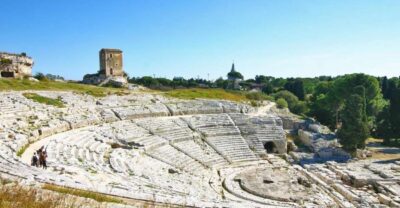
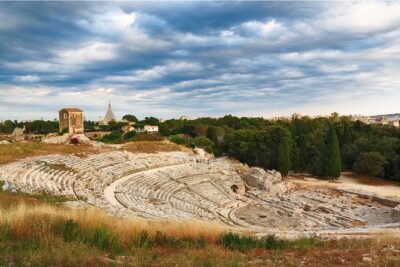
The Greek Theater is the centerpiece of the route. Cut into the slope, it has the scale to explain why public performance mattered so much in ancient Syracuse. Even without a long lecture, the layout makes clear that this was designed for a large audience.
The tour allows about 20 minutes here. That is enough to admire the structure and hear its main stories, but you may want extra time if you are fascinated by theater architecture or ancient performances. This visit is a guided overview, not a deep architectural study.
The Nymphaeum Fountain is another feature of this section. From the theater area, you also get a panorama toward the great harbor. That view is a major reason to choose the sunset departure. The fading light gives the water and distant city a softer frame, while the old stone in the foreground keeps the scene grounded in Syracuse’s past.
I like this part of the route because it joins scenery and history without needing extra travel. You are not being driven from one attraction to another. The view appears as part of the archaeological setting itself.
The Altar of Hieron II and Syracuse’s political power
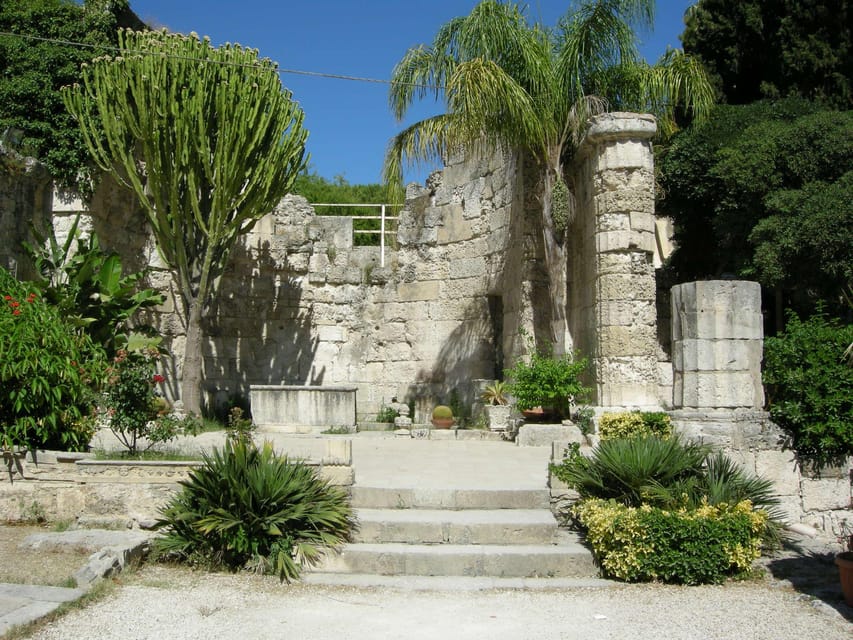
The Altar of Hieron II is described as part of the sunset journey and serves as a reminder of Syracuse’s political and religious importance. Its scale helps you think beyond individual ruins. Ancient cities needed public spaces, ceremonial structures, and displays of power, and this altar points to that larger civic world.
The provided route details do not assign a separate 20-minute stop to the altar, so treat it as part of the guided movement through Neapolis rather than a long standalone visit. Your guide can explain how it fits into the story of the city and its rulers.
This is also a useful moment to remember that Syracuse was not merely a small Greek outpost. The site’s monuments reflect ambition, wealth, authority, and the labor needed to build on a large scale. The sunset colors make the stones attractive, but the explanation gives them meaning.
Roman Amphitheater and stories of gladiatorial games
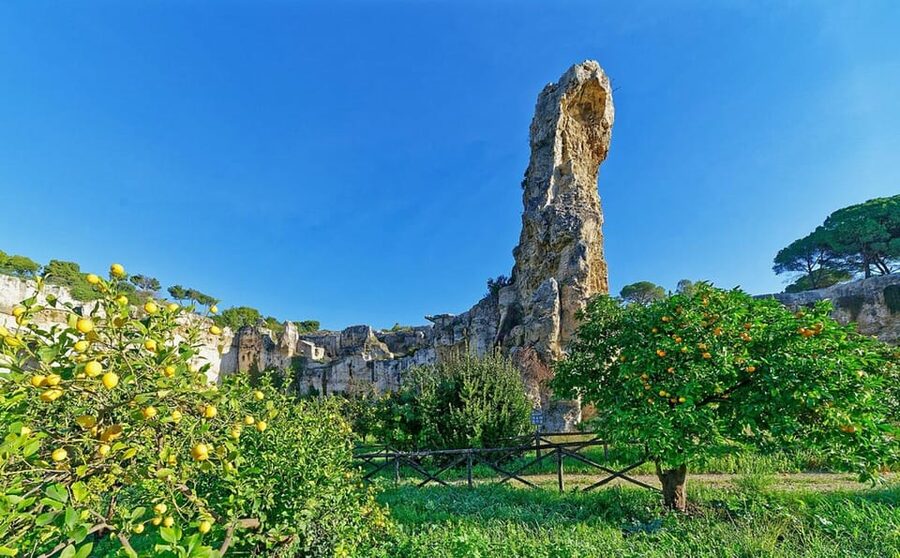
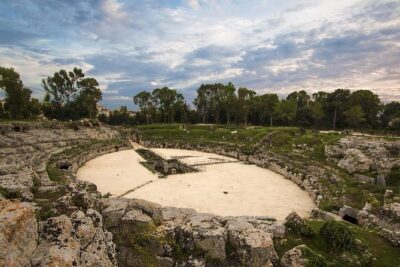
The final major sight is the Roman Amphitheater. Here the tour shifts from Greek Syracuse to the city under Roman rule, with attention to gladiatorial games and the public spectacles connected to the arena.
The amphitheater has a different feel from the Greek Theater. The Greek site is tied to performance and civic culture, while the Roman arena brings questions of combat, crowd entertainment, and imperial control. Seeing both during one walk makes the change in power easier to understand.
Your guide reveals the secrets of the gladiatorial games and explains how Syracuse changed under Roman rule. The 20-minute guided visit gives you a focused introduction rather than a full study of the monument. If Roman history is your main interest, you may wish the stop lasted longer, but the compact format keeps the tour moving and lets you see more of Neapolis.
The final section benefits from the lowering light. Shadows across the stone can make the arena feel especially atmospheric. At the same time, visibility will gradually decrease, so listen closely to the guide’s explanation instead of relying only on visual details.
Is $46 a fair price for two hours?
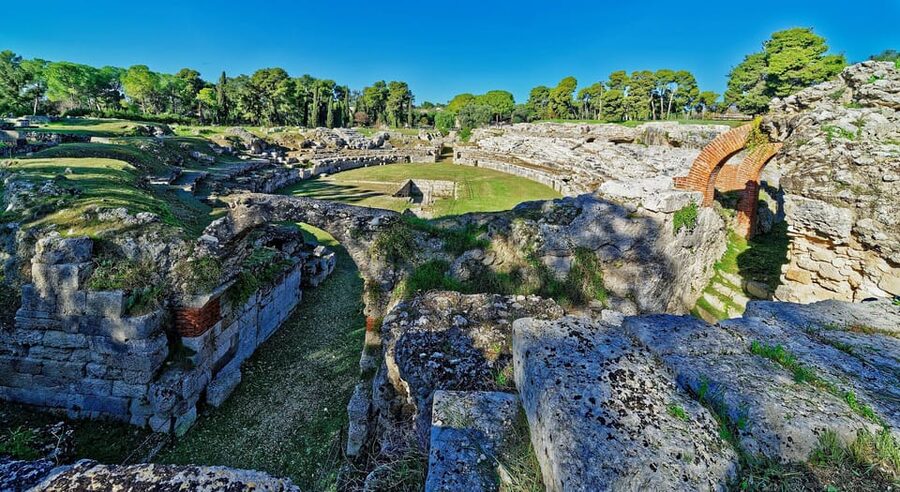
At $46 per person, this is not the cheapest way to see an archaeological park. It is a fair price if you want admission, a planned route, and live interpretation in English or Italian without arranging those pieces yourself.
The value is strongest for first-time visitors to Syracuse. You get the site’s main highlights in a short window and avoid spending time working out the layout. The guide’s role matters here. Detailed explanations were the most praised feature, and Francisco is specifically noted for giving clear information about the monuments.
The value is weaker if you prefer to wander alone or spend an hour photographing one monument. The schedule gives roughly 20 minutes to several key sections, so independent visitors may prefer the freedom of a self-guided visit.
The tour also works well for a short stay. If you have only a day in Syracuse, two hours at Neapolis gives you a useful historical foundation without taking over the entire afternoon or evening. You can then continue elsewhere in the city after returning to Via Luigi Bernabò Brea.
Who should book this sunset walk?
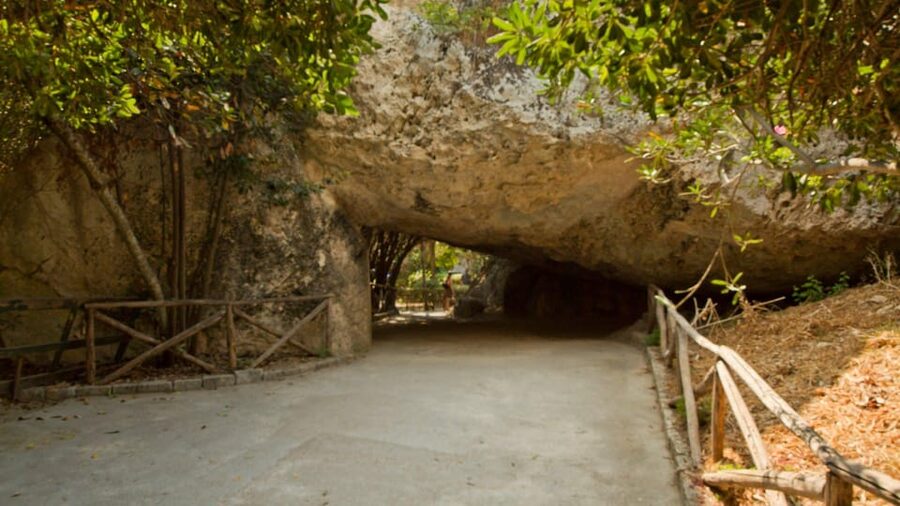
I would choose this tour if you want the main ancient sights explained in a compact format, especially if the idea of hearing the stories behind the Ear of Dionysius and gladiatorial games appeals to you.
It suits couples, families, and first-time visitors who prefer a guide to a map and audio notes. The listed wheelchair accessibility may also make it worth considering for visitors who need that feature, though you should confirm the route details in advance.
History fans should know that this is an overview. You will see the quarries, cave, Greek Theater, altar area, and Roman Amphitheater, but the schedule does not promise lengthy research-level discussion at each stop.
I would skip it if you want a private tour, a guaranteed single-language group, or a slow photographic walk. The tour may operate in Italian and English at the same time, and two hours leaves little room for lingering.
Practical details before you go
Book a starting time that gives you actual sunset light over the park. The supplied information does not list fixed departure times, so check availability for the date you want.
Arrive 20 minutes early at the Neapolis entrance gate on the Via Romagnoli and Viale Augusto side. Your guide hands over the entrance ticket there, and arriving early gives you time to identify the correct meeting point.
The activity includes free cancellation up to 24 hours before the start and allows you to reserve now and pay later. It is also listed as wheelchair accessible. The languages are Italian and English.
Bring comfortable shoes and keep your pace steady. The route covers several parts of the archaeological park, and the experience is built around walking between stops rather than sitting in one place.
Should you book the Syracuse sunset tour?
Book it if you want a well-organized introduction to Neapolis with evening light, included admission, and a guide who can connect Greek and Roman Syracuse. The Ear of Dionysius, Greek Theater, harbor view, and Roman Amphitheater give you a strong range of sights for two hours.
At $46, the tour earns its price through convenience and explanation. Just keep your expectations realistic: it is a concise group walk, not an exhaustive study of every ruin. Arrive early, confirm your preferred language, and choose it for the blend of archaeology, stories, and sunset views.
FAQ
How long does the Syracuse Greek Theater and Neapolis sunset tour last?
The tour lasts two hours.
What is included in the price?
The price includes admission to the Neapolis Archaeological Park and a guided tour of the park.
How much does the tour cost?
The listed price is $46 per person.
Where is the meeting point?
Meet the guide in front of the Neapolis entrance gate, on the Via Romagnoli and Viale Augusto side. The starting address is Via Luigi Bernabò Brea.
How early should I arrive?
You should arrive 20 minutes before the scheduled start time.
Which languages are available?
The guide is available in Italian and English. The tour may be conducted in both languages at the same time.
Is the entrance ticket provided in advance?
The guide gives you the Neapolis Archaeological Park entrance ticket at the meeting point.
Is the tour wheelchair accessible?
Yes. The activity is listed as wheelchair accessible.
Can I cancel the tour for a full refund?
Yes. You can cancel up to 24 hours in advance for a full refund.
More Things to Do After Dark in Syracuse
- Ortigia guided night tour, Syracuse
★ 4.8 · 4 reviews - Catania: Mount Etna Morning or Sunset Day Trip with Tasting
★ 4.8 · 4,028 reviews - Catania: Sunset Jeep Tour of Mount Etna and Lava Flow Caves
★ 4.8 · 2,113 reviews - Agrigento: Valley of the Temples Skip-the-Line Sunset Tour
★ 4.5 · 1,512 reviews
Just added around Syracuse
- Vendicari – Sicily’s best coast nature reserve ( Birdwatching & Archeology )★ 5.0 · 8 reviews
- Etna and Taormina tour from Syracuse with private driver★ 4.5 · 9 reviews
- Tour of Montalbano★ 4.5 · 7 reviews
- Etna tour from Syracuse with private driver★ 5.0 · 4 reviews
- Noto, Portopalo and Marzamemi tour from Syracuse with private driver★ 4.5 · 10 reviews
- Siracusa Walking Tour with Audio and Written Guide by a Local★ 5.0 · 59 reviews
- Syracuse Private Shore Excursion: Archaeological Park and Ortigia★ 5.0 · 5 reviews
- Syracuse Scavenger Hunt & Highlights Self Guided Audio Tour★ 4.5 · 4 reviews
Syracuse Archaeological Park Tours, compared.

Ancient Syracuse: private guided tour of the Neapolis archaeological park
Read our review →
Group guided tour of the archaeological park of Neapolis
Read our review →Browse the lists this tour appears in