
Reviewed · SYRACUSE ARCHAEOLOGICAL PARK TOURS
Group guided tour of the archaeological park of Neapolis
Syracuse’s Neapolis Archaeological Park packs Greek theater, Roman engineering, a legendary quarry, and the enormous Ear of Dionysius into one walk. The park is too spread out for a quick glance, so a guide helps you connect the stones to the ancient city rather than simply ticking off ruins.
I like the small maximum of 15 people, which makes it easier to hear the guide and ask questions. I also like the radio guide, especially when the group spreads out at a large site such as the Greek theater. Guides including Eva, Gaetano, Federica, and Sebastiano are praised for clear explanations, stories, and a calm pace.
The main catch is that the entrance ticket is not normally included. Buy it before the tour or select the tour-plus-ticket option, and note that the meeting point is at the street entrance on Largo Anfiteatro, not necessarily at the ticket booths. During spring and summer performances, the Greek theater may be covered and only partly visible.
Key points to know before booking
- Five major ancient sites in 90 minutes: The route includes the Ear of Dionysius, Greek theater, Hieron’s Altar, Roman amphitheater, and Latomia del Paradiso.
- A small English-speaking group: The maximum is 15 people, with a radio guide supplied so you can follow from a little distance.
- Strong guide-led storytelling: Eva, Gaetano, Federica, and Sebastiano are noted for clear facts, legends, anecdotes, and answers to questions.
- Tickets need attention: Admission is separate unless you choose the tour-plus-ticket option.
- The Greek theater may be partly hidden: Seasonal performances can cover much of the theater.
- Good timing matters: A late-afternoon departure can be pleasant on hot days and gives the park a different light.
Why a guide helps at Neapolis
Neapolis is not one compact ruin. It is a broad archaeological park where Greek, Roman, and later industrial traces sit among gardens and old stone quarries. Without context, you can admire the scale but miss how the parts fit together.
The tour begins with a short introduction at the park entrance. This is useful because Syracuse’s ancient story covers more than one period, and the route moves from a quarry associated with Greek Syracuse to Roman entertainment buildings and back to the dramatic stone-cut setting of Latomia del Paradiso.
The guide’s role is not just to point out walls. A good explanation tells you what a space was used for, how it was cut or built, and why it mattered to the city. Gaetano has been praised for a measured pace and clear explanations, while Eva is noted for combining archaeological facts with stories and details about the plants and trees in the park.
The supplied radio guide is a practical touch. In a small group, you can stand a few steps away to look at a feature without losing the explanation. It also helps if other groups are nearby or if the site is busy.
More visits to the Neapolis park:
- Syracuse: Neapolis Archaeological Park Small Group Tour
★ 4.7 · 350 reviews - From Catania: Neapolis of Syracuse, Ortygia, and Noto Tour
★ 4.7 · 234 reviews - Syracuse: Ortigia and Neapolis Guided Walking Tour
★ 4.7 · 205 reviews
The Ear of Dionysius: a cave with a memorable name
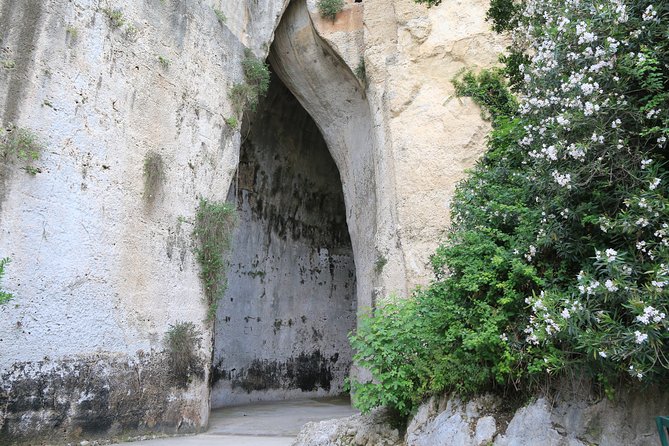
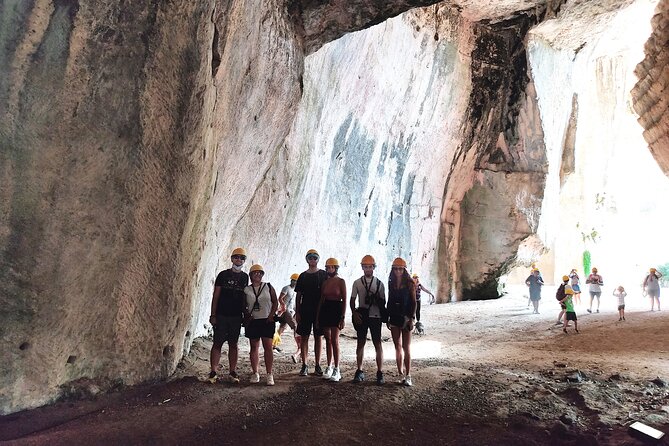
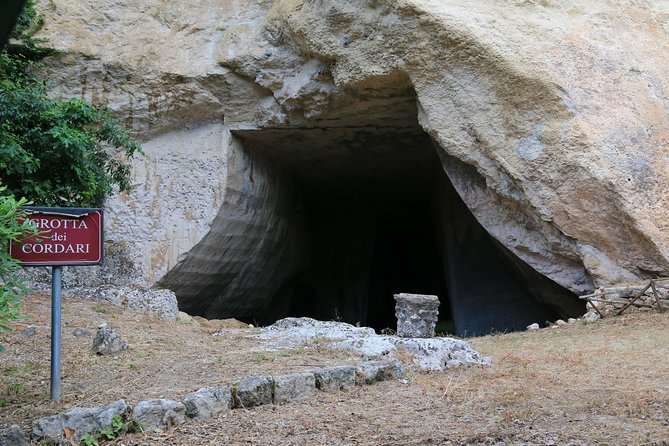
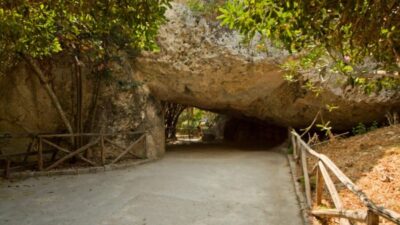
The first major stop is the Ear of Dionysius, a tall artificial cave cut into the limestone. You enter the cave for about 15 minutes, where the name and shape provide an immediate talking point.
This is one of the park’s most atmospheric areas. The high walls make the quarry feel much larger than a normal underground chamber, and the unusual name gives the guide a natural opening for stories and legends connected with the site.
The stop is short, but that works well. You get time to look upward, take in the scale, and hear the explanation without the visit becoming repetitive. The ground may feel uneven in an ancient quarry setting, so sensible shoes are a good idea, although the supplied information does not give a formal footwear requirement.
The Greek theater and the seasonal cover
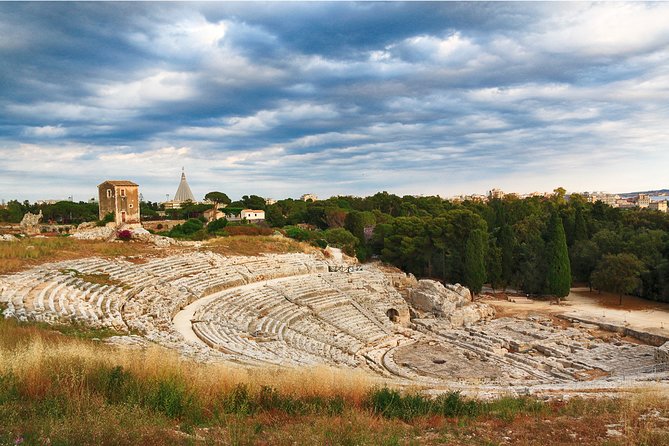
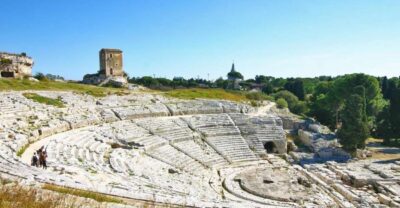
The Greek theater receives the longest stop, about 30 minutes. Here the guide explains the archaeological details, the theater’s use, and its role in the ancient city.
The seating cut into the hillside is the visual centerpiece of the park. From the theater, you can better understand how the ancient builders used the natural rock rather than treating the site as a flat building plot. The guide’s explanation is valuable here because the bare stone alone does not tell you how the space functioned.
There is one important seasonal warning. During the period of performances, usually spring and summer, the theater is covered and only partly visible. That does not remove the value of the visit, but it changes what you will see. If the theater is your main reason for booking, check the performance season before paying.
A late-afternoon visit may be a smart choice in hot weather. Sebastiano’s tour was particularly appreciated at that time for its gentler temperature and light. The schedule provided here does not guarantee a late departure, so treat this as a timing preference to check when booking, not as a promise.
Hieron’s Altar and the scale of public ceremony
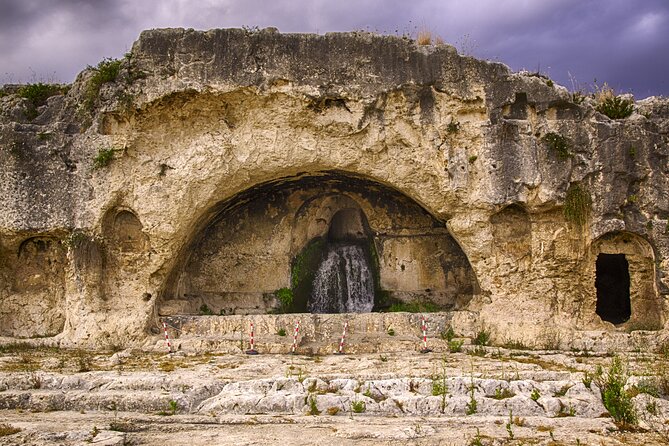
The next stop is the Ara di Ierone, or Hieron’s Altar. The guided visit lasts around 10 minutes and focuses on the history of this striking monument.
This stop is brief, but it helps show that Neapolis was not only a place for theater and quarry work. The altar’s scale points to large public ceremonies and the resources available to ancient Syracuse. You will get more from it if you pay attention to dimensions and layout rather than expecting a fully preserved building.
A guide is especially useful here because an altar can be hard to read when only parts remain. The explanation turns an open archaeological space into a place with a purpose, even where the original structure has been lost.
A few more Sicily days worth weighing up
- Etna Morning Trip
★ 4.5 · 1,241 reviews - Syracuse: Boat Trip of Ortigia Island and Sea Caves
★ 4.7 · 937 reviews - Tour of the island of Ortigia and exploration of sea caves with baths.
★ 5.0 · 668 reviews - Pub Crawl Palermo
★ 5.0 · 595 reviews
The Roman amphitheater: a different kind of spectacle
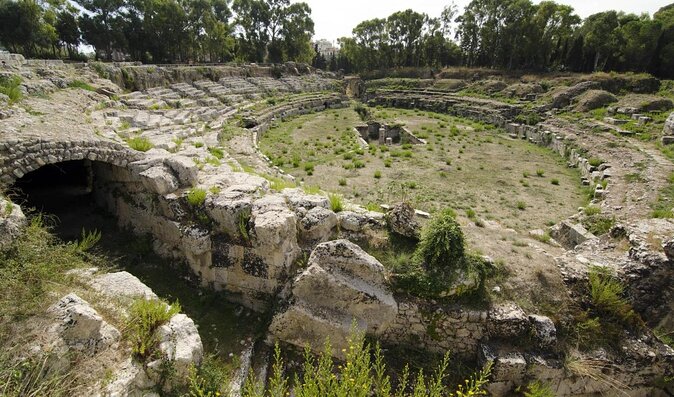
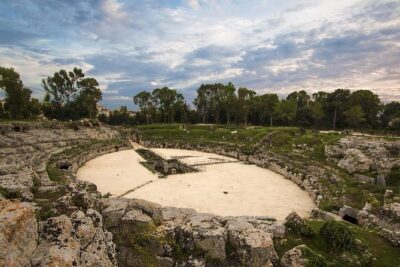
The Roman amphitheater receives about 20 minutes. Its form gives you a clear contrast with the Greek theater: both were built for public entertainment, but they served different traditions and different types of events.
The guide points out the archaeological details and explains the amphitheater’s use. I like this part of the route because it prevents the park from feeling like one long sequence of ancient stones. You see how Syracuse changed over time and how Roman building ideas appeared in a city with an older Greek identity.
The amphitheater is also a good place to listen carefully to the radio guide. The shape is large, and the group may spread out while looking into the arena. Audio support lets you keep following the explanation without standing shoulder to shoulder.
Latomia del Paradiso: an old quarry turned garden walk
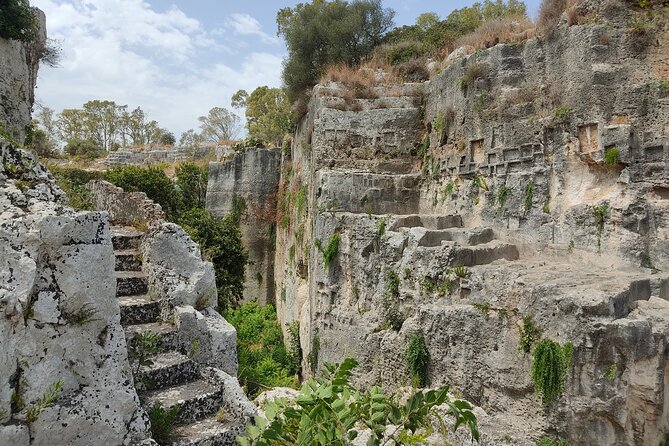
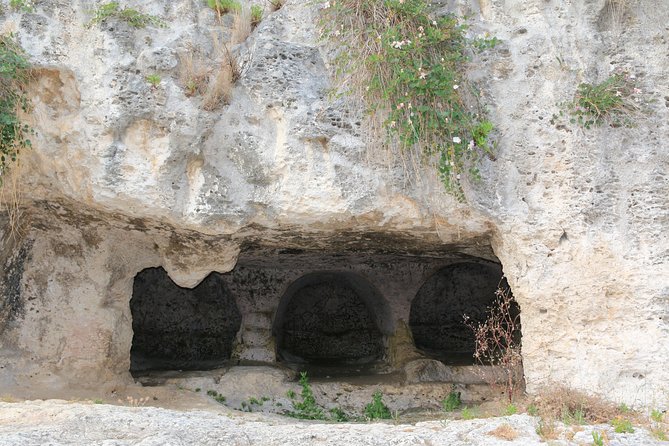
The final stop is Latomia del Paradiso, a panoramic guided walk through the gardens of the ancient stone quarry. It lasts about 20 minutes and gives the tour a calmer finish after the theater and amphitheater.
This area combines vegetation, stone walls, and views into a setting that feels different from a formal monument. The guide may point out plants and trees as well as archaeology. Eva, in particular, is noted for bringing those natural details into the walk, which adds variety for anyone who has had enough dates and dynasties by this point.
The quarry is important to the character of Neapolis. You are not only looking at buildings made from stone. You are also seeing the places where stone was removed and the physical setting that helped shape the park. The panoramic element makes this a pleasant place to slow down and take stock.
What the 90-minute schedule feels like
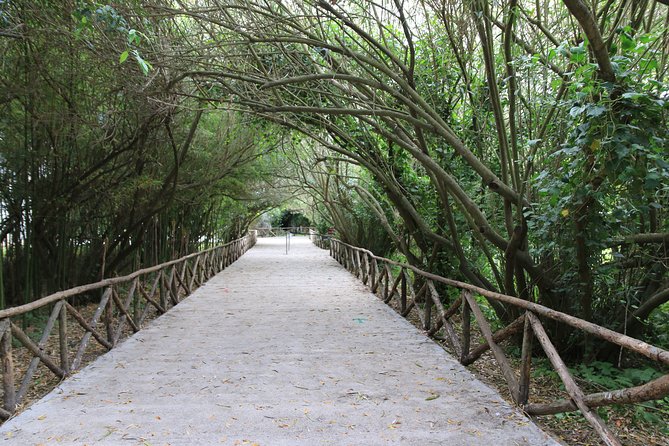
The published duration is about one hour and 30 minutes. That is long enough for a guided overview but too short for a leisurely independent exploration of every corner.
The time is divided sensibly:
- About five minutes for the park entrance and historical introduction
- About 15 minutes inside the Ear of Dionysius
- About 30 minutes at the Greek theater
- About 10 minutes at Hieron’s Altar
- About 20 minutes at the Roman amphitheater
- About 20 minutes in Latomia del Paradiso
The numbers add up to the full tour, so expect a steady pace. You will have time to hear the main explanation and look around, but you should not expect long photo stops or extended time at each monument.
That format suits you if you want the essential sites explained before continuing around Syracuse. It may feel rushed if you prefer to study inscriptions, sketch, photograph every angle, or linger without a schedule. The good news is that the activity ends back at the meeting point, so you can decide afterward if you want to explore the park further on your own, subject to opening and ticket conditions.
Price, tickets, and where the value lies
At about $26.43 per person, the tour is priced as a modest guided introduction rather than a full-day archaeological course. The value comes from the guide’s interpretation and the structure of the visit, not from admission being bundled into the standard price.
You need to pay close attention to the ticket choice. The regular tour does not include the entrance ticket, while a tour-plus-ticket option is available. If you arrive without admission, you may have to buy it separately and deal with the ticket line before the group begins.
One specific practical tip is to arrive early and buy your ticket in advance if you have not selected the combined option. The meeting point is at Largo Anfiteatro, 2, at the street entrance. It is not necessarily the same place as the actual ticket entrance, so allow time to orient yourself.
The cost makes the most sense for a first visit, a short stay in Syracuse, or a day when you want someone else to organize the order of the sites. If you already have strong knowledge of Greek and Roman archaeology and enjoy reading signs at your own pace, a self-guided visit may give you more freedom.
Group size, language, and access
The tour is offered in English and has a maximum of 15 people. That is small enough for a personal feel without the price of a private guide.
Several guides have received particular praise for speaking clearly and keeping a relaxed pace. Gaetano has been singled out for explanations that remain easy to follow even for people who do not speak Italian. Federica is noted for managing large cruise crowds well, and Eva is praised for adding stories and botanical details. Guide availability is not guaranteed, so book for the format rather than for one named person.
A radio guide is included. This matters more than it may sound. Archaeological parks can be noisy, open, and spread out, and you do not want to miss the explanation while standing back for a photograph.
The activity is near public transportation, service animals are allowed, and most people can participate. The supplied information does not give detailed mobility notes about slopes, surfaces, or rest areas, so you should ask the provider if you need specific accessibility advice.
Who will enjoy this tour most
I would choose this tour if you want the main sights of Neapolis explained in a clear order and you have limited time in Syracuse. It suits couples, families, and small groups who prefer stories and context to a silent walk among ruins.
It is also a sensible choice for a cruise day or a tightly planned visit. One guide specifically received praise for handling heavy cruise crowds, and the 90-minute length leaves room for other Syracuse plans.
Families may appreciate the legends connected with the Ear of Dionysius and the theater, especially because the guides are described as able to hold both adult and child attention. The pace is measured rather than rushed, but children who need frequent breaks may find the full archaeological route demanding.
I would hesitate if the Greek theater is your non-negotiable sight during performance season. The cover can block much of it. I would also think twice if you want a private, slow archaeological study rather than a set route with a group.
Booking and cancellation details
Confirmation is provided at the time of booking. The activity begins and ends at Largo Anfiteatro, 2, in Syracuse, and the tour is offered in English.
Free cancellation is available if you cancel at least 24 hours before the start time. Changes or cancellations inside that period are not accepted for a refund.
The tour depends on suitable weather and a minimum group size. If poor weather cancels it, or if the minimum number is not reached, you can choose another date or experience, or receive a full refund.
Should you book the Neapolis guided tour?
Book it if you want a compact, well-explained introduction to Syracuse’s Greek and Roman remains. The small group, radio guide, steady pace, and strong guide reports make it a useful choice for a first visit.
Before booking, confirm the ticket option and check the Greek theater’s seasonal condition. If the theater is covered, the Ear of Dionysius, amphitheater, altar, and quarry still make a worthwhile route, but your expectations should match what is visible.
For about $26.43 before standard admission, this is good value when you want facts, stories, and an efficient plan. It is less suited to anyone who wants complete independence or a long, unhurried look at every corner of the park.
FAQ
Where does the Neapolis archaeological park tour start?
It starts at Largo Anfiteatro, 2, 96100 Siracusa SR, Italy.
Where does the tour finish?
The activity ends back at the meeting point.
How long does the guided tour last?
The tour lasts approximately one hour and 30 minutes.
Is the entrance ticket included?
The standard tour price does not include admission. An option combining the tour and ticket is available.
Is the tour offered in English?
Yes. The experience is offered in English.
How many people can join the group?
The group has a maximum of 15 participants.
What equipment is included?
A radio guide is included so you can follow the guide’s explanations from a short distance.
Can I see the Greek theater during performances?
During the usual spring and summer performance period, the Greek theater is covered and only partially visible.
Are service animals allowed?
Yes, service animals are allowed.
Can I cancel for a full refund?
Yes, if you cancel at least 24 hours before the experience start time. Cancellations made later are not refunded.
What happens if bad weather cancels the tour?
You will be offered a different date or a full refund.
What happens if the minimum group size is not reached?
You will be offered a different date or experience, or a full refund.
Just added around Sicily
- Zafferana Etnea:Honey extraction workshop and honey tasting★ 4.7 · 3 reviews
- From Trapani: Favignana and Levanzo Yacht Tour with Stops★ 5.0 · 4 reviews
- Mt Etna: Winter Trekking Tour with Optional Catania Transfer★ 4.7 · 13 reviews
- Wine tour with wine tasting★ 4.7 · 18 reviews
- Sicilian Soul: Winery Tour, Wine & Food Tasting in Catania★ 5.0 · 4 reviews
- Wine tasting in Catania Historic center★ 4.4 · 15 reviews
- Valley Of The Temples By E-Bike With Picnic Included★ 4.7 · 7 reviews
- Valley of the Temples and Villa Romana Multi-Language Tour★ 4.8 · 5 reviews
Syracuse Archaeological Park Tours, compared.
Ancient Syracuse: private guided tour of the Neapolis archaeological park
Read our review →

Private tour Syracuse -Archaeological Park and Ortigia with lunch
Read our review →Browse the lists this tour appears in