
Reviewed · SYRACUSE ARCHAEOLOGICAL PARK TOURS
Syracuse: tour of the Neapolis Archaeological Park (max 6 guests)
The most memorable part of this Syracuse tour may be the Ear of Dionysius, a tall limestone cave where sound and legend meet. You will also see the great Greek theater, a massive Roman amphitheater, and the remains of an altar built for Zeus, all with Dr. Enrica De Melio, a PhD archaeologist, guiding you through the site.
I like the very small group, capped at six people, and I like having a guide who can answer questions instead of sending you from sign to sign. Enrica also uses pictures and diagrams to show how damaged ruins may once have looked. The main drawback is the short 90-minute format: the park deserves more time, and the €14 entrance fee is extra.
Key points to know before you book
- The Ear of Dionysius takes center stage: Expect about 30 minutes in and around this unusual quarry cave, with its strong echoes and dramatic shape.
- Dr. Enrica De Melio leads the walk: Her PhD in archaeology gives the tour a firm historical base, while her friendly style keeps it conversational.
- The Greek theater is a major stop: You will see one of the ancient world’s largest Greek theaters, with time to notice details that are easy to miss alone.
- The group stays small: No more than six people makes it easier to hear, ask questions, and keep a comfortable pace.
- The advertised tour lasts about 90 minutes: That is enough for the main sights, but not for a slow, full visit to every corner of the archaeological park.
- The entry ticket is separate: Budget €14 per person in addition to the tour price of $249.68 per person.
Why Neapolis is worth your time
Syracuse is not a place where Greek, Roman, and later Sicilian history sit in separate boxes. At Neapolis Archaeological Park, they overlap in one walk. A Greek theater, a Roman arena, a Hellenistic altar, and a quarry shaped by human labor all occupy the same broad archaeological area.
That mixture is the real appeal. You are not simply looking at one ancient monument. You are moving through the remains of a city that changed hands, customs, and political power over many centuries. Without a guide, the site can feel like a sequence of impressive but disconnected stones. Enrica’s job is to connect them.
I especially like the use of historical images and diagrams. Ruins often make perfect sense to specialists and look confusing to everyone else. A visual reconstruction can help you understand where an audience sat, how a monument was used, or why a broken wall still matters.
The tour is offered in English and begins and ends at the Neapolis Archaeological Park, at Via Luigi Bernabò Brea 14. It does not include transportation to the park, so you should plan your own route there. The site is near public transportation.
More visits to the Neapolis park:
- Syracuse: Neapolis Archaeological Park Small Group Tour
★ 4.7 · 350 reviews - From Catania: Neapolis of Syracuse, Ortygia, and Noto Tour
★ 4.7 · 234 reviews - Syracuse: Ortigia and Neapolis Guided Walking Tour
★ 4.7 · 205 reviews
Starting with the Ear of Dionysius
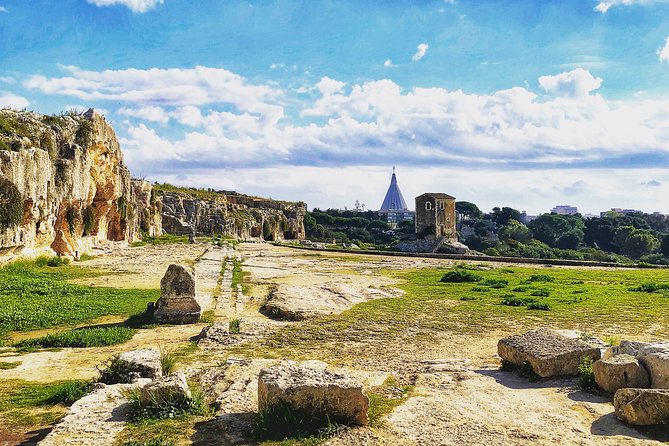
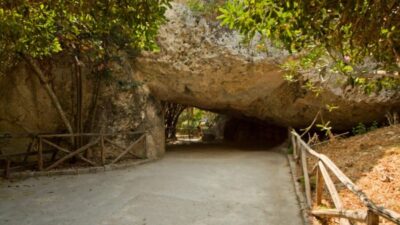
The tour’s first stop is the Ear of Dionysius, and the name gives you a clue to the atmosphere. This is a limestone cave with a striking interior shape and unusual acoustics. Sound carries well inside, which makes the space memorable even before you hear the stories attached to it.
The stop lasts about 30 minutes, making it the longest part of the advertised route. That is sensible. The cave is not just a quick photo stop. You need time to look at the cut stone, understand how the quarry was formed, and hear how ancient legend and later interpretation have shaped its fame.
This is also a good place for Enrica’s style of guiding. The cave’s nickname comes from the tyrant Dionysius, and the site invites a mix of fact and legend. A good guide helps you separate what can be supported from what belongs to the storytelling tradition. You get both sides without losing the pleasure of the tale.
The quarry area is sometimes associated with Paradise Quarry, a large white limestone excavation filled with tunnels and caves. The Echo effect can be fun for children, and some guides even sing inside. That is not promised as part of this experience, so treat it as an atmospheric possibility, not a scheduled feature.
The drawback is that cave and quarry surfaces can be uneven. The activity asks for a moderate level of physical fitness, and you should expect a walking visit rather than a seated lecture. Wear practical shoes and be prepared for the tour to continue outdoors.
Seeing the Greek theater with context
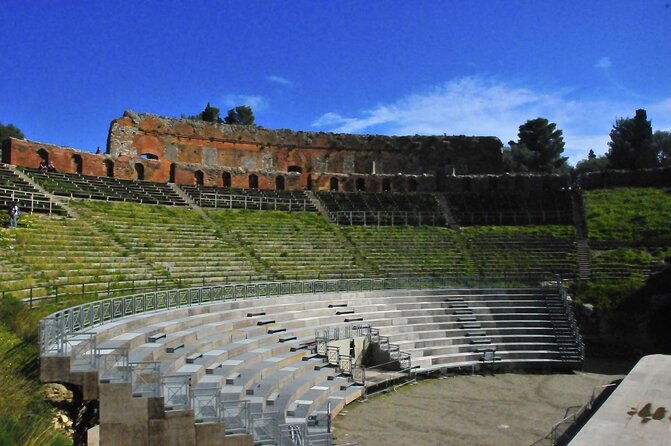
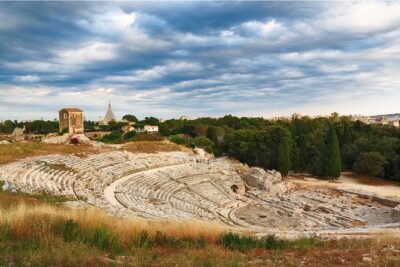
The Greek theater is the park’s grandest sight. It is described as the third largest Greek theater in the world, and its scale is difficult to grasp when you only read about it. From the stone seating and broad open setting, you can begin to picture thousands of people gathered for performances.
The scheduled time here is about 15 minutes. That sounds brief, but it works as part of a focused overview. Enrica can point out details that have faded or become hard to read, including inscriptions and features you might pass without noticing.
This is where a guide adds real value. A theater is more than a semicircle of seats. Its arrangement tells you about public life, performance, status, and the way people shared civic space. With Enrica explaining the setting, the theater becomes easier to read as a working place rather than a photogenic ruin.
The Greek theater has also been connected in the supplied information with gladiatorial spectacles, though the site’s many periods can be confusing if you rush through them. You will benefit from asking Enrica to clarify which features belong to the Greek period and which relate to later Roman use or later changes.
The short stop means you may not get a long time for quiet viewing or photography. If this monument is your main reason for visiting Neapolis, the 90-minute tour may feel like an introduction rather than a full examination. You can still ask questions, but the schedule is designed to keep moving.
Pausing at Hieron’s Altar
Ara di Ierone, or Hieron’s Altar, receives about five minutes. That is the quickest stop, but it represents an important part of Syracuse’s Greek past. The monument is a Greek altar from the third century BC, dedicated to Zeus.
At first glance, an altar can be less immediately dramatic than a cave or theater. Much of its impact comes from scale, function, and historical setting. Enrica can explain what you are seeing and why a large public altar mattered in an ancient city.
This is a good example of the tour’s balance. The route gives you a famous monument, an unusual cave, a theater, and a religious structure. You are not spending the entire visit on one type of ancient building.
Five minutes is enough for a guide to establish the basics, but not enough for a long discussion. If you have a strong interest in ancient religion or Hieron’s rule, use the question period to ask for more context. The small group makes that easier than it would be on a large coach tour.
A few more Sicily days worth weighing up
- Etna Morning Trip
★ 4.5 · 1,241 reviews - Syracuse: Boat Trip of Ortigia Island and Sea Caves
★ 4.7 · 937 reviews - Tour of the island of Ortigia and exploration of sea caves with baths.
★ 5.0 · 668 reviews - Pub Crawl Palermo
★ 5.0 · 595 reviews
Finishing at the Roman amphitheater
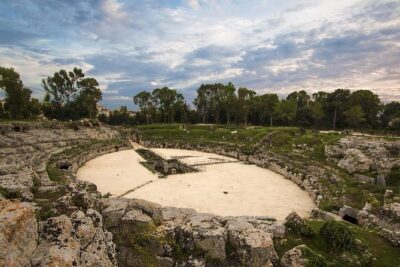
The Roman amphitheater of Syracuse gets about 10 minutes. It is described as the fourth largest amphitheater in the world, which gives you a sense of its scale. Like the Greek theater, it can be hard to understand from fragments alone, so the guide’s explanation matters.
The amphitheater adds a different layer to the park. Greek theater design and Roman arena design served different purposes, and seeing both in one visit helps you compare them. Enrica can place the structure within the wider story of Syracuse and explain what its surviving layout tells you.
Ten minutes is enough to see the basic form and hear a concise explanation. It is not enough for a slow circuit, detailed architectural study, or extended photography. If you like to linger, the tour’s fixed pace may feel brisk here.
Still, the stop is well chosen. After the Ear of Dionysius and Greek theater, the amphitheater gives the route a strong finish. You leave with a clearer sense of how the city’s public spaces changed over time.
What Enrica brings to the walk
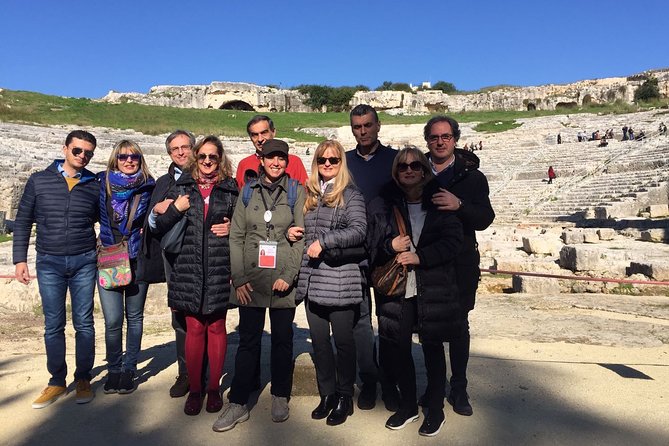
The guide is Dr. Enrica De Melio, a PhD archaeologist. That qualification matters most when the ruins are difficult to read. You can ask about inscriptions, building use, chronology, and the difference between established evidence and local legend.
Her approach also appears suited to families and mixed-age groups. A teenage audience can follow a story about ancient cities more easily when the guide is animated and willing to answer questions. Children may respond especially well to the Echo effect in the quarry area.
Enrica’s style is not limited to dates and names. She uses images and diagrams to help you picture earlier versions of the monuments. She also keeps the pace comfortable, according to the information provided about the tour experience. That combination is useful because archaeology requires both imagination and restraint.
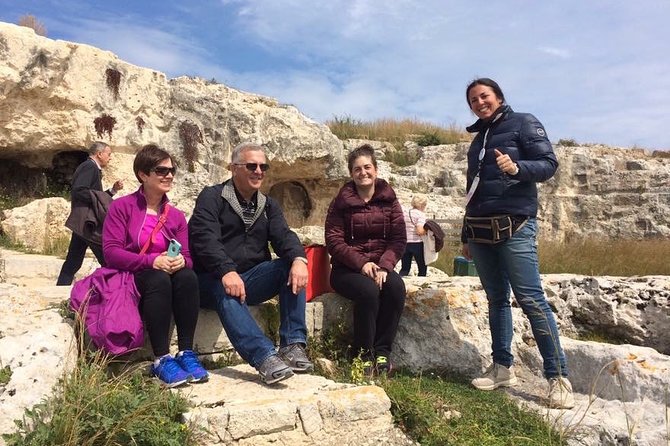
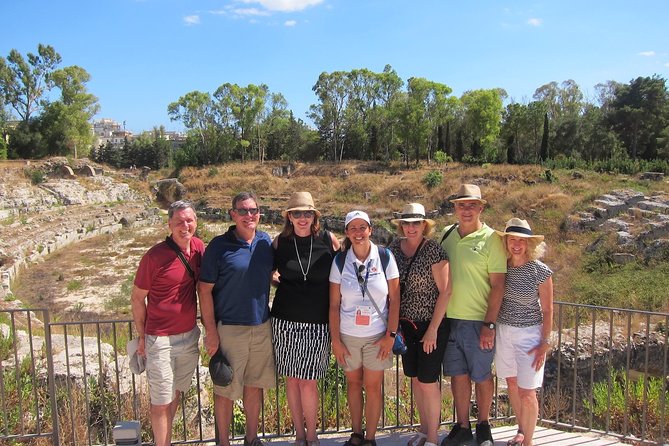
The tour’s private-style feel is another strength. With a maximum of six people, you should be able to hear clearly and ask questions without holding up a large crowd. It also gives Enrica more room to adjust an explanation to your interests.
You should not expect a silent, self-guided walk. The point is conversation. If you want to know how a quarry was cut, why an altar was built, or how to read a damaged inscription, ask. The experience is designed to make room for that exchange.
The value of the $249.68 price
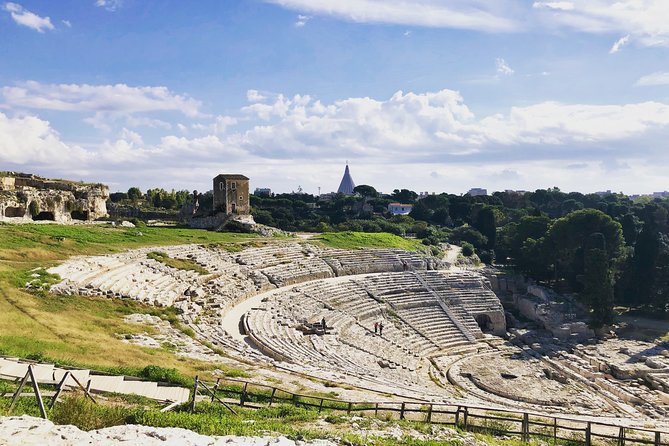
At $249.68 per person, this is not a low-cost sightseeing walk. You also pay the Neapolis entrance fee separately, listed as €14 per person. For one person, the combined price can feel high for a 90-minute activity.
The value improves if you are traveling as a small private party and want an archaeologist rather than a general city guide. You are paying for focused attention, a maximum group size of six, and access to Enrica’s academic background. The cost is less attractive if you only want to see the monuments quickly and do not plan to ask questions.
The tour is also priced for depth rather than transport or entertainment. There is no meal, transfer, or extra attraction included. Its value rests on the quality of the explanation and the way the four sites are connected.
I would compare it with the cost of spending half a day at the park on your own. An independent visit gives you more time but less help reading the ruins. This tour gives you an efficient introduction and a specialist who can make the ancient city easier to understand.
The 46-day advance booking pattern suggests that you should not leave it until the last minute if your schedule is fixed. Confirmation arrives at booking, and free cancellation is available until 24 hours before the start time. Changes or cancellations inside that 24-hour window are not accepted for a refund.
Timing, walking, and practical planning
The activity lasts about one hour and 30 minutes. The listed stop times total roughly one hour, leaving the rest for walking between monuments, introductions, questions, and transitions. You should treat the duration as approximate rather than expect exactly 90 minutes of standing at the four sites.
Start at the park entrance on Via Luigi Bernabò Brea 14. The tour returns to that meeting point at the end. Since the entry ticket is not included, make sure you have budgeted for it before arriving.
Wear comfortable shoes and expect a moderate amount of walking. The physical fitness requirement is not described as strenuous, but an archaeological park can involve uneven ground and outdoor exposure. Service animals are allowed.
The activity requires good weather. If poor weather cancels the tour, you will be offered another date or a full refund. That policy is helpful in Sicily, where a hot or wet day can change the comfort of an outdoor archaeological visit.
Because the group is so small, arriving on time matters. A late arrival can affect the whole schedule more than it would on a large group outing. Keep the meeting point details handy and allow time to reach the park.
Who will enjoy this Syracuse tour most
I would choose this tour if you want the ancient sites explained instead of simply photographed. It is a strong fit for anyone interested in Greek and Roman Sicily, especially if you enjoy asking questions and comparing different periods in one place.
Families may also like it. The cave’s echoes offer a direct, playful way into the subject, while the theater and amphitheater provide large spaces that help younger minds picture ancient crowds. The guide’s use of diagrams can make difficult material easier to follow.
This is also a useful choice for a first visit to Syracuse. You can learn the basic structure of Neapolis in a short time, then decide if you want to return for a slower look. The tour also works well as part of a wider Syracuse day, though the experience itself ends back at the park.
You may want something else if you prefer to wander alone, spend a long time taking photographs, or read every monument at your own pace. You may also find the price hard to justify if you are mainly looking for admission and a quick orientation.
Some longer experiences with Enrica have included Ortigia, Syracuse’s historic island center, but this particular activity focuses on Neapolis Archaeological Park. Do not assume the Ortigia portion is included. If you want both areas, confirm that you are booking the appropriate longer tour.
Should you book the Neapolis tour?
Book it if you want a compact, personal introduction to Syracuse’s ancient monuments and value having a PhD archaeologist at your side. The strongest reasons are the six-person maximum, Enrica’s use of visual aids, and the chance to ask questions at each stop.
Skip it if your priority is low cost or a long, unhurried visit. In that case, enter the park independently and give yourself at least several hours. But if you have limited time and want the Ear of Dionysius, Greek theater, Hieron’s Altar, and Roman amphitheater to make sense as parts of one story, this guided walk is a sensible splurge.
FAQ
How long does the Neapolis Archaeological Park tour last?
The tour lasts approximately one hour and 30 minutes.
How many people can join the tour?
The activity allows a maximum of six people.
Who guides the tour?
The guide is Dr. Enrica De Melio, a PhD archaeologist.
What sights are included?
The route visits the Ear of Dionysius, the Greek theater, Hieron’s Altar, and the Roman amphitheater of Syracuse.
Is the park entrance fee included?
No. The entrance fee is separate and is listed as €14 per person.
Where does the tour begin and end?
The tour begins at Neapolis Archaeological Park, Via Luigi Bernabò Brea 14, Syracuse, and ends back at the meeting point.
What happens if bad weather cancels the tour?
If poor weather causes a cancellation, you will be offered a different date or a full refund.
Just added around Sicily
- Zafferana Etnea:Honey extraction workshop and honey tasting★ 4.7 · 3 reviews
- From Trapani: Favignana and Levanzo Yacht Tour with Stops★ 5.0 · 4 reviews
- Mt Etna: Winter Trekking Tour with Optional Catania Transfer★ 4.7 · 13 reviews
- Wine tour with wine tasting★ 4.7 · 18 reviews
- Sicilian Soul: Winery Tour, Wine & Food Tasting in Catania★ 5.0 · 4 reviews
- Wine tasting in Catania Historic center★ 4.4 · 15 reviews
- Valley Of The Temples By E-Bike With Picnic Included★ 4.7 · 7 reviews
- Valley of the Temples and Villa Romana Multi-Language Tour★ 4.8 · 5 reviews
Syracuse Archaeological Park Tours, compared.
Ancient Syracuse: private guided tour of the Neapolis archaeological park
Read our review →
Group guided tour of the archaeological park of Neapolis
Read our review →Browse the lists this tour appears in