
Reviewed · SYRACUSE ARCHAEOLOGICAL PARK TOURS
Archaeological Syracuse: Neapolis Park private tour
The most striking part of this tour is the chance to stand inside the Ear of Dionysius, a tall quarry grotto famous for its shape and echo. You also get the Greek theater, carved into Temenite Hill, where the view reaches across Syracuse’s bay.
I like the private format, which gives your family or group room to ask questions and adjust the focus. I also like the route itself: quarries, caves, theater, altar, and amphitheater make a compact lesson in Greek and Roman Syracuse. The main drawback is time. At 105 minutes, the tour moves briskly, and the Greek theater may be partly covered during performance season.
Key points
- The Ear of Dionysius: Enter a dramatic quarry grotto where sound carries in an unusual way.
- A private guide for up to 15 people: Ask your own questions and shape the discussion around your interests.
- Greek theater views: Look across the bay from a theater cut directly into the rock of Temenite Hill.
- Seven major sights in 105 minutes: The route covers quarries, caves, the theater, Hieron’s altar, and the Roman amphitheater.
- A flexible seasonal option: Ask about extra areas, such as the Santa Venera quarry, when open.
- Ticket choice matters: Entry is included only with the tour option that specifically includes tickets.
A compact route through ancient Syracuse
Neapolis Archaeological Park is not a single monument. It is a broad archaeological area where Greek quarries, a theater, Roman remains, sanctuaries, and later changes to the site sit close together. That makes a guided walk especially useful. Without context, you can see impressive stone and ruins but miss how the pieces fit.
This private tour begins at the main entrance on Via Romagnoli and Viale Augusto, near the small fountain behind the medieval church of San Nicolò ai Cordari. Look for a guide with the Hermes Sicily logo. The tour ends at the same place, so you will not need to arrange a separate pickup or find your way back through the park.
The advertised route lasts 105 minutes. That is long enough to visit the major sights, but not long enough for a slow archaeological study. I would think of it as a well-focused introduction rather than a full morning among the ruins.
More visits to the Neapolis park:
- Syracuse: Neapolis Archaeological Park Small Group Tour
★ 4.7 · 350 reviews - Syracuse: Ortigia and Neapolis Guided Walking Tour
★ 4.7 · 205 reviews - Syracuse: Neapolis and Greek Theater guided tour
★ 4.5 · 160 reviews
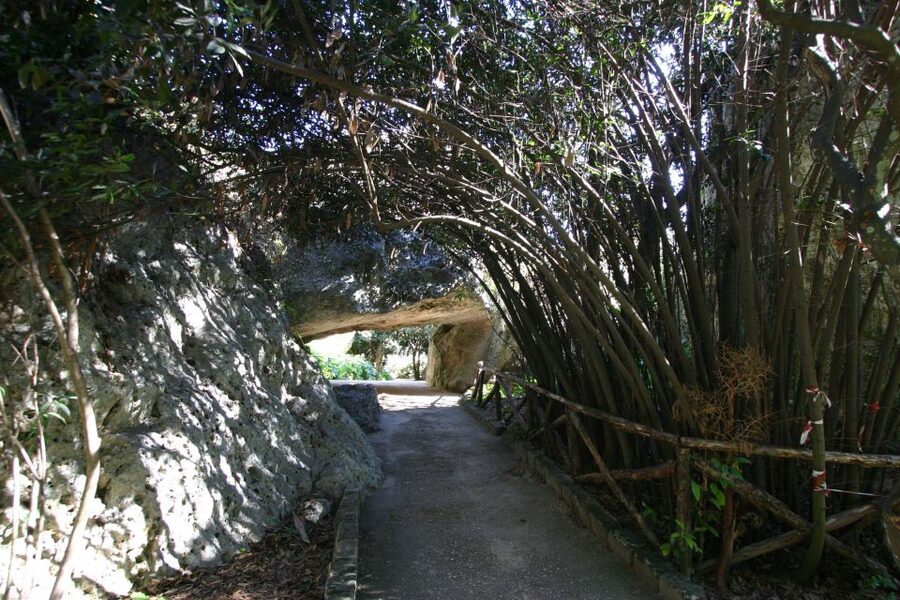
Latomie del Paradiso and the stone quarries
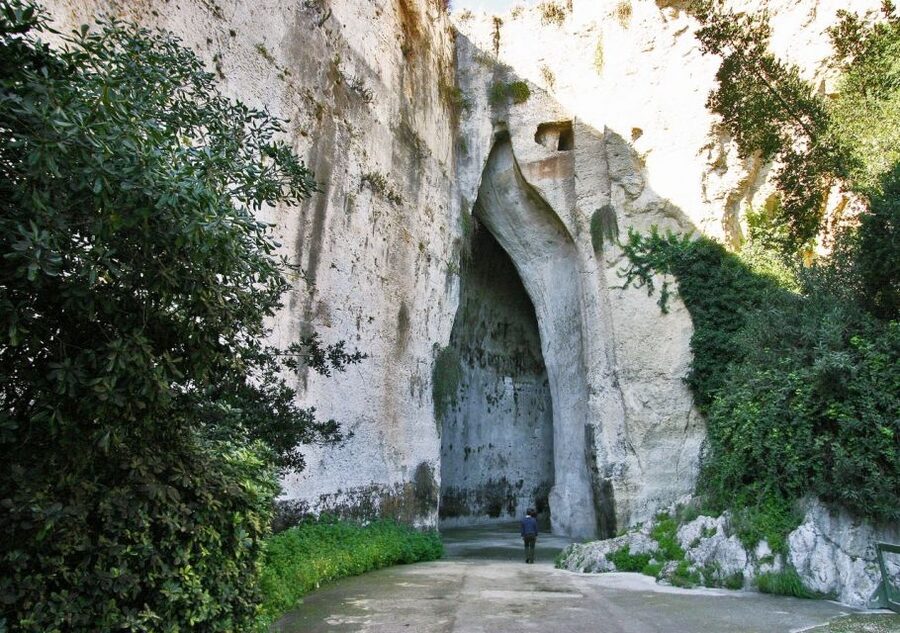
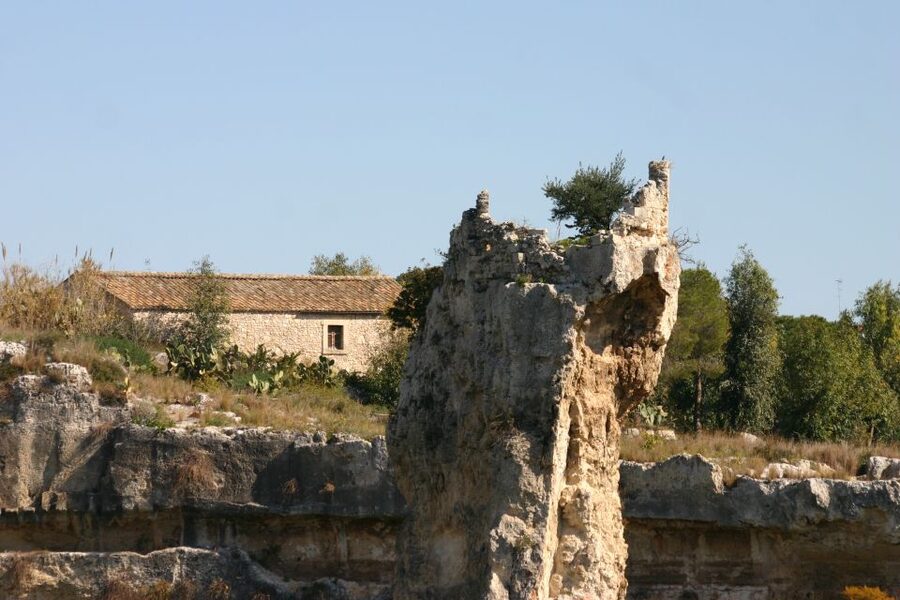
Your first major stop is Latomie del Paradiso, an ancient stone quarry now softened by local plant life. The name is often translated as Paradise Quarry, and the setting explains why: raw walls of pale stone meet pockets of greenery in the middle of the city.
The quarry also helps you understand the scale of Syracuse. These were not small pits dug for a quick building job. Stone was cut here for major construction, and the resulting walls and chambers became part of the city’s story. Your guide can connect the quarry to the monuments you see later, especially the theater.
You will spend about 15 minutes here. That is enough to get oriented and hear why the quarries matter, though you should not expect to explore every corner. Wear shoes with a firm sole. Comfortable footwear is the only item specifically requested, and it is sensible advice for a rocky archaeological park.
The Grotta del Salnitro and old craft work
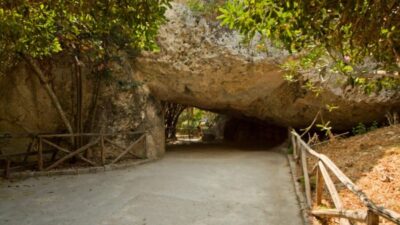
The route continues to the Grotta del Salnitro, also called the Saltpeter Grotto. This is one of the underground spaces inside the old quarries. The stop lasts about 15 minutes, giving your guide time to explain how these spaces were used and why quarrying shaped the site.
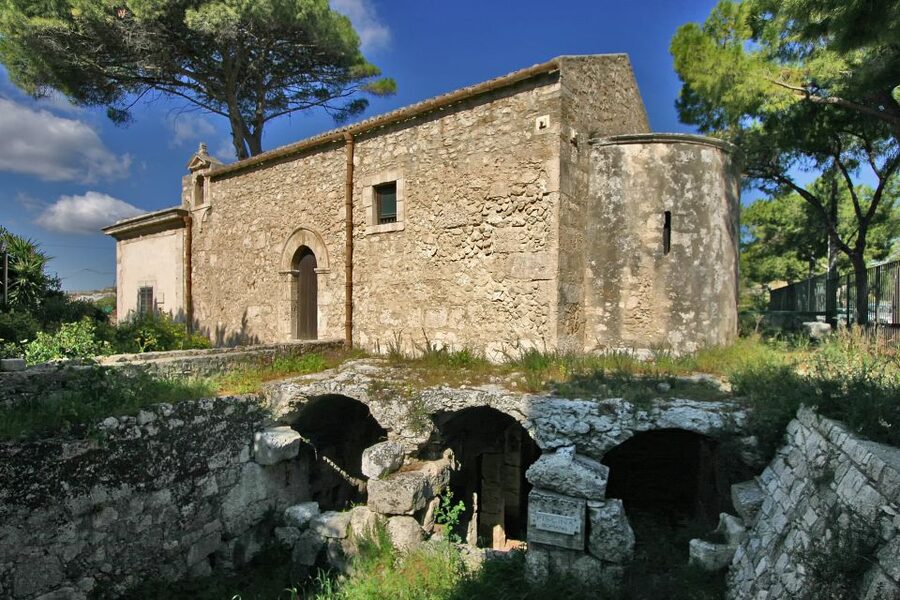
The park also includes the Ropemakers Grotto. The name points to the practical work once carried out in these spaces. Ancient Syracuse was not only about temples, rulers, and theaters. It depended on workers making the materials needed for ordinary life, and the grotto names preserve a trace of that labor.
This is one place where a private guide earns the fee. A quick walk past a cave can feel like scenery. A clear explanation turns it into evidence of how the ancient city functioned.
Entering the Ear of Dionysius
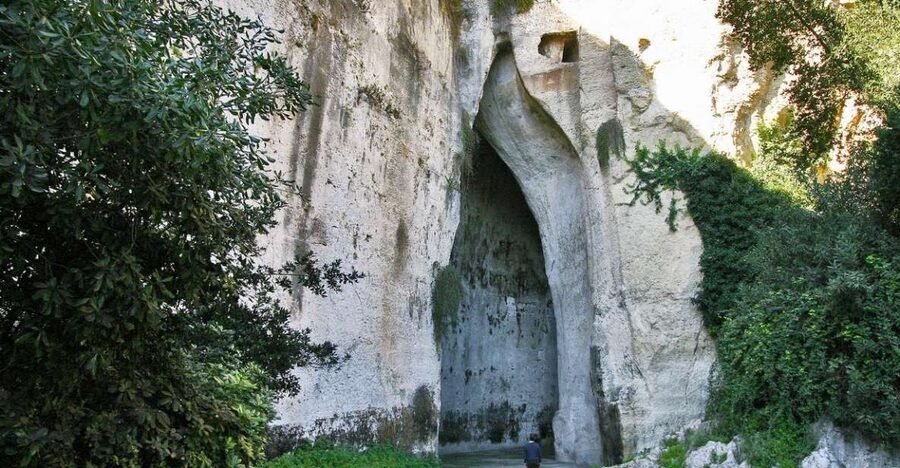
The Ear of Dionysius is the tour’s most memorable enclosed space. Its tall, curved form gives it a striking appearance, while the acoustics make even small sounds seem to travel. Your guide will explain the grotto’s place in local tradition and point out the features that gave it its famous name.
The stop is scheduled for about 15 minutes. That may sound short, but the grotto does not require a long visit to make an impression. You will have time to look up at the walls, test the echo, and hear the story attached to the site.
The name is linked to Dionysius, the powerful ruler of Syracuse, though the grotto itself is part of the quarry system. This is a good example of how Syracuse mixes solid archaeology with old stories. Listen for the distinction between what can be seen in the stone and what belongs to later tradition.
Because the Ear of Dionysius is enclosed, the atmosphere changes sharply from the open quarry. If you are sensitive to confined spaces, you may find this stop less comfortable than the theater or the outdoor paths. Smoking is not allowed anywhere on the activity.
A few more Syracuse days worth weighing up
- Syracuse: Boat Tour with Captain Mirko, Snorkeling & Caves
★ 4.7 · 746 reviews - Siracusa: Ortigia Boat Tour with Marine Grotto
★ 4.7 · 617 reviews - Siracusa: Ortigia & Sea Caves Speedboat Tour with Swim Stop
★ 4.9 · 499 reviews - Syracuse: Pillirina, Ortigia, and Sea Caves Tour by Boat
★ 4.6 · 348 reviews
The Greek theater on Temenite Hill
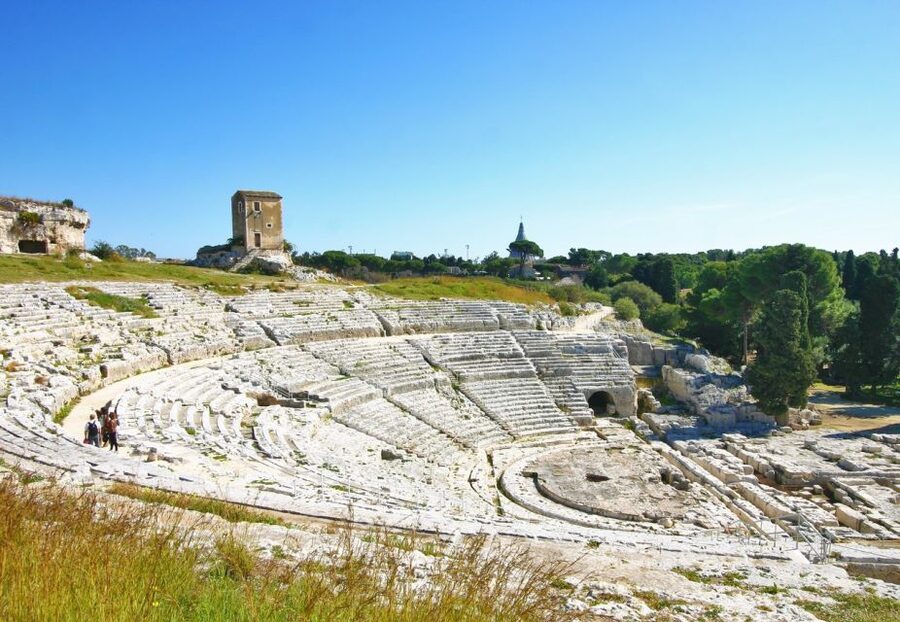
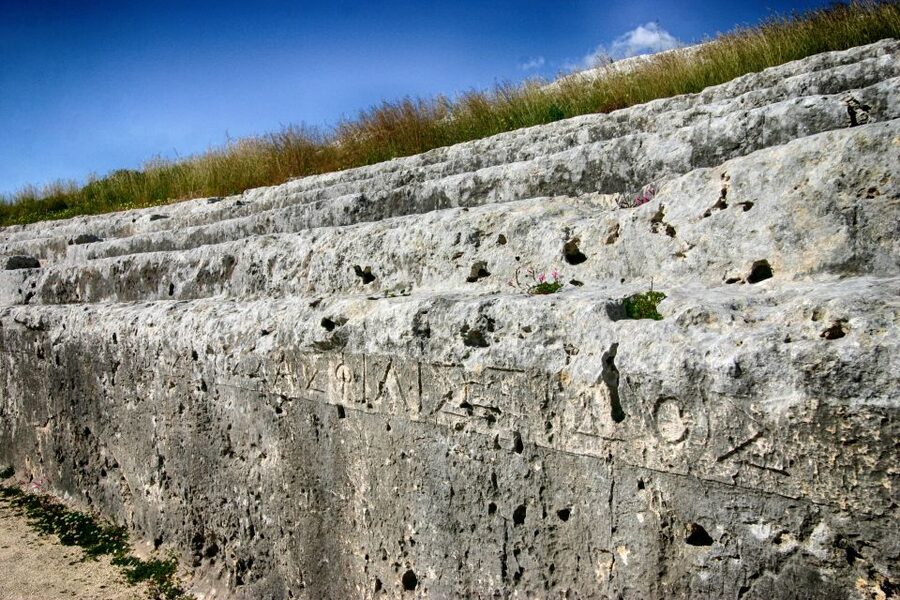
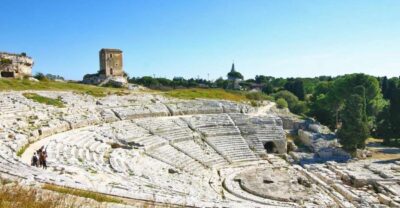
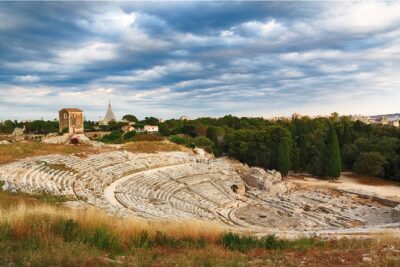
The Greek theater is the centerpiece of the park. Dating from the fifth to third centuries BC, it was cut directly into the rock of Temenite Hill. The scale is hard to grasp until you sit or stand within the seating area and look toward the stage.
Your guide will help you imagine the theater as a working part of Greek Syracuse, not merely as a ruin for photographs. Performances once drew large crowds, and the setting used the natural slope of the hill rather than fighting it.
About 20 minutes are assigned here, the longest stop on the route. That extra time is welcome. You can study the stone seating, take in the view, and hear how the theater fits into the city’s cultural life.
There is an important seasonal catch. The theater is still used for classical plays and concerts. During spring, and sometimes in summer, it may be covered for performances. A temporary structure can block parts of the theater and reduce the visual impact. The visit still has value, but you should set your expectations accordingly.
The hill also gives you a view of Syracuse’s bay. This is one of the tour’s best moments because the ancient setting and the modern town share the same scene. Bring your camera, but do not rush past the view while focusing on photos.
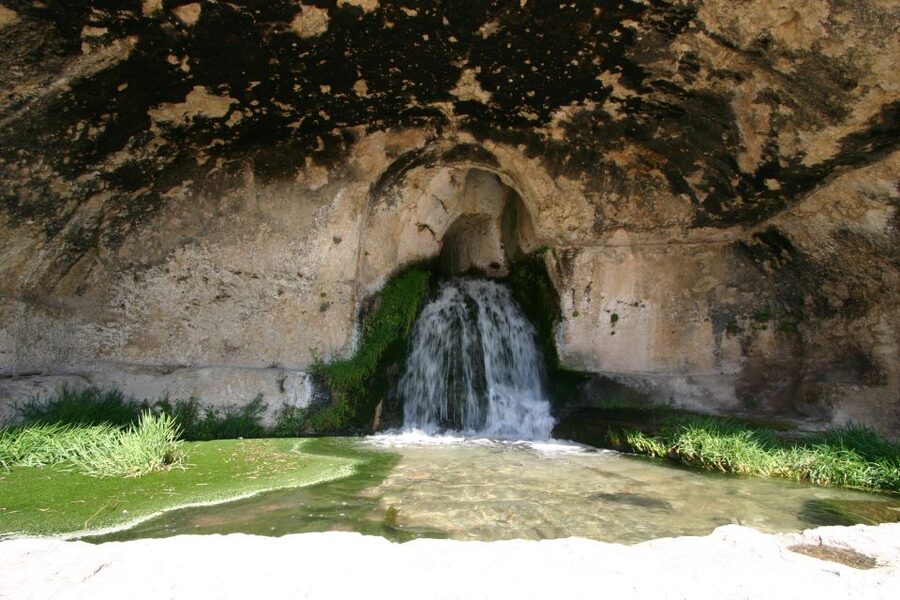
The Nympheum, a sanctuary linked to ancient water nymphs, is also visible from the hill. It offers a quieter point of interest and gives the guide another way to explain the religious life of the area.
Hieron II’s altar and the scale of public ceremony
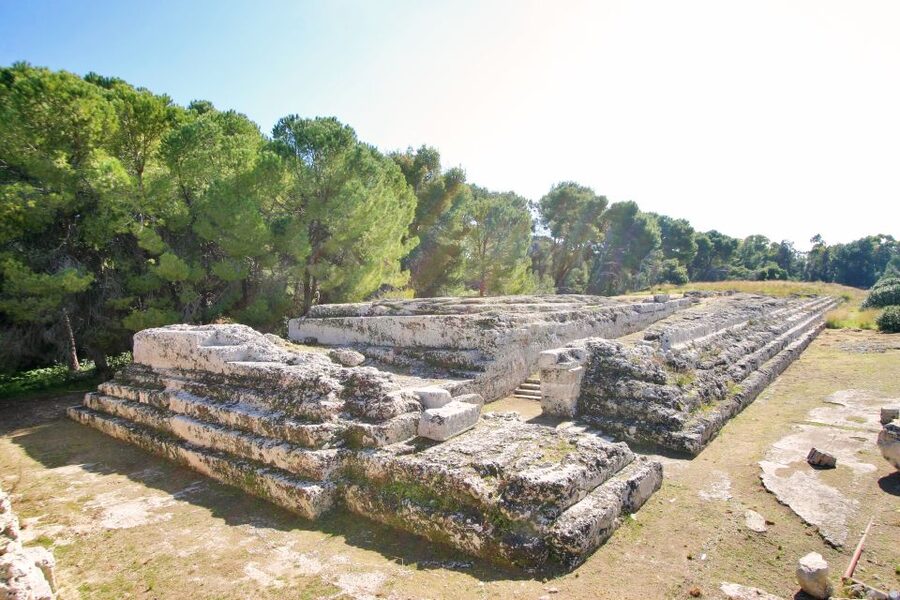
After the theater, the tour reaches the altar of Hieron II. This large ceremonial structure reflects the public and religious power of ancient Syracuse. The remains are not as enclosed or immediately dramatic as the Ear of Dionysius, but their scale matters.
You will spend about 15 minutes here. Listen for details about how an altar of this size would have supported major public ceremonies. It helps to imagine the site as part of a city with the resources to organize events on a very large scale.
This stop also breaks up the route nicely. The caves and theater give you enclosed and sloping spaces, while the altar opens the story toward civic religion and public display.
The Roman amphitheater and a change of era
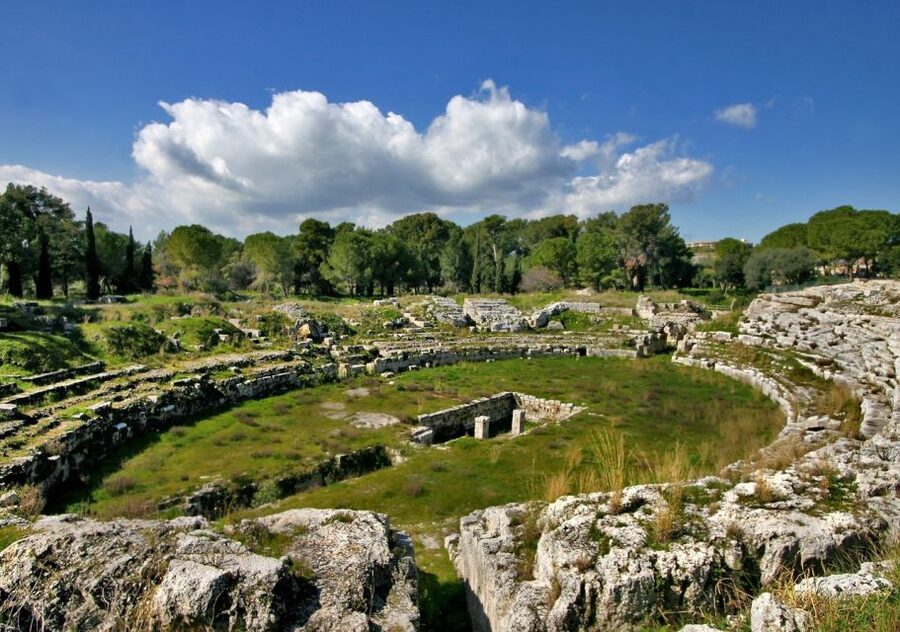
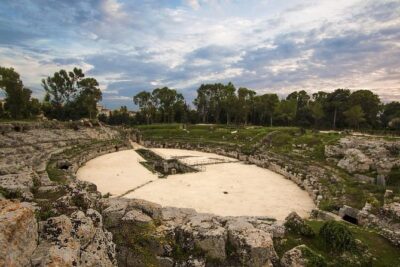
The final major stop is the Roman amphitheater. Its oval shape and remaining stonework show a different phase of Syracuse’s past. Here, the focus shifts from Greek theater and religious tradition to Roman public entertainment.
The amphitheater is scheduled for about 15 minutes. You can compare it with the Greek theater and see how two cultures used different building forms for public events. The Greek theater is tied to drama and performance on a hillside. The Roman amphitheater was designed around an arena and large-scale spectacles.
The tour does not turn this into a long standalone visit, so pay attention to the guide’s explanation. A private setting is helpful here because you can ask about the contrast between Greek and Roman architecture instead of simply moving on with the group.
The route then returns to Largo Anfiteatro, 2. Since the start and end are the same, you can continue exploring Syracuse afterward without being left at an unfamiliar part of town.
What the private guide adds
The private format is the strongest reason to choose this experience over a basic entrance visit. Your group can include up to 15 people, but the service is still reserved for your party rather than mixed with strangers. That means the guide can respond to the pace and interests of your group.
If your family wants more ancient Greek theater, you can ask for that. If you are more interested in quarry work, Roman architecture, or the religious sites, say so early. The experience is described as tailored to your preferences, so it makes sense to use that flexibility instead of staying silent.
Guides are available in English, Italian, and German. Eva has been praised for broad historical knowledge, pleasant company, and careful answers to questions. Another account names Ava and highlights strong knowledge of the area and its past. The names may reflect different guide assignments or a spelling variation, so check the assigned guide when booking if a particular person matters to you.
A private guide also helps with the park’s visual confusion. The monuments do not all announce their purpose. A good explanation can show why a quarry matters as much as a theater, and why the Roman amphitheater belongs to a later chapter of the city.
Is $215.24 good value?
The price is $215.24 per group of up to 15 people. That is not a low-cost tour for one or two people, but the calculation changes when several people share it. A full group of 15 pays about $14.35 per person before any ticket charge. A couple pays the full group rate between them, so the value is much weaker for a small party.
The price includes the walking tour and licensed guide. Entry tickets are included only if you select the tour-and-tickets option. If you choose the guide-only option, buy admission at the park entrance before the tour begins.
For families and larger groups, the private arrangement can make sense. You get 105 minutes with a guide focused on your party, rather than paying separate per-person rates for a large guided group. For two people, compare the cost with a standard group tour or a self-guided visit.
Children up to age 17 have free park admission, but the free ticket is available only at the ticket office. Bring an identity card or passport for registration. Do not choose the ticket-included option if you need to collect free child admission at the entrance.
Practical details that affect your visit
The meeting point is the main entrance gate of Neapolis Archaeological Park, at Via Romagnoli and Viale Augusto. It is near a small fountain behind San Nicolò ai Cordari. Your guide should have the Hermes Sicily logo, which makes the meeting easier.
The tour is wheelchair accessible, though the archaeological setting still includes open-air paths, rock-cut spaces, and uneven historic surfaces. If anyone in your group has specific mobility needs, confirm the route details in advance.
Starting times vary, so check availability for the day you want. The cancellation policy allows a full refund if you cancel at least 24 hours ahead. You can also reserve now and pay later, which helps if your Syracuse plans are still shifting.
Bring comfortable shoes. Carry water if you normally need it on a 105-minute walk, although no special equipment is listed. Smoking is not permitted.
During the tourist season, extra parts of the park may open temporarily, including the Santa Venera stone quarry. Ask your guide about adding these areas. An extension may suit you if you want more than the standard route, but it will require additional time and may change the cost or arrangement.
Who should book this Syracuse tour?
I would choose this tour if you want the major sights explained without spending half a day in the park. It suits families, couples who prefer private guiding, and groups with different interests. It is also a good fit if you want to ask questions freely or need the guide to adjust the pace.
It is less suitable if you want a slow, detailed archaeological study. The route is busy for 105 minutes, and each stop receives a set amount of attention. It may also disappoint if your main goal is to see the Greek theater completely open during performance season.
The value is best for a group of several people. Solo visitors and couples should compare the private price with other options. If the group size works for you, the combination of personal guiding, major monuments, and a clear start and finish makes the cost easier to justify.
Should you book the Neapolis Archaeological Park private tour?
Book it if you want a focused introduction to ancient Syracuse and prefer direct access to a guide. The Ear of Dionysius, the quarry spaces, Greek theater, bay view, Hieron’s altar, and Roman amphitheater create a strong route with plenty of variety.
Before paying, check three things: the ticket option, the theater’s condition during your date, and the number of people in your party. Ask about the Santa Venera quarry if extra areas are open. For a larger group, this private tour offers solid value. For a small party on a tight budget, a standard visit may be the wiser choice.
FAQ
How long does the Neapolis Archaeological Park tour last?
The tour lasts 1.5 hours, or 105 minutes. Starting times vary, so check availability for your chosen date.
Where does the tour begin?
It begins at the main entrance gate of Neapolis Archaeological Park on Via Romagnoli and Viale Augusto, near the small fountain behind San Nicolò ai Cordari medieval church.
Where does the tour finish?
The tour ends back at the meeting point at Largo Anfiteatro, 2.
Is this a private tour?
Yes. It is a private group experience for up to 15 people.
Which languages are available?
The tour is available in English, Italian, and German.
Are entry tickets included?
Entry tickets are included only if you select the tour option that includes tickets. Otherwise, you must buy admission at the park entrance.
Do children receive free admission?
Visitors up to age 17 have free entrance, but free admission is available only at the ticket office. Bring an identity card or passport for registration.
Is the tour wheelchair accessible?
Yes, the activity is listed as wheelchair accessible.
What should I bring?
Wear comfortable shoes. Smoking is not allowed during the activity.
Just added around Syracuse
- Etna and Taormina tour from Syracuse with private driver★ 4.5 · 9 reviews
- Vendicari – Sicily’s best coast nature reserve ( Birdwatching & Archeology )★ 5.0 · 8 reviews
- Tour of Montalbano★ 4.5 · 7 reviews
- Etna tour from Syracuse with private driver★ 5.0 · 4 reviews
- Noto, Portopalo and Marzamemi tour from Syracuse with private driver★ 4.5 · 10 reviews
- Siracusa Walking Tour with Audio and Written Guide by a Local★ 5.0 · 59 reviews
- Syracuse Private Shore Excursion: Archaeological Park and Ortigia★ 5.0 · 5 reviews
- Syracuse Scavenger Hunt & Highlights Self Guided Audio Tour★ 4.5 · 4 reviews
Syracuse Archaeological Park Tours, compared.
Ancient Syracuse: private guided tour of the Neapolis archaeological park
Read our review →
Group guided tour of the archaeological park of Neapolis
Read our review →Browse the lists this tour appears in