
Reviewed · SYRACUSE ARCHAEOLOGICAL PARK TOURS
Greek Theater – Ortigia walking tour
Syracuse’s Greek Theater is the main event here: a vast ancient performance space cut directly into the rocky hillside, with the remains of the city spread below. The half-day tour then shifts from archaeology to daily Sicilian life, taking you through Ortigia’s food markets and centuries-old churches.
I like the mix of big ancient sights and ordinary local corners. I also like the small group limit of 10 people, plus hotel or port pickup in an air-conditioned vehicle. The main caution is important: the theater may be dressed for a modern concert, with wooden seating, lights, speakers, and stage equipment covering much of the ancient site.
Key points at a glance
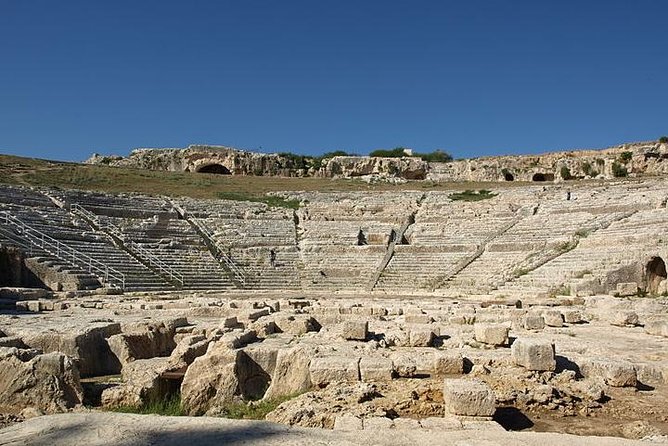
- The Greek Theater is carved from the hillside: You see an ancient performance space shaped by the natural rock rather than built as a separate structure.
- Ortigia adds a local, everyday side of Syracuse: Food markets and churches give the tour more range than an archaeology-only visit.
- Carlo is associated with the guiding team: Descriptions of his Ortigia and archaeological park tours highlight lively explanations for both adults and younger visitors.
- The group is capped at 10 people: That should make questions and conversation easier than on a large coach excursion.
- Admission is extra: Budget €10 per person for the Greek Theater and €2 for the Athena temple, with age-based exemptions listed.
- Concert setup can change the experience: Check current conditions before booking if seeing the original stone seating is your main reason for going.
Why the Greek Theater matters
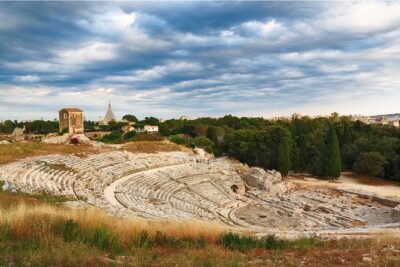
The Greek Theater is not simply an old auditorium placed on an empty plot. It was cut into the existing rock, using the hillside as its structure. That design explains why the site feels so closely tied to its setting and why the views matter as much as the theater itself.
Your guide is expected to explain the theater’s construction, purpose, and place in Syracuse’s ancient world. The tour includes a professional art historian guide, so this is aimed at people who want more than a quick photo stop. You should have time to look closely, ask questions, and connect the theater with the wider story of Sicily.
The scheduled visit to the Greek Theater lasts about one hour. Admission is not part of the listed tour cost. The extra charge is €10 per person, while entry is free for anyone under 18 according to the supplied conditions.
That extra fee is easy to overlook. At $174.53 per person, the tour already sits in the higher price range for a four-hour outing, so you need to add admission when comparing it with other Syracuse tours. There is also a €2 charge per person for the Athena temple in Ortigia, with free entry listed for children under 10.
More Walking Tours in Syracuse
- Syracuse: Street Food Walking Tour in Ortigia with Tastings
★ 4.9 · 293 reviews - Syracuse: Ortigia and Neapolis Guided Walking Tour
★ 4.7 · 205 reviews - Syracuse: Ortigia Private Walking Tour
★ 4.8 · 181 reviews
The concert-season warning you should take seriously
The biggest weakness is outside the guide’s control. The Greek Theater is used as a concert venue, and temporary construction can cover the ancient seating with wooden bleachers. Large lights, speakers, and a Broadway-style stage may also occupy the performance area.
When that happens, the basic shape of the theater is still visible, but the ancient character is reduced. If your main goal is to see the original stone seating and imagine Greek performances in an uncluttered setting, this could be a serious disappointment.
I would contact Sicily Nature Adventures before paying if your dates fall during a festival or concert season. Ask directly whether the seats, stage, or performance area will be covered. The tour description does not promise a clear site, and conditions can change from one date to another.
This warning does not make the excursion worthless. The archaeological park still has other sights, and a good guide can explain what you are seeing even when modern equipment is present. But the tour should be judged honestly: you are paying for guided access to the site, not a guarantee of an untouched ancient theater.
From the archaeological park to Ortigia
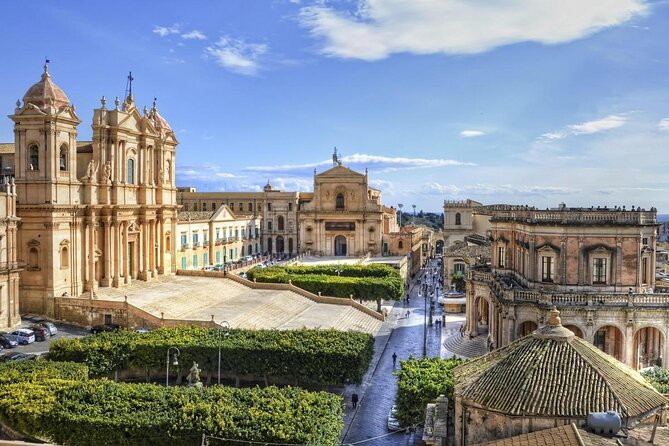
The tour is designed to connect two sides of Syracuse. First comes the ancient world at the Greek Theater. Then you move toward Ortigia, the island at the heart of modern Syracuse, where the focus shifts to food, streets, churches, and local culture.
That change is one of the best reasons to choose this experience. A visit limited to the archaeological park can feel disconnected from the city people live in today. Ortigia gives you a chance to see how Syracuse’s past remains part of daily life, without spending the entire morning among ruins.
The food markets are described as off the beaten track, which suggests a more practical look at local shopping rather than a formal tasting tour. Food and drinks are not included, and lunch is not included either. You should expect to look, listen, and perhaps buy something separately, not sit down to a meal covered by the tour price.
The market stop also gives the guide useful material. Sicilian food connects geography, trade, family habits, and seasonal produce, so this can be a good place to ask questions about what you are seeing. Still, the tour does not promise tastings, a market lunch, or a food-focused guide, so do not book it as a culinary tour.
Churches, temples, and the layers of Ortigia
Ortigia’s churches add another period to the day. The tour presents centuries-old religious buildings alongside ancient monuments, giving you a sense of how the city changed over time.
The Athena temple is part of the Ortigia visit and has its own small admission charge of €2 per person. Free entry is listed for children under 10. The supplied information does not specify how long you spend inside or which other churches you enter, so the guide’s route may determine how much time is available at each stop.
This is where the art historian’s background can make a real difference. A church can look impressive from the outside but seem confusing without context. An explanation of its art, building phases, or connection to Syracuse can turn a short stop into something memorable.
The guide associated with several school visits is named Carlo. Descriptions of his approach emphasize clear explanations, historical and mythological stories, and the ability to keep younger visitors interested. You should confirm who will lead your departure, but the experience is clearly intended to be more than a transfer between monuments.
More visits to the Neapolis park:
- Syracuse: Neapolis Archaeological Park Small Group Tour
★ 4.7 · 350 reviews - Syracuse: Neapolis and Greek Theater guided tour
★ 4.5 · 160 reviews - Private tour Syracuse -Archaeological Park and Ortigia with lunch
★ 5.0 · 28 reviews - Syracuse: Greek Theater and Neapolis Guided Private Tour
★ 4.6 · 8 reviews
What the guide adds
The tour includes a local guide, a professional art historian guide, and a professional guide in the listed inclusions. That wording is not perfectly clear about whether you have one person with several qualifications or more than one guide, so I would ask when booking.
The strongest part of the experience should be interpretation. The Greek Theater, temple, and churches are easier to understand when someone explains how they fit together. The guide can also help connect myths and historical events with what you see in the stone, streets, and buildings.
Carlo’s name is linked with tours of Ortigia and the Syracuse archaeological park. The available descriptions present him as prepared, engaging, and especially effective at holding the attention of school-age visitors. That makes this tour worth considering for families, though no specific family itinerary or child-focused activity is promised.
A guide also helps with pacing. Four hours can pass quickly when you are moving between the park and Ortigia. You will not need to plan every turn yourself, and you can use the time to ask about details you might miss on your own.
Four hours, pickup, and group size
The tour begins in Syracuse at 9:00 a.m. and ends back at the meeting point. Hotel and port pickup and drop-off are offered, with private transportation in an air-conditioned vehicle.
That arrangement matters in summer. You can avoid working out a separate transfer from your accommodation or cruise port, then move between the archaeological area and Ortigia without arranging another ride. The exact pickup point should be confirmed after booking, since the general start location is listed as Syracuse rather than a particular hotel.
The tour is about four hours, long enough for a serious introduction but not long enough for an unhurried exploration of every corner of Ortigia. You should expect a guided overview, not a full-day archaeological study or a leisurely food crawl.
Morning and evening options are mentioned, while the supplied meeting information gives a 9:00 a.m. start. Treat 9:00 as the specific time shown for this departure and verify whether an evening option is available on your date.
A maximum of 10 people is a useful feature. Small groups usually make it easier to hear explanations, ask about details, and keep the group together on busy streets. The tour is also listed as suitable for most people and near public transportation.
Is $174.53 good value?
The price is $174.53 per person for roughly four hours. That is not a bargain, especially once you add the €10 Greek Theater fee and the €2 Athena temple fee. Food, drinks, and lunch are also separate.
The value rests on convenience and guidance. You are paying for an art historian-led experience, private air-conditioned transport, and pickup and drop-off. If you are arriving at the port, staying outside the historic center, or want someone else to organize the route, those services can make the cost easier to justify.
The price information needs clarification. The inclusions list private transport and hotel pickup, but the additional notes say the price includes only the tour guide fee. Before booking, ask whether transport is fully included or whether the wording refers to a particular booking arrangement.
For two people, the total rises quickly. I would compare the full cost with a private guide plus your own transportation, making sure to include admission fees in both calculations. If you value a small group and do not want to manage logistics, the tour may be fair value. If you are comfortable using public transportation and reading site information yourself, it may feel expensive.
Who should book this experience?
I would recommend this tour to you if you want one compact introduction to Syracuse rather than separate bookings for the archaeological park and Ortigia. It suits first-time visitors who like historical explanation, prefer a planned route, and appreciate door-to-door transport.
Families may also find it useful, particularly if your children respond well to stories about Greek mythology and ancient life. The guiding style associated with Carlo is described as engaging for younger people, but remember that admission rules and the four-hour pace still apply to everyone.
This is less suitable if you want a long, quiet visit inside the Greek Theater. It is also a poor match if concert equipment is covering the seating and you have no interest in Ortigia’s other sights.
Food lovers should book only if the market visit appeals as a cultural stop. There is no included meal or tasting, and lunch is not part of the price. You will need to pay for any food or drinks yourself.
Practical booking advice
The tour offers free cancellation if you cancel at least 24 hours before the local start time. Cancellations made within 24 hours are not refunded, and late changes are not accepted.
Confirmation is sent within 48 hours, subject to availability. Since the theater setup can affect the visit, I would not wait until the morning of the tour to ask about festival equipment. Confirm the Greek Theater conditions, the pickup location, the exact guide, and the transport wording before your cancellation deadline.
Bring a phone with the mobile ticket ready. Wear comfortable shoes for a four-hour mix of archaeological grounds and city streets, though the supplied information does not state a required dress code or special equipment.
Should you book the Greek Theater and Ortigia tour?
Book it if you want history and modern Syracuse in one half-day, with a small group and transportation handled for you. The ancient theater, market, temple, and churches create a well-rounded route, and an engaging guide can make the connections between them much clearer.
I would pause before booking if the Greek Theater is your only priority. The $174.53 price is high, admission costs extra, and concert installations may cover the original seating. Ask about the condition of the theater and the full transport cost first.
If the site is clear and the added costs fit your budget, this is a sensible, focused way to meet Syracuse. If the seats are covered, consider it mainly an Ortigia and guided city tour with a compromised theater visit.
FAQ
Where does the tour take place?
The experience begins in Syracuse, in Sicily, and includes the Greek Theater and the island of Ortigia.
How long does the tour last?
The tour lasts approximately four hours.
What time does the tour start?
The listed start time is 9:00 a.m. Morning and evening tour options are also mentioned, so confirm the available time for your chosen date.
Is hotel pickup available?
Yes. Hotel pickup and drop-off are offered, and port pickup is also included in the tour information.
Is transportation included?
Private transportation in an air-conditioned vehicle is listed as included. The additional information also says the price includes only the guide fee, so confirm the transport cost before booking.
Is admission to the Greek Theater included?
No. The Greek Theater costs €10 per person. Entry is listed as free for anyone under 18.
Is admission to the Athena temple included?
No. The Athena temple costs €2 per person, with free entry listed for children under 10.
Are food and lunch included?
No. Food, drinks, and lunch are not included.
What is the maximum group size?
The tour has a maximum of 10 people.
Just added around Syracuse
- Etna and Taormina tour from Syracuse with private driver★ 4.5 · 9 reviews
- Vendicari – Sicily’s best coast nature reserve ( Birdwatching & Archeology )★ 5.0 · 8 reviews
- Tour of Montalbano★ 4.5 · 7 reviews
- Etna tour from Syracuse with private driver★ 5.0 · 4 reviews
- Noto, Portopalo and Marzamemi tour from Syracuse with private driver★ 4.5 · 10 reviews
- Siracusa Walking Tour with Audio and Written Guide by a Local★ 5.0 · 59 reviews
- Syracuse Private Shore Excursion: Archaeological Park and Ortigia★ 5.0 · 5 reviews
- Syracuse Scavenger Hunt & Highlights Self Guided Audio Tour★ 4.5 · 4 reviews
Syracuse Archaeological Park Tours, compared.
Ancient Syracuse: private guided tour of the Neapolis archaeological park
Read our review →
Group guided tour of the archaeological park of Neapolis
Read our review →Browse the lists this tour appears in